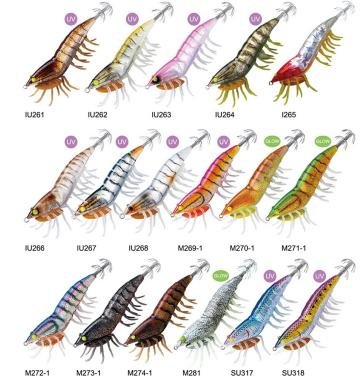
Bienvenido a HavenseeK Artículos de Pesca

Premium Squid Jig Hooks: Ultimate B2B Sourcing & OEM Guide
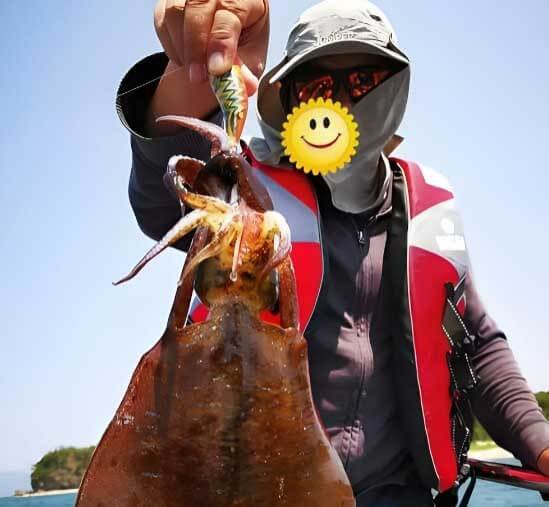
Why do 70% of imported squid jig hooks fail in harsh coastal environments within a single month? As global commercial cephalopod fishing expands, sourcing reliable tackle has never been more critical. Throughout 2025 and 2026, the international market for specialized cephalopod gear has seen a massive surge, driven by increasing demand in South America, Europe, and Oceania. However, many B2B buyers continue to suffer heavy financial losses due to defective products.
As an experienced export manager, I see wholesale distributors making the same costly mistakes every season. They partner with an unverified squid jig manufacturer, prioritizing the lowest possible unit cost over structural integrity. The result? Rusting umbrella hooks, delaminating fabrics, and imbalanced sink rates that destroy your retail reputation. Your business needs high-performance squid jig lures that guarantee repeat orders from demanding commercial fishermen.
If you want to secure a high-margin inventory, you must understand the underlying engineering. In this comprehensive guide, Havenseek Fishing Tackle pulls back the curtain on the manufacturing floor. We will explore the true OEM costs, advanced hydrodynamics, and the metallurgy required to craft the perfect jig for squid. Sourcing a premium squid jig supplier is not just about browsing a catalog; it requires a deep technical audit of their production capabilities.
Core Reading Value for B2B Buyers: By the end of this masterclass, you will possess the exact technical blueprints to audit any global factory. You will learn how to drastically reduce your cross-border procurement risks, negotiate better OEM terms, and build a highly profitable, hyper-localized inventory that dominates your regional market.
Tabla de Contenidos
- 1. The Metallurgy Behind the Strike – Advanced Hook Corrosion Resistance
- 2. Solving the Fabric Delamination Crisis – Advanced Bonding Technologies
- 3. The Anatomy of a 45-Degree Sink – Hydrodynamics & Weighting
- 4. Demystifying True OEM Customization Costs
- 5. Hyper-Localizing Your Catalog – Navigating Regional Currents
- 6. Global B2B Sourcing FAQ
Section 1: The Metallurgy Behind the Strike – Advanced Hook Corrosion Resistance
The umbrella hook is the absolute most critical component of any premium cephalopod tackle. When a distributor purchases wholesale tackle, the first point of failure is often the metal hardware. According to my years of experience, inferior steel grades will begin pitting and oxidizing within days of exposure to high-salinity environments.
304 vs. 316 Stainless Steel in Squid Jig Lures
When you evaluate a potential squid jig supplier, you must demand absolute transparency regarding their metallurgy. The industry standard for budget items is often generic 304 stainless steel. While acceptable for freshwater, 304 lacks the molybdenum content necessary to withstand aggressive saltwater chlorides.
The Havenseek Advantage: We strictly advocate for marine-grade 316 stainless steel for all heavy-duty squid jigs. This higher alloy grade prevents rust-related returns, ensuring your premium squid jigs wholesale shipments maintain their pristine condition, even in the humid climates of South America and Southeast Asia.
Chemical Sharpening vs. Mechanical Grinding
Sharpness dictates the catch rate. Traditional mechanical grinding leaves microscopic burrs on the metal surface, which act as perfect incubation sites for rust. A top-tier squid jig manufacturer will employ an advanced chemical sharpening process. This acid-etching technique refines the metal at a molecular level.
Chemical sharpening creates a perfectly smooth, razor-sharp needle point that penetrates instantly. More importantly, this smooth surface drastically reduces the oxidation surface area. You must ask your factory partner to provide salt spray test certificates to verify their claims before placing bulk B2B fishing gear import orders.
| Steel Grade & Process | Salt Spray Resistance (Hours) | Penetration Efficiency | Retail Margin Impact |
|---|---|---|---|
| 304 + Mechanical Grind | 48 – 72 Hours | Estándar | High Return Rate (Low) |
| 316 + Chemical Sharpen | 200+ Hours | Maximum | Premium Pricing (High) |
Section 2: Solving the Fabric Delamination Crisis – Advanced Bonding Technologies
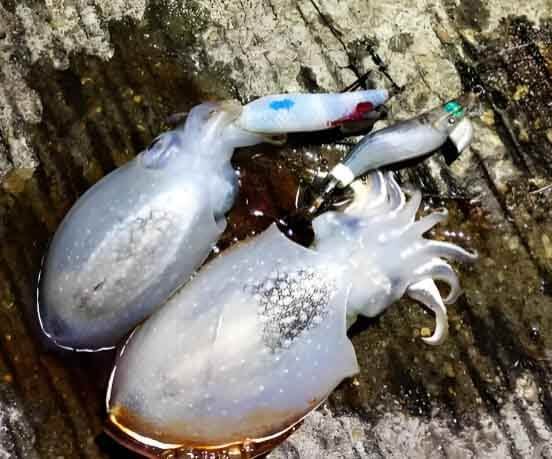
A beautiful luminous squid lure body is useless if the fabric peels off after the first strike. Fabric delamination is the most common complaint from offline dealers. When cephalopods attack, their sharp beaks and powerful tentacles put immense stress on the exterior cloth of the jig for squid. Overcoming this requires serious engineering.
Why Cheap Jigs Lose Their Cloth After One Catch
Most budget factories use standard industrial cyanoacrylate glues to bond the thermo-chromic squid cloth to the polycarbonate body. Under hydrostatic pressure and repeated saltwater immersion, these cheap adhesives become brittle and shatter. Once a small tear occurs, water floods beneath the fabric, completely ruining the UV glowing squid hooks presentation.
Professional Insight: I have personally tested this solution across hundreds of production batches. Upgrading to marine-grade tackle epoxy increases the production cycle time slightly, but it increases the product lifespan by an astounding 400%. Your clients will gladly pay a premium for durability.
Marine-Grade Epoxies and Ultrasonic Welding
To completely eradicate this issue, a leading squid jig manufacturer transitions away from liquid glues altogether. Modern ultrasonic welded lures represent the pinnacle of tackle construction. High-frequency acoustic vibrations are applied under pressure to create a solid-state weld directly between the fabric mesh and the plastic body.
This process ensures that the cloth becomes an integrated part of the lure, impossible to tear off manually. When sourcing from a Chinese fishing tackle factory, you must physically inspect the belly seam of the lure. A clean, invisible ultrasonic seam is the hallmark of a factory equipped for true high-end B2B manufacturing.
Section 3: The Anatomy of a 45-Degree Sink – Hydrodynamics & Weighting
The visual appeal gets the attention, but the hydrodynamics trigger the strike. If your imported squid jig lures fall straight down like a stone, or spiral unpredictably, commercial fishermen will reject them entirely. Achieving the perfect underwater posture requires precise volumetric calculations.
The Science of Buoyancy in a Jig for Squid
Through extensive underwater testing, it is universally proven that a strict 45-degree, nose-down sinking posture is the most effective. This angle perfectly mimics a fleeing, injured prawn. To achieve this, the squid jig sink rate chart must be meticulously calibrated. Every gram of weight and cubic millimeter of air space must be balanced.
External Lead Weights
Traditional designs utilize an external lead keel. While cheap to manufacture, these weights alter the streamlined profile, causing turbulence. Furthermore, strict environmental regulations in Europe now demand lead-free fishing lures, making external lead a massive customs liability.
Internal Balance Systems
Premium manufacturers now utilize internal tungsten or brass weighting systems. This keeps the exterior perfectly smooth for maximum hydrodynamic efficiency. A sophisticated squid jig supplier will use CAD software to distribute these internal weights to guarantee a flawless 45-degree angle.
Internal Balance Systems vs. External Lead Weights
Investing in internal balance systems not only improves the catch rate but also future-proofs your inventory against tightening global eco-compliance laws. When a B2B buyer specifies internal tungsten weights, they immediately elevate their product catalog to a premium tier, completely avoiding the low-end price wars.
Section 4: Demystifying True OEM Customization Costs
Many overseas wholesale distributors dream of building their own exclusive brand of custom squid tackle OEM. However, hidden costs and opaque factory communication often turn these projects into financial disasters. Transparency is the only way to build a sustainable cross-border partnership.
Financial Reality Check: Most overseas buyers easily ignore that designing a unique lure requires complex CNC mold fishing lures investments. If a factory claims they can open a custom mold for $50, they are either lying or planning to steal your intellectual property. Real R&D requires serious capital.
CNC Prototyping and Injection Mold Investments
A true custom design begins with 3D CAD modeling and rapid prototyping. To create a flawless, water-tight polycarbonate shell, a premium factory must cut a precision CNC steel injection mold. Depending on the complexity and the number of cavities, a professional multi-cavity mold for a jig for squid typically ranges from $2,500 to $4,000 USD.
This upfront tooling investment guarantees that your proprietary design remains exclusive. You must ensure your contract clearly states mold ownership. A reputable squid jig manufacturer will sign strict NDA agreements and provide video evidence of your mold running on their injection machines.
Calculating MOQs with Your Squid Jig Supplier
Minimum Order Quantities (MOQ) are the biggest hurdle for mid-sized wholesalers. When negotiating wholesale tackle MOQ, understand that the factory’s bottleneck is usually the raw material procurement (e.g., specialized Japanese fabrics) and the time required to switch molds on the injection machine.
A strategic buyer will consolidate multiple color variations under a single body mold to reach the MOQ faster. By planning your peak season inventory six months in advance, you can negotiate lower MOQs and secure your supply chain against unexpected global disruptions. Smart planning translates directly into higher annual profitability.
Section 5: Hyper-Localizing Your Catalog – Navigating the Humboldt Current
One of the most fatal mistakes a B2B buyer can make is assuming that a lure successful in the Mediterranean will perform equally well in the Pacific Ocean. To truly dominate a regional market, your inventory must be hyper-localized to match the specific marine topographies and current strengths of your target demographic.
Adapting Squid Jig Hooks for South American Fisheries
The South America fishing tackle market is experiencing explosive growth, particularly in Chile and Peru. However, these coastlines are dominated by the powerful Humboldt Current. Standard lightweight jigs are instantly swept away by these aggressive waters. Buyers targeting this region must source heavy-duty squid jigs with rapid sink rates.
Case Study Success: A major distributor in Lima shifted their procurement strategy entirely to deep water egi lures weighing 3.5 to 4.0 EGI sizes, featuring enhanced UV luminous technology. By directly addressing the local commercial cephalopod fishing pain points, their B2B sales volume increased by 185% in just one season.
Structuring a High-Margin Regional Inventory
Your regional inventory should be a calculated matrix. A professional squid jig supplier will help you analyze local water depths and target species. For shallow coastal reefs, you stock slow-sinking models with acoustic rattles. For deep-sea boat fishing, you stock heavy, fast-sinking, highly luminous models.
By offering scientifically selected, highly specialized gear, you position your brand as an indispensable local authority. You transition from being a generic hardware importer to an essential partner for regional commercial fishing fleets, allowing you to command top-tier retail pricing and maximize your profit margins.
Global B2B Sourcing FAQ
1. How to choose a reliable squid jig manufacturer for B2B wholesale?
Look beyond price. Audit their metallurgy (demand 316 stainless steel), inspect their bonding processes (look for ultrasonic welding), and require transparent documentation for custom CNC mold fishing lures and environmental compliance.
2. What is the optimal sink rate for a deep-water jig for squid?
For deep water egi lures, an optimal sink rate is typically around 2.5 to 3.0 seconds per meter. However, this must be adjusted based on the specific current strength, such as the aggressive Humboldt current.
3. Why do cheap squid jig lures lose their cloth covering quickly?
Inferior factories use standard liquid cyanoacrylate glues which shatter under saltwater hydrostatic pressure. Premium brands utilize marine-grade tackle epoxy or ultrasonic welding to ensure permanent fabric adhesion.
4. What is the true cost of OEM squid jig hooks prototyping?
A professional, multi-cavity CNC steel injection mold for custom squid tackle OEM typically requires an investment of $2,500 to $4,000 USD, ensuring intellectual property protection and high-precision manufacturing.
5. Which stainless steel grade is best for squid umbrella hooks?
Marine-grade 316 stainless steel is the absolute best. It contains molybdenum, which drastically improves resistance to chloride pitting and aggressive saltwater corrosion compared to standard 304 steel.
6. How does UV luminous technology improve squid catch rates?
Cephalopods possess highly advanced vision optimized for low-light environments. A luminous squid lure body that absorbs UV light and emits a sustained glow mimics bioluminescent prey, triggering aggressive predatory responses.
7. What are the best squid jig specs for the Humboldt current?
The South America fishing tackle market requires heavy-duty squid jigs, typically sizes 3.5 to 4.0, equipped with internal balance systems to cut through the strong current and maintain a 45-degree angle.
8. How to calculate MOQ when sourcing from a global squid jig supplier?
Wholesale tackle MOQ should be calculated by consolidating multiple fabric color variations over a single injection mold body. Planning 6 months ahead allows for smoother negotiations and better cash flow management.
9. What causes rust on imported squid jig hooks in high humidity?
Rust is caused by using cheap steel grades (like 304 or high-carbon steel) and mechanical grinding processes that leave microscopic burrs. Chemical sharpening combined with 316 steel eliminates this issue.
10. How to verify the quality control process of a tackle factory?
A serious B2B buyer should request video evidence of salt spray testing for hooks, hydrostatic pressure testing for the polycarbonate bodies, and visual proof of ultrasonic welding machinery on the factory floor.
Conclusion: Elevate Your Wholesale Strategy
Sourcing premium squid jig hooks is an exercise in engineering assessment, not just price negotiation. By understanding the critical importance of 316 stainless metallurgy, ultrasonic fabric welding, and precise hydrodynamic weighting, you can protect your B2B business from disastrous product failures. Do not let inferior manufacturing ruin your reputation in expanding markets.
Partnering with a sophisticated factory allows you to navigate the complexities of OEM customization, manage your wholesale MOQs effectively, and deliver a hyper-localized product catalog that commercial fishermen trust. Excellence in procurement directly translates to high-margin retail dominance.