Welcome To HavenseeK Fishing Tackle

Which Crank Baits Dominate Now? Find the Top Picks for 2025!
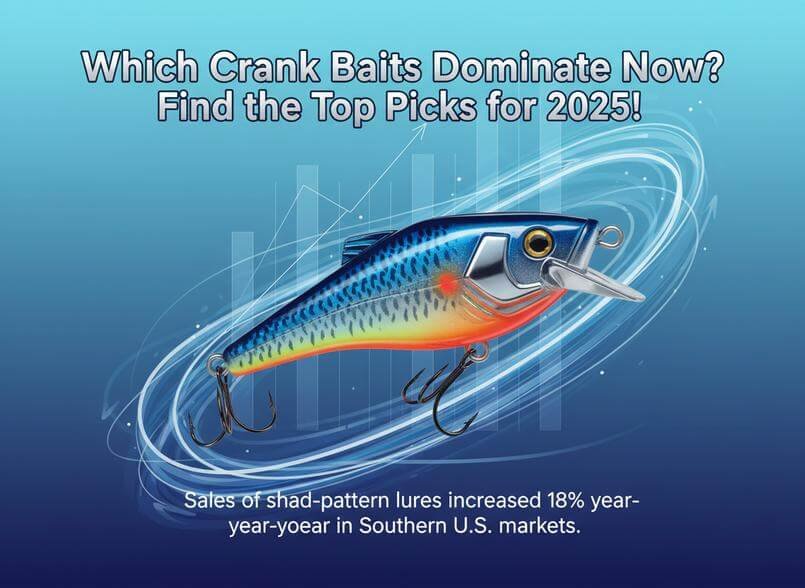
Crank baits aren’t just bits of plastic with hooks—they’re the secret sauce behind some of the fastest-selling tackle in the business. Retailers know: if you don’t stock what serious anglers are casting, you’ll be left holding last season’s duds while your competitors cash in.
Picture this—spring melt hits, bass start biting like they’ve got something to prove, and your shelves are loaded with color patterns that actually move. That’s not luck; it’s planning. It’s market-smart stocking based on real buyer behavior.
“Sales of shad-pattern lures increased 18% year-over-year in Southern U.S. markets,” according to ICAST 2024 Buyer Trends Report. You want ROI? Start there.
This guide cuts through gimmicks and gets straight to what crank baits folks will be grabbing by the dozen come 2025—because shelf space is money, and slow movers don’t pay rent.
Crank Baits Chronicles: Essential Insights for Every Angler
→ Top Rattle Chambers: Rattle chambers enhance attraction by mimicking prey movements through vibrations, ideal for various fishing conditions.
→ Lip Shapes Matter: Choosing the right lip shape tailors your crank bait to local water depths, optimizing performance for specific environments.
→ Buoyancy Insights: Different buoyancy levels serve varying fishing strategies, from topwater to deep-diving, making versatility key in selection.
→ Weight Distribution: Proper weight placement improves casting distance and mimics natural action, increasing the likelihood of fish striking your bait.
→ Color Patterns: Understanding effective color choices—like natural baitfish vs. crawfish imitations—can significantly boost your catch rates.
→ Innovative Materials: Polycarbonate lures are emerging as the material of choice for their durability and enhanced action, marking the future of crank baits.
→ Regional Trends: Staying aware of local fishing preferences and seasonal trends is essential for selecting the right crank baits for your market.
5 Must-Have Crank Baits for Every Fisherman in 2025
Choosing the right crank baits can be the difference between a slow day and a full livewell. Here’s what makes each one essential.
Top Rattle Chambers That Increase Attraction
- Steel beads offer sharp, high-pitched clicks that cut through murky waters like a dinner bell.
- Lead beads, on the other hand, give off deeper thuds—perfect for bass lurking around cover.
- Some designs combine both bead types inside multi-zone chamber designs, creating hybrid sounds that mimic distressed baitfish.
- The size and number of beads directly affect the noise profile, which can either call fish from afar or spook them if overdone.
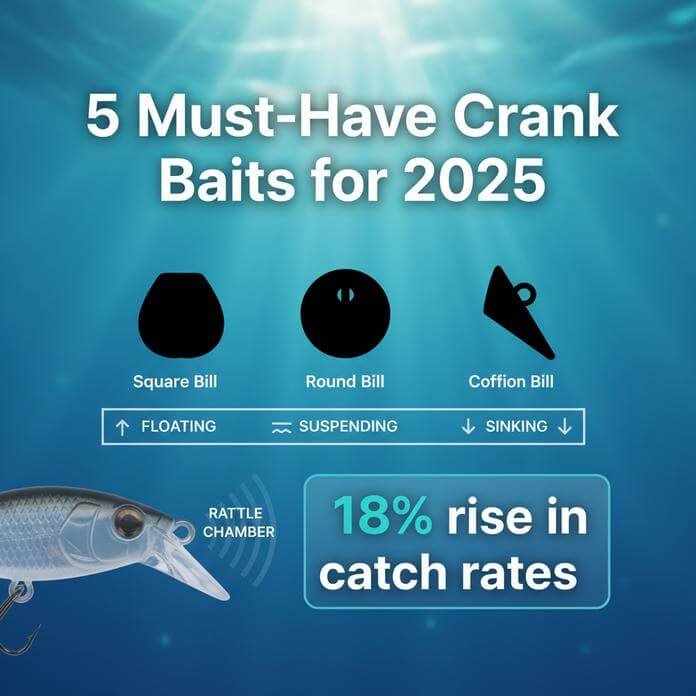
According to Rapala VMC’s Fishing Trends Report Q4/2024, “Crank bait sound profiles with mixed-frequency rattle chambers have seen a rise in catch rates by over 18%, particularly during low-light hours.”
The Best Lip Shapes for Your Local Waters
- Squarebills – Great for banging off rocks and logs; they deflect well and trigger reaction bites.
- Roundbills – Offer smoother action ideal for open water or sparse grass beds.
- Coffin bills – A hybrid option giving more aggressive vibration while still bouncing off cover efficiently.
Matching your crank bait’s bill design with your lake’s depth contours is key. For instance, shallow flats demand wide-angle lips, while ledge fishing calls for longer profiles that increase diving depth. Don’t forget how much water clarity influences what kind of lip action works best—subtle rolls win clear days; erratic kicks rule the muddy stuff.
Buoyancy Levels That Ensure Optimal Performance
• Floating baits stay up top until retrieved—ideal for twitch-and-pause tactics around weed lines or stumps.
• Suspending models hang mid-column when paused, keeping them right in front of curious predators longer.
• Sinking versions let you probe deep pockets where lunkers loaf during hot afternoons.
Every type has its moment depending on target species and season. For example, winter bass often suspend near thermoclines, so using a lure with neutral buoyancy keeps it parked at strike level longer than any jig could manage.
Short tip: Watch your bait’s rise rate after pause—if it shoots up too fast, you’re losing time in the strike zone.
Weight Distribution and Its Impact on Action
Grouped by function:
- Casting Distance
- Rear-weighted baits fly straighter into wind
- Balanced weights reduce tumbling mid-air
- Action & Stability
- Center-loaded designs produce tight wobbles
- Forward-shifted weights create wider rolls perfect for mimicking injured shad
- Retrieve Control
- Internal shifting weights adjust automatically during cast vs retrieve
- Fixed weights offer consistent tracking at all speeds
The way internal components are arranged affects how your lure swims through different parts of the water column. Tweak your setup based on whether you need long casts across points or pinpoint accuracy under docks—and remember, better balance equals fewer missed hits from tail-slapping fish hunting from behind.
One last thought: Havenseek Tackle’s latest line shows how far smart weight placement can go—it’s not just about distance anymore; it’s about believable motion too.
How to Choose the Best Crank Baits for Your Needs
Picking out the right crank baits doesn’t have to be rocket science—just match your style, depth, and target fish.
Evaluating Body Profiles: What Fits Your Fishing Style?
Choosing between different crankbait shapes is about more than just looks—it’s about matching your lure’s vibe with what you’re chasing and how you like to fish.
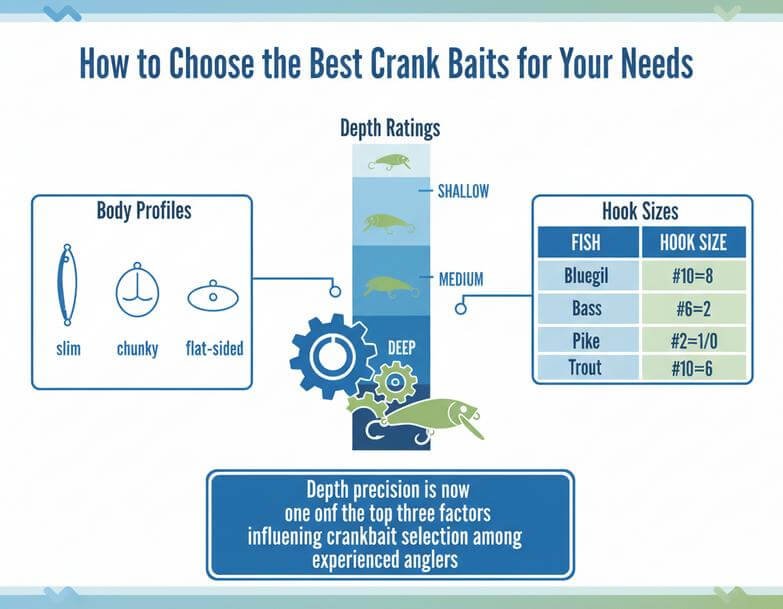
- Slim profiles are built for speed and resemble darting baitfish—great when predators are fired up.
- Chunky or round bodies move slower but displace more water, triggering bites from lethargic fish.
- Flat-sided lures give off tight wobbles that shine in cold or clear water where subtlety matters.
- If you’re burning lures across shallow flats, go light with high-buoyancy designs.
- For stop-and-go retrieves near cover, use a fatter body with a wide wobble—it’ll stir things up more.
- Match your lure’s profile to your target species—bass love exaggerated movement; trout prefer finesse.
- Don’t forget about water clarity: brighter days call for natural-looking lure profiles, while murky water benefits from bulkier silhouettes.
Each profile has its moment—it’s all about reading the conditions and knowing what kind of action will trigger a strike.
Understanding Depth Ratings: Shallow vs. Deep Divers
Not all diving crank baits are created equal—some skim just under the surface while others plunge deep into structure-rich zones where monsters lurk.
• Shallow divers usually run less than five feet deep. Perfect for early morning topwater chasers or over submerged weed beds.
• Medium divers hit that sweet spot—5 to 10 feet down—and work well along drop-offs or mid-lake humps.
• Deep divers go beyond 12 feet, ideal when fish hunker down during hot afternoons or winter chills.
Now let’s talk hardware:
- The angle and size of the diving lips determine how deep each bait runs—the steeper the lip, the deeper it dives.
- Fast retrieves force even shallow models lower into the water column, so adjust speed accordingly.
- Fish hugging cover? Use square-bill shallow divers—they bounce off rocks and logs without snagging easily.
As Rapala’s Q1 2024 angler behavior report highlights, “Depth precision is now one of the top three factors influencing crankbait selection among experienced anglers.” That tells you everything—you’ve got to know where your quarry swims before picking a lure that can reach them.
A Guide to Hook Size Selection for Different Fish
Choosing hook sizes isn’t guesswork—it’s crucial if you want solid hookups without tearing lips or losing fights mid-retrieve.
| Target Species | Recommended Hook Size | Ideal Hook Type | Notes |
|---|---|---|---|
| Bluegill | #10–#8 | Light-wire treble | Small mouths need finesse |
| Bass | #6–#2 | Wide-gap treble | Balance strength with sharpness |
| Pike | #2–#1/0 | Heavy-duty treble | Strong jaws require muscle |
| Trout | #10–#6 | Barbless treble | Better penetration on soft hits |
1) Check your lure size first—oversized hooks mess with action and buoyancy.
2) Consider hook strength too; thinner wire hooks bend easier but help with subtle strikes on light line setups.
3) Look at hook features like barbs, which increase hold but can injure smaller fish if catch-and-release is your game plan.
Don’t overlook shank length either—a longer shank helps avoid gut-hooking small species while giving better leverage during fights with larger ones.
When dialing in your setup, remember this rule of thumb: match hook size not only to fish type but also to retrieval style and crankbait profile—it all works together like gears in a reel.
Best Colors for Crank Baits: Boosting Your Catch Rate
Color can make or break your day on the water—let’s break down what actually works when it comes to choosing the right hues for your crank baits.
Natural Baitfish vs. Crawfish Imitation: Which Works?
Matching the hatch isn’t just an old saying—it’s a proven tactic, especially when deciding between baitfish patterns and crawfish patterns on your crank baits.
- In clear water with high visibility:
- Go with realistic imitation lures that mimic local prey species, like shad or minnows.
- These natural-looking designs blend in seamlessly, fooling even wary bass.
- In murky or muddy water:
- Bold, contrasting colors resembling natural forage like crawdads stand out better.
- Fish rely more on vibration and silhouette here, so color contrast matters more than fine detail. Tip: Rocky bottoms? Definitely lean into those crustacean tones—brown-orange combos shine where real craws live.
When comparing effectiveness, it’s not about which is “better” overall—it’s about matching conditions:
- Water clarity
- Local food sources
- Seasonal fish behavior
Having both styles in your tackle box gives you options to adapt fast without second-guessing every cast.
The Effectiveness of Chartreuse and Firetiger Patterns
Bright colors like chartreuse and firetiger aren’t just flashy—they’re fish magnets under specific conditions where visibility is key.
Grouped by use-case, here’s how each color excels:
- Stained Water Fishing • Use bold chartreuse lures when fishing after rain or in algae-heavy lakes—visibility spikes dramatically. • Firetiger’s mix of green, orange, and black makes it pop against dark backdrops.
- Triggering Reaction Bites • Both colors provoke strikes from aggressive fish during warmer months when predators are keyed into motion and flash. • Especially effective during pre-spawn when bass get territorial around nests.
- Color Selection Strategy • Early morning? Low light? Reach for brighter shades first before toning down. • Midday sun with stained water? Stick to high-vis patterns to keep those bites coming.
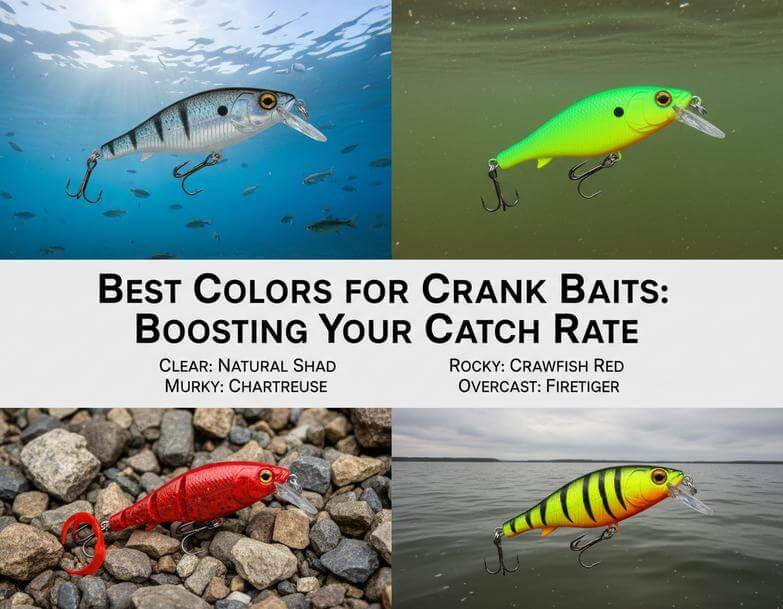
| Water Condition | Best Color Choice | Reason |
|---|---|---|
| Clear | Natural Shad | Subtle presentation |
| Murky | Chartreuse | High contrast & visibility |
| Overcast | Firetiger | Bold pattern grabs attention |
| Rocky Bottoms | Crawfish Red | Mimics native prey movement |
Mix these electric hues into your crank bait lineup—you’ll be surprised how often they out-fish the subtle stuff when things get tough.
Innovative Crank Baits: What’s New for 2025?
Bait design is shifting fast. Here’s how crank baits are evolving with tech, feedback, and fresh ideas.
Cutting-Edge Materials: The Rise of Polycarbonate Lures
• Polycarbonate lures are tougher than ever—resistant to cracking even after repeated collisions with rocks.
• Anglers love their clarity and shine; these clear plastics mimic baitfish like a charm.
• They’re also feather-light, which helps boost casting distance without sacrificing control.
Thanks to high-impact lure materials, today’s crank bait construction is all about precision and endurance. That’s why many pros are ditching old-school resin for next-gen blends that hold up under pressure.
User-Driven Designs: How Angler Feedback Shapes New Products
- Brands now run beta tests where real users try prototypes and report back on action, durability, and hook-up rates.
- Surveys through fishing apps collect insights on color preferences, retrieve speeds, and shape profiles.
- This user input gets baked into every stage of product development, from mold tweaks to packaging decisions.
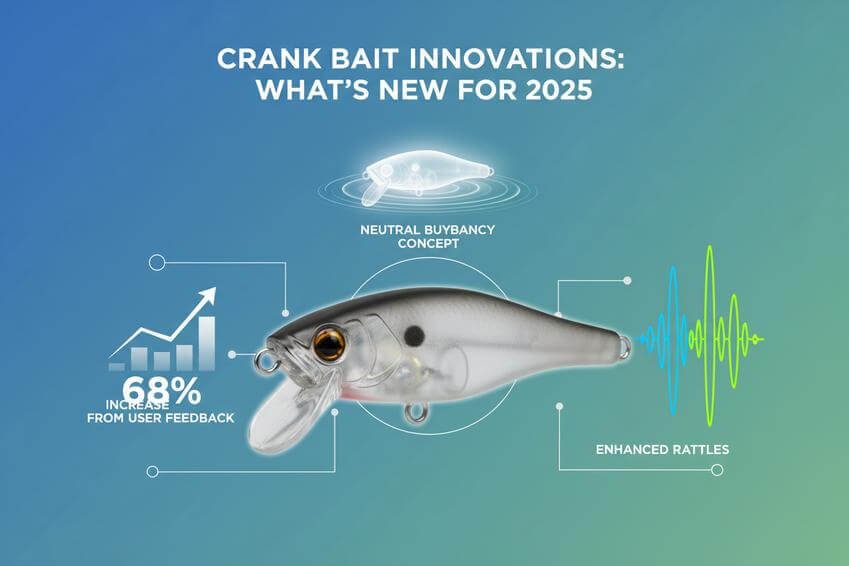
According to a 2024 report by Outdoor Gear Research Group, “over 68% of successful lure launches in the past year were directly influenced by structured angler panels.” That’s not just smart—it’s essential in today’s competitive tackle scene.
Fresh Color Patterns: Matte Finishes and Their Appeal
✦ Gone are the days of hyper-glossy finishes—today’s top-tier crankbait colors often go full matte.
✦ These low-glare options feel more natural underwater, especially in bright daylight or gin-clear lakes.
By stripping away reflectivity, designers give fish fewer reasons to spook—making these muted tones a go-to for finesse anglers chasing pressured bass.
Suspended Crank Baits: New Action Techniques
A suspended crank bait isn’t just sitting still—it’s floating mid-column like wounded prey.
• Neutral buoyancy lets it pause perfectly during stop-and-go retrieves. • This “hang time” triggers instinctive strikes from nearby predators. • Works wonders in cold water when fish aren’t chasing fast-moving targets.
The magic lies in mastering timing during those pauses—get it right and your hookup rate climbs dramatically with these suspended crankbaits.
Game-Changing Features: Enhanced Rattle Designs
Grouped below are innovations shaking up the world of internal noise:
– Sound chambers now come tuned for different frequencies—low thumps for murky water, high clicks for clear lakes.
– Some lures feature dual-tone systems that mimic multiple prey types at once using layered vibration patterns.
– Enhanced internal rattles can be adjusted via interchangeable beads or modular inserts depending on target species or conditions.
These smarter rattle setups make your bait louder—or sneakier—based on what the fish want that day. And that flexibility? It changes everything when you’re trying to outsmart finicky feeders with your favorite set of segmented crank baits.
Essential Factors in Selecting Crank Baits
Choosing the right crank baits isn’t just about color or size—it’s a game of timing, location, and smart stocking decisions.
Seasonal Trends: Adapting Your Selection for Success
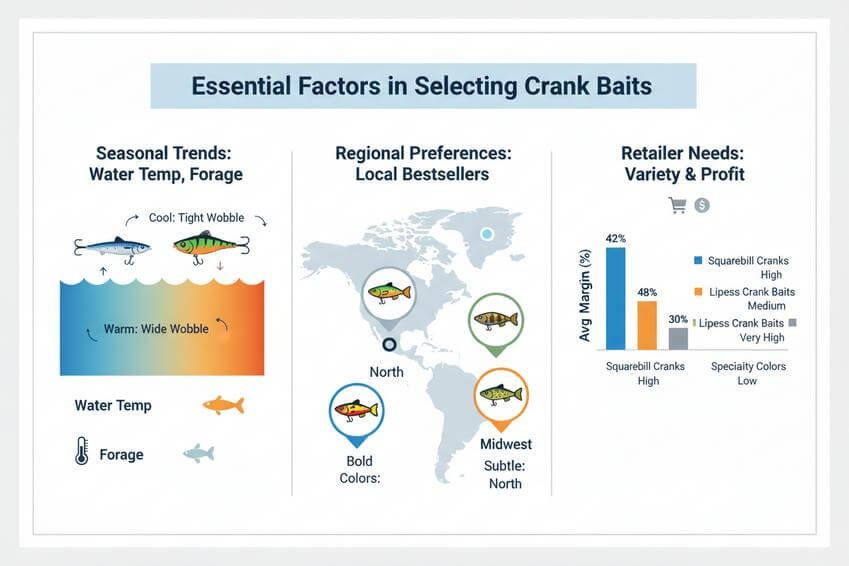
Fish act different when the seasons flip, so your bait game’s gotta shift too. Matching forage patterns and adjusting to water temperature changes is key when picking crank-style lures.
- Spring:
- Fish move shallow as water temperature warms.
- Go with tighter-wobble baits for cooler water.
- Summer:
- Deeper-diving models help target fish pushed into thermoclines.
- Match local depth profiles with longer-lipped designs.
- Fall:
- Shad imitations dominate as fish chase bait balls.
- Wide-wobble baits mimic injured prey well here.
- Winter:
- Slow-roll flat-sided cranks near structure in cold, clear water.
Keep an eye on water clarity, too—muddy runoff after rain? Brighter colors win. Clear lakes? Stick to naturals. Every season has its own rhythm; tune your crank lure selection accordingly or risk coming up empty-handed.
Understanding Regional Preferences: Local Bestsellers
What crushes it in Texas might flop in Michigan. That’s why knowing what works where is gold. Regional flavor matters, especially when you’re stocking or choosing based on local bite behavior.
Grouped by region:
- Southern Reservoirs: • Bold bait colors like chartreuse/blue • Medium-running squarebills
- Northern Lakes: • Subtle hues like perch or craw patterns • Smaller body styles match natural forage
- Western Rivers: • Fast-action cranks for current breaks • Durable builds to withstand rock strikes
Local anglers swear by specific combinations for their go-to spots—some even swear a certain shade only works on one lake. When you’re shopping or selling, digging into those regional variations, down to specific lakes, can make all the difference between moving product and watching it collect dust.
Retailer Needs: Balancing Assortment Variety and Profit Margins
Retailers walk a tightrope every day—carry enough variety to satisfy picky customers without drowning in dead stock that tanks margins. Smart inventory planning means understanding both demand and turnover rates across categories of crank-type baits.
| Product Type | Avg Margin (%) | Turnover Rate (Monthly) | Shelf Space Need |
|---|---|---|---|
| Squarebill Cranks | 42 | High | Moderate |
| Deep Divers | 38 | Medium | Large |
| Lipless Crank Baits | 45 | Very High | Compact |
| Specialty Colors | 30 | Low | Variable |
To keep profits healthy:
• Use historical sales data to forecast winners
• Rotate slow movers regularly (stock rotation)
• Strengthen ties with suppliers offering flexible terms (supplier relationships)
There’s no one-size-fits-all approach here—but keeping tabs on trends while fine-tuning your mix ensures you stay ahead of shifting customer demand without sacrificing those precious profit points.
FAQs about Crank Baits
What factors matter when bulk-ordering crank baits for mixed water types?
Squarebill lips bite through shallow timber; deep divers chase suspended fish in open basins.
- Buoyancy shifts the strike zone: floating over grass, suspending mid-column, sinking to rocky drops.
- Color changes with mood and clarity: natural baitfish for glass-clear mornings; chartreuse or firetiger under stained skies.
- Polycarbonate lips and epoxy-coated paint keep them fighting season after season without losing shine.
How do regional preferences shape wholesale crank bait success?
Fishing reports whisper local truths — crawfish imitation rules autumn rivers in some towns, chrome flashes dominate sunny bays elsewhere. Angler demographics guide size choices: smaller bodies win panfish fans, thicker profiles tempt pike patrols up north.
Which lure design features tend to spark immediate customer interest?
- Lip shape versatility — squarebill’s erratic dart vs deep diver’s steady pull.
- Body profile match — slim silhouettes for schooling predators; rounder forms teasing sluggish hunters.
- Rattle chambers with tuned steel tones gripping a predator’s attention before the hook bites home.
How can seasonal trends influence your inventory timing?
Spring shines neon (chartreuse wakes along shorelines), summer mimics life (natural baitfish glide on medium divers). Autumn turns bottom-feeder red-brown (crawfish patterns cracking cold stones). Winter slows down with suspending wakebaits lingering just enough to tempt lethargic jaws.
Why does weight distribution decide more than casting distance alone?
Balanced lead cores launch across windy water yet keep action alive on retrieval—tail-heavy casts reach far flats while centered weights let a lure dance steady through current lines, doubling chances of bigger strikes and higher sales value per hook set.