Welcome To HavenseeK Fishing Tackle

Fly Fishing Rod Supplier Guide: Avoid Costly Mistakes & Choose the Right Partner (2026)
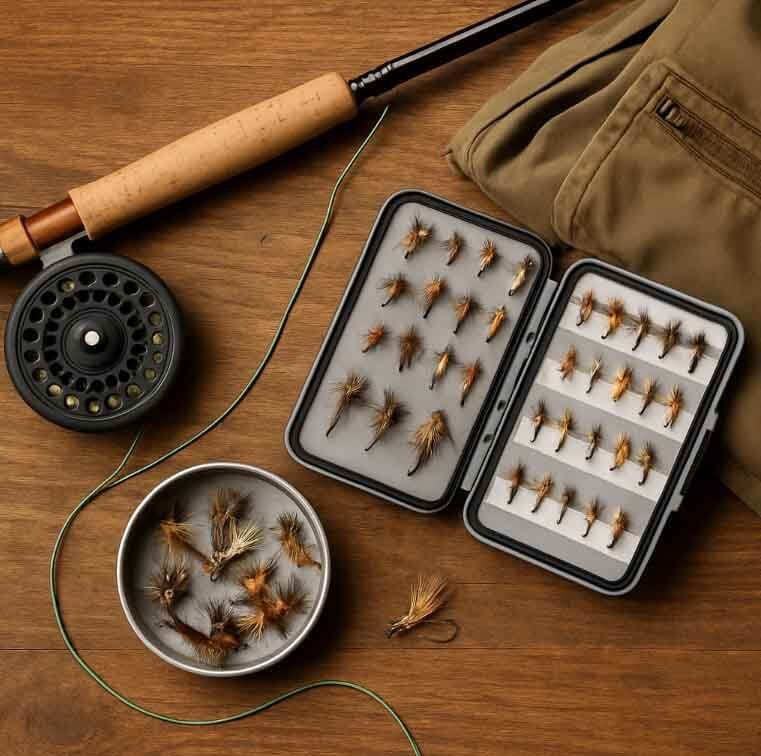
Havenseek Fishing Tackle | Expert OEM/ODM Manufacturing
Fly Rod Supplier Guide: Avoid Costly Mistakes & Choose the Right Partner (2025)
Picture this: You’ve spent months designing the perfect fly fishing rod. You’ve reviewed beautiful samples, negotiated a decent price, and placed your first large order. The containers arrive. But when you open them, your heart sinks. The fly fishing rod with reel seat alignment is off. The blank actions are inconsistent. The finish feels cheap. This isn’t the premium product you promised your customers. You’re now facing six-figure losses, angry retailers, and a damaged brand reputation. Why does this happen? Because most buyers evaluate a supplier’s sales pitch, not their core manufacturing capability.
This article is worth your time because it moves beyond generic directories and price comparisons. I’ll provide you with a practical, battle-tested framework for conducting deep due diligence on any fly rod supplier. You’ll learn how to distinguish true manufacturers from glorified middlemen, assess hidden quality risks, and build a partnership that delivers consistent excellence. Let’s turn your sourcing from a costly gamble into a strategic advantage.
Table of Contents
- Beyond Price & Catalog: Redefining a “Good” Fly Rod Supplier
- The Deep-Dive Checklist: Core Standards for Evaluation
- The Practical Comparison: Supplier Type Matrix
- From RFQ to Success: A Real-World “Anti-Pitfall” Case Study
- Your 5-Step Action Plan to Start Next Week
- Common Costly Mistakes & How to Sidestep Them
- Fly Rod Sourcing FAQ: Your Top Questions Answered
TL;DR – Key Takeaways
- The #1 Mistake: Confusing a trading company with a manufacturer. It leads to quality black boxes and communication breakdowns.
- The 2025 Trifecta: Evaluate suppliers on Technical Responsiveness, Production Stability, and Sustainability Compliance, not just price.
- Must-Verify: Always ask for evidence of core in-house processes (blank rolling, precise guide fitting) and a documented Quality Management System (QMS).
- Staged Approach: Never jump from sample to full production. A Pilot Run (5-10% of order) is non-negotiable for risk mitigation.
- Your Next Step: Download our free, detailed Fly Rod Supplier Due Diligence Checklist PDF at the end of this guide to systemize your search.
Beyond Price & Catalog: Redefining a “Good” Fly Rod Supplier in 2025
Let’s be brutally honest. The initial search for a fly rod supplier often focuses on two things: the unit price in the quotation and the aesthetics of the sample. This is a recipe for disappointment. In today’s market, a true partner is defined by much more.
Manufacturer vs. Trader: The Critical Distinction
Many companies presenting themselves as “fly fishing rod factories” are, in fact, trading companies. They have sales offices, beautiful showrooms, and samples sourced from various actual factories. Their strength is sales and service, but they act as a middleman layer between you and production. This creates a “black box”:
- You lose visibility: You can’t audit the real production line or speak directly to the engineers.
- Quality control is diluted: Your specs pass through multiple hands, increasing the risk of errors.
- Problem-solving slows down: Issues require communication through an intermediary.
Pro Tip: Ask direct questions: “Can we schedule a video tour of your blank rolling workshop and your guide wrapping and finishing line next Tuesday?” A true manufacturer will readily agree. A trader will hesitate or give excuses.
The 2025-2026 Supplier Excellence Standard
Forget the old criteria. The best partners now excel in three interconnected areas:
1
Technical Responsiveness
Can they adapt? This means having an in-house R&D team that can modify tapers, suggest material alternatives, and prototype quickly based on your feedback, not just copy a sample.
2
Production Stability
Can they deliver consistency? This is rooted in a robust QMS, skilled and retained workforce, and control over their core supply chain (e.g., carbon fiber sourcing).
3
Sustainability Compliance
Are they future-proof? By 2026, EU and North American markets will demand greater transparency on materials and carbon footprint. Suppliers with REACH/RoHS expertise and bio-resin experience will give your brand an edge.
A Cautionary Tale: The $150,000 Lesson
A client of ours, a passionate angler starting his own brand, sourced a beautiful fast-action 9ft 5wt fly fishing rod from a supplier with glowing references and attractive pricing. The samples were flawless. The first production batch of 500 units looked good on the surface. But within months, field reports trickled in: tips were breaking on normal casts, reel seats were loosening.
The Root Cause: The supplier was a trader. The actual factory, unbeknownst to our client, had switched to a lower-modulus, more brittle carbon cloth to cut costs after sample approval. The trader either didn’t know or didn’t care. The result was a total recall, brand crisis, and a $150k+ loss. The lesson? Samples prove a factory can make one good rod. Your due diligence must prove they can make five hundred identical, great rods, every time.

Havenseek Fishing Tackle | Expert OEM/ODM Manufacturing
The Deep-Dive Checklist: Your Core Standards for Evaluation
This is where we separate theory from practice. Use this checklist as your interrogation guide.
1. Manufacturing Capability Audit (The “Can They *Really* Make It?” Test)
Verify Physical Assets
Request a live, unedited video walkthrough of specific departments. Don’t accept curated photos.
- Blank Production: Look for CNC mandrel wrappers, precision resin application, and controlled curing ovens.
- Guide & Reel Seat Attachment: Look for laser alignment tools for placing guides perfectly straight. Is it done by hand with a jig or fully automated?
- Finishing & Painting: Look for dust-controlled spray booths and consistent, professional finishing work.
Assess Core In-House Control
The more processes a factory controls internally, the tighter their quality control. Ask: “What percentage of the rod’s value is created within your four walls?” Key processes they should own:
- Blank rolling/construction
- Guide fitting and alignment
- Finish application (painting, wraps)
- Final assembly and balancing
Expert Question to Ask: “If we need to modify the taper of this fly fishing rod with reel balance in mind, what is your process? From our new design sketch to a testable prototype, what’s the typical timeline and cost structure?” Their answer reveals their true R&D depth.
2. Quality Management System Audit (The “Can They Make It *Well*?” Test)
A factory without a documented QMS is relying on luck. Request to see examples of their quality records (with sensitive data blurred).
- Incoming QC: How do they test the modulus and integrity of incoming carbon cloth spools?
- In-Process QC (IPQC): What checks happen at blank rolling, guide spacing, epoxy curing? Are there checkpoints with sign-offs?
- Final QC (FQC): Do they have a final inspection checklist? What is their AQL (Acceptable Quality Level) standard? How do they test a finished fly fishing rod? It should include:
- Static deflection test: Checking action curve consistency.
- Dynamic “wiggle” test: Listening/feeling for imperfections.
- Guide alignment check: Using laser or straight-edge.
- Reel seat fit and finish: Ensuring smooth function.
Ask for their Corrective Action Report (CAR) process. What happens when a batch fails inspection? A professional factory will show you a documented 8D or similar problem-solving format.
3. Material Sourcing & Compliance (The “Is It Legit & Future-Proof?” Test)
Carbon Fiber Traceability
If a supplier claims to use “Toray T1100G” or “Mitsubishi MR70,” ask for the mill certificate or a purchase invoice from an authorized distributor. This is the only way to verify you’re getting the performance you’re paying for.
Mandatory Certifications
For most markets, ensure they can provide valid, third-party test reports for:
REACH / RoHS: Proves the rod contains no harmful levels of restricted substances (lead, cadmium, etc.).
CPSIA (for the US): Critical for any products that might be used by children.
The 2026 Horizon: Sustainable Materials
Forward-thinking brands are asking about bio-based epoxies and recyclable carbon fiber. Ask your potential fly rod supplier: “Do you have any R&D projects or commercial experience with sustainable resin systems? What are the cost and performance trade-offs?” Their answer gauges their investment in the future.
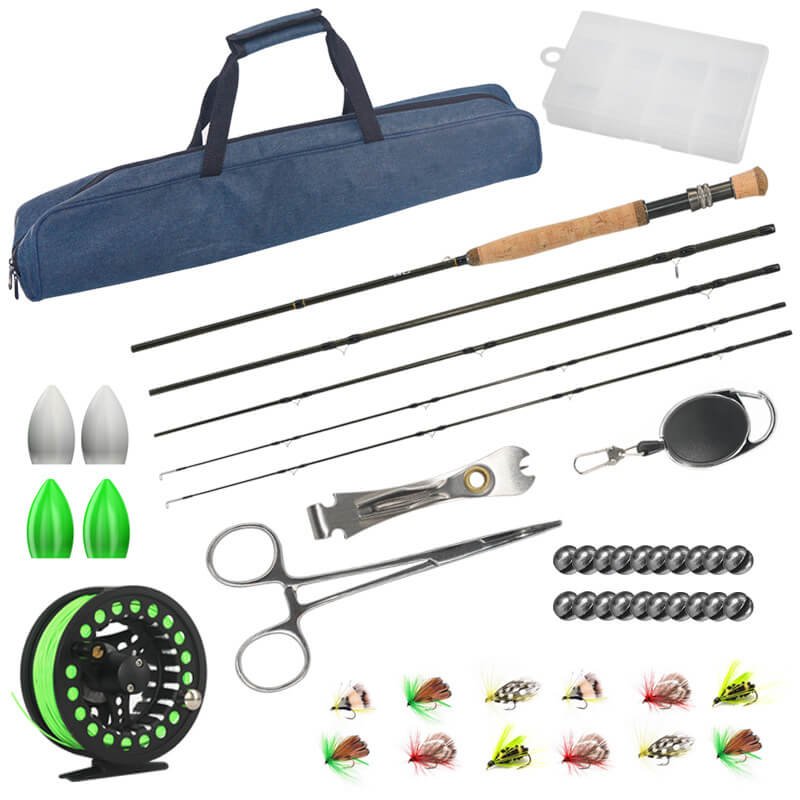
Havenseek Fishing Tackle | Expert OEM/ODM Manufacturing
The Practical Comparison: Fly Rod Supplier Type Matrix
There’s no single “best” type. The right choice depends entirely on your brand’s stage, volume, and technical needs. Here’s a clear breakdown.
| Supplier Type | Best For… | Key Advantages | Potential Risks / Limitations |
|---|---|---|---|
| Specialized OEM/ODM Manufacturer (e.g., Havenseek) | Brands seeking custom designs, technical collaboration, and high consistency at medium to high volumes. | Deep technical support, full control over core processes, strong IP protection, consistent quality, scalable. | Higher MOQs than traders (typically 300-500+ rods per model), less focus on tiny boutique orders. |
| Large Integrated Factory | Major brands with very high-volume, standard product lines (e.g., 10,000+ units per SKU). | Extremely competitive pricing for large volumes, one-stop-shop for many tackle items. | Rigid processes, slow to customize, you are a small fish in a big pond, risk of generic output. |
| Small “Boutique” Workshop | Artisanal brands, ultra-high-end custom rods, very low MOQ prototypes. | Extreme flexibility, passion for craft, willingness to do tiny batches, unique finishes. | Capacity limits, lack of formal QMS, potential inconsistency, scaling is difficult. |
| Trading Company / Sourcing Agent | Beginners testing the market, brands needing very small MOQs of generic catalog items. | Low MOQs (even 50 rods), good communication/service, handle logistics. | Highest risk for quality issues. No control over production. Margin stacking. “Black box” manufacturing. |
My Verdict: For brands serious about building a reputation for quality and innovation, a specialized OEM/ODM manufacturer offers the optimal balance of expertise, control, and scalable partnership. They act as an extension of your R&D team.
From RFQ to Success: A Real-World “Anti-Pitfall” Case Study
Let’s see how this framework plays out in reality. Our client, “Alpine Fly Co.” (a real company with a disguised name), was a European distributor wanting to launch its own brand of premium trout rods.
The Challenge: Navigating a Minefield of Suppliers
Alpine received 8 quotes. Two were incredibly low, three were in the mid-range with beautiful catalogs, and three were higher but from known factories. They were tempted by the low cost and the slick presentations. Their initial goal was just to “find a fly rod supplier.”
The Solution: Applying the Due Diligence Framework
We advised them to implement a staged filtration process:
- Stage 1 – Document Request: They asked all bidders for factory photos/videos of blank production and a summary of their QMS. Four suppliers couldn’t provide convincing evidence and were eliminated.
- Stage 2 – Technical Interview: They held video calls with the remaining four, asking our “expert questions” about taper modification and material traceability. Two gave vague answers, revealing limited technical depth.
- Stage 3 – The Pilot Run: With the two finalists, they didn’t order their full 1000-rod quantity. They negotiated a Pilot Production Order of 50 rods per model. This is the single most important risk-mitigation step. They tested these 50 rods rigorously, even sending them to professional guides for feedback.
The result? One supplier’s pilot rods matched the samples perfectly. The other’s showed minor but unacceptable inconsistencies in guide glue finish. The choice became clear.
The Quantifiable Result: Partnership & Growth
By choosing the right partner (Havenseek, in this instance), Alpine Fly Co. achieved:
- Field Failure Rate: Maintained below 0.5% (industry average for complex products can be 3-5%).
- Customer Return Rate: Reduced by an estimated 70% compared to their previous sourced products.
- Business Growth: The new rod line accounted for a 35% increase in their annual revenue and became the flagship that opened doors to premium retailers.
- Speed to Market: From final design to stocked warehouse was 5 months, thanks to clear communication and the supplier’s efficient prototyping.
Havenseek Fishing Tackle | Expert OEM/ODM Manufacturing
Your 5-Step Action Plan to Start Next Week
Don’t let this be just another article you read. Systemize your search with these concrete steps.
- Internal Briefing: Document your exact needs: Target species/action, price point, annual volume forecast, key markets & required certifications (REACH, etc.).
- Initial RFQ & Screening: Send your brief to 5-8 potential suppliers. Immediately request the “evidence” documents (factory video, QMS outline, compliance certs). Eliminate those who can’t or won’t provide them.
- Deep-Dive Interviews: Schedule 45-minute calls with the top 3 contenders. Use the technical questions from this guide. Assess communication clarity and honesty.
- The Non-Negotiable Pilot Run: Budget for and insist on a pilot production order (5-10% of your planned first order) before committing to full volume. Test these units destructively if needed.
- Contract & Onboarding: Finalize agreements with clear IP clauses, quality standards (reference the pilot run units), penalty clauses for non-compliance, and a communication protocol.
Common Costly Mistakes & How to Sidestep Them
- Mistake: Chasing the lowest unit price.
Sidestep: Calculate Total Cost of Ownership. Include potential costs of returns, replacements, lost sales, and brand damage. A slightly higher price from a reliable fly rod supplier is always cheaper in the long run. - Mistake: Sharing full design details without an NDA.
Sidestep: Have a mutual Non-Disclosure Agreement (NDA) signed before sending CAD files or detailed specs. Reputable factories expect this. - Mistake: Assuming sample = production quality.
Sidestep: Remember the pilot run! Samples are often made by senior technicians with hand-picked materials. The pilot run tests the production line’s capability. - Mistake: Ignoring the human factor.
Sidestep: Try to meet the factory owner or operations manager. Gauge their passion, business ethics, and long-term vision. You’re building a relationship, not just making a purchase.
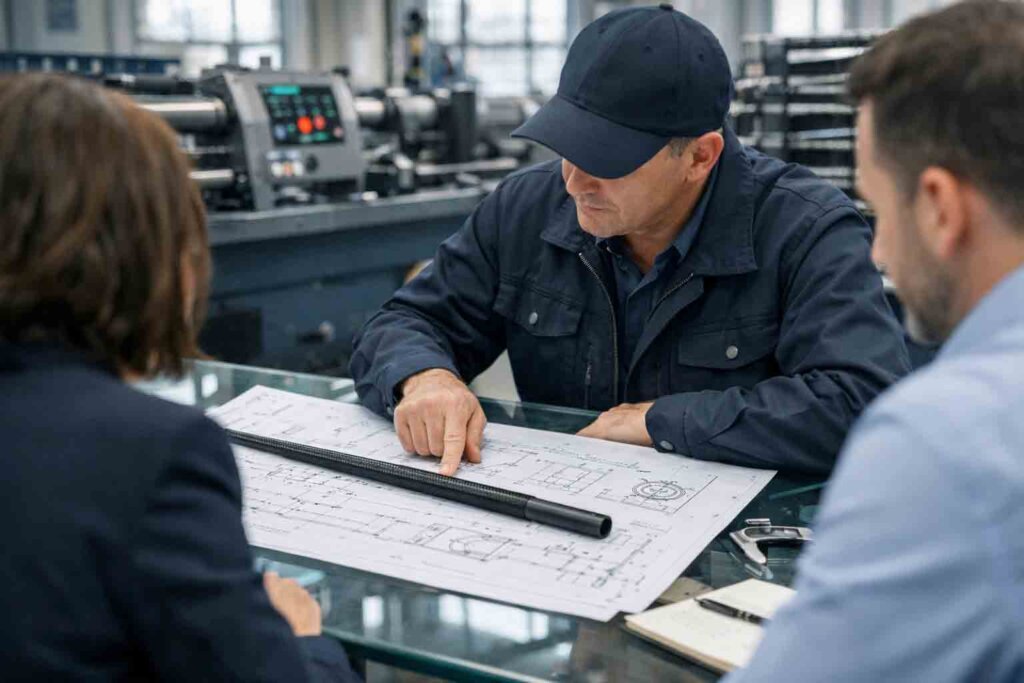
Havenseek Fishing Tackle | Expert OEM/ODM Manufacturing
Fly Rod Sourcing FAQ: Your Top Questions Answered
Q1: What is a realistic Minimum Order Quantity (MOQ) for a custom fly rod design from a reputable manufacturer?
A: For a truly custom blank design (new taper, new materials), expect an MOQ between 300 and 500 rods per model/specification from a quality OEM. For modifying an existing model (changing guide types, reel seat, finish), MOQs can be as low as 100-200 rods. “Catalog” models with only your logo may have lower MOQs. Beware of factories offering 50-piece MOQs for custom designs—they are almost certainly traders.
Q2: How do we protect our proprietary rod design IP when working with an overseas supplier?
A: A strong NDA and Contract are essential. Within the contract, specify that all tooling (mandrels, molds) created for your product are your property, paid for by you, and must not be used for any other client. Reputable manufacturers respect this. Additionally, you can split production of key components between two trusted factories (e.g., blanks from Factory A, finishing/assembly at Factory B) to further protect your IP.
Q3: What are the hidden cost factors we should ask about besides the unit price per rod?
A: Always request a comprehensive “FOB” quote. Ensure it includes: Cost of molds/tooling (if new), sample fees, pilot run costs, standard packaging (tube, sock), labeling, compliance testing fees, and export packaging. Clarify payment terms (e.g., 30% deposit, 70% before shipment). The cheapest unit price often comes with extra, surprising charges later.
Q4: Can a good supplier help us develop a balanced and high-performance fly fishing rod with reel combo under our brand?
A: Absolutely. This is a key service of a true OEM partner. They should analyze the weight and balance point of your blank and recommend specific reel models (or custom reel seat weights) to achieve a neutral balance point. They can even source or manufacture branded reel seats and handle components to create a truly integrated fly fishing rod with reel system. Ask them for case studies of past combo developments.
Q5: How long does the entire process take, from initial design to receiving the first production batch?
A: For a new design, plan for a 5 to 8-month timeline. Breakdown: 1-2 months for prototyping/sample iterations, 1 month for pilot run and testing, 2-3 months for full production (depending on order size and factory schedule), and 1 month for shipping. Rushing any of these stages increases risk exponentially.
Q6: Is it always better and cheaper to go directly to a factory instead of a trading company?
A: Not always, but usually for serious brands. If you are a very small brand (order value under $10,000), a reliable trading company can provide valuable service, consolidate items from multiple factories, and handle small orders. However, as soon as your volumes and technical requirements grow, the lack of transparency, added margin, and quality risks of a trader outweigh the benefits. Going direct to a qualified factory gives you control, which is priceless.
Conclusion: Your Sourcing Journey Starts Here
Finding the right fly rod supplier is the most critical business decision a tackle brand can make. It’s the foundation of your product quality, your customer satisfaction, and ultimately, your brand’s legacy. By shifting your focus from price-taking to partner-vetting, you transform sourcing from a cost center into a core competitive advantage.
The framework in this guide is the same one we use internally and recommend to our partners. It’s designed to protect you, reveal true capability, and set the stage for a partnership built on transparency and mutual success.
Ready to apply this with confidence? We’ve condensed the key evaluation points from this guide into a single, actionable document.
Submit your project outline, and our sourcing specialists will provide a preliminary assessment and send you the detailed PDF checklist within 12 hours.
References & Further Reading
- NOAA: Understanding Fishing Gear & Technology – A reliable .gov source on fishing equipment principles.
- ICAST (American Sportfishing Association) Press Releases – For the latest trends and innovations in the fishing tackle industry.
- European Chemicals Agency (ECHA): Understanding REACH – Authoritative information on the critical REACH compliance regulations affecting tackle imports to the EU.