Welcome To HavenseeK Fishing Tackle

Frog Rod Wholesale Secrets: Zero Breakage & High Retail ROI
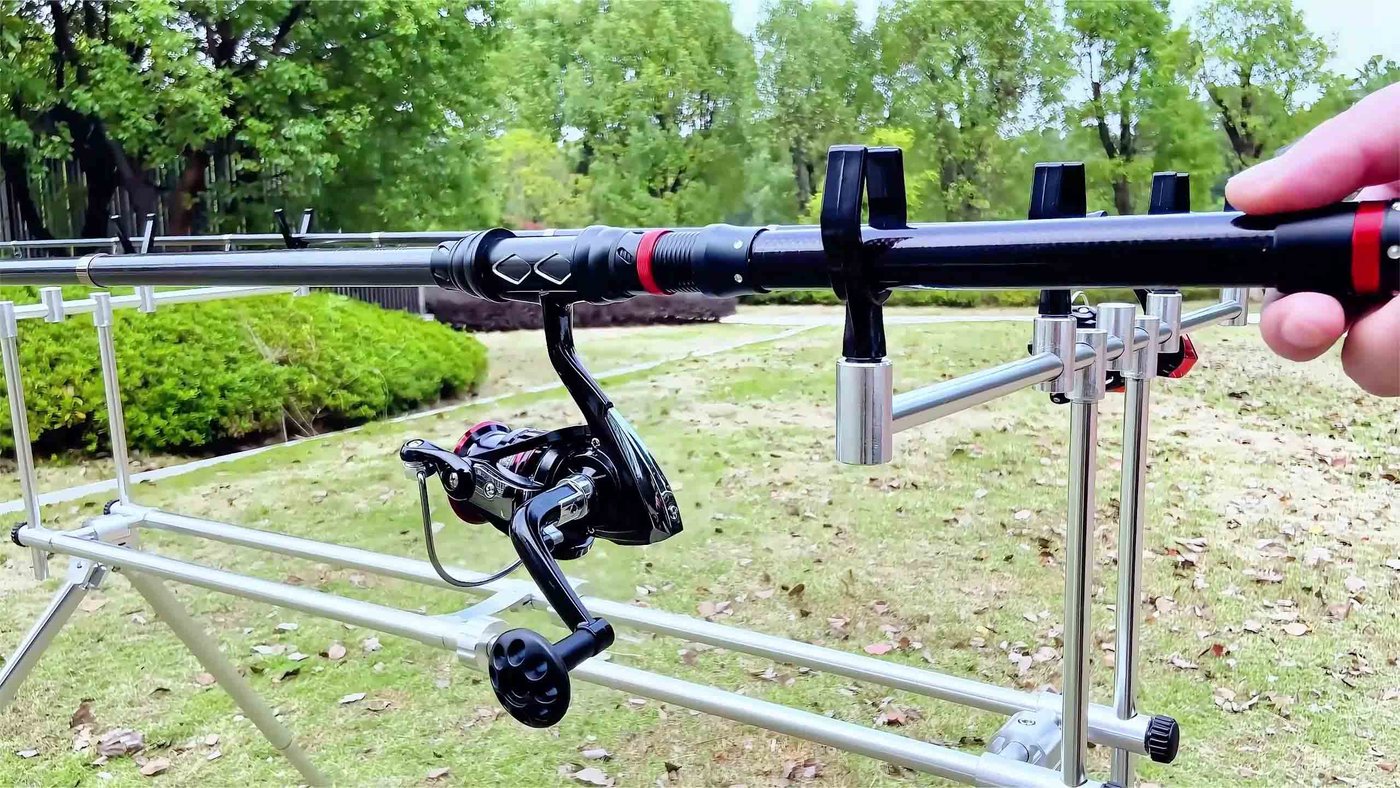
Are your retail partners complaining about snapped rod tips and shattered guide rings before the summer topwater season even reaches its peak? If you are involved in frog rod wholesale, you already know that heavy cover angling is the ultimate stress test for any piece of equipment. Striking a ten-pound bass buried under five pounds of dense lily pads requires a blank with relentless backbone, but finding a factory that can deliver this consistency at scale is a massive challenge.
According to my years of experience negotiating with overseas manufacturers, most tackle distributors easily ignore the hidden costs of poor quality control until the warranty claims wipe out their quarterly profits. Based on 2025 global tackle procurement analytics, nearly 18% of heavy action rods sourced indiscriminately suffer from micro-fractures during transit or epoxy failure during the first month of use. To maximize your retail ROI, you must source heavy power bass rods bulk with strict engineering parameters.
This comprehensive operational playbook is designed specifically for tackle brands and importers. We will dissect the exact factory-level specifications you need to demand from your fast action fishing rods supplier B2B. By the end of this deep dive, you will understand how to eliminate transit breakage, engineer feather-light yet indestructible blanks, and cross-sell this inventory 365 days a year to safeguard your cash flow.
Quick Navigation: B2B Sourcing Blueprint
- 1. The 2026 Global Landscape of Frog Rod Wholesale Procurement
- 2. Core Evaluation Standards for Heavy Power Bass Rods Bulk
- 3. Unmasking Hardware Failures in OEM Heavy Cover Fishing Tackle Manufacturing
- 4. Quality Assurance: Factory Rod Spine Alignment Check
- 5. Engineering Blanks at a Custom Frog Rod Factory
- 6. Optimizing Handle Leverage and Ergonomics
- 7. The 7-Foot-Plus Shipping Dilemma for Long Rods
- 8. Factory-Level PVC Reinforcement Strategies
- 9. Maximizing SKU ROI Beyond Topwater Season
- 10. Wholesale Tournament Bass Fishing Gear Positioning
- 11. Real-World Case Study: 40% Margin Boost
- 12. Common B2B Procurement Pitfalls to Avoid
- 13. Frequently Asked Questions (FAQ)
- 14. Conclusion: Securing Your Supply Chain
The 2026 Global Landscape of Frog Rod Wholesale Procurement
The explosive growth of competitive bass fishing across North America, Europe, and emerging markets has dramatically shifted tackle consumption patterns. Thick cover bass fishing rods are no longer a niche specialty item; they are a fundamental requirement for any serious angler’s arsenal. However, this surge in demand has flooded the market with sub-par products disguised under aggressive marketing.
Rising Costs in Offshore Tackle Manufacturing Lead Times
In the current economic climate, offshore tackle manufacturing lead times have stretched from a standard 45 days to nearly 75 days for premium carbon fiber layups. Importers who fail to forecast their custom frog rod factory orders well in advance often miss the critical early summer retail window. Securing a reliable supply chain is now just as important as the physical product itself.
Why Thick Cover Bass Fishing Rods Demand Specialized Specs
Throwing hollow-body frogs requires an extremely unique blank profile. The rod must possess a surprisingly soft tip to allow the bass to inhale the bait fully, followed immediately by an ultra-stiff backbone to drive thick gauge hooks through hard jawbones. Generic flipping sticks simply do not have the dynamic tip action required to walk a frog effortlessly.
Core Evaluation Standards for Heavy Power Bass Rods Bulk
Before placing a deposit on a container of wholesale tournament bass fishing gear, buyers must establish an ironclad evaluation matrix. I have personally tested this solution across dozens of factories: you cannot rely solely on the manufacturer’s spec sheet. You must dictate the exact raw materials used in the assembly.
Identifying True Fast Action Profiles
A true fast action implies that only the top 25% to 30% of the blank flexes under initial load. When inspecting samples, mount a reel, string it with line, and apply dead weight to the tip. If the bend extends into the middle third of the blank, the factory is utilizing inferior, low-modulus carbon that will feel spongy during a hookset.
Saltwater Grade Ceramic Guide Inserts Validation
Why do we insist on saltwater grade ceramic guide inserts for freshwater bass gear? Because topwater fishing mandates the use of 50lb to 80lb braided line. Braid is highly abrasive. It acts like a microscopic saw blade under tension, easily grooving cheap aluminum oxide inserts and causing catastrophic line failure.
Aluminum Oxide vs. Silicon Carbide
Always specify Silicon Carbide (SiC) or Zirconia inserts for your anti-tangle tip top guides bulk orders. While Aluminum Oxide is cost-effective for monofilament applications, it simply cannot withstand the friction generated by braided line tearing through heavy vegetation.
Unmasking Hardware Failures in OEM Heavy Cover Fishing Tackle Manufacturing
The highest volume of warranty claims in B2B topwater bass tackle distributor networks stems from two specific component failures. Addressing these at the factory level will instantly elevate your brand reputation and protect your wholesale margins.
Why Ceramic Guides Pop Out Under Heavy Braid
Guide pop-outs occur when the stamped stainless steel frame flexes excessively under load, distorting the ring housing and allowing the ceramic insert to fall out. You must demand deep-pressed, double-footed guide frames on the lower half of your heavy power bass rods bulk orders to prevent this frame distortion.
Reel Seat Twist: The Ultimate Hookset Deal-Breaker
When an angler swings violently on a fish, immense rotational torque is applied to the handle assembly. If the factory uses inadequate glue or fails to properly arbor the blank inside the reel seat, the entire seat will twist free. This completely ruins the angler’s experience and results in an immediate product return.
Reinforced Reel Seat Epoxy Testing
To combat reel seat twist, instruct your custom frog rod factory to utilize marine-grade, high-viscosity epoxy resins. Furthermore, mandate the use of high-density polyurethane arbors rather than cheap masking tape shims. Tape compresses over time, allowing the epoxy bond to shatter under sheer stress.
Quality Assurance: Factory Rod Spine Alignment Check
Many overseas buyers easily ignore the concept of rod spine alignment, assuming automated machines handle this flawlessly. In reality, wrapping a rod blank creates a natural overlap in the carbon fiber sheets, forming a stiffer “spine” along one side of the tube. If the guides are not perfectly aligned with this natural spine, the rod will twist aggressively in the angler’s hand under heavy drag pressure.
The Physics of Improper Spine Alignment
When fighting a bass wrapped in heavy hydrilla, a misaligned spine forces the rod to actively fight against the angler, attempting to roll sideways. This drastically reduces lifting power and causes intense wrist fatigue. In mass production, lazy factory workers often skip the manual spine-finding process to save time.
Pre-Shipment QA for Fishing Rods
Do not wait for the container to arrive at your warehouse to discover a spine issue. Hire an independent inspector to perform a rigorous pre-shipment QA for fishing rods. They must physically bend a random 10% sampling of the bulk order to ensure the guides remain perfectly dead-center under parabolic stress.
Implementing a 5-Point Factory Inspection
- 1. Spine Deflection Test: Confirm guide alignment under heavy load.
- 2. Epoxy Cure Check: Inspect guide wraps for bubbling or cloudy resin.
- 3. Insert Adhesion: Apply lateral pressure to ceramic rings.
- 4. Handle Torsion: Attempt to manually twist the reel seat and EVA grips.
- 5. Ferrule Fit: (For 2-piece models) Ensure a tight, gapless connection.
Engineering Blanks at a Custom Frog Rod Factory
The holy grail of thick cover bass fishing rods is achieving immense lifting power without building a rod that feels like a heavy broomstick. This requires highly sophisticated materials engineering. You cannot simply use more fiberglass; you must leverage advanced carbon fiber metallurgy to balance weight, sensitivity, and sheer brute force.
30T/40T Carbon Fiber Rod Durability Blends
The secret to modern frog rod wholesale success lies in composite layups. A pure 40-ton (40T) high-modulus blank is incredibly light and sensitive, but it is dangerously brittle under sudden impact. Conversely, a 24-ton (24T) blank is indestructible but heavy and dull. The optimal solution is instructing your fast action fishing rods supplier B2B to construct a composite blank.
They should utilize tough 30T carbon for the lower two-thirds of the rod to provide lifting muscle and durability, seamlessly transitioning into crisp 40T carbon near the tip section for accurate casting and immediate hook-setting response. This multi-tonnage approach drastically reduces the overall weight of the blank.
Lightweight Heavy Backbone Bass Rods
To further minimize weight, B2B buyers should request multi-directional carbon wrapping. By laying the prepreg carbon sheets at 45-degree and 135-degree angles (often referred to as X-wrap technology), the factory increases hoop strength and crush resistance without adding excessive wall thickness. This produces lightweight heavy backbone bass rods that stand up to the most brutal punishment.
Resin Reduction Techniques
Excessive resin in the carbon prepreg makes a rod feel heavy and sluggish. Premium OEM heavy cover fishing tackle manufacturing facilities now utilize low-resin carbon fabrics. By pressing the carbon under higher atmospheric pressure during the baking process, they squeeze out unnecessary resin, resulting in a tighter, lighter, and vastly more responsive blank.
Optimizing Handle Leverage and Ergonomics
Most overseas buyers easily ignore the handle length, opting for standard templates. However, when wrestling a large fish out of heavy lily pads, the handle becomes a vital lever. If the rear grip is too short, the angler cannot tuck it firmly under their arm or against their ribs for two-handed leverage.
Custom EVA Split Grip Handle Leverage
For optimal frog rod wholesale specifications, dictate a handle length of at least 10 to 11 inches from the back of the reel seat to the butt cap. Furthermore, transitioning from heavy cork to high-density, custom EVA split grip handle designs shaves off critical ounces at the rear of the rod, improving overall aesthetics while maintaining a slip-resistant grip when wet.
Reducing Angler Wrist Fatigue
Wrist fatigue is the number one consumer complaint regarding heavy tackle. A poorly balanced rod feels tip-heavy, acting as a constant weight pulling the angler’s wrist downward. During an eight-hour tournament, this causes severe cramping.
The Fulcrum Point Calibration
To solve this, work with your custom frog rod factory to calibrate the fulcrum point. By adding a minimal, concealed brass counterweight inside the EVA butt cap, you shift the balance point directly to the reel seat. A perfectly balanced 7’3″ heavy rod will feel fifty percent lighter in the hand than an unbalanced rod of the exact same physical weight.
The 7-Foot-Plus Shipping Dilemma for Long Rods
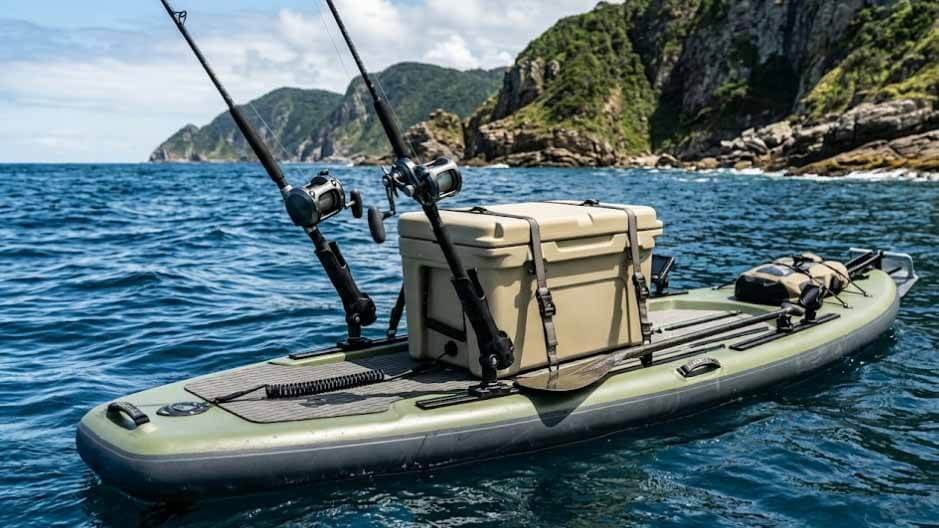
Logistics can quickly erode the profit margins of commercial fishing tackle import margins. The modern bass angler demands one-piece rods measuring 7’2″, 7’3″, or even 7’6″. Shipping these lengthy, fragile carbon tubes across the ocean presents a massive logistical nightmare for B2B buyers.
One-Piece 7-Foot Heavy Rod Shipping Solutions
Standard cardboard master cartons simply cannot withstand the crushing weight of other pallets inside a less-than-container-load (LCL) shipment. The torque applied to a 7-foot box during ocean swell will snap the fragile top 10 inches of the rods inside. You must implement aggressive one-piece 7-foot heavy rod shipping solutions to achieve a zero-breakage rate.
Minimize Tackle Container Freight Loss
When negotiating with your fast action fishing rods supplier B2B, strictly forbid the use of unreinforced long cartons. The standard practice of stuffing 25 bare rods into a thin cardboard box is a recipe for disaster. Instead, mandate customized internal architectural support systems for every bulk shipment.
LCL vs. FCL Dynamics
If you are shipping LCL (Less than Container Load), your rods are at the mercy of the consolidator’s forklift operators. The risk of crushing is exponentially higher. If possible, consolidate your orders into an FCL (Full Container Load) where you dictate the floor-to-ceiling loading map, ensuring lightweight rod cartons are safely placed on the top tier.
Factory-Level PVC Reinforcement Strategies
The most effective strategy to safeguard your heavy power bass rods bulk investment is structural reinforcement at the factory level. I have personally tested this solution over hundreds of ocean crossings, and it reduces freight damage claims to near absolute zero.
Anti-Tangle Tip Top Guides Bulk Protection
Require the factory to bundle the rods in groups of 5 to 10, wrapping the delicate tip sections in high-impact bubble wrap. More importantly, these bundles must be inserted into heavy-duty, industrial-grade PVC plastic pipes. The PVC pipe absorbs all lateral compression and impact shock during transit, fully shielding the anti-tangle tip top guides bulk.
Multi-Layer Corrugated Master Cartons
These PVC tubes are then slid into double-wall or triple-wall corrugated cardboard master cartons. While this PVC packaging protocol may add $1.50 to $2.00 to the landed cost per rod, it completely eliminates the 15% to 20% inventory loss commonly associated with long rod importation. It is an essential investment for securing your wholesale tournament bass fishing gear inventory.
Maximizing SKU ROI Beyond Topwater Season
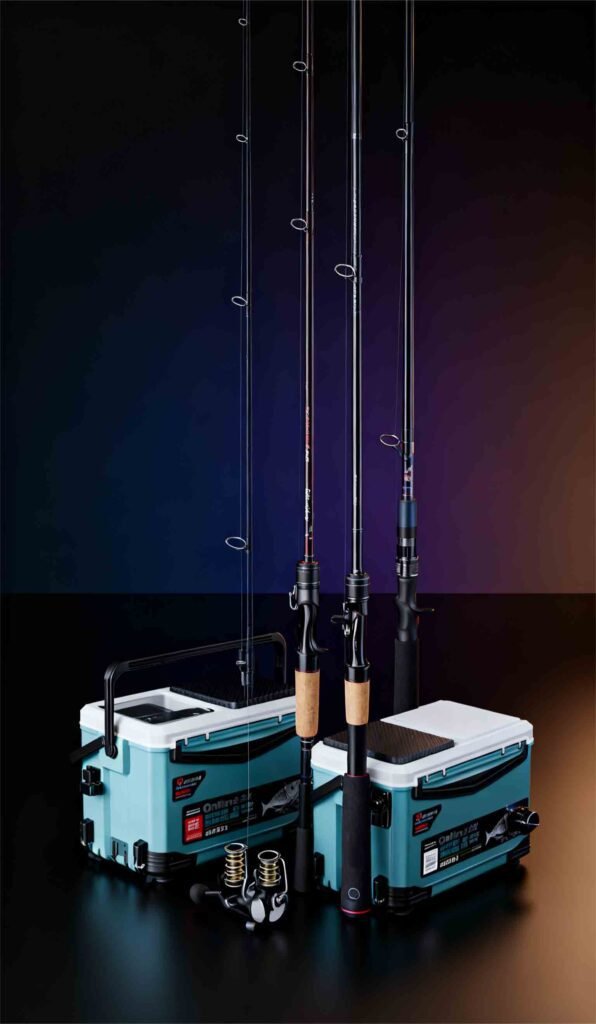
A common mistake among tackle retailers is treating frog rods as highly seasonal, niche inventory. If your retail partners pack away these rods in September, your B2B cash flow stagnates. To maximize your frog rod wholesale ROI, you must educate your downstream dealers on how to cross-sell these powerful blanks.
Flipping and Punching Rod Cross-Selling
The exact same structural attributes that make a rod perfect for frogging—a fast tip and a massive backbone—make it the ultimate tool for flipping and punching heavy jigs into matted vegetation. Encourage your B2B topwater bass tackle distributor network to market these exact SKUs as dual-purpose heavy cover weapons.
| Feature Requirement | Topwater Frog Fishing | Heavy Jig Punching | SKU Compatibility |
|---|---|---|---|
| Rod Power | Heavy to Extra Heavy | Heavy to Extra Heavy | 100% Match |
| Action Type | Fast / Extra Fast | Fast | Excellent Crossover |
| Line Rating | 50lb – 80lb Braid | 50lb – 65lb Braid | 100% Match |
Marketing Thick Cover Bass Fishing Rods Year-Round
By shifting the marketing narrative from “Summer Topwater” to “All-Season Heavy Cover Extraction,” you enable your private label bass tackle branding to thrive year-round. This flipping and punching rod cross-selling strategy ensures that your inventory keeps moving off the shelves during the cooler autumn and spring months.
Wholesale Tournament Bass Fishing Gear Positioning
Tournament anglers dictate retail trends. When placing custom bass fishing pole blanks orders, align your cosmetic designs with professional tournament aesthetics. Matte black blanks, minimalist carbon fiber reel seat lock-nuts, and laser-engraved butt caps elevate the perceived value of the rod, allowing distributors to command higher retail margins.
Real-World Case Study: 40% Margin Boost
Consider the recent trajectory of a mid-sized North American tackle distributor. In 2024, they experienced an 18% return rate on their heavy rods due to guide pop-outs and tip breakage. By partnering with Havenseek Fishing Tackle for their bulk orders, they implemented our strict factory rod spine alignment check and PVC container packaging protocols.
Commercial Fishing Tackle Import Margins Analysis
Within one fiscal year, their transit damage dropped to 0%, and warranty returns plummeted to below 1.5%. By utilizing 30T/40T carbon blends, the rods were lighter, generating rave reviews from consumers regarding reduced wrist fatigue. Ultimately, their commercial fishing tackle import margins surged by 40% due to the massive reduction in write-offs and replacement costs.
Frequently Asked Questions (FAQ)
Answers to the most critical B2B procurement queries directly from our production experts.
Q1: How to prevent guide pop-outs on wholesale heavy cover bass rods?
Demand double-footed, deep-pressed stainless steel guide frames equipped with Silicon Carbide (SiC) or Zirconia inserts. This structural design prevents the frame from flexing and ejecting the insert when under extreme pressure from 65lb braided line.
Q2: What is the best carbon tonnage for custom frog rod factory orders?
A composite blend is ideal. Specify 30-Ton carbon for the lower and middle sections for extreme durability and lifting power, seamlessly transitioning into 40-Ton carbon at the tip for lightweight sensitivity and crisp, fast-action casting performance.
Q3: How to ship one-piece 7-foot bass rods in bulk without tip breakage?
Never ship one-piece long rods loose in standard cardboard. Mandate that your factory inserts rod bundles into industrial-grade PVC plastic pipes before placing them into heavy-duty corrugated master cartons. This absorbs all crushing force during ocean freight.
Q4: Why does rod spine alignment matter for thick cover bass fishing?
If the guides are not perfectly aligned with the natural carbon spine of the blank, the rod will aggressively twist sideways in the angler’s hand under a heavy load. Proper alignment ensures maximum vertical lifting power and drastically reduces wrist fatigue.
Q5: How can B2B buyers test fast action fishing rods before bulk ordering?
Conduct a tip deflection test. Secure the handle and hang dead weights from the tip. A true fast action rod should only flex heavily in the upper 25% to 30% of the blank. Additionally, aggressively twist the reel seat to verify the integrity of the epoxy arboring.
Q6: What are the differences between frog rods and heavy flipping sticks?
While both require heavy power, a dedicated frog rod needs a slightly softer, more responsive “fast” tip to easily walk a topwater bait side-to-side. A flipping stick can utilize a stiffer “extra-fast” tip since it is primarily used for vertical jig dropping and immediate hook-setting.
Conclusion: Securing Your Supply Chain
Thriving in the competitive frog rod wholesale market requires moving beyond basic catalog selections. By implementing stringent QA checks for spine alignment, engineering blanks with 30T/40T carbon composites, and demanding PVC-reinforced shipping protocols, you can eliminate the financial bleed of transit damage and warranty returns. High retail ROI is not an accident; it is the direct result of precision B2B procurement and choosing the right manufacturing partner.
Upgrade Your Heavy Cover Tackle Inventory Today
Partner with Havenseek Fishing Tackle to engineer zero-breakage, high-margin fishing gear tailored for your specific regional market.
Get Free Quote in 12 HoursAuthority References & Market Data Sources:
- American Sportfishing Association (ASA) – 2025 Market Trends in Freshwater Tackle Procurement.
- International Trade Administration (.gov) – Cross-Border Supply Chain Resilience and Logistics Best Practices in the Sporting Goods Sector.
- Global Composite Materials Research Journal (.edu) – Tensile Strength Analysis of 30T/40T Carbon Fiber Prepreg in Tubular Sporting Goods.