Welcome To HavenseeK Fishing Tackle

Private Label Soft Plastic Lures: The 5 Profit-Killers to Avoid
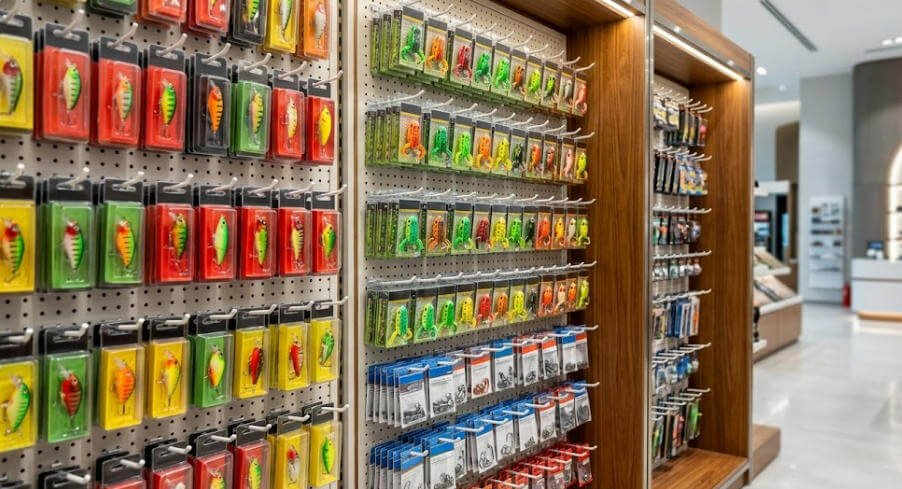
The global soft plastic swimbait market reached ¥38.83 billion in 2025 and is forecast to hit ¥54.37 billion by 2032 — a steady 5.0% CAGR. Soft bait already accounts for over 60% of the entire plastic bait category. On paper, this is a category every distributor should be doubling down on.
Yet in my twelve years auditing private label soft bait programs, I have watched more first-year private label soft plastic lures fail than succeed. Not because the market was wrong, and rarely because the price was too high. The failures cluster around five variables that wholesale buyers systematically underestimate: material specification, minimum order discipline, regulatory exposure, formulation balance, and factory evaluation. Each one is a profit-killer. Each one is avoidable.
This is not a catalog walkthrough. It is a post-mortem of the mistakes I have seen repeated across hundreds of OEM soft bait manufacturer engagements — and the exact decision frameworks that separate programs with healthy reorder rates from those that quietly die in a warehouse.
The 5 Profit-Killers at a Glance
- → #1: Specifying “Silicone” When You Need Plastisol or TPE
- → #2: Treating Small Batch Paddle Tail Swimbaits as a Price Lever
- → #3: Walking Into REACH & Prop 65 Without a Paper Trail
- → #4: Letting Salt Load & Plasticizer Wreck Reorder Rates
- → #5: Evaluating an OEM Soft Bait Manufacturer on Catalog Alone
Profit-Killer #1 — Specifying “Silicone” When You Actually Need Plastisol or TPE
I have lost count of how many inquiry sheets I have reviewed that list the material as simply “silicone.” The buyer almost never means silicone. Most of the time, they mean a soft, stretchy, fish-catching plastic — and in the soft bait industry, that phrase describes Plastisol PVC, not silicone rubber. This terminology gap is not academic. It directly determines what the factory quotes, what the mold tooling requires, and whether the final product survives a single season of saltwater abuse.
The Three Materials Behind Every “Custom Silicone Fishing Worm”
| Material | Shore Hardness | Tear / Durability | Typical B2B Application | Cost Signal |
|---|---|---|---|---|
| Plastisol (PVC) | Shore A 5–40 (soft) / 45–70 (medium) | Not very elastic; susceptible to tearing; relatively hard | Worms, swimbaits, creature baits — the industry default | Lowest raw material cost |
| TPE / TPR | Shore A 10–90 | “Much tougher and stretchier” than Plastisol; resistant to tearing; one lure can survive dozens of fish catches | Saltwater-exposed baits, toothy-species programs | Mid-range; higher than Plastisol |
| LSR (Liquid Silicone) | Shore A 10–70 | Silky feel, wide temperature range, platinum-cure options | Niche; rarely the default for high-volume fishing soft baits | Highest; tooling and cycle time penalize volume |
Most overseas buyers easily ignore that TPE is not a premium upgrade in every scenario. In saltwater programs targeting toothy species — bluefish, tailor, Spanish mackerel — TPE’s tear resistance directly reduces retailer warranty claims. In freshwater finesse worm programs where sink rate and salt release drive strikes, Plastisol’s formulation flexibility remains unmatched. The material decision must follow the fishing condition, not a generic “better material” narrative.
Why Plastisol Still Dominates — and Where It Fails
Plastisol dominates because it accepts salt loading, glitter, scent oils, and translucent color with a manufacturing maturity that TPE and LSR have not matched at volume. That flexibility is why nearly every custom scented soft bait specification I have seen starts as a Plastisol conversation. But Plastisol’s structural weakness is real: “not very elastic, susceptible to tearing, relatively hard.” When a buyer specifies “silicone” on the inquiry, many factories default to the cheapest available Plastisol compound — and the resulting bait tears on the first aggressive hookset.
The Specification Trap That Costs 15–25% Margin
Here is the mechanism: the word “silicone” gives the factory latitude. A factory quoting against “silicone” can supply a low-grade Plastisol with minimal salt tolerance, a brittle plasticizer package, and no batch-level QC. The buyer believes they purchased a premium material; the factory delivered the lowest-cost interpretation. The margin loss shows up 90 days later as retailer returns, not on the invoice. Lock the spec sheet to base polymer type + Shore A range + salt percentage (or target sink rate) + phthalate declaration before a single sample is poured.
Profit-Killer #2 — Treating Small Batch Paddle Tail Swimbaits as a Price Negotiation, Not a Validation Step
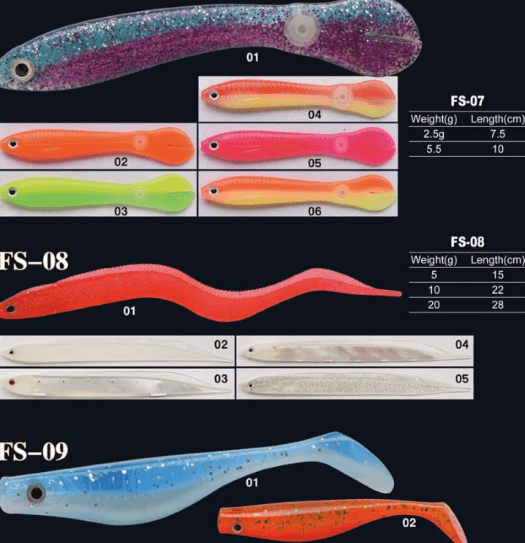
Small batch paddle tail swimbaits are not a discount channel. They are a risk-management tool. The buyers who use them correctly save tens of thousands in private mold costs. The buyers who use them as a bargaining chip to squeeze unit price almost always end up ordering a production mold for a tail action that does not perform in their target water.
What “Small Batch” Actually Tests
A disciplined 200–500 unit trial validates three variables that no catalog photo can answer: the tail-start threshold at your target retrieval speed, the color and flake visibility in your target water clarity, and the batch-to-batch consistency of salt or scent loading. From my experience on the factory floor, tail-start inconsistency is the single most common reason a paddle tail SKU dies at retail — the bait looks identical across the batch, but the first 20 units from a carton swim differently from the last 20.
A 200–500 Unit Validation Protocol
- Step 1: Run the trial on an existing mold base — do not commission a private mold before validation.
- Step 2: Lock 3 colors × 2 salt gradients in the trial; record tail action at low, medium, and high retrieve speeds.
- Step 3: Count casts-to-first-tear, not visual appearance. A bait that looks perfect but tears at cast #12 is a return waiting to happen.
- Step 4: Only formulations that pass all three checks proceed to private mold quoting.
The MOQ Reality Check
The industry-standard MOQ for soft baits is 1,000 pieces per color per model, though trial orders can run lower. When a factory quotes significantly below that threshold, two things are usually true: the per-unit price carries a hidden premium, and the QC sampling is lighter than what a production run receives. My advice to buyers is consistent: accept the reasonable premium on a validation batch, and redirect the savings toward private mold amortization and compliance testing. Squeezing $0.02 off a 300-piece trial is not a sourcing strategy; it is a distraction from the costs that actually determine landed margin.
Profit-Killer #3 — Walking Into REACH and Prop 65 Without a Paper Trail
Regulatory exposure is the profit-killer that does not announce itself until a container is held at customs or a retailer cancels a purchase order. For private label soft plastic lures destined for Europe and California, two regulatory tracks demand documentation before production, not after.
REACH Lead Restriction: The Countdown Structure Is Already Defined
The European Commission has submitted a draft regulation to amend REACH Annex XVII entry 63, restricting lead (≥1% concentration) in specific fishing tackle categories. The phase-in follows a tiered timeline: fishing wires and drop-in sinkers at 6 months after entry into force; sinkers and lures ≤50g at 3 years; sinkers and lures >50g to ≤1kg at 5 years. A derogation exists for copper-alloy lures containing between 1% and 3% lead, and for micro split shot ≤0.06g in child-safe packaging. Retailers selling lead-containing tackle will also face point-of-sale warning obligations.
For soft bait buyers, the practical implication is not about the soft plastic body itself. It is about weighted hooks, jigheads, and internal lead components packaged with or recommended alongside the bait. Demand a component-level lead declaration, not a finished-product blanket statement. A factory that cannot separate these is a factory that has not read the regulation.
Prop 65 Phthalates: The Opt-In Pathway Is the Paper Trail
California’s Proposition 65 enforcement against soft plastic lures has produced a structured settlement pathway that sophisticated buyers use as a supplier screening tool. The industry opt-in settlement covers four listed phthalates in soft plastic fishing lures: BBP, DEHP, DIDP, and DINP. Participating companies that meet defined standards — either ≤50% by weight for the listed chemicals in the soft plastic substrate, or acceptable levels under a standardized NIOSH 9100 wipe test — do not need Prop 65 warnings. Compliance can be demonstrated through manufacturing batch records, a commercial laboratory content test, or a certification from the substrate manufacturer. Critically, the settlement also releases claims against downstream retailers and distributors for lures supplied by participating companies.
“Phthalate-free” on a supplier’s website is not a compliance document. The opt-in settlement’s compliance architecture — batch records or third-party content tests — is the documentation standard a serious OEM soft bait manufacturer should already have on file.
The Paper Trail Checklist for Private Label Soft Baits
What to Request Before Approving a Sample
- REACH SVHC declaration current to the latest candidate list — not a two-year-old PDF.
- Prop 65 four-phthalate content test (BBP, DEHP, DIDP, DINP) from a commercial laboratory, or batch records supporting the ≤50% threshold.
- Component-level lead declaration for any jigheads, weighted hooks, or internal weights packaged with the bait.
- Substrate manufacturer certification if the factory sources compounded Plastisol rather than mixing in-house.
Profit-Killer #4 — Letting Salt Load and Plasticizer Level Wreck Reorder Rates
Salt is the most overused and least understood variable in custom scented soft baits. Buyers ask for “heavy salt” because they associate it with faster sink and stronger fish attraction. What they often get is a bait that performs beautifully on cast #1 and tears apart by cast #15 — and a retailer who does not reorder.
The Salt–Durability Trade-Off Is Not a Linear Dial
Salt increases density and therefore sink rate, but the mechanism carries structural cost. As one industry analysis puts it, heavy salt saturation forces PVC baits to sink, but “the salt eventually dissolves, alters the fall rate, and leaves the plastic brittle and easily torn.” A competing material strategy builds density into the polymer itself, so “the sink rate remains consistent and does not change as the bait is fished.” For a wholesale buyer, the lesson is not that salt is bad — it is that salt without a durability test is an incomplete specification.
Scent Retention: Surface Spray vs. Compound-Integrated
A surface-sprayed custom scented soft bait smells aggressive in the bag and fades within the first few minutes of immersion. A compound-integrated attractant — mixed into the Plastisol before molding — releases over a longer fishing window. The buyer’s validation question is simple: request both versions in the trial batch, submerge them in water for 30 minutes, and compare. If the supplier cannot produce a compound-integrated variant, the “scented” claim is marketing, not formulation.
A Formulation Decision Matrix
| Formulation Variable | What It Controls | What It Risks | Lock Into Spec Sheet As |
|---|---|---|---|
| Salt % (or density additive) | Sink rate | Tear strength; fall-rate consistency over time | Target sink rate (cm/s) + casts-to-tear benchmark |
| Plasticizer level | Action liveliness, softness | Durability; phthalate compliance exposure | Shore A range + phthalate declaration |
| Scent process | Attractant release duration | Perceived value vs. actual fish-holding time | Surface-spray vs. compound-integrated, explicitly |
| Base polymer | Tear resistance, temperature tolerance, recyclability | Cost and tooling compatibility | Plastisol / TPE / LSR — not “silicone” |
If you take one sentence from this section, make it this: a soft bait specification without a casts-to-tear benchmark is a purchase order for returns. The factory will hit whatever salt number you write down. It will not protect your reorder rate unless the durability threshold is written beside it.
Profit-Killer #5 — Evaluating an OEM Soft Bait Manufacturer on Price and Catalog Alone
Weihai, the self-described “China Fishing Tackle Capital,” hosts more than 1,400 tackle production and supporting enterprises, with an annual output value exceeding ¥10 billion and products shipped to over 60 countries. Scale is real. But scale is also the reason price-only evaluation fails. In a cluster that large, a low quote can be manufactured by skipping compliance testing, thinning QC sampling, or substituting a cheaper substrate — and the buyer will not see the difference until the first reorder fails.
The Four-Pillar Factory Evaluation for Private Label Soft Baits
① Compliance Paper Trail
Can the factory produce REACH SVHC declarations, Prop 65 four-phthalate test reports, and component-level lead declarations at the inquiry stage — not after the PO is signed?
② Batch Traceability
Does the factory retain substrate batch samples? Does it run density-column or weight checks to verify salt-load consistency across the run?
③ Trial-Order Discipline
Does the small batch paddle tail swimbait trial go through the same QC sampling plan as mass production, or is the trial treated as a “special case”?
The Reorder-Rate Signal
When I screen a new OEM soft bait manufacturer for a client, I ask one question that catalogs never answer: “What is your soft bait reorder rate over the last 12 months?” A factory that tracks this number is managing quality as a system. A factory that cannot answer is managing orders as transactions. Pair that with on-time delivery performance — below 90% signals chronic production or logistics fragility — and you have a screening filter that costs nothing and eliminates most of the risk before a sample is even poured.
Bringing the Five Variables Together: The One-Page Spec Sheet That Prevents Most of These Problems
The five profit-killers share a single root cause: specifications written as product descriptions instead of purchasing standards. A one-page document that locks the following items prevents the majority of margin leakage I have witnessed:
- Base polymer: Plastisol PVC / TPE / LSR — with Shore A range, not “silicone.”
- Density strategy: salt percentage or target sink rate (cm/s), plus a casts-to-tear benchmark.
- Phthalate compliance: Prop 65 four-phthalate declaration + REACH SVHC current list confirmation.
- Lead declaration: component-level for any weighted hooks or jigheads packaged with the bait.
- Trial and production QC: confirmation that the small batch paddle tail swimbaits trial uses the same sampling plan as mass production.
- Tooling path: RTV prototype mold → CNC aluminum mold → steel mold, with amortization terms quoted in writing.
At Havenseek Fishing Tackle, the private label soft plastic lures workflow is built around these exact checkpoints: material selection support before sampling, small-batch validation coordination, and compliance documentation as a standard deliverable rather than an afterthought. We do not claim to be the only factory in Weihai that can pour a swimbait. We do claim that the paper trail and the batch consistency benchmark should arrive with the sample, not three months after the container ships.
Start With a Validation Batch, Not a Production Bet
Send your target species, water conditions, and volume range. We will respond with a material recommendation, a small-batch validation quote, and the compliance documentation checklist for your destination market — within 12 business hours.
Get a Free Quote in 12 Hours →Or request a free formulation consultation / download the 2026 Soft Bait OEM Catalog.
Frequently Asked Questions
What is the MOQ for private label soft plastic lures?
The industry-standard MOQ for private label soft plastic lures is 1,000 pieces per color per model, though small batch paddle tail swimbaits trials can run lower — often 200–500 pieces — with a per-unit premium to cover setup and QC costs. A custom silicone fishing worm program with a new private mold typically requires a higher committed volume to amortize tooling, but the validation batch itself should not be treated as the MOQ benchmark.
Is TPE better than Plastisol for saltwater soft baits?
TPE delivers measurably higher tear resistance and stretch than Plastisol — “much tougher and stretchier,” with the ability to survive dozens of fish catches per lure. For saltwater programs targeting toothy species, that durability translates directly into lower warranty claims. However, Plastisol remains superior for salt-loaded finesse applications and scent-integrated formulations. The right answer depends on species, fishing style, and reorder economics, not a universal “premium material” ranking.
Do custom silicone fishing worms actually contain silicone?
Most do not. The overwhelming majority of soft plastic lures sold as “silicone worms” are Plastisol PVC systems — PVC resin suspended in plasticizer. True LSR (liquid silicone rubber) soft baits exist but are niche: Shore A 10–70, silky feel, and a cost and cycle-time profile that rarely fits high-volume private label programs. If your specification says “silicone,” clarify whether you mean Plastisol, TPE, or genuine silicone before sampling — the factory will otherwise interpret the word in the cheapest available way.
What phthalate limits apply to soft plastic fishing lures under Prop 65?
The industry opt-in settlement for soft plastic fishing lures covers four listed phthalates: BBP, DEHP, DIDP, and DINP. Participating companies that meet the ≤50% by weight standard in the soft plastic substrate, or acceptable NIOSH 9100 wipe-test levels, are not required to provide Prop 65 warnings and receive protection against downstream retailer/distributor claims for covered lures. Compliance can be documented through batch records or a commercial laboratory content test.
How much salt should be in a soft bait for the South American market?
There is no single “South America salt number.” The specification should be a target sink rate, not a salt percentage. Salt increases density and sink speed, but it also dissolves over time — altering the fall rate — and leaves the plastic brittle and easily torn. For custom scented soft baits targeting Brazilian or Argentine coastal species, lock the sink-rate target and a casts-to-tear benchmark in the same spec sheet. The factory can hit any salt number you request; only the paired durability benchmark protects your reorder rate.
Can I order small batch paddle tail swimbaits before committing to a private mold?
Yes — and you should. A 200–500 unit trial on an existing mold base is the standard de-risking step before private tooling. The trial validates tail-start consistency, color visibility in your target water, and batch-to-batch formulation stability. Buyers who skip this step and commission a private mold based on a catalog photo or a single sample are the most common source of first-year OEM soft bait manufacturer failures I encounter. Treat the trial as a validation cost, not a unit-price negotiation.
What REACH documents should an OEM soft bait manufacturer provide?
At minimum: a current REACH SVHC declaration aligned to the latest candidate list, and — for products sold into the EU — awareness of the pending Annex XVII lead restriction for fishing tackle components (tiered 6-month / 3-year / 5-year phase-in based on weight category). Because the soft bait body itself is rarely the lead-bearing component, also request a component-level lead declaration for any jigheads, weighted hooks, or internal weights packaged with or recommended alongside the bait. A supplier that provides only a blanket “REACH compliant” statement is not providing a paper trail.
How do I verify scent retention in custom scented soft baits before mass production?
Request two trial variants: a surface-sprayed version and a compound-integrated version (attractant mixed into the Plastisol before molding). Submerge both in water for 30 minutes and compare scent intensity. Surface spray reads strong in the bag but fades quickly; compound integration releases over a longer fishing window. If the factory cannot produce a compound-integrated variant, the “scented” claim is a packaging feature, not a formulation one. Lock the chosen process — surface vs. integrated — into the spec sheet by name.
Authoritative References
- QYResearch — 2026 Global Soft Plastic Swimbait Industry Size & Forecast Report. 2025 market ¥38.83B, 2032 forecast ¥54.37B, CAGR 5.0%.
- Global Info Research / MarketPublishers — Global Plastic Bait Supply, Demand and Key Producers, 2026–2032. Soft bait >60% of plastic bait category.
- Bureau Veritas — EU Proposed Restriction on Lead in Fishing Tackle (Bulletin AN 055-26), April 2026. REACH Annex XVII entry 63 tiered restriction timeline.
- American Sportfishing Association — Prop 65 Fishing Lure Opt-In Settlement Agreement FAQs. Four listed phthalates: BBP, DEHP, DIDP, DINP; ≤50% by weight standard and wipe-test alternative.
- Salt Strong — Best & Worst Rigging Options for TPE & Plastisol Lures (Oct 2026). TPE durability and stretch comparison.
- Wired2Fish — Z-Man Introduces Sinking ElaZtech (Jul 2026). Salt dissolution effect on fall rate and brittleness.