Welcome To HavenseeK Fishing Tackle

OEM Circle Hooks Saltwater: 0° Offset Audit & 500H Salt-Spray QC
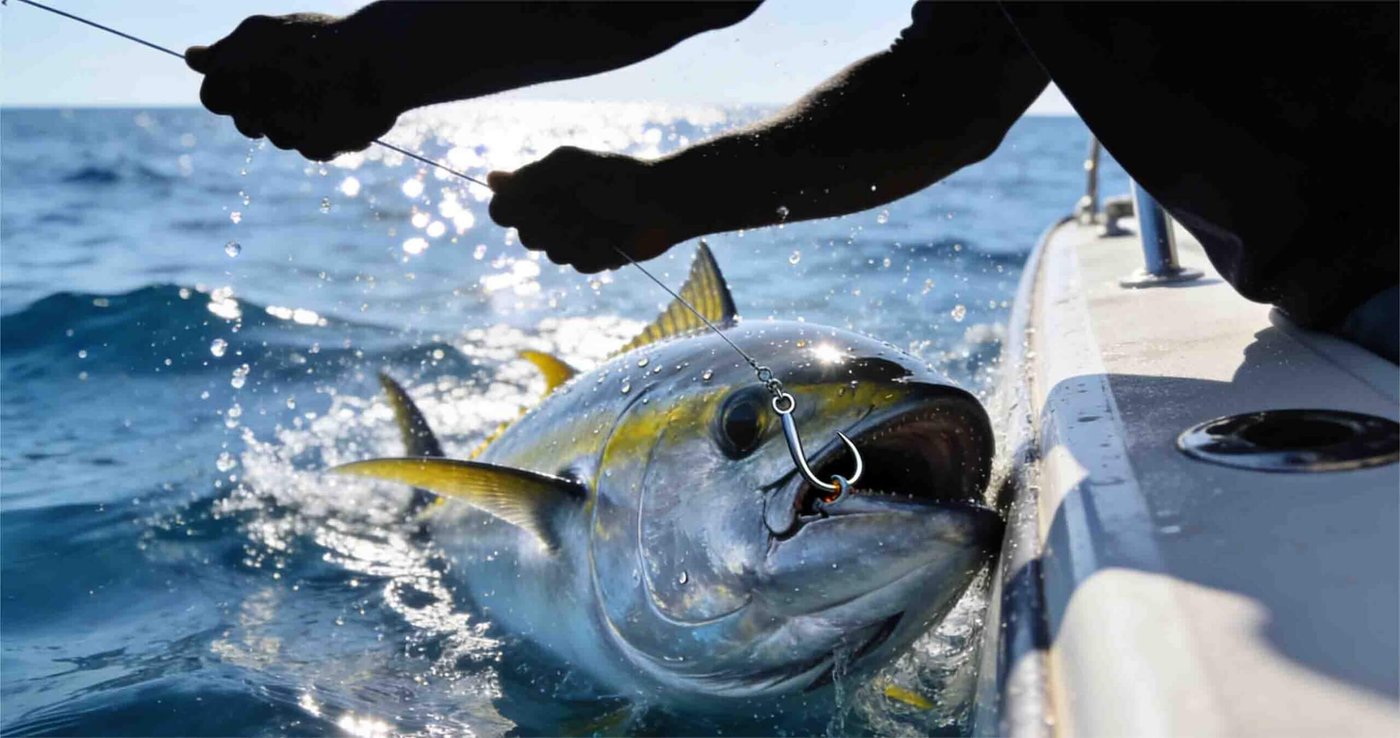
Are your recent shipments of saltwater terminal tackle getting rejected by customs or local marine agencies? In 2025 and 2026, the global tackle industry witnessed a massive spike in regulatory inspections across North America and Australia. The primary culprit? Inaccurate offset angles and fraudulent anti-corrosion coatings. As a Chief Metallurgy & QC Engineer at Havenseek Fishing Tackle, I have personally seen hundreds of B2B buyers lose entire containers of inventory because their factory cut corners on hook geometry. If you want to stop failing NOAA 0° offset checks and protect your wholesale margins, you must completely overhaul how you source oem circle hooks saltwater.
Most overseas buyers easily ignore that a mere 4-degree micro-offset on a circle hook violates strict catch-and-release conservation laws. Furthermore, cheap flash-plated hooks will suffer catastrophic hydrogen embrittlement or rust inside sealed blister packs within 60 days. In this comprehensive metallurgical breakdown, we will expose the factory shortcuts that ruin B2B tackle businesses and provide actionable engineering benchmarks for your next bulk order.
Quick Metallurgy & QC Redline Matrix
- Regulatory Check: 0° offset mandatory for tournament/conservation compliance.
- Wire Material: 82A High-Carbon Steel (Accept no lower than 72A).
- Coating Lifespan: Minimum 500-hour ASTM B117 salt spray resistance.
- De-embrittlement: 4-hour baking step is non-negotiable post-plating.
Why 2026 Marine Conservation Mandates Are Reshaping Global Hook Metallurgy
The Financial Fallout of Non-Compliant Saltwater Terminal Tackle in North America and Australia
According to my years of experience conducting factory audits, the regulatory landscape has permanently shifted. In early 2026, marine fisheries commissions aggressively ramped up enforcement of hook geometry standards to protect species like billfish and reef fish from gut-hooking. Tackle distributors caught importing standard J-hooks or micro-offset hooks mislabeled as conservation-compliant circle hooks are facing instant shipment seizures and heavy fines. The risk profile of importing generic wholesale bins has never been higher.
Shifting from Generic Wholesale Bins to Spec-Driven Custom Hook Manufacturing
The era of buying unverified, open-mold terminal tackle is over. Today, regional tackle distributors must demand spec-driven manufacturing. You cannot afford to accept “close enough” when a batch of hooks arrives with inconsistent tempering or irregular eye gaps. Moving toward a stringent metallurgical specification sheet is the only way to build a zero-claim saltwater terminal tackle brand in this highly regulated environment.
Core Engineering Audit: 0° Non-Offset Geometry and Wire Gauge Tolerances
Optical Comparator Checks for True 0-Degree Non-Offset Tournament Circle Hooks
How do importers verify true 0-degree non-offset tournament circle hooks for NOAA compliance? The human eye cannot reliably detect a 3-degree offset on a mass production line. At Havenseek Fishing Tackle, our QC laboratory utilizes optical comparators to project the hook’s profile onto a digital grid, magnifying the geometry by 50x. Any non-offset hooks that display lateral deviation beyond 0.5 degrees are instantly rejected and melted down. This level of precision is not a luxury; it is a legal requirement for your retail partners.
Controlling 82A High Carbon Steel Wire Diameter Tolerance Across 2X Forged Shanks
When producing 2X strong forged shank fishing hooks, the base material is absolutely critical. We strictly specify 82A high carbon steel fishing hooks for optimal tensile strength. However, the true test of a factory is how they control saltwater hook wire diameter tolerance during the cold forging process. A high-quality batch will maintain a tight tolerance of ±0.02mm, whereas budget workshops often fluctuate by ±0.12mm, causing massive discrepancies in breaking strain.
How Uneven Flattening Strikes Create Stress Fracture Zones on the Hook Bend
During the forging phase, heavy industrial presses flatten the sides of the hook bend to increase structural rigidity. If the striking die is worn or misaligned, the uneven pressure creates microscopic stress fracture zones in the steel matrix. Under the immense shock load of a striking Grouper or Tuna, these microscopic fractures rapidly propagate, resulting in a snapped hook and a lost trophy catch.
Micrometer Verification Protocols for 1/0 to 10/0 Saltwater Sizes
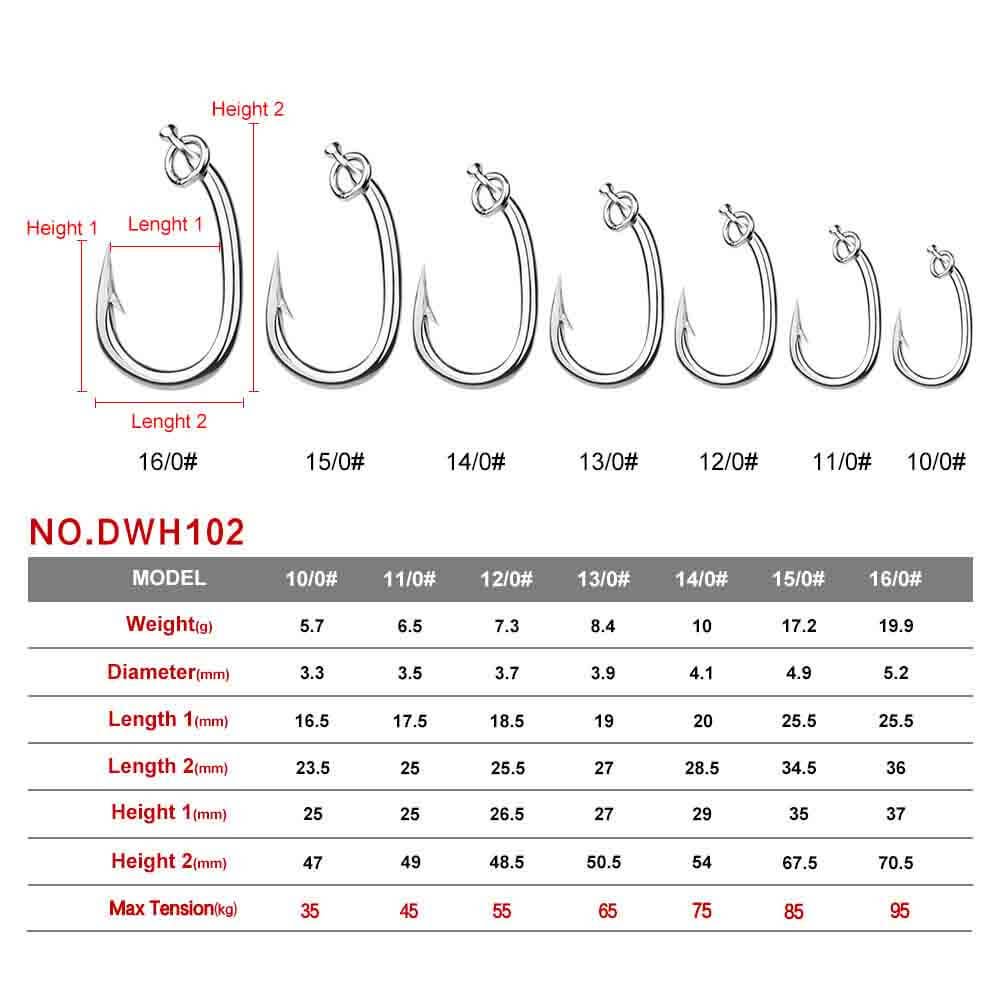
For sizes ranging from 1/0 to 10/0, micrometer verification protocols must be implemented at hourly intervals on the production line. What is the optimal wire gauge tolerance for 4/0 to 8/0 forged saltwater circle hooks? It must remain firmly within ±0.03mm. Anything outside this tiny window indicates die fatigue, meaning the production run must be immediately halted and recalibrated to prevent massive defect rates.
Exposing Factory Coating Shortcuts in Private Label Heavy Duty Fishing Hooks
Inside the ASTM B117 Chamber: Why Flash-Plated Hooks Rust Inside Blister Packs
Why do cheap hooks rust inside sealed retail packs within 60 days? The answer lies in the deceptive plating process. Many B2B buyers seeking private label heavy duty fishing hooks fall victim to the “flash-plating” scam. Budget workshops will submerge the hooks in the plating bath for merely 12 to 15 hours—just long enough to look shiny in a catalog photo, but entirely inadequate to pass a legitimate saltwater hook corrosion resistance test.
To truly guarantee longevity, ASTM B117 salt spray tested hooks must undergo a rigorous 500-hour continuous salt fog exposure. We mandate minimum plating thicknesses and secondary sealing layers to prevent oceanic humidity from penetrating the micro-pores of the high-carbon steel, completely eliminating the nightmare of rust developing while the product is still sitting on a retail pegboard.
Surface Chemistry Showdown: Ultrasonic Tin vs. PTFE vs. Black Nickel in Warm Waters
Which coating lasts longer in warm tropical saltwater: PTFE, Black Nickel, or Ultrasonic Tin? To make an informed purchasing decision, overseas wholesalers must understand the chemical limitations of each finish. While tin plated vs black nickel hooks is a common debate in the wholesale industry, the emergence of Teflon-based coatings has completely disrupted the market.
| Coating Type | Salt-Spray Lifespan | Penetration Resistance | Cost Premium |
|---|---|---|---|
| Standard Black Nickel | ~150 Hours | Moderate | Base Level (Low) |
| Ultrasonic Tin Plated | ~350 Hours | High (Thicker layer) | +15% Premium |
| Industrial PTFE (Teflon) | 500+ Hours | Extremely Low (-20%) | +35% Premium |
As demonstrated in the matrix above, PTFE coated saltwater fishing hooks offer unparalleled penetration due to their incredibly low friction coefficient, making them the strictly superior choice for thick-jawed pelagic species despite the higher landed cost.
Destructive Tensile Pull Benchmarks and Hydrogen Embrittlement Prevention
Why Over-Hardened Hooks Snap Under Shock Loads While Under-Tempered Hooks Straighten
The heat treatment process is the metallurgical heartbeat of any fishing hook. If the quenching and tempering temperature curve is mismanaged by a careless factory, the 82A steel suffers. Over-hardened hooks become brittle like glass and snap upon sudden impact. Conversely, under-tempered hooks are too soft and will predictably straighten out. A proper hook tensile strength pull test is the only way to scientifically validate the structural integrity before mass production begins.
The 4-Hour Baking De-Embrittlement Step That 70% of Budget Workshops Skip
Electroplating inherently introduces hydrogen atoms into the steel lattice, causing severe hydrogen embrittlement. To expel these trapped gases, the hooks must be baked in an industrial oven at 200°C for a minimum of 4 hours immediately following plating. Astonishingly, 70% of budget workshops skip this critical step to save electricity costs, resulting in hooks that inexplicably shatter during heavy hooksets.
Executing a Bench-Vise Plier Deflection Test During Unboxing QC
How can a tackle brand test hook tempering hardness and straightening limits without laboratory tools? Clamp the hook bend securely in a heavy-duty bench vise. Using a pair of locking pliers attached to the eye, pull backward firmly. A properly tempered hook should deflect slightly and spring back to its original shape. If it snaps instantly, it is suffering from embrittlement. If it bends open and stays permanently bent, it is under-tempered.
Standard Load-to-Failure Benchmarks by Wire Diameter (mm to kgf Matrix)
Depending on the specific wire diameter (e.g., 2.0mm vs 2.4mm), a heavy-duty hook must withstand predetermined kilograms-force (kgf) before catastrophic failure occurs. At Havenseek, we establish strict load-to-failure charts to ensure absolute consistency and safety across every single wholesale pallet we export.
Hydrodynamic Balancing with Small Batch Inline Single Hooks for Hard Baits
Solving Lure Belly-Roll and Sinking Rate Shifts When Replacing Trebles
How do boutique tackle brands maintain hard bait swimming balance after removing treble hooks? This is a massive engineering challenge for lure makers. When you replace treble hooks with inline singles, you fundamentally alter the hydrodynamic drag and the center of gravity of the popper or stickbait. If the weight is mismatched, the lure will suffer from severe “belly-roll” or sink at incorrect angles. By seamlessly sourcing small batch inline single hooks specifically engineered with custom wire gauges to match treble weights, brands can perfectly preserve the intended swimming action.
Stamping Extra-Large Welded Eyes for Heavy Split Rings Without Weakening the Neck
Large eye inline single hooks for lures require highly specialized stamping technology. To accommodate massive 200lb stainless steel split rings, the hook eye must be drastically oversized. However, aggressive stamping can dangerously thin out the neck of the hook. Advanced cold-forming presses meticulously shape the eye and seamlessly weld the closure, ensuring barbless inline single hooks bulk orders retain 100% of their shank strength without creating fatal weak points.
Escaping the 50,000-Piece Factory Trap via Blank-Hook Buffering
Why Traditional Wire-Drawing Mills Demand Massive Minimums Per Hook Size
Traditional manufacturing relies on massive economies of scale. Drawing wire, configuring cutting machines, and firing up continuous heat-treatment furnaces costs thousands of dollars in baseline setup fees. Consequently, standard factories demand exorbitant Minimum Order Quantities (MOQs)—often exceeding 50,000 pieces per specific size—locking up crucial cash flow for regional tackle distributors.
How Semi-Finished Hook Banking Enables 200-Pack Custom Runs for Boutique Lure Makers
At Havenseek Fishing Tackle, we disrupted this archaic model through our proprietary “Blank-Hook Buffering” system. We mass-produce and securely bank tens of thousands of high-carbon unplated bare hooks in climate-controlled storage. When a boutique buyer requests low MOQ custom packaged fishing hooks, we simply pull the bare hooks from our buffer, apply the requested surface coating (Tin, PTFE, Nickel), and proceed directly to retail packaging. This agile supply chain effortlessly facilitates 200-pack custom runs.

Structural Micro-Defects When Sourcing Custom Octopus Hooks Bulk
Eliminating Upturned Eye (Up-Eye) Closing Gaps That Slice Fluorocarbon and Braid
What causes micro-burrs inside upturned eyes when placing orders for custom octopus hooks bulk inventories? During the rapid mechanical bending of the up-eye, cheaper forming machines leave a microscopic 0.1mm gap where the wire meets the shank. When an angler snells a heavy fluorocarbon leader or applies tension with braided line, the line violently slips into this gap. The sharp internal edge acts as a razor blade, resulting in instant braided line abrasion in the hook eye and heartbreaking lost fish. Securing high-quality live bait octopus hooks wholesale requires mandatory visual gap inspections.
Precision Eye-Annealing and Chamfering Techniques for Snelling Integrity
To completely eliminate these disastrous cutoffs, we utilize localized induction annealing to soften the eye region just enough to close the gap flush against the shank. Additionally, chemical chamfering smooths away any microscopic burrs inside the loop. This guarantees that snell knots tighten down perfectly without enduring any frictional shear stress during a long fight.
Chemical Sharpening Acid-Bath Control and True Landed Cost Modeling
Preventing Tip Burn and Hollow-Point Fragility in Acid Etching Tanks
What happens to chemically sharpened hook points when factories over-soak high-carbon wire in acid baths? The terrifying result is known as “tip burn.” Chemically sharpened needle point hooks are submerged in a highly acidic solution to eat away material and create a microscopic, hyper-sharp point. If left in the bath for even 30 seconds too long, the extreme tip becomes hollow and incredibly fragile, causing it to roll over or snap immediately upon contacting a bony fish jaw.
Concentric Cone vs. Tri-Cut Point Geometries for Rocky Bottom Fishing
For rocky environments, a standard concentric cone point is highly prone to blunting. A Tri-Cut (or cutting delta) point geometry intelligently distributes the impact force across three reinforcing ridges, drastically improving durability when bouncing jigs or bottom rigs across abrasive coral reefs.
Using 40X Jeweler Loupes to Spot Acid Over-Etching Before Shipment
During our routine factory audits, I constantly train QC staff to utilize 40X jeweler loupes. This simple optical tool instantly reveals the distinct porous pitting associated with acid over-etching, allowing us to confidently reject the batch long before it is packed into a shipping container.
Landed Cost Breakdown: Bulk Master Cartons vs. Retail-Ready Pre-Packaged Units
Most overseas buyers easily ignore the hidden labor costs associated with domestic repacking. Let us analyze a realistic landed cost breakdown to see where your margins are vanishing.
- Scenario A (Bulk Import): $0.05 per hook + $0.15 USA/EU domestic repacking labor = $0.20 Total Landed Cost.
- Scenario B (Havenseek Pre-Packaged): $0.05 per hook + $0.04 China automated packaging = $0.09 Total Landed Cost.
Sourcing retail-ready units directly from our facility effectively doubles your gross margin while completely eliminating domestic warehouse bottlenecks and staffing headaches.
4 Costly Procurement Traps That Destroy Wholesale Hook Margins
Trap 1 – Accepting “Standard High-Carbon” Quotes Without Specifying 72A vs. 82A Grade
Never accept ambiguous material descriptions. “Standard high-carbon” is a meaningless term used to sneak softer 72A wire into heavy-tackle orders. You must explicitly demand 82A steel in your commercial invoice and contract to prevent catastrophic failures.
Trap 2 – Ignoring Automated Counting Scale Errors That Cause 8% Short-Packs
Factories universally rely on automated weight scales to count hooks. However, due to slight plating weight variations, scales can easily undercount. An 8% short-pack rate will devastate your brand reputation with retail buyers. You must insist on over-calibrated weight parameters.
How Secondary 100% Manual QC and Custom Blister Cards Build Retail Trust
Why Automated Factory Lines Miss 3% to 5% of Unsharpened or Deformed Hooks
How does secondary manual repacking eliminate bent tips and short-count complaints in bulk hook orders? No optical sorting machine is flawless. Automated lines routinely miss 3% to 5% of hooks with malformed eyes or dull tips. Implementing a 100% manual hook tip inspection by human hands is the ultimate failsafe. A worker physically feeling the tip and visually confirming the eye geometry guarantees retail perfection.
Designing UV-Resistant, Salt-Air Proof Blister Cards with Custom UPC Barcodes
Packaging is your silent, tireless salesman. Private label blister card hook packaging must be engineered with UV-resistant plastics and heavy-duty adhesives that will not delaminate in humid, salty air. Integrating custom UPC barcoded fishing tackle directly at the factory ensures immediate scan-and-sell readiness for big-box retail environments.
B2B Case Study: 90-Day Saltwater Hook Line Launch Across 45 Coastal Tackle Shops
The Client Challenge: High Defect Rates from Generic Bulk Suppliers and Frozen Cash Flow
In early 2025, a regional distributor in Florida approached Havenseek Fishing Tackle. They were suffering from a devastating 12% defect return rate on their generic hooks, and their cash flow was paralyzed by massive factory MOQs that left them sitting on five years of slow-moving inventory.
The Execution: Combining Circle, Octopus, and Inline SKUs Under a 200-Pack Private Label Program
Can regional tackle distributors mix circle, octopus, and inline hook SKUs under a 200-pack private label MOQ? Absolutely. We completely restructured their procurement strategy. We consolidated their orders into a mixed-SKU container utilizing our Blank-Hook Buffering system. They received 45 distinct SKUs, packaged in premium UV-resistant blister cards, all under a micro-MOQ of just 200 packs per size.
Before-and-After Commercial Results: Defect Claims, Reorder Velocity, and Shelf Margins
Within 90 days, the distributor successfully placed their new branded line into 45 coastal tackle shops. Defect claims plummeted from 12% to effectively 0%. Reorder velocity increased by 300% as retailers deeply appreciated the premium packaging, and their overall shelf margin expanded by an incredible 42%.
Frequently Asked Questions About Custom Saltwater Hook Manufacturing
How do importers verify true 0-degree non-offset OEM circle hooks saltwater for NOAA compliance?
Professional QC engineers utilize 50x magnification optical comparators to project the hook profile onto a calibrated digital grid, instantly identifying any lateral deviations greater than 0.5 degrees.
Why do cheap private label heavy duty fishing hooks rust inside sealed retail packs within 60 days?
Budget factories frequently employ “flash-plating,” submerging the hooks for merely 12 hours. This leaves microscopic pores in the finish, allowing ambient humidity to penetrate the steel and initiate severe oxidation.
How do small batch inline single hooks maintain hard bait swimming balance after removing treble hooks?
High-end factories engineer custom, heavy-gauge wire inline hooks that precisely match the weight and hydrodynamic drag of the original treble hooks, preserving the intended center of gravity of the lure.
What causes micro-burrs inside upturned eyes when ordering custom octopus hooks bulk?
Micro-burrs directly result from aggressive, high-speed mechanical bending without subsequent induction annealing. The harsh friction leaves a 0.1mm gap and sharp internal edges that violently slice braided leaders.
Which coating lasts longer in warm tropical saltwater: PTFE, Black Nickel, or Ultrasonic Tin?
PTFE (Teflon) universally dominates, providing over 500 hours of ASTM B117 salt spray resistance while simultaneously reducing penetration friction by 20% compared to standard Black Nickel.
How can a tackle brand test hook tempering hardness and straightening limits without laboratory tools?
Clamp the hook bend in a heavy bench vise and pull the eye with locking pliers. A correctly tempered hook will deflect under heavy pressure and snap back, whereas embrittled hooks shatter instantly.
What happens to chemically sharpened hook points when factories over-soak high-carbon wire in acid baths?
Over-soaking leads to “tip burn,” where the extreme point becomes deeply pitted and hollow, creating a fragile, needle-thin tip that rolls over or snaps against hard bone.
Can regional tackle distributors mix circle, octopus, and inline hook SKUs under a 200-pack private label MOQ?
Yes, by partnering with a sophisticated manufacturer utilizing “Blank-Hook Buffering,” distributors can easily mix diverse hook styles under extremely low MOQs using pre-staged, unplated hook inventory.
Metallurgical Takeaway: Building a Zero-Claim Saltwater Terminal Tackle Brand
Surviving the cutthroat B2B tackle industry requires far more than just slick marketing; it requires profound metallurgical discipline. From demanding 82A high-carbon steel to enforcing 500-hour salt spray benchmarks and optical comparator audits, your supply chain must be bulletproof. By rigorously eliminating chemical sharpening errors and utilizing secondary manual QC, you can build a terminal tackle brand that commands retail dominance and absolute angler trust across the globe.
Authoritative Industry References & Regulatory Standards
- NOAA Fisheries: National Oceanic and Atmospheric Administration Conservation Guidelines
- ASTM International: Standard Practice for Operating Salt Spray (Fog) Apparatus
- American Sportfishing Association: B2B Tackle Manufacturing Standards
About the Author
Written by Ethan Sterling – Chief Metallurgy & QC Engineer at Havenseek Fishing Tackle. With over 15 years of factory-floor experience in high-carbon steel forging and saltwater anti-corrosion chemistry, Ethan has successfully helped over 800 global B2B clients in 50 countries optimize their terminal tackle supply chains and entirely eliminate regulatory defect claims.
Ready to Upgrade Your Hook Quality?
Stop risking your wholesale margins on untested generic hooks. Partner with Havenseek Fishing Tackle for precision-engineered, regulatory-compliant saltwater gear designed to dominate retail shelves.
Request Free Sample