Welcome To HavenseeK Fishing Tackle


Fishing spinner Baits: Spinnerbait Skirts & Fishing Spinner Guide for Anglers
This multi-color spinner bait set includes a durable fishing spinner and 3 interchangeable spinnerbait skirts (neon, natural, glow). Quick-snap skirts let you switch colors instantly, while the balanced blade delivers consistent flash. Suitable for freshwater/saltwater, targeting bass, snook, and walleye.
Spinner Baits: Spinnerbait Skirts & Fishing Spinner Guide for Anglers
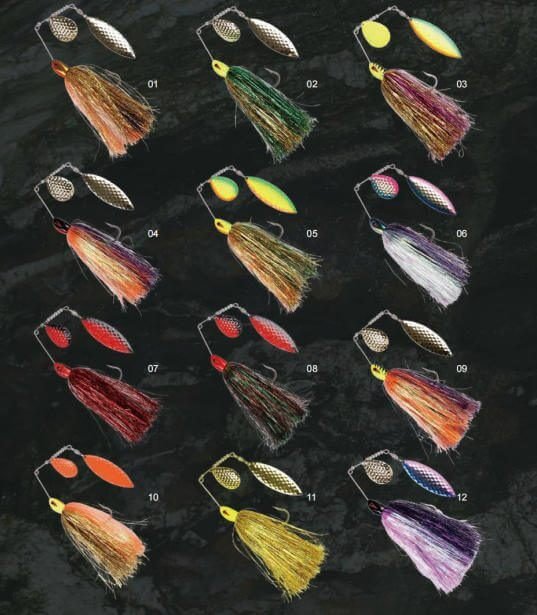
Spinner baits are a staple in angling, known for their flash and vibration. They attract fish across freshwater and saltwater habitats.
The right fishing spinner and spinnerbait skirts combination can turn casual trips into memorable catches. This guide breaks down their design and use.
Why Spinner Baits Stand Out
Combine visual flash with water vibration. The rotating blade creates light reflection, while the skirt adds movement.
This dual attraction works for predators like bass, pike, and redfish, even in low-visibility conditions.
Anatomy of Spinner Baits
Key Components That Drive Success
Spinner baits have three core parts: the blade, the head, and the skirt. Each plays a critical role in performance.
Fishing Spinner Blades
Willow leaf: Thin and fast-spinning. Creates subtle flash for clear water.
Colorado: Round and slow-spinning. Produces strong vibration for murky water.
Indiana: Hybrid shape. Balances flash and vibration for versatile use.
Weighted Head
Lead or tungsten construction for casting distance.
Weights range from 1/8oz (shallow water) to 1oz (deep water).
Sharp hook hidden near the head for secure hook sets.
Spinnerbait Skirts
Covers the hook and adds natural movement.
Materials include silicone, nylon, or rubber.
Comes in solid, multi-color, or patterned designs.
The design is modular. Anglers can swap blades or spinnerbait skirts to adapt to conditions.
This versatility makes spinner baits effective across seasons and habitats.
Spinnerbait Skirts: Material & Color Choices
More than just decoration. They mimic prey and influence fish attraction.
Popular Skirt Materials
Silicone: Soft and durable. Holds color well and moves naturally in water.
Nylon: Lightweight and fluttery. Creates extra movement for slow retrieves.
Rubber: Thick and tear-resistant. Ideal for toothy fish like pike.
Marabou: Feather-like. Adds subtle motion for finicky fish.
Color Selection Tips
Natural colors (brown, green, white) for clear water or pressured fish.
Bright colors (chartreuse, orange, pink) for murky water or low light.
Multi-color skirts (black-and-yellow, blue-and-white) for stained water.
Match local prey: Use shrimp-colored skirts for saltwater, worm colors for freshwater.
Skirt length matters too. Shorter skirts (2-3 inches) work for small prey imitations.
Longer skirts (4-5 inches) mimic larger baitfish or crawfish.

Types of Fishing Spinner & Their Uses
Choosing the Right Spinner for Your Target
Come in two main styles: inline and safety pin. Each suits different fishing scenarios.
Safety Pin Spinner Baits
Blade hangs from a wire arm (shaped like a safety pin).
Ideal for casting and retrieving through weeds or structure.
Best for bass, pike, and muskie in freshwater.
Weedless designs available for thick vegetation.
Inline Fishing Spinner
Blade spins directly on the main line.
Produces faster, more consistent spin for open water.
Effective for trout, panfish, and small bass.
Lightweight (1/32oz to 1/4oz) for shallow water use.
Other variations include tandem spinner baits (two blades) for extra flash.
Spinnerbaits with trailers (soft plastic additions) add extra movement and scent.
Open Water: Inline spinner or willow leaf blade spinner baits. Fast spin covers water quickly.
Weedy Areas: Safety pin spinner baits with Colorado blades. Slow spin avoids snagging.
Deep Water: Heavyweight safety pin spinner baits. Reaches fish holding at depth.
Techniques for Success
Retrieve Methods & Rigging Tips
Work with simple retrieves, but small adjustments make a big difference.
Basic Cast & Retrieve
1. Cast toward structure (weeds, rocks, docks) or open water.
2. Let the spinner bait sink 1-2 seconds.
3. Reel steadily at a pace that keeps the blade spinning.
4. Pause briefly every 5-6 cranks to mimic injured prey.
Slow-Roll Technique for Deep Fish
1. Use a heavyweight spinner bait (3/4oz to 1oz).
2. Cast and let it sink to the bottom.
3. Reel extremely slowly to keep the blade spinning.
4. The slow movement targets lethargic fish in deep water.
Yo-Yo Retrieve for Aggressive Fish
1. Cast and let the spinner bait sink halfway.
2. Reel fast for 3 seconds to lift the bait.
3. Stop reeling and let it fall freely.
4. Repeat—this creates erratic movement that triggers strikes.
Rigging is simple. Most spinner baits come ready to use out of the package.
For extra attraction, add a small soft plastic trailer to the hook.

Freshwater vs. Saltwater Applications
Adapting it to Different Environments
Work in both freshwater and saltwater, but some tweaks are needed for success.
Freshwater Use
Target species: Bass, pike, muskie, trout, panfish.
Popular styles: Safety pin spinner baits (1/4oz to 3/4oz).
Spinnerbait skirts: Natural colors (green pumpkin, black) for bass; bright colors for pike.
Habitats: Lakes, rivers, ponds, and streams.
Saltwater Use
Target species: Redfish, snook, speckled trout, bluefish.
Popular styles: Heavyweight safety pin spinner baits (3/4oz to 1oz).
Spinnerbait skirts: Shrimp, mullet, or crab colors (brown, silver, pink).
Habitats: Flats, marshes, jetties, and nearshore reefs.
Saltwater type need corrosion-resistant hardware. Look for stainless steel blades and hooks.
Freshwater models can use standard materials but may need more frequent blade cleaning.
Tidal Impact: In saltwater, use heavier spinner baits during strong tides to maintain control.
Vegetation: In freshwater weeds, use weedless spinner baits. In saltwater flats, opt for open-hook designs.
Maintenance & Troubleshooting
Keeping it in Top Condition
Proper care ensures your spinner baits perform well trip after trip.
Cleaning & Storage
Rinse with fresh water after each use, especially in saltwater.
Wipe blades with a soft cloth to remove rust or debris.
Store in a dry tackle box with dividers to prevent tangling.
Replace damaged or bent blades promptly.
Common Issues & Fixes
Blade not spinning: Check for line twists or debris. Replace bent blades.
Snagging: Use weedless designs or adjust retrieve to avoid structure.
Skirt falling off: Secure with a small zip tie or replace the skirt collar.
No strikes: Change blade type or spinnerbait skirt color. Adjust retrieve speed.
Spinner baits are durable, but regular inspections prevent failures.
Sharpen hooks every 3-4 trips for better penetration into fish jaws.
Seasonal Adjustments: Use smaller blades and lighter weights in spring. Switch to larger blades and heavier weights in fall.
Water Clarity: Clear water needs willow leaf blades and natural skirts. Murky water calls for Colorado blades and bright skirts.