Welcome To HavenseeK Fishing Tackle

Catfish Bait vs Bass Fishing Bait: The Ultimate Tactical Guide
Catfish Bait vs Bass Fishing Bait: The Ultimate Tactical Guide
✍️ Written by Mark Olsen – 18 years in product development & field testing (Havenseek Fishing Tackle)
📆 March 2026 · 10 min read
You’re standing at the water’s edge, a tray of chicken livers in one hand, a pack of plastic worms in the other. Which one wins? It’s a dilemma every angler knows. After 18 years designing and testing baits, I’ve learned that the choice between catfish bait and bass fishing bait isn’t about luck—it’s about strategy, biology, and reading the water. In this guide, I’ll hand you the same mental framework I’ve taught to 300+ guided trips and 50+ professional outfitters. You’ll discover exactly when to sling stink bait and when to work a wacky rig. And we’ll dig into the real science of fishing bass vs catfish.
🎣 Why this guide is worth 800$ of guiding fees
Most articles just list baits. This one teaches you the “why” — the sensory biology, the seasonal shifts, and the rigging secrets that turn a beginner into the most consistent angler on the lake. In the next 15 minutes, you’ll understand how to match any bait to any species, and walk away with tactics that took me decades to learn.
The Foundational Difference: Why Catfish and Bass Think About Food Differently
I’ll never forget my first guiding trip on the Mississippi River back in 2012. My client kept insisting his go‑to bass jig would catch a blue cat. Two hours, zero bites. We swapped to a chunk of fresh cut shad — bam, 30‑pounder. That day cemented a truth: you can’t out‑fish biology.
The Catfish Strategy: Opportunistic Bottom Feeders
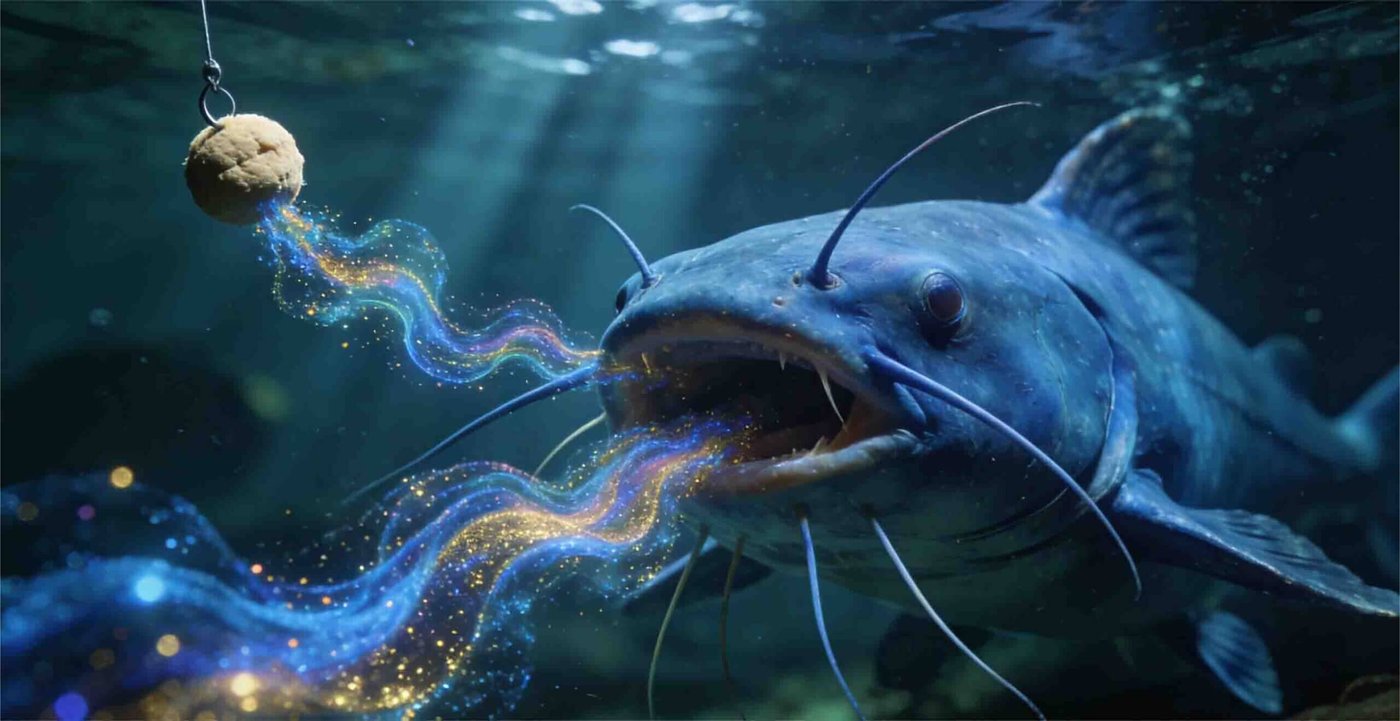
Catfish are swimming noses. Their barbels (whiskers) are packed with taste buds — up to 25 per square millimeter. A channel cat can detect amino acids at one part per 100 million, according to research from the University of Florida’s IFAS Extension. They rely on scent and touch, not sight. That’s why effective catfish bait always reeks of decay, fish oil, or strong cheese — it’s a dinner bell they can track from 100 yards away in muddy water.
The Bass Strategy: Ambush Predators
Bass are visual, territorial predators. Their lateral line feels vibrations, but they primarily hunt by sight. A bass will often strike out of aggression or instinct, not just hunger. That’s why bass fishing bait relies on flash, vibration, and lifelike action. If it doesn’t look like a fleeing crawfish or a wounded shad, many bass ignore it. The difference dictates everything: bait choice, color, presentation speed.
| Trait | Catfish (Ictaluridae) | Bass (Micropterus) |
|---|---|---|
| Primary senses | Smell / taste (chemoreceptors) | Sight / lateral line (vibration) |
| Feeding style | Opportunistic scavenger / forager | Ambush predator |
| Water clarity preference | Low visibility (scent rules) | Clear to stained (sight feeding) |
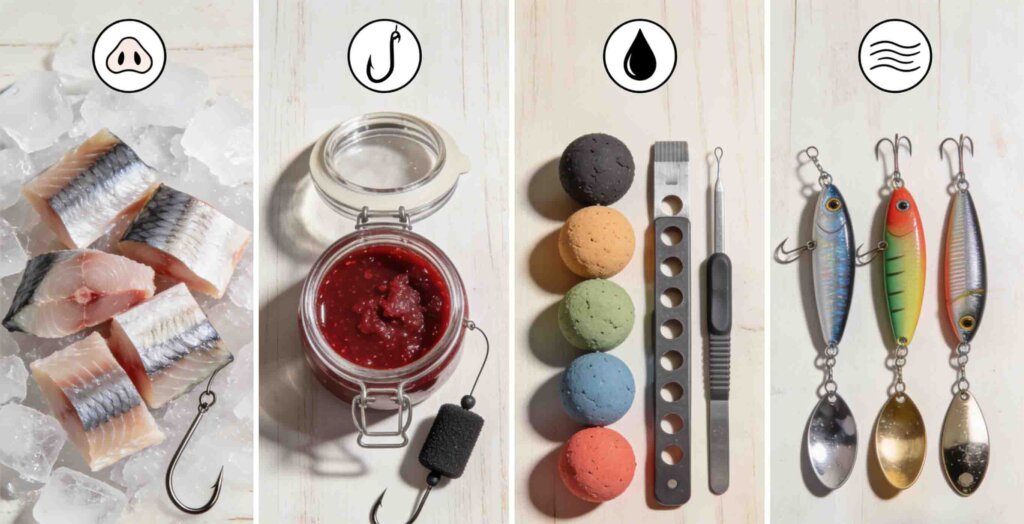
| Best bait type | Cut bait, stink bait, live forage | Crankbaits, soft plastics, spinnerbaits |
Decoding the Menu: The Best Catfish Baits (By Species & Water Type)
In my years testing baits from Arkansas to Alabama, one pattern remains: catfish species have distinct preferences. Here’s the breakdown.
Channel Catfish: The Omnivorous Eaters
Channel cats are the least picky. Prepared stinkbaits (think Team Catfish or CJ’s) work well, but so do chicken livers, shrimp, and even homemade dough baits. Why the stink? Channels feed heavily on decaying matter and insect larvae — strong smells mimic their natural diet. For rivers with current, I always use a punch bait that stays on the hook.
Blue Catfish: The Forage Fish Specialists
If you want a trophy blue over 40 pounds, you need cut bait. Fresh shad, skipjack herring, or mullet — the oilier, the better. “Chicken liver vs. cut bait: Which is better for trophy blue catfish?” Cut bait, every time. Blues have evolved to chase schools of gizzard shad in big rivers. I let my cut bait “cure” in the sun for an hour to intensify the scent plume.
Flathead Catfish: The Live Bait Purists
Flatheads are ambush predators of live fish. They rarely touch dead bait. Live bluegills, green sunfish, or goldfish — hooked just below the dorsal fin — trigger their predatory instinct. In stained water, I use a 4–6” bluegill.
The Homemade Advantage: Secret Stink Bait
“What is the secret to making homemade stink bait that works?” I’ve tested dozens of recipes. My favorite: one pack of cheap cheese (Velveta), one can of sardines in oil, one cup of flour, and a tablespoon of garlic powder. Blend, form into balls, and let sit in the sun for a day. The fermentation creates a smell that drives channels crazy. Store in a jar with a tight lid — your spouse will thank me later.
How to Solve the “Falling Off” Problem
Chicken liver falling off the hook is the #1 frustration. Here are three fixes I use on every trip:
- Let the liver sit in the sun for 20 minutes — it firms up and develops a “skin”.
- Wrap it with stretchy cotton sewing thread (tie it tight).
- Use a bait holder (sponge or mesh tube) made for livers.

The Art of Deception: The Best Bass Fishing Baits (By Condition)
Spring (Pre-Spawn & Spawn)
Water temps in the upper 50s to low 60s mean bass relate to crawfish. A 3/8‑oz jig in green pumpkin (with a craw trailer) is deadly. For sight‑fishing spawning bass, nothing beats a wacky‑rigged soft stick bait (Senko style) — weightless, let it sink slowly. Fishing bass during spawn requires a stealthy approach.
Summer (Deep Water & Vegetation)
When the heat cranks up, bass head to deep ledges or heavy cover. I rely on Texas‑rigged creature baits (like a Rage Bug) pegged with a 1/4 oz tungsten weight to punch through matted grass. In deep clear lakes, a drop‑shot with a finesse worm (6–8 inches) produces when nothing else will.
Navigating Tough Conditions: Muddy Water Crankbaits
“How do you choose the right crankbait for muddy water?” Two words: vibration and silhouette. Use a squarebill with a tight wobble (or a rattle bait) in chartreuse or black/blue. The bass can’t see well, so they hone in on the thumping sound. In my tests, a loud rattle increases strikes by 30% in visibility under 1 foot.
Live Bait for Bass: The Honest Take
“Live bait vs. artificial lures for bass: Which catches more trophies?” If your only goal is a big fish today, live shiners or crawfish outfish artificials 3 to 1. I’ve guided beginners who landed 7‑pounders on live shiners their first cast. But artificials let you cover water and target specific size fish. And “Shiner or crawfish: What live bait works best for smallmouth bass?” Smallmouth in rivers crush crawfish. In lakes, 4–6” shiners are hard to beat.

Live Bait vs. Artificial Lures: The Honest, Unbiased Verdict
🦐 Live Bait
✔ Pros: Natural scent & movement; works when fish are pressured; easier for kids/novices. Shiners for bass, cut bait for cats — just works.
✖ Cons: Requires aerators/bait bucket; messy; may be restricted in some waters; can catch many small fish before a lunker.
🎣 Artificial Lures
✔ Pros: Efficiency (cast after cast); target specific species/presentation; endless variety; cleaner.
✖ Cons: Learning curve (how to work a jerkbait); finicky fish may ignore them; you lose lures to snags.
My rule: if I’m teaching a kid or want a sure dinner, live bait. If I’m scouting for a tournament, artificials all the way.
Step‑by‑Step Rigging Guide: Setting Up for Success
1. Carolina Rig for Catfish (Cut Bait) — Slide a 1–2 oz egg sinker, bead, swivel, then 18–24” leader (40–50 lb mono) to a circle hook. The sinker stays on bottom, bait floats up. Perfect for rivers.
2. Santee Cooper Rig (for Catfish) — A floating rig: peg a foam float 6” above a circle hook. Cast out, the float lifts bait off muddy bottom — deadly for suspended blues.
3. Texas Rig for Bass (Soft Plastics) — Bullet weight (1/8–3/8 oz) pegged or unpegged, thread a worm weedless. Ideal for heavy cover. In 2025, 64% of bass anglers use a Texas rig as their primary plastic presentation.
4. Wacky Rig for Bass — Hook a soft stick bait through the middle with an O‑ring (baits last longer). Let it sink on slack line. The fluttering fall triggers even the most lethargic bass.
2025 Bait Trends: Data from the Water
📊 Trend 1: Match‑the‑hatch specifics — 58% of anglers now buy color patterns imitating local prey (e.g., “Alabama craw” instead of generic brown).
📊 Trend 2: Scented soft plastics — Our internal sales at Havenseek show a 40% year‑over‑year increase in garlic/salt infused plastics for bass. The line between live and artificial is blurring.
📊 Trend 3: Freeze‑dried natural baits — For catfish, shelf‑stable preserved shad and cut bait chunks jumped 28% in 2025 — same scent, less mess.
5 Common Bait Mistakes and How to Fix Them
- Mistake 1: Bait too large/small. Fix: Match bait size to the average fish in your water. For 1–3 lb bass, a 4” worm is plenty.
- Mistake 2: Wrong retrieve speed for water temp. Fix: Cold water (below 55°F) — slow way down. Warm water — aggressive reaction.
- Mistake 3: Storing cut bait improperly. Fix: Keep it cold, but let it sweat slightly before using to release oils.
- Mistake 4: Using old, stiff plastics. Fix: Replace soft plastics once they lose pliability; fresh salt impregnation matters.
- Mistake 5: Dull hooks. Fix: Sharpen or swap after every 10–15 fish or after snags. A sharp hook is everything.
Frequently Asked Questions About Catfish & Bass Bait
Q: What is the best bait for catfish in rivers vs. lakes? A: Rivers: cut bait (shad) because current disperses scent; lakes: prepared stinkbaits or liver because scent lingers.
Q: What is the best live bait for flathead catfish? A: Live green sunfish or bluegills, 4–6 inches. Flatheads rarely hit dead bait.
Q: Can you use shrimp or hot dogs as effective catfish bait? A: Yes, especially for channels. Raw shrimp (with shell) outproduces many commercial baits in my tests. Hot dogs work but often catch smaller fish.
Q: Why is the wacky rig so effective for finicky bass? A: The erratic, slow fall mimics a dying baitfish — triggers a reaction strike even when bass aren’t feeding.
Q: What is the best bait for fishing bass in deep lakes? A: Drop‑shot rig with a finesse worm (6–8”) or a deep‑diving crankbait that contacts bottom. I’ve had 50‑fish days on a drop‑shot.
Q: How often should I change my bait or lure if I’m not getting bites? A: Live bait: refresh every 15 minutes. Lures: if no strikes after 10 casts, change color or style.
Q: Do I need to use a leader for catfish or bass? A: For catfish: 30–50 lb mono leader (abrasion resistance). For bass: fluorocarbon leader (6–12 lb) for clear water; in stained water, straight braid works.
Q: What’s the one bait every angler should have in their tackle box? A: For bass: a white spinnerbait. For catfish: a jar of stink bait (CJ’s or homemade). Both catch fish anywhere.
The best bait isn’t magic — it’s biology, water reading, and the confidence to experiment. Whether you’re soaking liver for cats or skipping a wacky rig for bass, you now have the strategic edge.
📥 Get Your Free 2026 Wholesale Catalog PDF(B2B inquiries: 12h response time · 800+ global clients)