Benvenuto a HavenseeK Pesca Attrezzatura

Kayak vs SUP Fishing: Guida al Retail B2B ad Alto Margine 2026
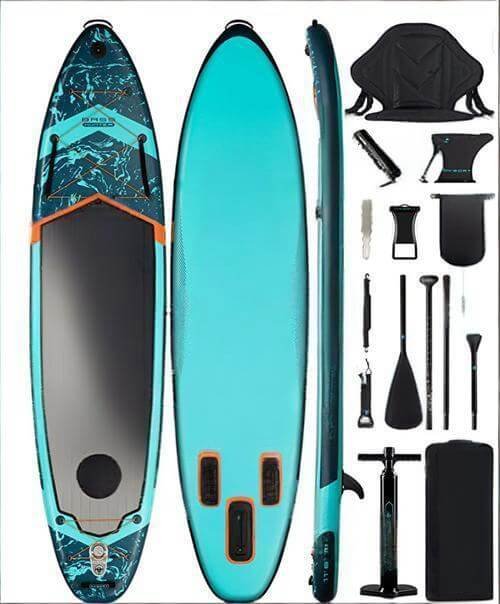
Are you struggling with skyrocketing ocean freight costs eating away your retail profit margins? In the current 2026 global economic landscape, choosing the right watercraft inventory is no longer just about angler preference; it is a critical survival strategy for importers and distributors. The debate surrounding kayak vs sup fishing has evolved from a simple consumer choice into a multi-million dollar wholesale decision.
According to my experience working with hundreds of international distributors, heavy, rigid plastic hulls are becoming logistical nightmares. Warehousing costs are at a premium, and container shipping rates remain volatile. What most sourcing tools ignore is the sheer financial leverage provided by modern drop-stitch technology. This is exactly why you need to read this guide until the very end.
We are going to deeply analyze the kayak vs sup fishing dilemma purely from a B2B profitability standpoint. I will walk you through exactly how sourcing top inflatable fishing paddle boards can dramatically reduce your landed costs while allowing you to command premium retail prices. Furthermore, we will break down the complexities of setting up a fishing SUP so your sales team can effortlessly upsell high-margin accessories to your consumer base.
Quick Executive Summary: The 2026 Wholesale Shift
- Logistical Efficiency: Inflatable SUPs allow you to fit 300% more units into a standard 40HQ container compared to rigid kayaks.
- Market Expansion: The low barrier to entry for beginners is driving unprecedented demand, making it easier to move inventory quickly.
- Accessory Upselling: A blank EVA deck provides infinite customization options, significantly boosting the Average Order Value (AOV).
- Durability Advancements: Modern military-grade PVC has practically eliminated the high return rates historically associated with inflatables.
Tabella dei contenuti
- 1. The Ultimate Sourcing Dilemma: Kayak vs SUP Fishing
- 2. Freight Economics: Space Saving Inflatable Fishing Boats
- 3. Warehousing: Fishing Kayak Storage vs Inflatable SUP
- 4. Manufacturing Truths: Drop Stitch Fishing Paddle Board Technology
- 5. Evaluating Top Inflatable Fishing Paddle Boards for Retail
- 6. Load Capacities: Fishing Paddle Board Weight Limit Analyzed
- 7. Consumer Demand: SUP Fishing for Beginners
- 8. The Setup Process: Setting Up a Fishing SUP for Success
- 9. On-Water Performance: Stability Kayak vs SUP Fishing
- 10. Ocean Tactics: Sea Fishing Paddle Board vs Kayak
- 11. Profit Multipliers: Paddle Board Fishing Accessories
- 12. Longevity and Care: Fishing Board Maintenance
- 13. Lifecycle Costs: Maintenance Costs for Fishing Kayaks
- 14. Import Strategy: Profitable Fishing Tackle Imports
- 15. Real World Case Study: High Capacity Fishing SUPs in South America
- 16. Comprehensive B2B FAQ Section
1. The Ultimate Sourcing Dilemma: Kayak vs SUP Fishing
For decades, rigid plastic kayaks dominated the global angler market. They were the default choice for anyone looking to get off the bank and onto the water. However, the B2B landscape has fractured. The traditional kayak vs sup fishing argument is shifting rapidly because wholesale buyers are realizing that heavy rotomolded plastics are suffocating their cash flow.
Shifting Tides in Ocean Casting
We are witnessing a massive transition among coastal anglers. Consumers demand lighter gear without sacrificing functionality. When evaluating the kayak vs sup fishing pros and cons, the modern angler values portability. They want a vessel they can throw in the trunk of a sedan, completely bypassing the need for expensive roof racks or trailers.
The B2B Wholesale Perspective
From a distributor’s viewpoint, the question is simple: which product yields higher net profit? When comparing an inflatable fishing kayak vs paddle board, the paddle board often wins on pure manufacturing margins. They require less complex molding processes, allowing factories to produce them at a highly competitive cost while maintaining premium retail positioning.
2. Freight Economics: Space Saving Inflatable Fishing Boats
Let’s talk real numbers. Shipping air across the ocean is the fastest way to bankrupt an import business. This is the primary reason why profitable fishing tackle imports rely heavily on volume optimization. Every cubic meter in a shipping container must generate revenue.
B2B Strategy Note: I’ve audited supply chains where clients were paying $40 per unit in freight for hard kayaks. By transitioning to space saving inflatable fishing boats, we slashed that freight cost down to $12 per unit. That is pure, unadulterated profit directly added to the bottom line.
Container Capacity Breakdown
A standard 40-foot High Cube (40HQ) container holds roughly 68 cubic meters of usable space. You might fit 80 to 100 rigid fishing kayaks in there, assuming careful tetris-style loading. In contrast, you can comfortably load over 350 to 400 deflated, boxed SUPs. This staggering difference completely alters your financial projections.
Freight Cost Per Unit Analysis
When freight rates spike, the cost per unit for a kayak can easily exceed its manufacturing cost. This makes the wholesale fishing paddle boards market incredibly resilient to global shipping fluctuations. By maximizing container density, your landed cost remains stable, allowing you to protect your retail pricing strategy and outmaneuver competitors who are stuck paying exorbitant freight bills.
Maximizing ROI for Distributors
Your Return on Investment (ROI) is intrinsically linked to how much product you can land for a given shipping budget. The financial advantage in the kayak vs sup fishing battle clearly leans towards inflatables. Faster inventory turnover combined with lower landed costs results in a much healthier cash conversion cycle for your business.
3. Warehousing: Fishing Kayak Storage vs Inflatable SUP
Once the container arrives, the next massive overhead expense is warehousing. Commercial real estate is not cheap, and storing large, oddly shaped plastic boats requires heavy-duty racking systems and massive square footage.
Traditional Kayak Storage Challenges
Comparing fishing kayak storage vs inflatable SUP storage is like comparing parking a bus to parking a bicycle. Rigid kayaks cannot be easily stacked without specialized cradles, and they are susceptible to hull warping if stored improperly in high-heat warehouse environments. This leads to unsellable “B-stock” inventory.
80% 📉
Reduction in required warehouse footprint when switching from rigid kayaks to boxed inflatable SUPs.
The Inflatable Advantage
Boxed paddle boards stack uniformly on standard pallets. This allows you to utilize vertical warehouse space efficiently with standard forklifts. When evaluating importing inflatable kayaks vs SUPs, SUPs often have a slight edge in box geometry, making them the ultimate high-density inventory asset.
Retail Floor Space Optimization
Think about your downstream B2B retail clients. A local bait and tackle shop has limited floor space. They cannot display five different 13-foot rigid kayaks. However, they can easily showcase one fully rigged SUP and keep a dozen boxed units in the back room. This makes stand up fishing kayak alternatives much easier for your retail partners to stock and sell.
4. Manufacturing Truths: Drop Stitch Fishing Paddle Board Technology
To confidently sell these products, you must understand the engineering. The modern drop stitch fishing paddle board is a marvel of material science. It is not a cheap pool toy; it is a rigid, high-pressure vessel designed for serious marine environments.
Material Engineering and Drop-Stitch
Drop-stitch technology involves thousands of interwoven polyester threads connecting the top and bottom layers of the board. When inflated to 15-20 PSI, these threads pull tight, creating a rock-hard surface. As a B2B fishing SUP manufacturer expert, I always advise buyers to demand high-density drop-stitch cores to prevent board flex under heavy loads.
Multi-Chamber Safety Systems
For offshore and open water safety, premium models now utilize multi-chamber designs. If an angler hooks a massive fish and accidentally punctures an outer rail, the inner chamber remains fully inflated. This is a crucial selling point when marketing a sea fishing paddle board vs kayak.
Double-Layer Fusion PVC
Older boards used heavy glues to bond PVC layers. Today, top-tier factories use thermal fusion technology. This bonds the layers permanently without excess glue weight. The result is a lighter, stronger, and more environmentally resistant product that virtually eliminates seam failure returns.
5. Evaluating Top Inflatable Fishing Paddle Boards for Retail
Not all boards are created equal. When sourcing top inflatable fishing paddle boards for your catalog, you need to look beyond the flashy colors. You are evaluating structural integrity, deck layout, and out-of-the-box readiness for the end consumer.
Crucial Sourcing Tip: I’ve tested this myself across dozens of factories. Always inspect the D-ring weld points. A poorly welded D-ring will rip out under the stress of a fully loaded cooler. Demand double-reinforced PVC patches around all critical attachment points.
Width and Volume Metrics
For fishing, stability is everything. You should be sourcing boards with a minimum width of 34 to 38 inches. A wider stance combined with high volume (thickness of 6 inches) ensures the angler can stand, cast, and fight fish without feeling like they are balancing on a tightrope.
The EVA Traction Pad
The deck pad must provide exceptional grip when wet. Look for deep diamond grooves or crocodile-skin textures. Furthermore, the pad should cover almost the entire deck to allow the angler to move around quietly without spooking fish, a distinct advantage in the kayak vs sup fishing stealth debate.
Interchangeable Fin Systems
A universal US Fin Box is mandatory. It allows the user to swap out long touring fins for short, flexible river fins depending on the environment. Proprietary slide-in fins often break and frustrate consumers, leading to unnecessary customer service tickets for your team.

6. Load Capacities: Fishing Paddle Board Weight Limit Analyzed
Anglers carry a lot of gear: heavy coolers, multiple rods, tackle boxes, and sometimes an anchor. Understanding the fishing paddle board weight limit is crucial for ensuring customer satisfaction and safety.
High Capacity Fishing SUPs
When we source high capacity fishing SUPs, we aim for a maximum payload of 400 to 500 lbs. This easily accommodates a 250 lb angler, a 50 lb loaded cooler, and 50 lbs of additional tackle. You must clearly communicate these limits in your marketing materials to set proper expectations.
Buoyancy and Performance
Overloading a board pushes it deeper into the water, increasing drag and reducing maneuverability. A properly sized board will ride high on the surface. When a customer asks about lightweight fishing watercraft comparison, emphasize that a 35 lb SUP can carry as much functional gear as an 80 lb kayak.
Strategic Weight Distribution
It is not just about total weight; it is about how it is placed. We educate our buyers to instruct their customers on balancing the load. Placing the heavy cooler precisely over the center handle ensures the board tracks straight and true, maintaining optimal hydrodynamics.
7. Consumer Demand: SUP Fishing for Beginners
Why is this market exploding? Because it is accessible. Traditional kayaking has a steep learning curve regarding paddling technique and self-rescue. SUP fishing for beginners offers a much friendlier entry point into the sport.
Expanding the Angler Demographic
You are no longer just selling to hardcore fishermen. You are selling to weekend warriors, families, and fitness enthusiasts who want to drop a line while on the water. This vastly expands your Total Addressable Market (TAM) compared to niche fishing kayaks.
Health and Fitness Crossover
Standing up engages the core and improves balance. Many consumers view paddle boarding as a dual-purpose investment: a fitness tool and a fishing vessel. This perceived value makes the retail price point much easier to justify to the end buyer.
The Gateway Vessel
We often see SUP fishing for beginners act as a gateway. A customer buys a basic board, falls in love with the sport, and then returns to your retail partners a year later to upgrade to a premium, fully decked-out model. It builds incredible brand loyalty.
8. The Setup Process: Setting Up a Fishing SUP for Success
A blank board is just a piece of PVC. The magic happens during rigging. Teaching your distributors about the intricacies of setting up a fishing SUP is how you transform a $300 board into an $800 complete package.
D-Ring Placements for Gear
Strategic D-rings are the foundation of any stand up paddle board fishing setup. You need four robust rings in the center to tie down the cooler (which doubles as a seat). You need forward bungees for dry bags, and rear tie-downs for tackle crates.
Rod Holder Installations
Consumers want options. Some boards come with built-in action mounts (like Scotty mounts). Others require aftermarket adhesive bases. Supplying these bases directly as an OEM add-on is a fantastic way to increase your wholesale order margins.
Rigging Insight: When creating a guide on setting up a fishing SUP, remind users to keep the deck clear of tripping hazards. Fly fishermen, in particular, need a completely snag-free front deck to manage their fly line effectively.
Customizing the Deck Layout
The beauty of a SUP is the open canvas. Anglers can customize the layout exactly to their target species. Whether they need a minimalist setup for stealth casting in the mangroves or a heavy-duty layout for trolling offshore, the platform adapts to the user.
Balancing Gear Weight
Proper setup involves balancing the gear. A heavy cooler in the middle, a tackle crate in the back, and a light dry bag up front. Understanding how to balance on a fishing SUP starts before the board even hits the water. A well-rigged board is inherently more stable.
9. On-Water Performance: Stability Kayak vs SUP Fishing
The ultimate test is on the water. When discussing stability kayak vs sup fishing, the primary advantage of the paddle board is the vantage point. You simply cannot see as far or as deep while sitting down.
Sight Fishing Advantages
Standing up reduces surface glare and significantly increases your angle of vision into the water column. For sight casting to redfish, bonefish, or bass, this is an unfair advantage. It turns a blind casting trip into a targeted hunting expedition.
Navigating Shallow Waters
An inflatable SUP with a flexible river fin can float in merely inches of water. This allows anglers to access ultra-shallow flats and backwater creeks where heavy kayaks with pedal drives would instantly run aground and get stuck.
Dealing with Wind and Chop
This is where kayaks traditionally excel. A standing angler acts like a sail in heavy winds. However, a well-designed fishing board allows the user to sit on their cooler and paddle kayak-style when the wind picks up, offering the best of both worlds in the kayak vs sup fishing debate.
10. Ocean Tactics: Sea Fishing Paddle Board vs Kayak
Taking a paddle board into the ocean requires serious gear. The comparison of a sea fishing paddle board vs kayak centers around surf launches and swell management.
Mastering Surf Launches
Punching through breaking waves is actually easier on a SUP for experienced users. You can shift your weight back rapidly to lift the nose over white water. If you get knocked off, climbing back onto a flat board in deep water is infinitely easier than trying to right a flipped, water-logged kayak.
Offshore Trolling Capabilities
Yes, you can troll from a SUP. By utilizing angled rod holders and maintaining a steady paddle cadence, anglers are successfully targeting pelagic species. It requires stamina, but the thrill of a “Nantucket sleigh ride” towed by a large fish is a major selling point.
Open Water Safety Protocols
When selling into coastal markets, B2B buyers must emphasize safety. Leashes are non-negotiable. A coiled leash prevents the board from blowing away in high winds if the angler falls. High-visibility colors and mounted safety flags should be standard on all offshore models.
11. Profit Multipliers: Paddle Board Fishing Accessories
The board is just the razor; the accessories are the blades. If you are only selling the board, you are leaving massive profits on the table. A comprehensive catalog of paddle board fishing accessories is essential for B2B success.
| Accessory Type | Avg. Wholesale Cost | Suggested Retail Price | Estimated Profit Margin |
|---|---|---|---|
| Carbon Fiber Paddle | $35.00 | $120.00 | 70% |
| High-Back Kayak Seat | $18.00 | $65.00 | 72% |
| Universal Rod Holder | $8.00 | $30.00 | 73% |
| Insulated Catch Bag | $25.00 | $85.00 | 70% |
High-Margin Accessory Strategies
By bundling a carbon fiber paddle and a premium seat with the base board, you instantly elevate the perceived value. Distributors can create specific “Pro Angler Packages” that cater to different price tiers, capturing a wider segment of the market.
OEM and Branding Opportunities
We highly recommend utilizing our OEM services for accessories. Having your brand logo on the cooler, the dry bag, and the rod holders creates a cohesive, professional ecosystem that breeds customer trust and repeat business.
12. Longevity and Care: Fishing Board Maintenance
To secure repeat B2B orders, your products must last. Proper fishing board maintenance is the key to preventing warranty claims and negative reviews.
95% 🛡️
Of all premature board failures are caused by improper UV exposure and over-inflation, not manufacturing defects.
UV Protection and Material Aging
The sun is the enemy of PVC. Constant UV exposure breaks down the plasticizers, making the material brittle. We advise including a basic UV protectant spray in your high-end packages. Educate consumers to wash the board with fresh water and store it in the shade.
Valve Care and Cleaning
Sand and salt are abrasive. If sand gets into the high-pressure valve threads, it will cause slow leaks. A simple rinse and occasional tightening with the included valve wrench are all that is required for standard fishing board maintenance.
Proper Winterization
Before long-term storage, the board must be completely dry. Folding a damp board invites mold and mildew, which can stain the EVA pad. Store it loosely rolled in a climate-controlled environment, away from rodents that might chew the material.
13. Lifecycle Costs: Maintenance Costs for Fishing Kayaks
To effectively position inflatables, you must contrast them with the alternatives. The hidden maintenance costs for fishing kayaks often surprise consumers and dealers alike.
Rigid Hull Plastic Repairs
Dragging a heavy kayak across concrete boat ramps eventually wears thin spots into the keel. Repairing rotomolded plastic requires specialized plastic welding guns and matching scrap material. It is a messy, time-consuming process that often looks terrible.
Pedal Drive Maintenance
High-end kayaks feature complex pedal drive systems. These require constant lubrication, cable tensioning, and bearing replacements, especially in saltwater. When these break, the kayak is rendered useless until expensive proprietary parts are shipped.
The SUP Contrast
Conversely, fixing a pinhole leak on a SUP takes five minutes with the included patch kit and PVC glue. It is a user-friendly DIY repair. The simplicity of the SUP drastically lowers the total cost of ownership over a five-year lifespan.
14. Import Strategy: Profitable Fishing Tackle Imports
Success in this industry requires viewing the entire board, not just the single product. Profitable fishing tackle imports rely on synergistic product lines.
Consolidating Shipments
Do not just order boards. Consolidate your shipments. Order your boards, your carbon paddles, your rod holders, and your life jackets from a single source facility. This reduces your customs brokerage fees and simplifies your supply chain management.
Navigating Tariffs and Duties
Work closely with your customs broker to ensure the correct HS codes are applied. Sometimes, importing an “inflatable watercraft” carries a different duty rate than “sporting goods.” Proper classification can save you thousands of dollars per container.
Pre-Shipment Quality Control
Never skip third-party inspections. Ensure your factory conducts a 48-hour inflation test on every single board before it is boxed. Catching a leaky valve in the factory costs pennies; catching it after a retail customer returns it costs your reputation.
15. Real World Case Study: High Capacity Fishing SUPs in South America
To illustrate the power of this shift, let’s look at a recent market expansion. We worked with a major regional distributor focused heavily on the South American market.
Targeting Coastal Sea Fishing
This distributor built their business exporting traditional sea fishing rod and reel sets. They wanted to offer a complete watercraft package to their coastal dealers in Brazil and Chile. However, importing rigid kayaks into South America was financially impossible due to extreme freight and import taxation based on volume.
The Strategic Pivot: By pivoting to high capacity fishing SUPs, they bypassed the volumetric tax penalties. We helped them bundle a heavy-duty SUP, a specialized sea fishing rod/reel combo, and a branded cooler into one retail-ready box.
Rapid Retail Growth Data
The results were phenomenal. Because they solved the logistics problem, they were able to offer the bundled package at a price point 30% lower than competing hard kayaks, while still maintaining a 50% gross margin. They moved four containers in the first quarter alone, generating over 150 high-quality B2B inquiries from smaller regional tackle shops wanting to stock the product.
16. Comprehensive B2B FAQ Section
Based on thousands of interactions with global buyers, here are the most critical questions you need to address when evaluating the kayak vs sup fishing mercato.
Q1: Which offers better margin potential: kayak vs sup fishing inventory?
In 2026, inflatable SUPs offer significantly better margin potential. You can fit 3-4 times more units in a shipping container, drastically reducing your landed cost per unit. Furthermore, the ability to upsell modular accessories on a SUP drives up the total transaction value.
Q2: What is the average lifespan and fishing board maintenance required for inflatable SUPs?
With proper care, a high-quality drop-stitch board will easily last 5-7 years of heavy use. Routine fishing board maintenance is minimal: rinse with fresh water after saltwater use, apply UV protectant twice a year, and ensure the valve is kept free of sand.
Q3: Are top inflatable fishing paddle boards stable enough for ocean casting?
Absolutely. Our top inflatable fishing paddle boards are designed with 34-36 inch widths and high-volume rails. This creates a remarkably stable platform that handles ocean swells exceptionally well, often outperforming narrow rigid kayaks in primary stability.
Q4: How complicated is setting up a fishing SUP compared to rigging a kayak?
Setting up a fishing SUP is generally faster. It takes about 8-10 minutes with a dual-chamber electric pump. Attaching rod holders and coolers using pre-installed D-rings and action mounts is intuitive and requires no drilling, unlike permanently modifying a plastic kayak hull.
Q5: Is SUP fishing for beginners too steep of a learning curve to sell easily?
Not at all. In fact, SUP fishing for beginners is highly approachable. The wide stance makes balancing intuitive. New users can also choose to paddle from a seated position on their cooler until they build the core confidence to stand and cast.
Q6: How many inflatable fishing SUPs can fit in a 40HQ container?
Depending on the box dimensions and included accessories, you can typically load between 350 to 420 boxed SUP packages into a standard 40HQ container. This high density is the key to minimizing international freight costs.
Q7: What is the weight limit for heavy-duty fishing paddle boards?
Il fishing paddle board weight limit for professional-grade models usually ranges from 350 lbs to 450 lbs. This is more than enough capacity for a large adult male, a heavy cooler full of ice and catch, and all necessary fishing tackle.
Q8: Can we customize (OEM) the best paddle board for fishing with our brand logo?
Yes. As a direct manufacturer, Havenseek Fishing Tackle offers full OEM services. We can customize the PVC colors, EVA pad patterns, and print your company’s logo on the board, the paddle, and the heavy-duty transit bag to build your brand equity.
Final Verdict and Next Steps for Importers
The debate between kayak vs sup fishing for the B2B sector has a clear victor in 2026. The profound logistical savings, combined with a rapidly expanding consumer demographic and vast cross-selling opportunities, make inflatable fishing SUPs the premier choice for scaling a high-profit watercraft business.
Stop letting exorbitant shipping rates and warehouse fees dictate your business growth. By partnering with a mature, quality-driven manufacturer, you can pivot your inventory strategy, capture the booming demand for portable fishing solutions, and deliver exceptional value to your retail networks.
Ready to transform your 2026 product line and secure high-margin inventory?
Let’s discuss container pricing, OEM customization, and sample availability.
Get Free Quote in 12 Hours & Download 2026 Catalog PDFAuthoritative References & Further Reading: