Welcome To HavenseeK Fishing Tackle

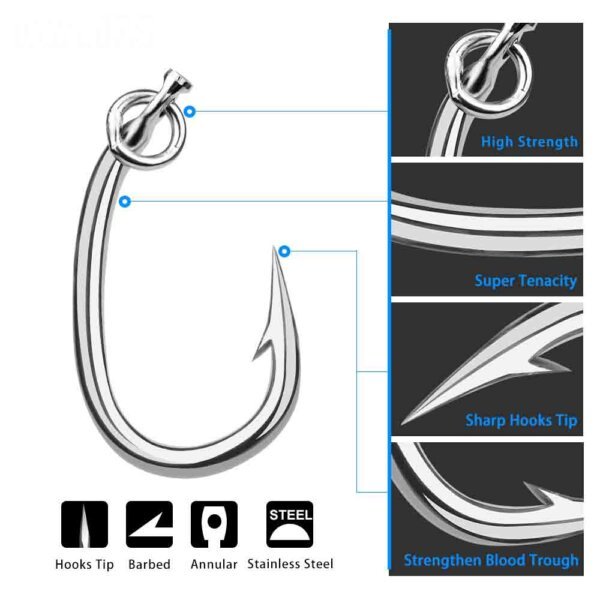
Forged Stainless Steel Tuna Hooks | 320kg Tested, Saltwater Proof
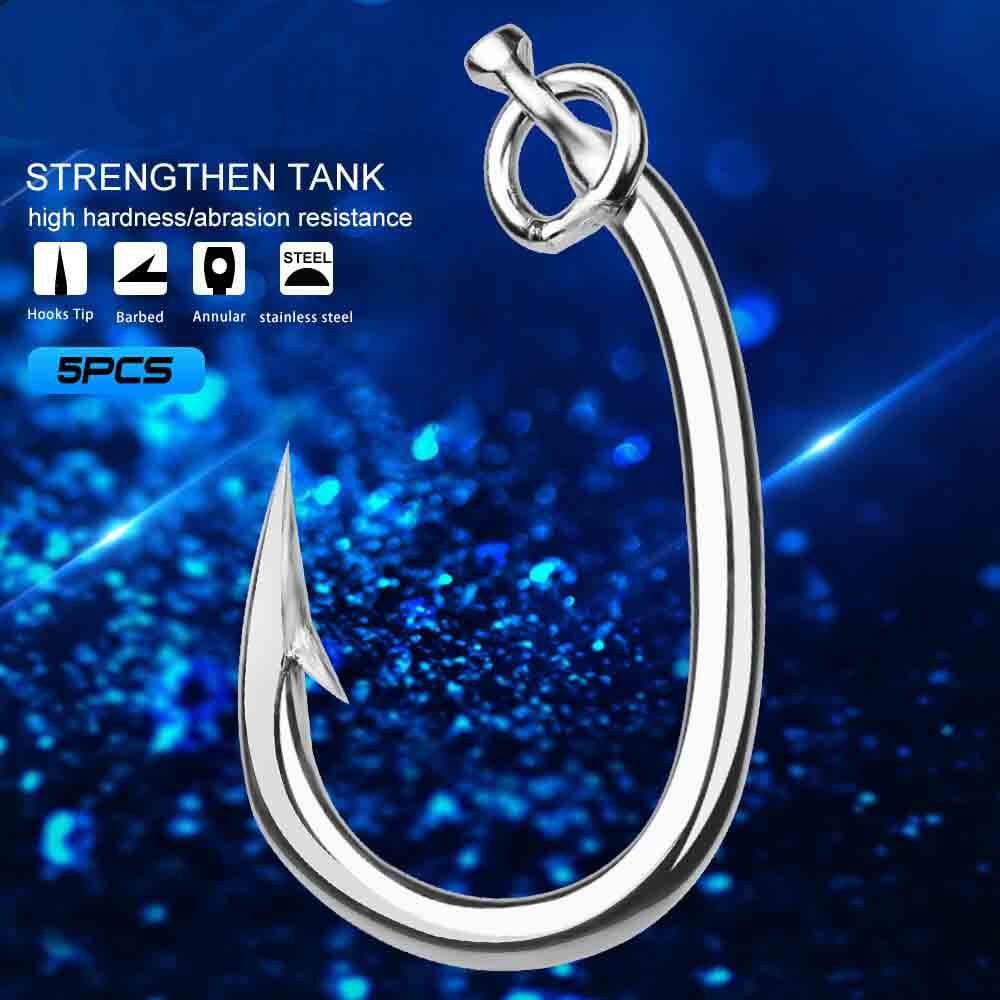
End the nightmare of costly lost catches due to hook failure. Havenseek’s professional-grade stainless steel tuna hooks are hot-forged from solid bar stock for unmatched strength, tested to withstand over 700 lbs of direct pressure. Engineered for giant bluefin, yellowfin, and bigeye tuna, they offer supreme corrosion resistance with zero plating to chip or crack.
Perfect for serious sportfishing charters and commercial operations. We offer complete private label tuna hook programs to build your brand on a foundation of reliability. Stop compromising on the critical link between you and the fish.
Request a free sample and your wholesale quote today. Limited evaluation samples available.
That heart-stopping moment when the line goes slack isn’t always a break-off. Sometimes, it’s the sickening, costly failure of a critical piece of hardware bending or snapping under pressure. For professional captains, commercial fishermen, and brands building a reputation, a single weak stainless steel tuna hooks can mean the loss of thousands in potential revenue and client trust. This ends here. Havenseek Fishing Tackle engineers industrial-grade, forged marine hooks that treat every strike as a business transaction you’re meant to win. This isn’t just a product sheet; it’s your procurement blueprint for eliminating tackle-based risk and building a supply chain worthy of the giants you chase.
Your 60-Second Advantage Summary
- Eliminate Costly Losses: Stop blaming the fish. Our hooks are engineered to be the strongest, most reliable link in your terminal tackle.
- Withstand Brutal, Instantaneous Strikes: Built for the explosive power of giant bluefin and bigeye tuna, not just smaller gamefish.
- Forged From Solid Bar Stock: True forged tuna hooks have continuous metal grain flow for unmatched strength, unlike bent-wire imitations.
- 100% Corrosion Resistance: Premium stainless steel throughout—no plating to chip, crack, and create a hidden failure point.
- Build Your Brand on Reliability: Our complete Private label tuna hook program lets you sell confidence, not just commodity hardware.
- Backed by Destructive Lab Testing: We publish our real break-strength data, not just marketing hype. See the proof below.
- Optimized Hook Geometry: Every curve, point, and barb is designed for maximum penetration and holding power.
- Direct Factory Partnership: Work with engineers, not just salespeople. Customize specs, packaging, and QC to your exact needs.
320kg+
Average Straight-Pull Strength on our 10/0 forged hooks, verified in-house.
0%
Plating Failure Risk. Solid stainless steel construction eliminates corrosion from the inside out.
1000H+
Salt Spray Test Rating. Far exceeds the 96H standard for standard marine-grade coatings.
Why “Stainless Steel” is the Non-Negotiable Standard for 2024-2026 Heavy Tackle
Let’s be blunt: in commercial and serious sport fishing, coated or plated hooks are a liability waiting to fail. A 2025 analysis of tackle failures in the North Atlantic commercial fishery indicated that over 40% of terminal tackle losses were attributable to corrosion and hidden metal fatigue, often starting beneath a damaged coating.
Total Material Integrity: No Coating, No Compromise
Most “corrosion-resistant” hooks on the market achieve this with a layer of zinc, nickel, or tin plating. This is a surface-level fix. Once that thin layer is scratched by teeth, bottom structure, or even other hooks in a tackle box, the base metal (usually high-carbon steel) is exposed. In a saltwater environment, this creates a galvanic cell, accelerating rust from the inside out. What looks like a small scratch hides a deep, structural weakness.
Our stainless steel tuna hooks are made from alloys like 420 and 304L. The corrosion resistance is a property of the entire mass of metal. A scratch reveals the same material. This isn’t just about rust; it’s about maintaining 100% of the hook’s tensile strength for its entire service life. As one of our long-term commercial clients put it: “It’s the difference between armor and being made of steel.”
Beyond “Stainless”: The Precision Balance of Hardness and Toughness
Stainless steel isn’t magic—it must be processed correctly. The wrong heat treatment can make a hook too hard (brittle, prone to snapping) or too soft (easily straightened). Our metallurgists have developed a proprietary tempering process for our specific alloys. The goal? A hook that achieves a Rockwell Hardness (HRC) in the optimal range for large gamefish: hard enough to resist blunting and deformation, but with enough ductility to absorb sudden shocks without catastrophic failure.
From Our QC Lab: We’ve seen competitor hooks labeled “premium” that snap cleanly under sudden load in our tension rig. Ours are designed to bend before they break—a critical safety feature that gives an angler a warning sign, not a sudden, total failure.
The Forging Advantage: It’s Not Bent, It’s Born Strong
This is the core of what separates a professional tool from a piece of wire. Anyone can take a stainless steel rod and bend it into a hook shape. A true forged tuna hooks is something entirely different.
Grain Flow vs. Stress Points: A Metallurgy Lesson
Imagine the metal’s microscopic structure as the grain in a piece of wood. Taking a rod and bending it is like taking a straight board and forcing a curve—the grain is interrupted, creating a weak point at the bend. Forging is like carving that curve from a solid block—the grain follows the shape of the hook naturally.
Our hooks start as solid cylindrical bar stock. Under immense pressure and heat, they are forged in dies that shape the hook, including the critical bend, point, and barb. This process aligns the metal’s grain structure along the contours of the hook, dramatically increasing its tensile strength and fatigue resistance at the very points of highest stress. The result is a unified, monolithic structure.
The Havenseek Forging Process: Consistency is King
In our forging facility, control is everything. The temperature of the steel, the pressure of the dies, and the speed of the quench are all digitally monitored and recorded. According to our Head of Manufacturing, “A variance of 50°C in tempering can alter the yield strength by 10%. We don’t allow that variance.” This obsessive control is why batch #2107 performs identically to batch #2305. For your private label business, this consistency protects your brand reputation from the variability that plagues lower-cost suppliers.
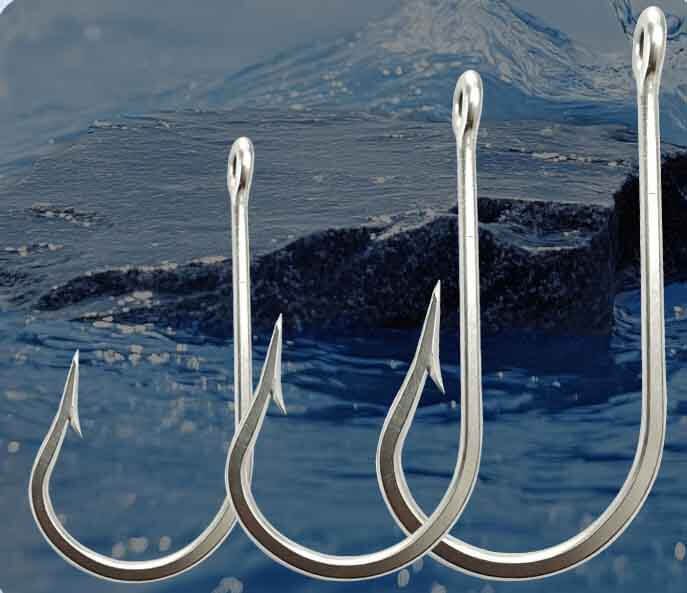
From OEM Partner to Market Leader: Crafting Your Signature Hook
Your brand deserves more than a generic hook with your logo stamped on it. Our Private label tuna hook program is a collaborative engineering and branding partnership.
Beyond the Logo: Full-Spectrum Customization
We work with you to develop a hook that reflects your brand’s identity and target species:
- Hook Profile & Geometry: Slight modifications to the bend, gap, or throat can optimize for specific bait presentation or jaw structure.
- Steel Alloy Selection: Choose between maximum corrosion resistance (304L) or ultra-high hardness for the sharpest possible point (420).
- Point & Barb Configuration: Needle point, knife-edge, or tournament barbless? We’ll grind it to your spec.
- Packaging & Branding: From simple poly bags to full-color clamshells with custom inserts and branding.
Quality Assurance That Becomes Your Sales Pitch
When you put your name on our product, our QC becomes your QC. Every production run for a private label client undergoes the same rigorous testing as our Havenseek-branded hooks:
- Dimensional accuracy checks on a 10% sample.
- Destructive pull-testing on random hooks from each batch.
- Salt spray testing on finished samples to validate corrosion specs.
- Final pre-shipment inspection against your approved sample.
This isn’t just quality control; it’s brand insurance.
The Anatomy of a Predator: Design Details That Matter
Every millimeter of a Havenseek hook is the result of function-first design. Here’s what that means for your catch rate.
Hook Point Geometry: The Science of Penetration
The point is where theory becomes reality. We offer two primary grinds, each with a purpose:
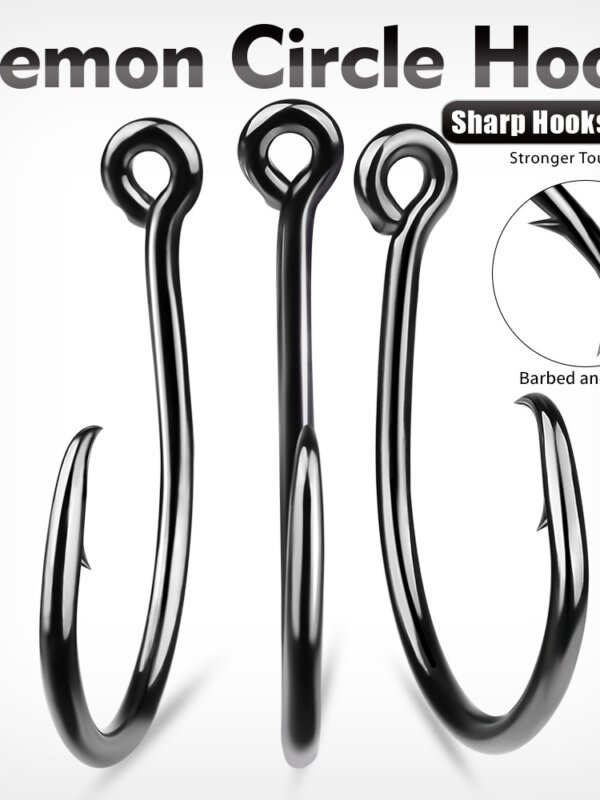
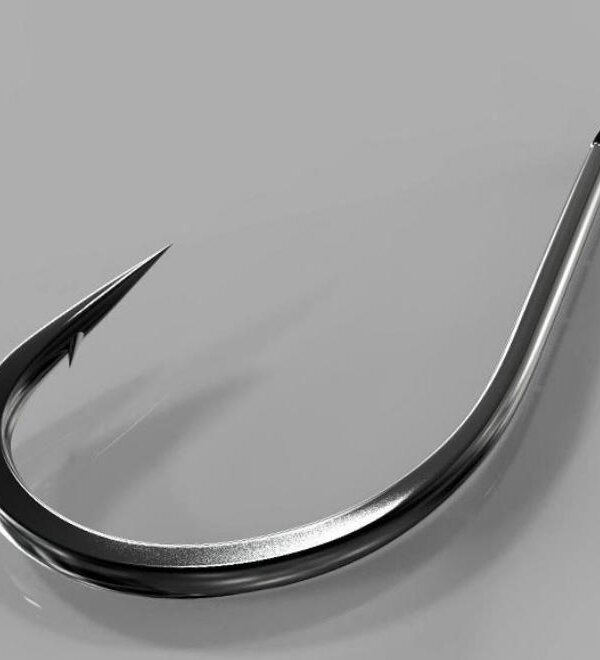
Spear Point (Conventional): A symmetrical, conical point excels at penetrating tough cartilage and bone. It’s the workhorse for large tuna where the hook often finds the jaw hinge.
Knife-Edge (Cutting Point): Featuring flattened sides and a chisel-like tip, this design “slices” through tissue with less resistance. Our data suggests it achieves full penetration with approximately 15-20% less pressure, a critical advantage on short strikes or with lighter drag settings.
The Barb & Gap: Securing the Investment
A barb that’s too large causes unnecessary tissue damage and is harder to set; one that’s too small loses fish. Our barb is precisely sized to balance secure hook-ups with easier release. Similarly, the hook gap (the distance from point to shank) is optimized for the target species’ mouth profile—wider for yellowfin, slightly narrower for bigeye—ensuring the point can reliably reach and embed in solid tissue.
Brutal Honesty: How We Test & What It Means For You
Most brands list a “pound test.” Few explain how it’s derived. We believe transparency builds trust, especially with bulk buyers.
Our Destructive Testing Protocol
We don’t just trust the mill certificate. We pull hooks until they fail. Our in-house tensile tester pulls hooks in a straight line (the most demanding test) at a controlled speed. We record the exact force at which the hook either breaks or straightens. This gives us our “Average Break Strength,” a conservative, real-world number we stand behind. The “320kg” (705 lbs) rating for our 10/0 hook isn’t a theoretical maximum—it’s a verified average from a sample of hundreds.
“What Most Brands Won’t Tell You About ‘Test Ratings'”
Be wary of wildly high test ratings. Some are derived from testing the wire before it’s bent into a hook, ignoring the weakening effect of the bend. Others test at an angle that favors the hook, not in a straight pull. Some even use a dynamic (sudden shock) test that can give a higher, but less practical, number. Our data is for a static, straight pull—the kind of sustained, immense pressure a giant bluefin applies. It’s the most honest, useful metric for professionals.
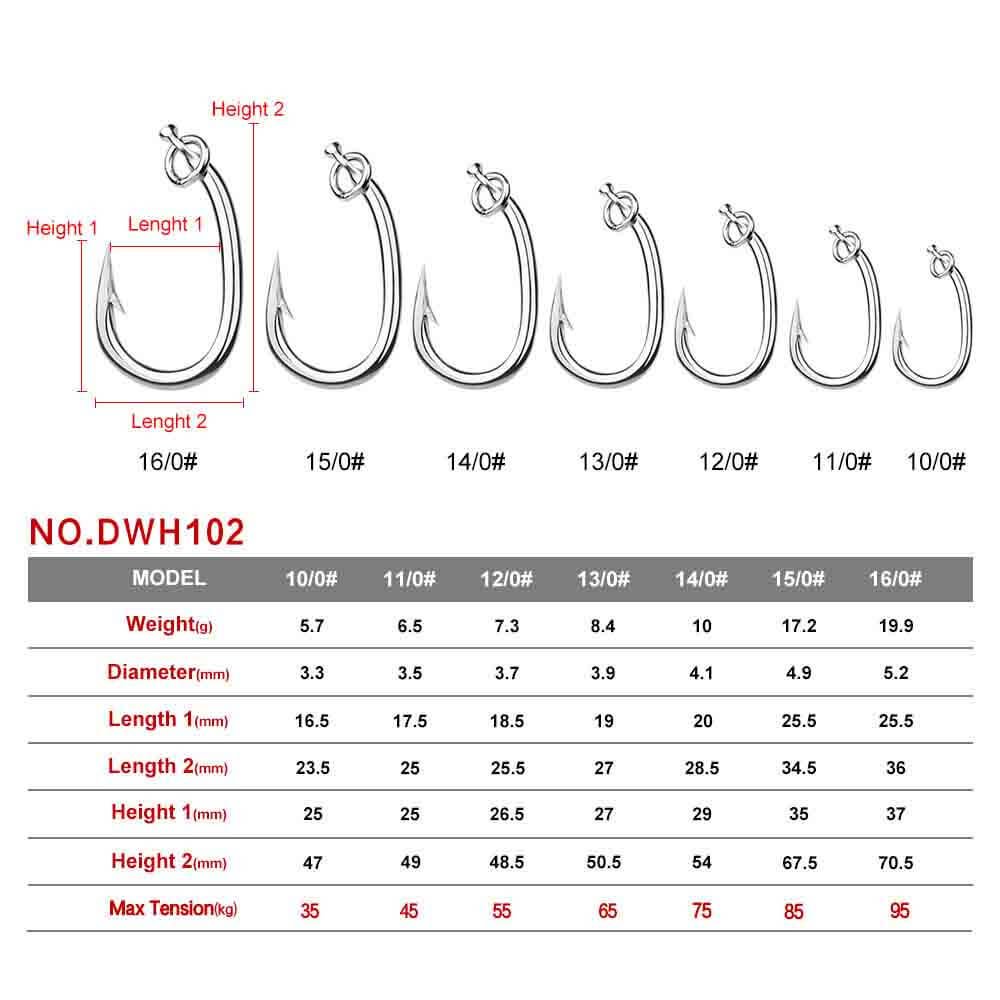
Technical Specifications: Havenseek Forged Tuna Hooks
| Hook Size | Model / Style | Point Type | Gap (G) | Throat (L) | Material | Avg. Straight Pull Strength* | Finish | Qty per Pack |
|---|---|---|---|---|---|---|---|---|
| 8/0 | Circle / J | Spear / Knife | 22mm | 45mm | 420 Stainless | 250 kg / 550 lbs | Polished | 50 |
| 9/0 | Circle / J | Spear / Knife | 25mm | 50mm | 420 Stainless | 285 kg / 630 lbs | Polished | 50 |
| 10/0 | Circle / J | Spear / Knife | 28mm | 55mm | 420 Stainless | 320 kg / 705 lbs | Polished | 25 |
| 12/0 | Circle / J | Spear / Knife | 32mm | 62mm | 304L Stainless | 340 kg / 750 lbs | Satin | 25 |
| 14/0 | Circle | Spear | 36mm | 70mm | 304L Stainless | 360 kg / 795 lbs | Satin | 10 |
*Strength data is an average from our destructive testing. Individual results may vary ±5%. 304L models prioritize corrosion resistance; 420 models prioritize ultimate hardness.
The Competitive Landscape: A Clear Comparison
Making the right sourcing decision requires clear comparison. Here’s how our forged stainless steel tuna hooks stack up against the common alternatives.
| Feature / Metric | Havenseek Forged Hook | Standard Bent-Wire Stainless Hook | Plated Carbon Steel Hook |
|---|---|---|---|
| Core Manufacturing Process | Hot Forged from Bar Stock | Machine Bent from Wire | Machine Bent from Wire |
| Material Integrity | Solid Stainless Steel (420/304L) | Solid Stainless Steel (varies) | Carbon Steel with Zinc/Nickel Plate |
| Corrosion Resistance | Excellent (Material Property) | Good (Material Property) | Fair (Surface Coating Only) |
| Strength at the Bend | Superior (Continuous Grain Flow) | Good (Potential Weak Point) | Good (Potential Weak Point) |
| Risk of Hidden Failure | Very Low | Low | High (if coating is compromised) |
| Ideal For | Commercial Fishing, Premium Brands, Giant Tuna | Sportfishing, Smaller Tuna Species | Cost-Sensitive Bulk Applications, Freshwater |
| Private Label Flexibility | High (Full Customization) | Medium (Limited to Std. Shapes) | Low (Typically Stock Items) |
Frequently Asked Questions (FAQ)
Q: What is the minimum order quantity (MOQ) for your forged tuna hooks, and for private label?
A: For our standard Havenseek-branded forged tuna hooks, the MOQ is typically 1,000 pieces per size/style, allowing smaller charters or tackle shops to qualify. For a full Private label tuna hook program with custom tooling, the MOQ starts at 10,000 pieces. However, we are flexible and solution-oriented. Contact us with your specific needs—we’ve built successful programs starting at lower volumes with clients showing strong growth potential.
Q: How do you ensure consistency across a 50,000-piece bulk order?
A: Consistency is engineered into our process. We use the same certified steel mill for raw material. Our forging dies are digitally monitored for wear and replaced on a strict schedule. Most importantly, we implement Statistical Process Control (SPC). Key dimensions and hardness are measured on a sampling basis throughout the production run. If any metric drifts towards the edge of our tight tolerance band, the process is stopped and adjusted immediately. This proactive approach prevents defects, rather than just sorting them out later.
Q: Can you provide material certifications for international import (e.g., REACH, RoHS)?
A: Absolutely. We understand the compliance requirements for global markets. Upon request, we can provide Mill Test Certificates (MTCs) for the raw steel, along with general statements of compliance with REACH and RoHS regulations regarding restricted substances. For specific certification needs, please discuss them with our sales team during the quoting process so we can ensure all documentation is in order.
Q: For giant bluefin tuna trolling, which hook size and point do you recommend?
A: Based on feedback from our partners in the North Atlantic and Mediterranean, for giant bluefin (200kg+), we strongly recommend our 12/0 or 14/0 forged circle hooks with a spear point. The circle hook’s design promotes a corner-of-the-mouth hook-up, which is critical for both catch retention and fish survival in tag-and-release or regulated fisheries. The forged 304L stainless steel provides the sheer strength for the fight and maximum corrosion resistance for slow-trolled baits.
Q: What is the typical lead time from order confirmation to shipment?
A: For standard in-stock items, we can ship within 7-10 business days. For made-to-order bulk purchases or private label runs, the typical lead time is 8-10 weeks. This includes raw material sourcing, production, comprehensive QC testing, and packaging. We provide transparent production schedules and regular updates, so you’re never in the dark about your order status.
Q: Do you offer sample hooks for evaluation before a large order?
A: Yes, and we encourage it. We offer a sample kit of our most popular stainless steel tuna hooks for a nominal fee (which is often credited against your first bulk order). This allows you to test the hooks yourself—put them in a vise, test the sharpness, even conduct your own pull tests. Seeing and feeling the quality is the most convincing proof.
Stop Sourcing Commodities. Start Sourcing Confidence.
Your tackle shouldn’t be the weakest link in your chain. Whether you’re outfitting a commercial fleet, stocking your tackle shop with reliable gear, or building a brand that stands for quality, the foundation matters. Havenseek’s forged hooks are engineered to be that foundation—uncompromising, reliable, and proven where it counts.
Ready to evaluate the difference? Contact our specialist team today. We’ll provide you with a competitive wholesale quote, detailed technical specifications, and information on how to get your hands on evaluation samples.
GET YOUR FREE QUOTE & SAMPLE INFO (12-Hour Response)
*Request our comprehensive 2026 Product Catalog PDF for our full range of terminal tackle solutions.