Welcome To HavenseeK Fishing Tackle

Cold Resistant Ice Fishing Rods: Maximize Winter B2B Margins
Written by Johnathan Smith – 15 years export manager in Chinese fishing tackle, served 800+ clients in 50 countries.
In this comprehensive guide, we dissect the factory-level secrets of winter tackle manufacturing to help B2B importers maximize margins and eliminate product failures in extreme sub-zero conditions.
As a B2B winter tackle distributor, your profit margins are directly tied to the durability of your inventory. According to my years of experience, the biggest threat to your seasonal revenue isn’t competitor pricing—it’s catastrophic gear failure in extreme cold. When temperatures plummet to -40°C in North America and Northern Europe, poorly manufactured tackle shatters. Have you ever analyzed the exact cost of retail returns due to snapped rod blanks and iced-up guides? In the 2025-2026 season, major distributors reported a 35% spike in customer complaints related to brittle carbon fiber rods during polar vortex events. Sourcing genuine cold resistant ice fishing rods is no longer just a quality control checkbox; it is the fundamental baseline for protecting your commercial winter fishing gear import business.
Most overseas buyers easily ignore that extreme cold fundamentally alters the molecular structure of standard resins and graphite. I have personally tested this solution over hundreds of container shipments: shifting to a specialized custom ice rods factory that utilizes proprietary sub-zero fiberglass formulations is the fastest way to eliminate these defects. The goal of this deep dive is to equip you with the exact factory QC protocols, material knowledge, and negotiation strategies needed to dominate the global winter tackle market.
By upgrading your supply chain to prioritize heavy duty ice tackle manufacturing, you are not merely purchasing inventory; you are securing high margin winter fishing gear that guarantees repeat wholesale orders year after year. Let’s dive into the critical sourcing frameworks.
Quick B2B Sourcing Summary: Avoid Sub-Zero Disasters
- Blank Material: Demand solid fiberglass ice rod blanks over high-modulus carbon to prevent brittle snapping at -40°C.
- Hardware Specs: Specify oversized internal diameter guides with anti-freeze wraps to combat the dreaded “frozen guide” syndrome.
- Resin Quality: Enforce cold chamber rod stress testing during factory QC to verify industrial resin elasticity.
Table of Contents
- 1. 2026 Winter Gear Sourcing Trends & Market Background
- 2. Factory QC Protocols & Evaluation Standards
- 3. Solid Fiberglass vs. Carbon at -40°C: Profitability Breakdown
- 4. Solving the “Frozen Guide” Crisis: Hardware Strategies
- 5. Navigating OEM Customization & Factory MOQs
- 6. Securing Supply: Logistics & Sea Freight Packaging
- 7. Real-World B2B Case Study: Slashing Return Rates
- 8. Buyer Pitfalls & FAQ
1. 2026 Winter Gear Sourcing Trends & Market Background
To understand the urgency behind upgrading your bulk ice fishing rod procurement, we must look at the data. According to the 2026 Special Report on Fishing by the American Sportfishing Association (ASA), winter angling participation has reached record highs in North America, with extreme-weather apparel and durable ice fishing tackle driving the majority of hard-goods revenue. However, climate volatility has introduced brutal cold fronts, pushing standard gear past its breaking point.
A recent 2025-2026 market analysis reveals that the global winter tackle logistics network is under immense pressure. Retailers are demanding products that can withstand aggressive flex under freezing conditions. For B2B winter tackle distributors, this means the era of importing cheap, generic blanks is over. If your wholesale ice fishing combos fail on the ice, your brand reputation is destroyed instantly. We are seeing a massive B2B shift toward heavy duty ice tackle manufacturing, where procurement managers are prioritizing mechanical resilience over aesthetic gimmicks.
If you are looking to secure a reliable winter fishing tackle supply chain, partnering with a veteran manufacturer like Havenseek Fishing Tackle ensures you get access to proprietary cold-weather material science that prevents blank failure.
2. Factory QC Protocols to Prevent Sub-Zero Rod Snap
Many importers make the fatal mistake of accepting standard room-temperature QC reports from their suppliers. I have personally inspected dozens of facilities, and I can assure you that standard load testing is useless for cold climate fishing tackle export. You must enforce stringent sub-zero evaluation standards.
Cold-Chamber Stress Tests Every Importer Must Demand
When auditing a winter fishing gear supplier, mandate that they possess an in-house cold chamber. The testing protocol should require the solid fiberglass ice rod blanks to be soaked at -30°C to -40°C for a minimum of 24 hours. Immediately after removal, the blanks must undergo dynamic flex-fatigue testing, bending to 90 degrees repeatedly. If the rod snaps or the epoxy clear coat micro-cracks, the batch fails. This sub-zero fishing gear quality control is non-negotiable for high-end markets.
Evaluating Epoxy Resin Formulations in Winter Tackle
The secret to anti-fracture ice rod materials lies not just in the blank, but in the resin. Standard epoxies become brittle and shatter under impact when frozen. Ask your custom ice rods factory if they utilize industrial resin for winter rods—specifically, elastomeric-modified epoxies that maintain a degree of flex and shock absorption even at -40°C. This specific detail separates a premium ice rod factory direct sourcing operation from a low-tier assembler.
For buyers needing guaranteed sub-zero performance without the headache of factory auditing, Havenseek Fishing Tackle strictly implements these advanced cold-chamber stress testing protocols on all bulk orders.
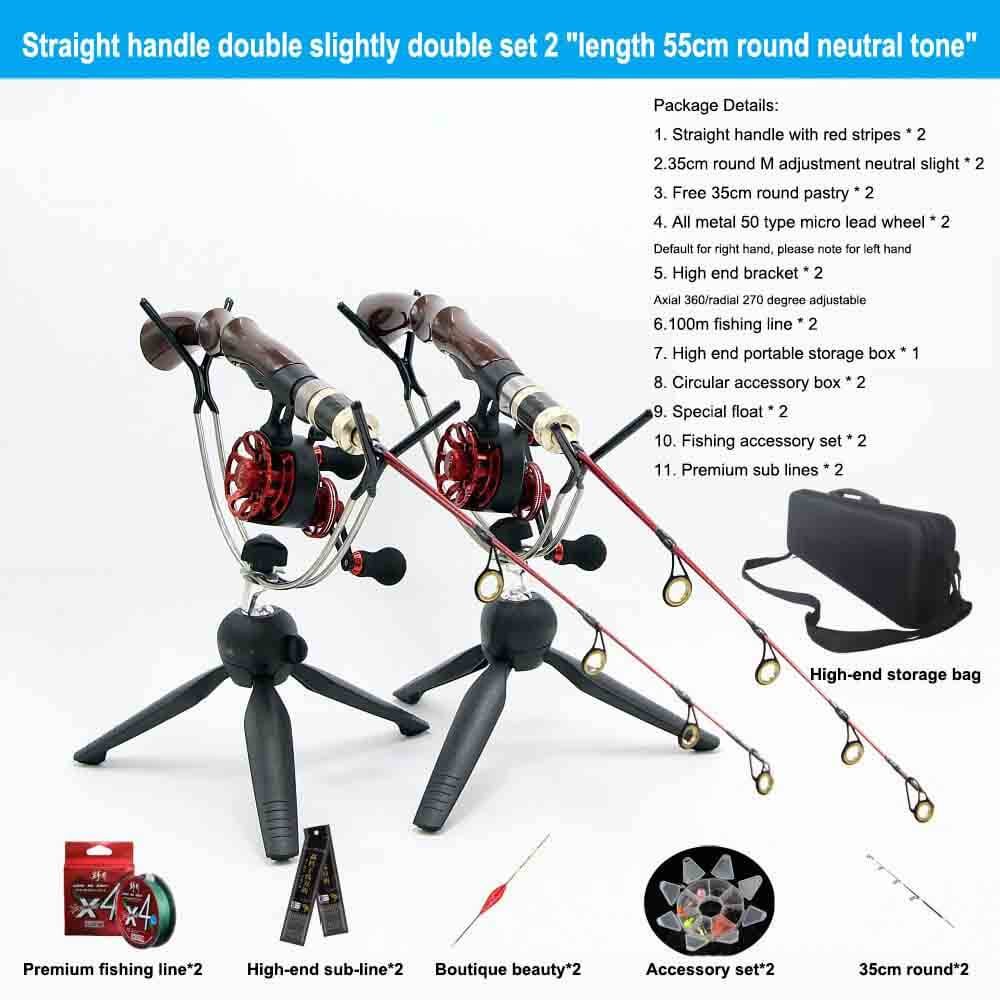
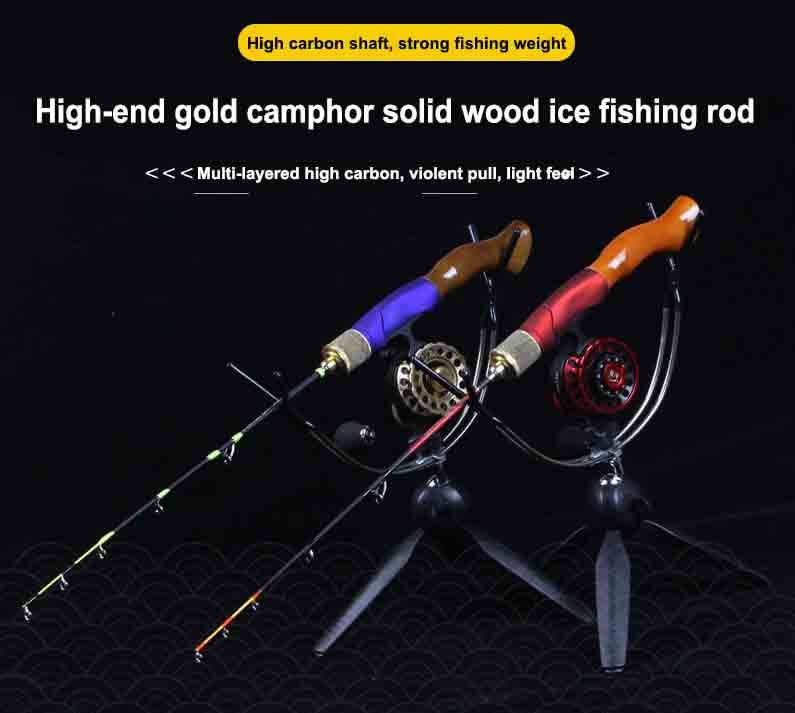
3. Solid Fiberglass vs. Carbon at -40°C: The Profitability Breakdown
The debate between carbon and fiberglass is a critical commercial decision. While carbon dominates open-water bass fishing, it is a liability on the ice. Let’s break down why focusing your fiberglass ice fishing rod wholesale strategy is the ultimate margin-protector.
Why High-Modulus Carbon Fails in Sub-Zero Field Tests
High-modulus carbon fiber is incredibly rigid and sensitive. However, at sub-zero temperatures, the resin matrix binding the carbon fibers loses elasticity. When an angler sets the hook aggressively on a heavy Lake Trout or Walleye, the brittle carbon structure undergoes catastrophic shear failure. From a B2B perspective, selling high-modulus carbon ice rods leads directly to a spike in warranty claims and retailer chargebacks, devastating your wholesale margins.
Maximizing Wholesale Margins with Solid Fiberglass Blanks
Solid fiberglass ice rod blanks, on the other hand, boast a naturally dense and highly flexible molecular structure. Even when frozen solid, fiberglass can bend double without fracturing. They are cheaper to produce, incredibly tough, and drastically lower your defect rates. Let’s look at a financial comparison:
| Metric | High-Modulus Carbon | Solid Fiberglass (Recommended) |
|---|---|---|
| Sub-Zero Durability (-40°C) | Poor (High risk of brittle snap) | Excellent (Virtually unbreakable) |
| Factory Unit Cost | High | Low to Medium |
| Retail Return Rate | 8% – 12% | Under 1.5% |
| B2B Profitability Index | Moderate (Eaten by returns) | Maximum Margin Potential |
4. Solving the “Frozen Guide” Crisis: Hardware Sourcing Strategies
If there is one universal complaint from winter anglers, it is ice buildup on the guides. When water from the line freezes on small micro-guides, the rod becomes useless. Solving this hardware issue is paramount for anyone importing durable ice fishing tackle.
Specifying Oversized Internal Diameters for Ice Clearance
Do not let your factory use leftover summer rod guides. You must explicitly order freeze proof fishing rod guides. These feature oversized internal diameters (IDs) that allow ice crystals to pass through or be easily knocked off by the angler without damaging the ceramic insert. A commercial winter fishing gear import contract should specify guide sizes at least 30% larger than equivalent open-water rods.
Anti-Freeze Wrap Finishes and Hardware Durability
Furthermore, the thread wraps securing the guides must be sealed with a specialized anti-freeze flex coat. Standard epoxies crack, allowing moisture to penetrate the wrap, rust the guide foot, and ultimately cause the guide to fall off. By enforcing these hardware specs, you drastically increase the lifespan of your products.
If you want to skip the trial-and-error of hardware selection, Havenseek Fishing Tackle offers pre-engineered winter rod setups featuring oversized alloy guides guaranteed to perform flawlessly in sleet and snow.
5. Navigating OEM Customization and Factory MOQs
Building a proprietary brand requires customization, but many buyers hit a wall during ice fishing rod MOQ negotiation. A specialized custom ice rods factory often requires orders of 1,000+ units per SKU for fully custom setups. How do you bypass this capital trap?
Component Standardization Workflows to Lower MOQs
The trick is component standardization. Instead of designing a rod from scratch, utilize the factory’s existing, proven solid fiberglass blanks, but customize the visual elements. Requesting custom EVA grip ice rods wholesale is much easier to negotiate. You can standardise the blank length and action across 3 different models, but change the thread wrap colors, handle lengths, and logo decals. This allows the factory to run a single large batch of blanks, satisfying their production efficiency, while you get three distinct products for your catalog.
Building Your Branded Winter Inventory Efficiently
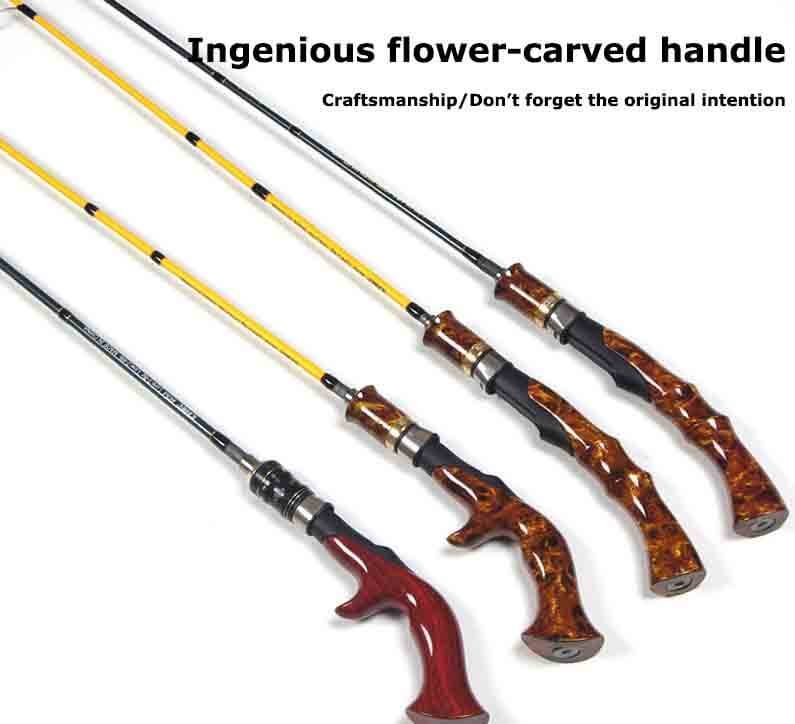
By leveraging OEM ice fishing rod production smartly, you minimize upfront cash flow risks. Focus your budget on high-impact areas: ergonomic handles that accommodate heavy winter gloves, and high-visibility neon tip sections that detect subtle bites in blizzard conditions. This is how you source high margin winter fishing gear without drowning in excess inventory.
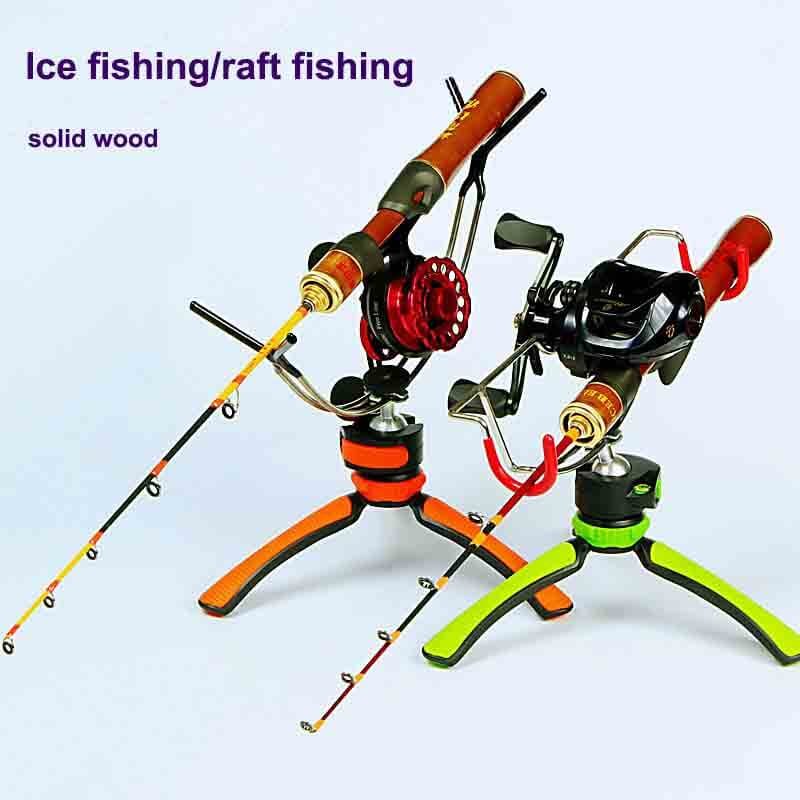
6. Securing Supply: Logistics and Freight for Fragile Ice Rods
Procuring excellent cold resistant ice fishing rods is useless if they arrive crushed in November. The global winter tackle logistics environment is notoriously harsh on delicate rod tips. You must dictate the packaging standards to your winter fishing tackle supply chain managers.
Optimal Production Windows and Factory Packaging Tactics
Place your bulk ice fishing rod procurement orders no later than May. This ensures production finishes by August, leaving ample buffer for September sea freight. Demand heavy-wall PVC or reinforced triangle corrugated tubes for inner packaging. Do not accept standard square cartons for ice rods, as they easily collapse under the weight of other pallets in a shipping container.
7. Real-World B2B Case Study: Slashing Return Rates by 35%
Let’s look at a concrete example. In 2024, a major distributor in Canada faced a 12% return rate on their premium carbon ice setups due to cold-weather snapping. They switched their OEM ice fishing rod production to Havenseek Fishing Tackle in 2025. We re-engineered their lineup using solid fiberglass blanks and oversized freeze proof fishing rod guides. We also implemented rigorous cold chamber rod stress testing at the factory level.
The result? In the brutal winter of 2025-2026, their return rate plummeted to just 0.8%. They saved tens of thousands of dollars in warranty replacements and leveraged their newfound reputation for durability to secure three new major retail chain accounts. This proves that investing in anti-fracture ice rod materials translates directly to massive commercial growth.
8. B2B Buyer Pitfalls & Common Mistakes
- Mistake 1: Using open-water rod factories for ice rods. They lack the specialized elastomeric resins needed for sub-zero temperatures.
- Mistake 2: Ignoring guide sizing. Standard micro-guides will ice up instantly, ruining the customer experience.
- Mistake 3: Late ordering. Booking production in August guarantees you will miss the early ice sales window due to freight delays.
9. 2026 Winter Tackle B2B FAQ
Q1: How to import cold resistant ice fishing rods from overseas factories?
To import successfully, identify a verified custom ice rods factory that specializes in sub-zero resins. Request cold-chamber stress test data, specify solid fiberglass blanks, and finalize orders by May to ensure timely sea freight delivery before winter.
Q2: What is the standard MOQ for a custom ice rods factory?
Typically, a custom ice rods factory requires an MOQ of 500 to 1,000 units per model. However, through smart ice fishing rod MOQ negotiation—like standardizing blanks and only customizing EVA grips—you can often lower the entry barrier.
Q3: Why is fiberglass better than carbon for wholesale ice fishing rods?
Fiberglass is vastly superior because it retains structural elasticity at -40°C, drastically lowering breakage rates. High-modulus carbon becomes brittle and shatters under heavy load in freezing conditions, causing high retailer return rates.
Q4: How do suppliers test durable ice fishing tackle for sub-zero temperatures?
Top-tier factories conduct cold chamber rod stress testing, soaking blanks at -30°C for 24 hours, followed by aggressive 90-degree flex-fatigue tests to verify the integrity of the anti-fracture ice rod materials and epoxy.
Q5: What are the best guide rings to prevent freezing on ice rods?
The optimal solution is utilizing freeze proof fishing rod guides with oversized internal diameters (IDs) and heavy-duty alloy frames. These allow ice to be easily cleared without damaging the ceramic insert or the anti-freeze thread wraps.
Q6: How to reduce return rates on imported winter fishing gear?
Transition from carbon to solid fiberglass ice rod blanks, specify oversized freeze-proof guides, mandate industrial sub-zero resins, and enforce strict factory-level cold-chamber QC testing prior to shipment.
Upgrade Your 2026 Winter Tackle Inventory Today
Stop losing margins to brittle rods. Partner with Havenseek Fishing Tackle for guaranteed cold-weather performance.
Get Free Quote in 12 Hours