Welcome To HavenseeK Fishing Tackle

What Ice Anglers Want: A Buyer’s Guide to Rod Ice Fishing Factory Specs
Written by Michael Thorne – 18-year Export Director and Product Development Lead at Havenseek Fishing Tackle, personally involved in the design and sourcing of over 200,000 precision ice fishing rods for 500+ brands across North America and Europe.
Why this article is worth your next 15 minutes: This isn’t another generic list of fishing rod features. This is a masterclass in deconstructing the unspoken, critical demands of serious ice anglers and translating them into concrete, factory-floor specifications. If you are a brand owner, retailer, or sourcing agent, buying rod ice fishing products without this insight is like navigating a frozen lake blindfolded. By the end, you’ll have a actionable checklist to communicate with any rod ice fishing manufacturer, ensuring the products you source don’t just meet a price point, but dominate a market segment. I’ve seen this knowledge turn struggling import lines into category leaders. Let’s unlock that for you.
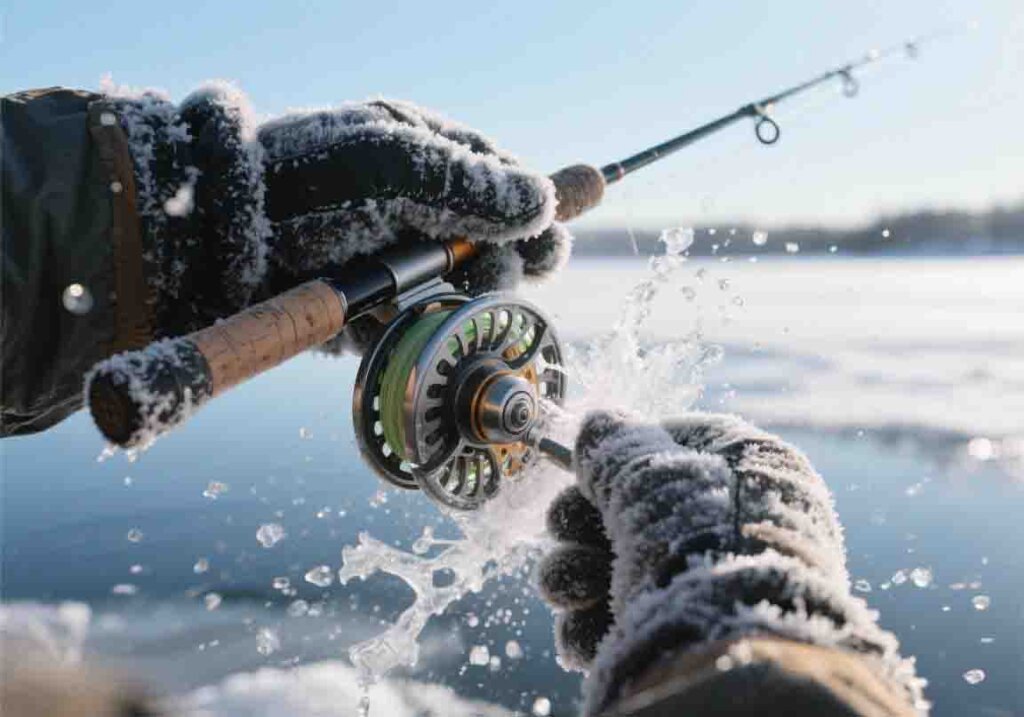
Table of Contents
- Beyond the Basics: The Serious Angler’s Demands on Materials & Feel
- Performance Under the Ice: Specifying Action, Guides, and Reel Seats
- Durability in the Real World: Non-Negotiable Tests for Your Factory
- From Insight to Order: Translating Demands into Factory Specifications
- FAQ: Sourcing High-Performance Ice Fishing Rods
Introduction
Walk into any big-box store in the ice belt, and you’ll see racks of rod ice fishing options. Yet, season after season, the same patterns repeat: some models collect dust on clearance racks, while others sell out before the first hard freeze and command loyal, repeat customers. The difference isn’t luck or marketing hype alone. The chasm between success and failure in this niche is defined by one critical factor: whether the sourcing decision truly understood the end-user. For a B2B buyer, your job transcends comparing FOB prices and MOQs. Your real value is acting as the authoritative voice of the serious ice angler to your rod ice fishing factory. This guide provides the translation manual. We will dissect the exacting, often unwritten, requirements of dedicated ice fishermen and show you how to convert them into technical specifications and quality control protocols. This is how you move from being a commodity purchaser to a strategic product developer, sourcing rod ice fishing tools that build your brand’s reputation for performance and quality.
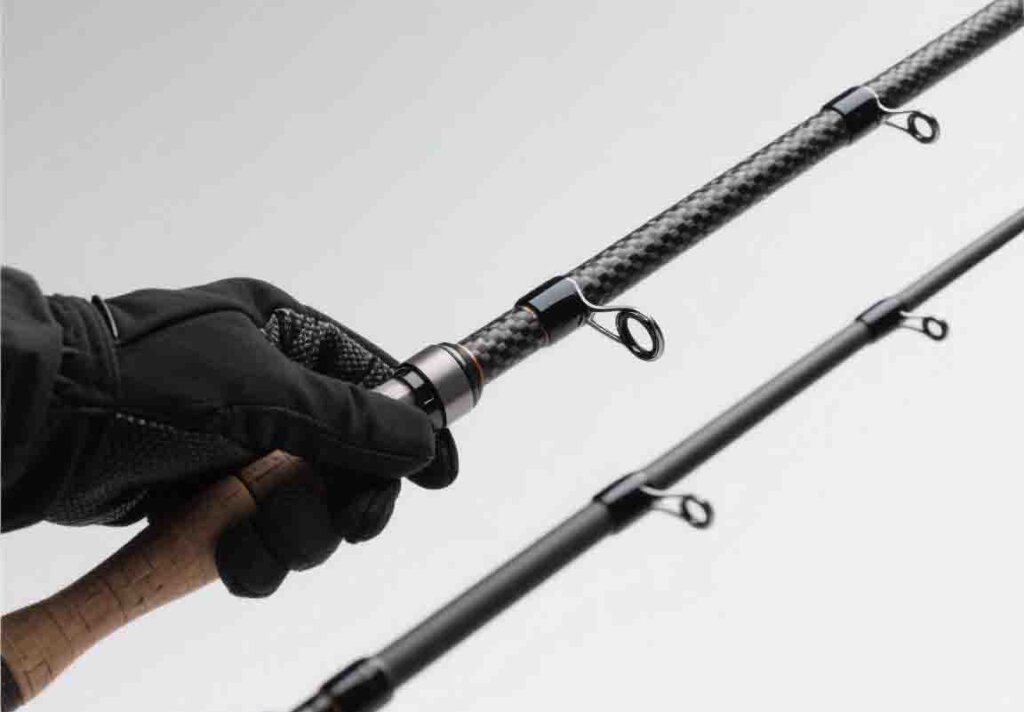
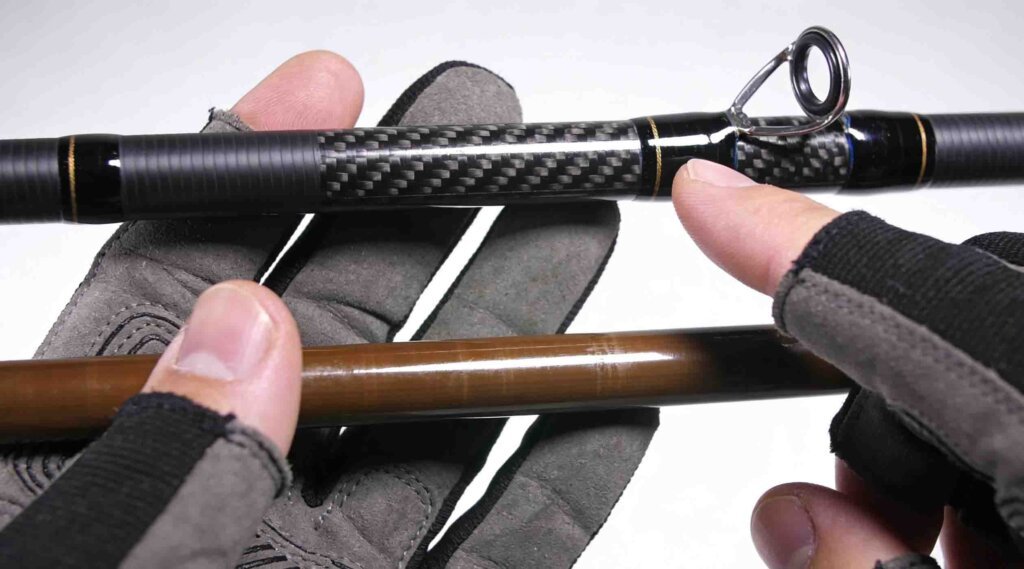
A side-by-side comparison showing a high-end ice fishing rod blank with detailed carbon weave visible next to a generic, glossy blank. A gloved hand points to specific construction details.
1. Beyond the Basics: The Serious Angler’s Demands on Materials & Feel
The first disconnect between a casual buyer and a serious angler happens at the most fundamental level: the blank. It’s not just a “stick”; it’s the primary sensory organ. Here’s what matters.
The Carbon Fiber Deep Dive: Modulus, Layup, and Feel
To a serious angler, “carbon fiber” is a starting point, not a specification. The conversation is about modulus, weave, and layup schedule.
- Modulus Matters for Sensation: A rod ice fishing manufacturer might tout “high-modulus carbon,” but you must dig deeper.
- Standard Modulus (24T-30T): Offers durability and a slightly more forgiving action. Good for heavier lures or anglers targeting larger, aggressive fish like pike or lake trout.
- Intermediate to High Modulus (30T-40T): The sweet spot for many enthusiasts. Provides an exceptional balance of sensitivity, light weight, and sufficient strength. This is where you get that coveted “telepathic” bite detection.
- Ultra-High Modulus (40T+): Incredibly sensitive and incredibly stiff. However, it can be more brittle in extreme cold if not engineered correctly. It’s for the purist who prioritizes feel above all else.
Your Actionable Spec: Don’t just accept “carbon fiber.” Require your factory to specify the tonnage (T) of the primary carbon cloth used in the blank. Ask about the layup schedule—how layers of different materials are oriented to create specific actions and prevent twisting (anti-torque).
Sensitivity is the Holy Grail: How Blank Design Transmits the Bite
A sensitive blank transmits the faintest tap from a tentative panfish directly to the angler’s hand. Several factory-level factors dictate this:
- Taper Design & Wall Consistency: A precision taper is engineered, not accidental. Inconsistent wall thickness, especially around the guide attachment points, creates “dead spots” that dampen sensitivity.
- The Role of the Spiral Wrap (Inline Reel Rods): For inline reel setups popular for finesse panfish, a spiral (or “acid”) wrap where the guides travel along the blank’s spine dramatically improves load distribution and feel. Not all factories master this winding technique.
Your Actionable Spec: Request a “ deflection curve” diagram for the blank model. During sampling, perform the “tap test”: hold the rod tip near a hard surface, tap the blank gently, and feel the vibration travel to the butt. A good blank will transmit a sharp, clean buzz; a poor one will feel dull.
Grip in the Extreme: Handle Material Science
The handle is the primary human-rod interface, and in sub-zero temperatures, material choice is critical.
| Material | Angler Perception & Practical Reality | Your Factory Inquiry |
|---|---|---|
| Premium EVA | Durable, easy to clean, provides good insulation. Higher-density EVA offers better feel. Cheaper EVA can feel slippery when wet/icy. | “What is the density of the EVA foam? Is it rated for low-temperature flexibility?” |
| Natural Cork | Warm to the touch, excellent grip even when wet, classic aesthetic. Can degrade if not high-grade and can be damaged by hooks. | “What is the grade of the cork (e.g., Flor grade)? How is it sealed/protected?” |
| Thermoplastic Rubber/Schrink Tube | Provides a very secure, non-slip grip in all conditions. Can feel cold initially. Often used on the foregrip for precise finger placement. | “What is the low-temperature performance rating of the TPR material?” |
2. Performance Under the Ice: Specifying Action, Guides, and Reel Seats
Performance is where design meets the harsh reality of the ice. Every component must be specified with intent.
Matching Rod Action to Fish and Technique: A Spec Table
“Fast action” is meaningless without context. You must guide the rod ice fishing factory with precise application data.
| Target Species & Technique | Ideal Rod Action & Power | Why It Matters to the Angler |
|---|---|---|
| Panfish (Bluegill, Perch) – Finesse | Ultra-Fast to Fast, Light Power | Maximizes sensitivity for detecting light bites, provides quick hook set with small hooks. |
| Walleye – Jigging Spoons/Vertical | Fast, Medium-Light to Medium | Enough backbone to set the hook at depth and fight a strong fish, while maintaining tip sensitivity. |
| Lake Trout/Pike – Heavy Jigging/Live Bait | Moderate-Fast to Fast, Medium-Heavy to Heavy | The moderate-fast tip can load with heavy lures and absorb headshakes; the powerful butt section controls big fish. |
| All-Around/“Multi-Species” | Fast, Medium Power | The compromise choice. Must be executed very well to not feel like a “master of none.” |
Why Micro-Guides Are Not Just a Gimmick
Modern ice rods increasingly use small, lightweight guides. A savvy buyer knows why:
- Reduced Ice-Up: Smaller surface area for freezing spray to accumulate.
- Improved Line Flow: Creates a smoother, lower-friction path from reel to tip, crucial for light-line applications.
- Weight Savings & Balance: Removes weight from the blank, enhancing sensitivity and improving overall balance.
Your Actionable Spec: Discuss guide material and framing. Stainless steel is standard; titanium frames offer superior corrosion resistance for saltwater ice fishing. For the inserts, ask for hardened aluminum oxide or silicon carbide (SiC) for durability and smoothness. Inspect the wrap finish—epoxy should be smooth, bubble-free, and not “glop” over the guide foot.
Reel Seat Stability: The Critical Interface
A loose reel is a catastrophic failure point. The reel seat must withstand constant torque and impact in the cold.
- Machined Aluminum vs. Graphite: Machined aluminum seats are generally more durable and secure than molded graphite composites.
- Locking Mechanism: A secure, threaded ring is standard. Check for smooth threading and a final “stop” that prevents over-loosening.
- Compatibility: Ensure the seat accommodates the range of reel foot sizes common in the market you serve (e.g., standard 13mm to 17mm for most ice reels).
Your Factory Test: During sample evaluation, mount a reel, tighten it firmly, and then subject the rod to sharp, repeated taps and shakes. The reel should not shift, creak, or loosen.
A close-up of an ice angler’s hands on a frozen lake, performing a harsh “cold shake” test on a rod and reel combo, with ice shards visible.
3. Durability in the Real World: Non-Negotiable Tests for Your Factory
The ice fishing environment is abusive. Your sourced rods must be built for it.
The “Cold Impact Resistance” Mandate
Carbon fiber behaves differently at -30°C than at room temperature. A brittle blank is a safety hazard.
- Factory-Level Testing: A reputable rod ice fishing factory will have a cold chamber where they subject finished blanks to a standardized low-temperature flex test (e.g., ASTM D790). They test for failure, not just feel.
- Your Proxy Test (The “Car Door” Simulator): While not scientific, you can place a sample rod in a commercial freezer for 24 hours, then carefully flex it in a controlled manner (wear safety glasses). Listen for cracking sounds. A well-made blank will remain resilient.
Connector System Reliability for Travel Rods
Multi-piece rods are essential for mobility, but each connection is a potential failure point.
- Spigot (Fuji DVS-style) vs. Over-Fit (Ferrule) Systems: Spigot systems, where a male piece inserts into a reinforced female socket, generally offer better alignment and durability with less signal loss than simple overlap ferrules.
- Inspection Points: The fit should be snug but not require excessive force. There should be no “wiggle” or “click” when assembled and twisted. The finish should be perfectly flush.
Finish Quality: The First Line of Defense
The rod’s finish isn’t about gloss; it’s a protective shell.
- Chip and Scratch Resistance: A thin, cheap coat will chip easily from flying ice or storage in a bucket with other gear. This exposes the underlying fibers to moisture.
- UV Resistance: Even winter sun can degrade epoxy over time, causing yellowing and brittleness.
- Your Inspection: Look for an even, high-clarity coating. Run a fingernail gently over non-critical areas (with permission). A quality finish will resist marking.
4. From Insight to Order: Translating Demands into Factory Specifications
This is where you become the conductor, translating the angler’s symphony into a score the factory can play.
Creating Your “Proof of Concept” Sample Brief
When requesting samples, send a detailed technical brief, not a one-line email.
Example Brief Structure:
- Target Application: “Finesse vertical jigging for walleye in 15-40 feet of water, using 1/8oz to 3/8oz jigging spoons and 6-8 lb fluorocarbon.”
- Priority Hierarchy: “Priority #1: Ultimate sensitivity. Priority #2: Lightweight balance for all-day use. Priority #3: Durability for occasional larger pike.”
- Key Specifications:
- Blank: 30T-36T carbon, solid tip construction.
- Action: Fast.
- Length: 32 inches.
- Handle: Split-grip, premium EVA butt, TPR foregrip.
- Guides: 5x micro guides with SiC inserts, titanium frames.
- Reel Seat: Machined aluminum, down-locking.
- Requested Tests: “Please provide deflection curve data and confirm cold chamber testing to -20°C is standard.”
The Comprehensive Sample Evaluation Checklist
When samples arrive, go beyond a visual inspection.
- [ ] Weigh the rod on a precision scale (grams).
- [ ] Find the balance point with the intended reel mounted.
- [ ] Perform the “tap test” for vibration transmission.
- [ ] Check guide alignment with a laser or by sighting down the spine.
- [ ] Assemble/Disassemble travel rods 20+ times, checking for wear and consistent fit.
- [ ] Mount a reel and perform the “stress shake” test.
- [ ] Flex the rod moderately in a safe arc, feeling for flat spots or irregularities.
Critical Questions for Your Potential Manufacturing Partner
Your due diligence questions separate partners from vendors. Ask any potential rod ice fishing manufacturer:
- “Can you walk me through your quality control process for blank wall thickness consistency?”
- “Do you perform batch testing of raw carbon cloth for modulus verification?”
- “What is your standard low-temperature impact test protocol, and can you share typical results?”
- “Can you provide traceability documentation for your primary components (guides, reel seats, carbon)?”
- “What is your engineering team’s process for translating a performance requirement (e.g., ‘more sensitive for panfish’) into a new blank design?”
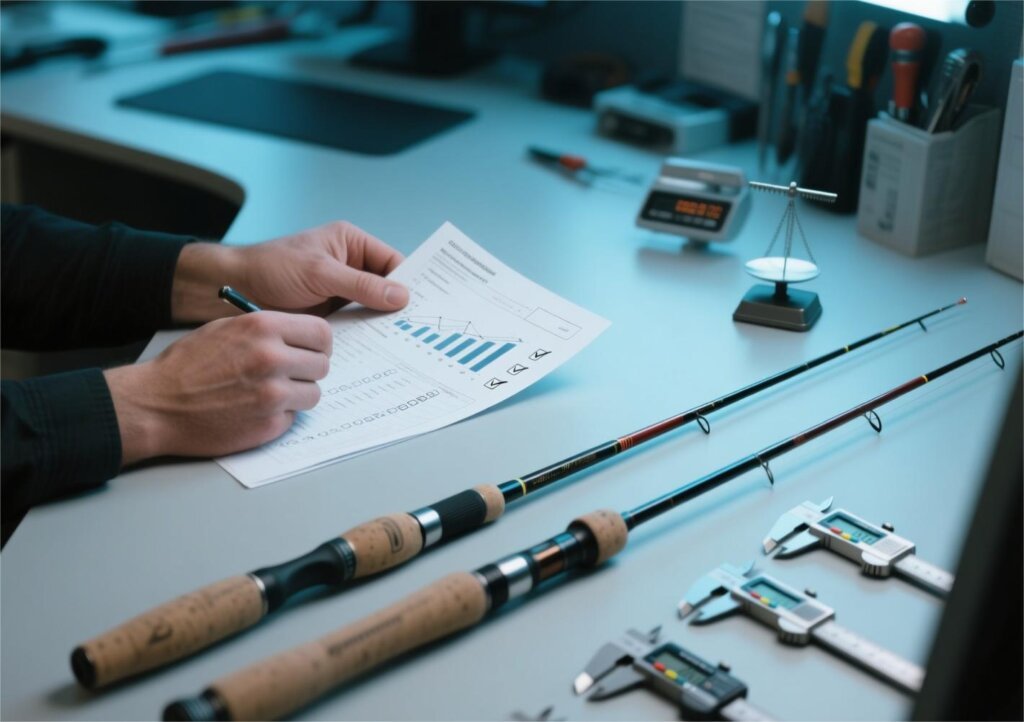
A professional buyer at a desk, reviewing a detailed technical specification sheet for ice fishing rods, with sample rods and a checklist visible.
Conclusion
Sourcing exceptional rod ice fishing gear is a specialized discipline. It requires you to be a hybrid: part market analyst, part materials scientist, and part quality assurance engineer. The most successful buyers we work with at Havenseek are those who embody this deep, angler-centric knowledge. They don’t just buy a product; they co-develop a solution to a specific set of on-ice challenges.
This expertise transforms your role from a cost center to a core competitive advantage, allowing you to build a brand known for performance and reliability. The market is crowded with generic sticks, but it is starved for purpose-built tools. By applying the framework in this guide, you position yourself to fill that void.
Ready to source rods that serious anglers will seek out? Let’s translate these insights into your next best-selling product line. Download our comprehensive 2026 Ice Fishing Product Development & Sourcing Checklist PDF and submit your specific product requirements. Our engineering team will provide a free, confidential analysis and sample proposal within 12 hours.
FAQ: Sourcing High-Performance Ice Fishing Rods
What is the most important thing to communicate to a rod ice fishing factory?
The specific end-use application and target angler. Instead of “a 28-inch medium rod,” specify “a 28-inch fast-action rod for sight-fishing panfish in shallow, clear water using 2-lb test line.” This gives the factory’s engineers a true performance goal.
How can I verify the quality of carbon fiber used by a manufacturer?
Request a Material Data Sheet (MDS) or certificate of analysis for the carbon prepreg they use. Reputable suppliers will have this. Also, ask about their incoming material inspection process for the carbon cloth.
Are custom graphics and packaging a complicated process?
For an experienced rod ice fishing manufacturer, it’s a standard service. The complexity depends on the technique (hot stamp, decal, direct print) and the number of colors. Provide print-ready vector artwork (AI/EPS files) and clear Pantone color codes to streamline the process.
What is a realistic Minimum Order Quantity (MOQ) for a custom ice fishing rod?
This varies widely. For a completely new blank design
How long does the sampling process typically take?
For a standard sample based on existing tooling, expect 4-6 weeks from confirmed order to delivery. For a new design requiring new mandrels, allow 8-12 weeks. A clear technical brief significantly speeds up this process.
References & Further Reading:
- “The Materials Science of Modern Fishing Rods” – Advanced Angler
- “Understanding Rod Action and Power: A Guide for Tackle Buyers” – Tackle Business Magazine
- “Global Sourcing 101: Quality Assurance for Fishing Tackle” – Sourcing Journal