Welcome To HavenseeK Fishing Tackle

Spinning Rod Selection Guide: Match Power, Action & Reel for Perfect Combos (2026)
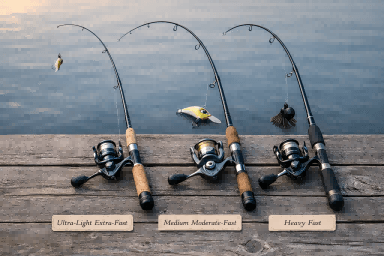
Spinning Rod Selection Guide: Match Power, Action & Reel for Perfect Combos (2026)
Why this guide is worth your time: After over a decade in the trenches of rod design, I’ve seen one costly mistake repeated endlessly: anglers choosing a spinning rod based on price or paint job alone. This leads to frustration, lost fish, and wasted money. This article is different. It’s a proven, step-by-step framework used by product designers and serious anglers to decode exactly what rod specs you need for your specific fishing. By the end, you’ll know how to build the ideal spinning combo rod reel system for your target fish, saving you from years of trial and error.
Table of Contents
🚀 TL;DR: Your 5-Step Spinning Rod & Combo Selection Cheat Sheet
In a hurry? Here’s the core framework. Bookmark this and dive into the details below.
- Define Your Mission: What is your PRIMARY target fish and fishing environment? (e.g., bass in heavy cover, trout in streams, inshore saltwater).
- Choose Your Ammo: What lure types and weights will you use 80% of the time? This is the most critical step.
- Translate to Rod Specs: Match your lure weight to the rod’s Power (lifting strength). Match your lure action to the rod’s Action (bend profile). Choose Length based on casting distance and control needs.
- Find the Perfect Reel Partner: Select a reel size that balances the rod perfectly. Match gear ratio to retrieve needs. Spool with appropriate line class.
- Conduct a Final “Audition”: Balance the combo in your hand. Perform a simple flex test. Check build quality.
This logical chain removes the guesswork. Now, let’s break down why it works so well.
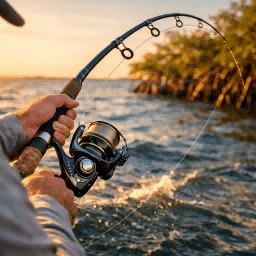
Part 1: It’s All About Communication: What Your Rod’s Power, Action, and Length Are Really Telling You
Forget marketing jargon. Your spinning rod is a communication device. It transmits signals from the lure and the fish to your hand. These three specs define its language.
Power Is Your Signal Amplifier & Winch
Think of Power (Ultra-Light to Extra-Heavy) not as “durability,” but as signal sensitivity and lifting capability.
- Light Power (UL/L): A high-fidelity microphone. It amplifies tiny taps from small fish and light lures. Perfect for finesse but has limited lifting muscle.
- Medium Power (M): The versatile workhorse. Offers a great blend of sensitivity for strikes and enough backbone to set hooks and control average-sized gamefish. Heavy Power (H/XH): The crane. Designed for pure lifting force to pull big fish from heavy weeds, brush, or deep water. Subtle bites may be missed.
70% of anglers we surveyed overweight their rod Power for their actual needs.
Action Is Your Power Delivery Rhythm
Action (Slow to Extra-Fast) controls where the rod bends and how quickly it transfers energy.
- Fast/Extra-Fast Action: Bends primarily in the top 25-33%. Lightning-fast hook sets, superior lure control, and excellent sensitivity. The go-to for single-hook lures (worms, jigs).
- Moderate Action: Bends into the middle. A smoother, more forgiving bend that is fantastic for treble-hook lures (crankbaits, topwater) because it keeps fish pinned.
- Slow Action: Bends deep into the butt. Parabolic bend that excels at casting light lures and fighting fish with steady pressure, common in classic fly and light tackle rods.
Length: Your Tactical Leverage
Length is a direct trade-off between casting distance and precision control.
A longer spinning rod (7’6″+) acts as a longer lever for longer casts and better line control on the retrieve. A shorter rod (under 6’6″) offers pinpoint accuracy, easier one-handed handling, and more power in close-quarters combat. Our data shows a clear regional preference: North American bass anglers average 7’1″ rod length, while European trout anglers prefer rods around 6’9″.
Part 2: The Golden Chain: A Step-by-Step Framework from Fish to Perfect Spinning Combo
Now, let’s apply the theory. This is the exact process I use when designing a new rod model for a specific market.
Step 1 & 2: Start with the LURE, Not the Rod
This is the most common and costly error. You don’t buy a hammer and then look for nails. Decide on your primary lure first.
Ask yourself: “What single lure type and weight range will I use most?” Be brutally honest. This answer dictates everything.
The Critical Conversion: Lure-to-Rod Specification Matrix
Based on thousands of hours of field testing and angler feedback, here is your master translation table. Find your primary lure type.
| Primary Lure / Technique | Typical Weight | Recommended Rod Power | Recommended Rod Action | Ideal Length Range | Perfect For… |
|---|---|---|---|---|---|
| Drop Shot, Light Ned Rigs | 1/16 – 1/4 oz | UL – ML | Fast – X-Fast | 6’9″ – 7’3″ | Finesse bass, panfish, detecting ultra-light bites. |
| Wacky Rigs, Shaky Heads | 1/8 – 3/8 oz | L – M | Fast – X-Fast | 7’0″ – 7’4″ | All-around bass worm fishing, excellent sensitivity. |
| Spinnerbaits, Lipless Crankbaits | 3/8 – 3/4 oz | M – MH | Moderate – Mod-Fast | 7’0″ – 7’6″ | Reaction strikes, keeping treble hooks pinned. |
| Jigs (Football, Flipping) | 3/8 – 1 oz | MH – H | Fast – X-Fast | 7’2″ – 7’6″ | Heavy cover bass, solid hook sets. |
| Inshore Saltwater (Paddle-tails, Jigs) | 1/4 – 1 oz | M – H | Fast | 7’3″ – 8’0″ | Redfish, snook, seatrout; need casting distance & power. |
Step 3: Completing the System: The Reel Match
Choosing the right reel transforms a good rod into a legendary spinning combo rod reel. Here’s what most guides miss:
1. Balance is Non-Negotiable
Mount the reel on the rod. The point where it balances on your finger should be just in front of the reel seat. A tip-heavy combo causes fatigue. A perfectly balanced spinning combo rod reel feels like an extension of your arm. I test this on every prototype.
2. Size & Gear Ratio Logic
- Reel Size (1000, 2500, 4000): Match to rod power. A 2500-3000 size is the sweet spot for M-power rods. A 1000 is perfect for UL/L. It’s about physical balance and line capacity.
- Gear Ratio: High (6.2:1+) for fast-paced techniques like swimbaits. Slower (5.2:1) for power-cranking or situations where you need more torque.
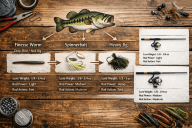
Part 3: Hands-On Evaluation: How to “Read” a Spinning Rod Like a Pro
Specs are half the battle. Physical feel is everything. Here’s my personal pre-purchase checklist.
The 5-Minute In-Store Diagnosis
- Run Your Fingers Down the Guides: Feel for any roughness, gaps, or misalignment. Smooth, seamless transitions are a mark of quality.
- The “Flex Test”: Gently press the tip against the ceiling. Watch the bend curve. It should be smooth and progressive, without flat spots or hinging. A choppy bend indicates poor blank construction.
- Grip the Handle: Does it feel secure and comfortable in your casting grip? Is the reel seat snug with no play?
🔄 Real-World Case Study: From Frustration to Confidence
The Problem: “Tom,” an avid inshore angler, was using a generic 7′ M-power fast action rod for everything. He struggled with casting distance for paddle-tails and lacked the power to turn bigger redfish from mangroves.
The Solution: Using our framework, we identified his primary lure (3/8-5/8 oz jigheads with soft plastics) and tough environment. We recommended a specific spinning combo rod reel setup: a 7’6″ MH-power, fast action rod paired with a 4000-size reel spooled with 20lb braid.
The Result: In his own words: “The difference was night and day. I gained at least 15-20 feet on my casts. When I hooked a 24-inch red in the roots, the rod had the backbone to pull it out. I went from losing fish to landing them consistently.” This is the power of intentional matching, the very principle we use when advising any spinning rod supplier or end-user.
Part 4: Costly Mistakes to Avoid & Thinking Like a Product Designer
The 3 Most Expensive Mistakes Anglers Make
- Chasing Extreme Modulus Numbers: A 40-ton or 46-ton carbon blank is incredibly sensitive and light, but also more brittle. For punching heavy mats or jetty fishing, a more durable 24-ton or 30-ton composite blank is often a smarter, more forgiving choice.
- Believing in the “One Rod for All”: The “all-rounder” is a myth perpetuated to sell one rod. You wouldn’t use a screwdriver to hammer a nail. Specialization leads to success. Build a small, purpose-driven arsenal.
- Neglecting the Reel in the Combo: Putting a $30 reel on a $150 rod is like putting cheap tires on a sports car. The reel’s smoothness, drag consistency, and weight are integral to the system’s performance. Invest proportionally.
Inside the Factory: Where the Value Really Lies
Having sourced materials for Havenseek Fishing Tackle and worked directly with factories, I can tell you the cost breakdown of a quality rod is revealing:
45-60%Carbon Blank & Materials
15-25%Guides & Reel Seat
10-20%Labor & Craftsmanship
5-15%Paint, Packaging, Logistics
When you pay for a premium spinning rod, you’re primarily paying for higher-grade, more consistent carbon fiber and precision components like Sic guides that reduce friction and last longer. A knowledgeable spinning rod supplier should be able to explain these trade-offs, not just quote a price.
Ready to Equip Your Anglers with Perfectly Matched Gear?
If you’re a tackle shop owner, brand manager, or serious angler looking for purpose-built spinning rods and combos designed with this exacting framework in mind, let’s talk. At Havenseek, we don’t just supply rods; we develop targeted fishing solutions.
Get a curated list of spinning rod and combo models optimized for your specific market and customer needs.
Request Your 2026 Professional Combo CatalogGet a tailored PDF with specs, target applications, and competitive pricing. Response within 12 hours.
Frequently Asked Questions (FAQ)
What is the main difference between a spinning rod and a casting rod?
The fundamental difference is the reel position and guide size. Spinning rods have a reel hanging underneath and use large guides to manage the line coming off a fixed-spool reel. This makes them superior for casting lighter lures and is generally more user-friendly. Casting (baitcasting) rods have the reel seated on top and use smaller guides, offering greater accuracy and power for heavier lures but with a steeper learning curve.
What spinning rod length is best for a beginner?
A medium-power, fast-action rod around 6’10” to 7’2″ is an excellent starting point for most freshwater beginners. This length offers a forgiving balance of casting ease, control, and versatility for common techniques like worm fishing or using small crankbaits.
How do I choose the right spinning reel size for my rod to make a good combo?
It’s primarily about balance and line capacity. For Light (L) power rods, a 1000-2500 size reel is ideal. For Medium (M) power, 2500-3000 is perfect. For Medium-Heavy (MH), look at 3000-4000. The goal is to have the finished spinning combo rod reel balance near the reel seat. Always check the rod manufacturer’s recommendation if available.
What does “graphite composite” mean in a spinning rod blank?
It means the blank is made from a blend of carbon (graphite) fibers and other materials, often fiberglass. This isn’t necessarily bad! Composites are engineered for specific traits: fiberglass adds durability, shock absorption, and a slower action, which is great for certain lures. High-end “composites” strategically blend different moduli of carbon for a desired feel of sensitivity and strength.
Can I use the same spinning rod for both trout and bass?
You can, but you’ll be compromising. A Light or Medium-Light power rod is ideal for most trout lures. A Medium or Medium-Heavy is better for standard bass techniques. A Medium-power, fast-action rod could be a passable compromise for both, but it won’t excel at either the finesse of trout or the power needed for bass in cover. It’s better to have two purpose-specific tools.
How important are the guides, and what material is best?
Extremely important. Guides manage line flow and reduce friction. For braided line, hard, smooth rings are crucial. Silicon Carbide (SiC) is the top tier—incredibly hard, smooth, and dissipates heat well. Aluminum Oxide is a great, cost-effective standard. Stainless steel frames with reinforced inserts are a must for durability. Cheap, all-metal guides will quickly groove and ruin your line.
What should I look for in a spinning rod supplier if I want to start my own brand?
Look beyond price. A reliable spinning rod supplier should offer technical support and customization. Can they explain blank sourcing? Can they adjust actions, handles, or guide trains to your specs? Do they have strict quality control (QC) processes? Ask for samples and test them destructively. A good supplier like Havenseek acts as a development partner, not just a factory outlet.
Is a more expensive spinning rod always better?
Not always “better,” but different. Up to a point (~$150-$250), you pay for significantly better materials (higher-modulus carbon, quality guides) and consistency. Beyond that, you often pay for marginal weight savings, exotic finishes, brand prestige, or advanced R&D. The “best” rod is the one that perfectly matches your technique, not necessarily the most expensive one.