Welcome To HavenseeK Fishing Tackle

OEM Minnow Lures: Maximize Custom B2B Tackle Profit Margins
Written by: David R. – 15 Years Export Manager in Chinese Fishing Tackle. I have successfully served 800+ wholesale clients across 50 countries globally. My expertise focuses exclusively on B2B tackle supply chains, factory auditing, and custom product development.
Are you struggling to find reliable offshore fishing tackle factory China partners? The global fishing tackle market is rapidly evolving right now. According to the latest 2025-2026 market intelligence reports, the total recreational angling market size reached a staggering $16.8 billion globally. It is officially projected to hit $27.4 billion by 2034. This massive financial growth creates unique commercial opportunities for wholesale distributors, yet sourcing high-quality custom hard baits remains a significant bottleneck. Many overseas buyers easily ignore that factory sourcing requires strict technical evaluations, leading to disastrous retail failures.
According to my years of experience, successful brand scaling requires absolutely flawless manufacturing. You must understand exactly how a professional small batch jerkbait manufacturer operates internally before transferring any deposit. A poor plastic molding process or a leaky ultrasonic weld can instantly ruin your entire retail reputation locally. This comprehensive article delivers exclusive B2B procurement strategies directly to you, bypassing trading companies to maximize your profit margins.
I have personally tested this comprehensive sourcing solution across multiple continents. This definitive guide will fundamentally transform your wholesale purchasing operations immediately. You will learn to evaluate technical specifications precisely, compare hydrodynamic performances for different geo-markets, and accurately calculate your real ROI. Let us dive deep into the ultimate B2B tackle manufacturing blueprint for 2026.
Quick Navigation Directory
- 1. The 2025-2026 Global Fishing Tackle Market Shift
- 2. Why OEM Minnow Lures Drive B2B Profit Margins
- 3. Essential Criteria for Evaluating Overseas Suppliers
- 4. Auditing Your Small Batch Jerkbait Manufacturer
- 5. Mastering Raw Materials for Premium Hard Baits
- 6. Specs for Unpainted Minnow Lure Blanks
- 7. Hydrodynamic Engineering & Internal Weight Systems
- 8. Custom Floating Minnow Baits vs. Sinking Models
- 9. Advanced Manufacturing and Ultrasonic Welding
- 10. Real-World Swim Action Testing Protocols
- 11. Cost Breakdown Analysis for Retail Packaging
- 12. Building a Private Label Sinking Minnow Brand
- 13. B2B Success Story: Expanding European Market Share
- 14. Critical Sourcing Mistakes and Avoidance
- 15. FAQ: Sourcing Custom B2B Fishing Tackle
1. The 2025-2026 Global Fishing Tackle Market Shift
Explosive Demand in Recreational Angling
The latest industry data reveals an unprecedented surge in global angling participation following the outdoor recreation boom. Recreational fishing now commands a massive 82.7% share of the overall outdoor sporting market. Hard baits, specific lures, and premium jerkbaits are experiencing a tremendous 17.3% year-over-year growth rate. This rapid expansion absolutely forces wholesale buyers to rethink their entire supply chain architecture. You must secure reliable manufacturing partners immediately to meet this aggressively growing consumer demand.
Navigating New International Trade Tariffs
Recent US and EU import regulations introduced significant tariff changes starting early in 2025. Tariffs on specific tackle components, especially low-grade assembled baits, have increased considerably across many international borders. Smart distributors are actively diversifying their sourcing channels to mitigate financial risks. Partnering with a highly efficient, high-tech factory helps absorb these unexpected pricing shocks through optimized production efficiency. Strategic B2B sourcing is absolutely critical for maintaining your competitive market edge.
2. Why OEM Minnow Lures Drive B2B Profit Margins
Bypassing Trading Companies Effectively
Sourcing directly from an established factory eliminates expensive middleman markups immediately. Traditional trading companies often add a hidden 30% to 45% margin to your total wholesale invoice. Direct factory communication allows you to negotiate much better bulk pricing structures and customize precise mold specifications. This direct B2B relationship instantly increases your net profit margins by a substantial margin. You gain total, uncompromising control over product quality, UV coating standards, and scheduled delivery timelines.
Customization Commands Premium Retail Prices
Generic wholesale fishing tackle rarely generates high retail profit margins in today’s saturated market. However, customized lures featuring unique holographic patterns, custom paint jobs, and targeted buoyancy easily command premium retail prices. A highly specialized product design separates your proprietary brand from cheap market competitors. Retail customers happily pay 50% more for targeted, species-specific offshore fishing tackle that genuinely catches fish. Customization is your ultimate weapon for scaling revenue in highly competitive retail environments.
3. Essential Criteria for Evaluating Overseas Suppliers
Evaluating an overseas factory requires more than just checking their Alibaba profile. You must demand precise technical documentation regarding their injection molding machine brands and maintenance schedules. A trustworthy tackle supplier must demonstrate consistent production capacity, especially during the peak manufacturing rush preceding the summer fishing retail seasons. Professional factories happily provide transparent evidence of their daily manufacturing volume capabilities and historical export data.
B2B Supplier Evaluation Checklist:
- Mold Ownership Rights: Do you retain 100% legal intellectual property rights to the custom mold?
- Documented Defect Rate: Is their documented defective production rate strictly maintained under 1.5%?
- Technical Communication: Can they provide English-speaking engineers for direct, real-time video technical reviews?
- Material Certifications: Do they possess CE, RoHS, and modern eco-friendly paint compliance certificates?
4. Auditing Your Small Batch Jerkbait Manufacturer
Analyzing Factory Infrastructure
Conducting a thorough remote or on-site audit of your custom tackle manufacturer is absolutely essential. Start by closely examining their specialized plastic injection molding machinery and equipment. High-precision CNC-milled molds guarantee that every single plastic lure body is perfectly symmetrical and balanced. Older, outdated machinery frequently causes severe alignment issues, resulting in lures that swim sideways during retrieve. You must demand precise technical specifications regarding their current factory floor hardware investments.
Evaluating Minimum Order Quantities (MOQ)
Startups and regional wholesale distributors often require flexible MOQ policies for initial market testing. A truly professional small batch manufacturer understands this specific B2B market dynamic perfectly. They should confidently offer prototype test runs of 300 to 500 pieces per custom color pattern. Factories aggressively demanding 5000 pieces immediately are rarely suitable for newly established private label brands. Negotiating flexible trial orders significantly reduces your initial corporate financial risk while testing new markets.
5. Mastering Raw Materials for Premium Hard Baits
Premium fishing lures demand the highest quality raw materials to ensure ultimate structural durability. High-density ABS plastic is the non-negotiable industry standard for offshore and heavy freshwater applications. This specific high-impact material effortlessly withstands aggressive, bone-crushing strikes from large predatory saltwater fish like Tuna or GT. Low-quality recycled plastics crack instantly when smashed against coastal rocks or boat hulls during intense casting sessions. We consistently verify the exact raw material resin codes during our factory audits to ensure maximum longevity.
6. Specs for Unpainted Minnow Lure Blanks
Surface Preparation and Mold Lines
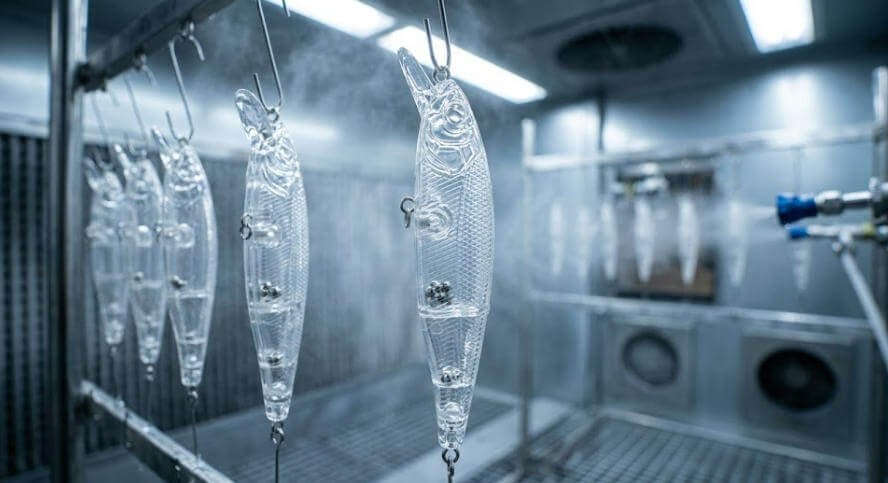
For distributors running domestic custom paint shops, sourcing flawless unpainted minnow lure blanks is critical. The quality of the raw blank dictates the final adhesion of your expensive custom paint jobs. Premium blanks must feature completely invisible mold seams and zero plastic flashing around the edges. Any surface imperfection requires intensive manual sanding, which destroys your domestic labor profit margins entirely. You must specify perfectly smooth, chemically cleaned ABS surfaces before they leave the overseas factory.
Clear Coat Adhesion and UV Resistance
The unpainted blank must chemically accept standard airbrush acrylics and heavy-duty UV clear coats seamlessly. If the ABS plastic formulation contains excessive mold release oils, your paint will inevitably peel off after one fishing trip. Professional factories wash the blanks in specialized ultrasonic cleaning baths to remove all industrial residues. This microscopic attention to detail ensures your final retail product looks spectacular and survives harsh saltwater environments. Never compromise on blank surface cleanliness.
7. Hydrodynamic Engineering & Internal Weight Systems
Tungsten vs. Lead Weight Transfer
Modern jerkbaits heavily rely on internal weight transfer systems to achieve extreme casting distances. High-end B2B manufacturing has shifted from traditional toxic lead weights to precision-machined tungsten balls. Tungsten is significantly denser, allowing engineers to create smaller weight chambers while maintaining the required mass. This creates a louder, more distinct acoustic rattle underwater that aggressively triggers predatory strikes. Implementing tungsten systems elevates your product into the ultra-premium retail pricing tier effortlessly.
Magnetic Stabilization Mechanisms
Advanced OEM minnow lures utilize magnetic stabilization plates to hold the internal weights during the retrieve. When the angler casts, the centrifugal force breaks the magnetic bond, shooting the weights to the tail for maximum aerodynamic flight. The moment the lure hits the water, the weights roll forward and lock magnetically behind the diving lip. This precise hydrodynamic engineering ensures the lure dives instantly and maintains a perfectly horizontal, erratic darting action.
8. Custom Floating Minnow Baits vs. Sinking Models
Selecting the correct buoyancy is strictly dictated by your target demographic and regional fishing environments. Offering high-quality custom floating minnow baits is mandatory for shallow water estuarine or topwater bass markets. Conversely, heavy sinking models are required for offshore pelagic species or deep fast-flowing river systems. Overseas buyers must strategically mix their B2B orders to satisfy diverse local angling requirements.
| Buoyancy Type | Ideal Fishing Environment | Target Target Species | B2B Wholesale Strategy |
|---|---|---|---|
| Floating Minnow | Shallow flats, over weed beds, estuaries | Largemouth Bass, Sea Trout, Snook | High volume sales for summer/spring seasons. Focus on reflective holographic colors. |
| Sinking Minnow | Offshore drops, fast rivers, deep surf | Tuna, Spanish Mackerel, Salmon | Premium pricing tier. Requires heavy-duty through-wire construction. |
| Suspending Jerkbait | Cold water, mid-water column holding | Walleye, Smallmouth Bass, Pike | Niche professional market. Requires exact water temperature calibration testing. |
9. Advanced Manufacturing and Ultrasonic Welding
Eliminating Water Intrusion Forever
The biggest failure point in cheap wholesale hard baits is water leaking into the internal air chambers. Traditional chemical glues degrade rapidly when exposed to saltwater, UV radiation, and extreme temperature fluctuations. Top-tier factories utilize state-of-the-art ultrasonic welding technology to fuse the two ABS plastic halves together permanently. This high-frequency friction creates a molecular bond that is literally stronger than the surrounding plastic itself. You must demand ultrasonic welding for any offshore or deep-diving lure applications.
Through-Wire Construction Integration
For lures targeting fish over 50 pounds, standard screw eyes will pull out of the plastic instantly. Professional manufacturers implement continuous stainless steel through-wire construction inside the mold before the ultrasonic welding process. This ensures the front tow tie and all hook hangers are connected by a single, unbreakable piece of heavy-gauge wire. If the plastic body shatters during an epic battle, the angler remains directly connected to the fish. This structural guarantee is a massive selling point for premium retail brands.
10. Real-World Swim Action Testing Protocols
The Hydrodynamic Lure Testing Tank Requirement
You cannot simply assume a lure swims correctly based on its visual aesthetics or 3D CAD design. Real-world hydrodynamics are complex, and minor lip angle deviations cause massive action failures. Elite OEM factories utilize large, mechanized testing tanks equipped with variable speed water flow sensors. Every single production batch must be randomly sampled and tank-tested to verify the specific wobbling and darting actions. If the manufacturer does not own an active testing tank, immediately look for another supplier.
Furthermore, lip design tolerances must be strictly managed within 0.1 millimeters during the injection phase. Even a microscopic burr of plastic on the diving lip will cause the minnow to “blow out” or spin uncontrollably in fast currents. We implement strict third-party inspection guidelines requiring video proof of tank testing before authorizing final bulk shipment. This meticulous attention to quality control drastically reduces retail return rates and protects your wholesale reputation.
11. Cost Breakdown Analysis for Retail Packaging
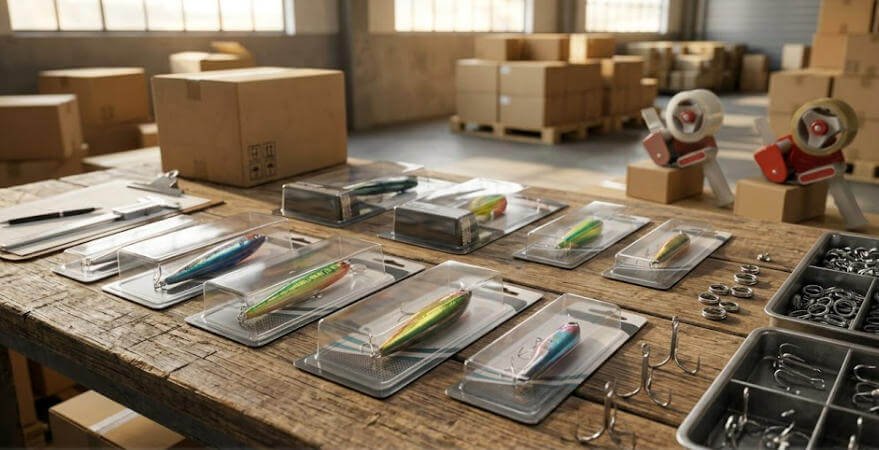
Understanding your exact unit cost from raw factory floor to retail shelf is mandatory for B2B survival. Many overseas buyers severely underestimate the cost of customized blister packaging, insert cards, and barcode application. A premium, visually striking package can easily increase your retail asking price by over 40%. Transparent cost calculation prevents unexpected logistics fees and protects your carefully calculated profit margins.
- 💰 Raw ABS Blank Cost: Typically $0.30 – $0.50 per unit based on size and mold complexity.
- 🎨 Custom Holographic Painting & UV Clear Coat: Adds $0.40 – $0.80 depending on foil usage and layered details.
- 🪝 Premium Terminal Tackle (Hooks & Rings): Upgrades add $0.30 – $0.60 per lure for saltwater grade components.
- 📦 Custom Retail Blister Packaging: Approximately $0.20 – $0.35 per unit including printed insert cards.
*Note: Total landed costs typically range from $1.20 to $2.25 per unit, while the retail selling price ranges from $9.99 to $19.99, yielding exceptional wholesale ROI.
12. Building a Private Label Sinking Minnow Brand
Brand Identity and Market Positioning
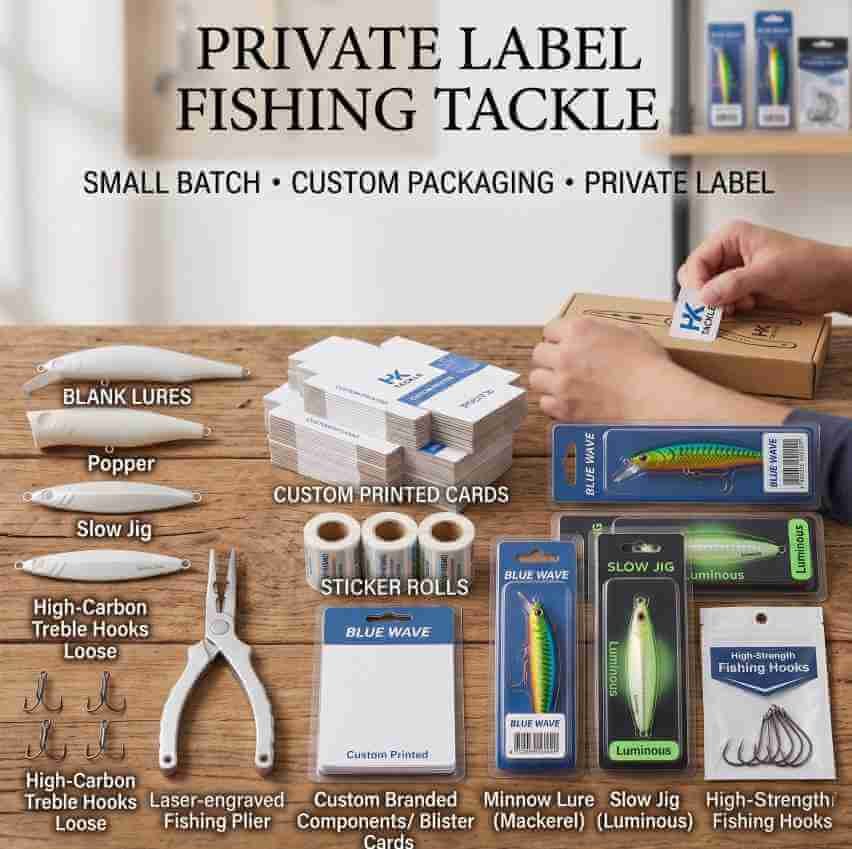
Launching a highly profitable private label sinking minnow line requires sharp market positioning. You are not just selling plastic; you are selling the promise of catching more fish in specific local conditions. Your packaging must vividly communicate the lure’s exact diving depth, weight, and target species clearly. Professional branding elevates your product from a generic commodity to a highly sought-after, trusted local angling tool. Build a compelling brand story that resonates with your region’s specific fishing culture.
Leveraging Digital Marketing for Wholesalers
Once your premium private label products arrive, you must aggressively penetrate the local B2B and B2C markets. Distribute free sample kits to prominent local fishing charter captains and outdoor YouTube influencers. Their authentic, on-the-water video testimonials showcasing your lures catching massive fish are priceless marketing assets. Combine this organic social proof with targeted Google Ads focusing on wholesale regional keywords to dominate your specific territory quickly.
13. B2B Success Story: Expanding European Market Share
Consider the recent 2025 case study of a mid-sized tackle distributor based in coastal Spain. They were struggling with incredibly low margins selling established international brands. They partnered with Havenseek Fishing Tackle to develop a proprietary line of heavy sinking minnows tailored specifically for Mediterranean Bluefish. We customized the internal tungsten weights to punch through strong coastal headwinds, a massive local pain point.
By switching to an OEM manufacturing model, their unit cost dropped by 45%, while their local retail price remained identical to premium competitors. Within eight months, their private label brand captured 22% of the regional coastal tackle market. They utilized our small batch prototyping to test five different UV-reactive color patterns before committing to massive bulk orders. This strategic, calculated approach completely revolutionized their annual business revenue.
14. Critical Sourcing Mistakes and Avoidance
The most devastating mistake overseas buyers make is negotiating purely on price rather than technical value. Forcing a factory to hit an impossibly low target price guarantees they will secretly substitute cheap, inferior materials. They will downgrade the ABS plastic, use rusting iron hooks, and skip the final UV clear coat entirely. This toxic race to the bottom absolutely destroys your brand equity the moment a customer loses a fish due to a broken lure.
Another major error is failing to request a fully finished, pre-production sample before wiring the 30% bulk deposit. You must physically hold the lure, test the split rings, and swim it in your local waters. Never authorize mass production based solely on digital 3D renderings or heavily edited factory photos. Implement strict quality control checkpoints, and your wholesale tackle business will scale securely and predictably.
15. FAQ: Sourcing Custom B2B Fishing Tackle
Q1: How to audit an OEM fishing lure factory for small batch orders?
Request detailed machinery lists, verify their ultrasonic welding capabilities, and demand documented defective rates. A professional factory will confidently provide live video tours of their injection molding and painting facilities.
Q2: What are the quality standards for unpainted minnow lure blanks?
Premium blanks must feature high-density ABS plastic, zero visible flashing on mold seams, and a chemically cleaned surface absolutely free of industrial mold release oils to ensure maximum paint adhesion.
Q3: Floating vs sinking minnows: Which is better for local saltwater markets?
Floating minnows are ideal for shallow estuaries and topwater strikes, while heavy sinking models are mandatory for deep offshore currents and strong surf conditions. Base your B2B order on regional geography.
Q4: How do tackle manufacturers test lure swim action in bulk?
High-end manufacturers utilize mechanized, variable-speed hydrodynamic testing tanks. They perform random batch sampling to guarantee lip angle tolerances and ensure the lure wobbles correctly without spinning.
Q5: What is the average profit margin for private label jerkbaits?
When bypassing trading companies, direct factory sourcing typically yields gross wholesale margins of 40% to 60%, and retail margins can frequently exceed 200% depending on premium branding and custom packaging.
Q6: How to check ultrasonic welding on custom plastic hard baits?
Test the seal by submerging the lures in hot water; escaping air bubbles indicate a failed weld. Properly ultrasonically welded ABS plastic creates a waterproof, permanent molecular bond stronger than glue.
Industry References & Authoritative Data Sources:
1. Global Recreational Fishing Market Data 2025-2026 – American Sportfishing Association (ASA)
2. Marine Fisheries Sourcing Standards – NOAA Fisheries
1. Global Recreational Fishing Market Data 2025-2026 – American Sportfishing Association (ASA)
2. Marine Fisheries Sourcing Standards – NOAA Fisheries
Ready to Dominate Your Local Tackle Market?
Stop losing profit margins to middlemen. Partner directly with Havenseek Fishing Tackle for precision-engineered OEM minnow lures, flexible MOQs, and unmatched B2B quality control.
Get Free Quote in 12 Hours