Welcome To HavenseeK Fishing Tackle

Custom Soft Shrimp Lures: 5 Specs That Stop Returns Before They Ship
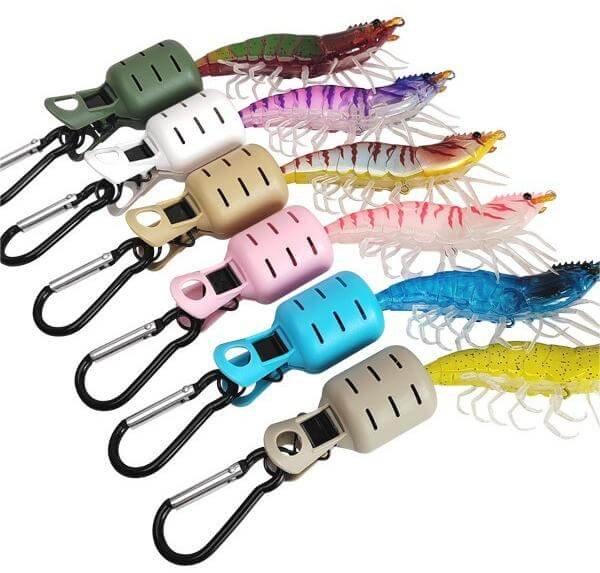
Open the retail reviews for almost any branded soft shrimp lure, and the same sentence keeps surfacing: “This particular batch was so soft that each bait falls off the hook after one fish.” Another buyer writes that the tails “just fall onto the floor of the boat.” A third notes the bait “rips apart on the jig head after a couple of casts or snags in seaweed.” These are not outlier complaints from careless anglers. They are the predictable outcome of purchase orders that specify “soft texture” and “realistic feel” instead of testable acceptance criteria.
The global saltwater bait market was valued at roughly USD 1.07 billion in 2024 and is projected to reach USD 1.57 billion by 2031, growing at a 5.7% CAGR. Soft plastics represent one of the two primary product segments driving that expansion. The category is growing. What is not growing, for many importers, is the reorder rate — because the same five failure modes keep slipping through sampling and into containers.
This article translates those five failure modes into specification clauses you can write into a purchase order today. Whether you are developing custom soft shrimp lures from scratch, sourcing oem luminous soft shrimp for night fishing programs, building a private label saltwater soft baits line, committing to weedless soft plastic shrimp bulk volumes, or testing a small batch silicone shrimp formulation, the fix is the same: replace subjective descriptions with measurable thresholds.
The 5 Specs at a Glance
- → Spec #1: Hook-Slot Tear Resistance — Define the Cast Count
- → Spec #2: Luminous Performance — Test Retained Glow, Not First-Minute Brightness
- → Spec #3: Batch Softness Consistency — “Same Formula” Is Not a Specification
- → Spec #4: Weedless Hook Retention — The Kevlar Webbing Must Extend Past the Slot
- → Spec #5: Trial-Batch Fidelity — If the Trial Does Not Use Mass-Production QC, You Validate Nothing
$1.07B
Global Saltwater Bait Market (2024)
5.7%
CAGR to 2031
3,000
Typical MOQ per Color (Soft Shrimp)
Spec #1 — Hook-Slot Tear Resistance: Define the Cast Count, Not the “Softness Feel”
I have reviewed hundreds of inquiry sheets that describe the target product as “soft, lifelike shrimp.” Almost none of them define what happens at the hook slot after the tenth cast. The buyer believes they have specified a product. In reality, they have specified an appearance. The factory is free to interpret “soft” in whatever way minimizes its material cost — and that interpretation is where the return begins.
What Buyers Actually Complain About
The retail feedback pattern is remarkably consistent. Shrimp baits are described as so soft that “each bait falls off the hook after one fish”. Tails “just fall onto the floor of the boat.” One reviewer notes a bait that “rips apart on the jig head after a couple of casts or snags in seaweed”. A separate product review counts the failure in precise terms: “Maybe 9–12 casts and the minnows are falling off”. These are not vague complaints about quality. They are cast-count observations — a measurable failure point that no specification sheet asked the factory to test.
The Material Reality Behind the Tear
Plastisol PVC — the material behind the overwhelming majority of soft shrimp lures — has a documented structural weakness. Patent literature describes it as “not very elastic, it is susceptible to tearing, it is relatively hard”. A tackle publication puts it more bluntly: standard Plastisol has “almost no give and barely any durability,” and “the tail doesn’t rip off after a couple of fish the way plastisol shrimp often do” only when a different material — TPE — is used instead. TPE is “much stretchier and more durable,” with the ability to survive dozens of fish catches. One field test recorded 60-plus fish on a single TPE bait without structural failure.
This is not an argument that every buyer should switch to TPE. TPE carries different tooling, salt-compatibility, and scent-integration trade-offs. The point is that the material choice must be a deliberate, written decision, not the factory’s default interpretation of the word “soft.”
The Specification Fix: Casts-to-First-Tear Benchmark
Replace “soft texture” with a testable clause: “Hook-slot tear must not occur before [X] simulated casts under [Y] lb test line and moderate snag-resistance conditions, using the specified hook model and size.”
The test method matters as much as the number. Push the hook through the bait at the exact rigging point, then pull straight out and record the force or the number of repeated cycles before visible tearing. A hang-weight test can provide a repeatable pass/fail metric. The specific threshold depends on target species and fishing style, but the PO must contain a number. Without one, the factory’s QC team has no basis for rejection.
What Goes Into the PO
- Base polymer type: Plastisol PVC / TPE / LSR — explicitly, not “silicone” or “soft plastic.”
- Shore A target value ± tolerance, as a secondary consistency indicator.
- Casts-to-first-tear lower limit, with the test hook model and line weight specified.
- Confirmation that the trial batch and mass production use the identical test method (see Spec #5).
Spec #2 — Luminous Performance: “Glows in the Dark” Is Not a Testable Claim
Oem luminous soft shrimp programs fail on a slower timeline than tear-resistance failures. The first container arrives, the baits glow brightly in a dark room, and the buyer approves the shipment. Six months later, retailers report that the glow “does not last” in actual night fishing. The root cause was present in the first sample: nobody tested what happens to the glow after the bait sits in saltwater.
The Difference Between First-Minute Brightness and Retained Glow
The dominant high-brightness, long-afterglow pigment is strontium aluminate (SrAl₂O₄), typically doped with europium and dysprosium. It works by absorbing light and re-emitting it over time. But unencapsulated strontium aluminate is sensitive to moisture, and water exposure accelerates glow decay. Encapsulation is the standard industry response, but encapsulation quality varies, and a catalog photograph taken after 30 seconds of UV charging tells the buyer nothing about performance after 30 minutes submerged.
There is also a compliance layer that most buyers miss. Strontium is a regulated migration element under EN 71-3:2019+A2:2024, the European toy safety standard for migration of certain elements. EN 71-3 measures migration — how much of an element can leach out under simulated gastric conditions — not total content. For raw strontium aluminate powder, the Category I migration limit for strontium is 4,500 mg/kg; for other material categories the limit can differ, and raw-powder test results cannot be directly extrapolated to the finished bait. If an oem luminous soft shrimp program touches EU distribution or any application where child contact is conceivable, the EN 71-3 report must be run on the finished article, not the pigment datasheet.
The Soak-and-Compare Protocol
- Baseline: Charge the sample under a specified light source for a specified duration. Photograph in a dark enclosure at a fixed distance and exposure.
- Soak: Submerge the same sample in saltwater for 30 minutes.
- Re-charge and re-photograph: Use the identical lighting and camera settings.
- Measure: Express retained glow as a percentage of baseline intensity — not as “still glows” or “bright enough.”
- Repeat across the batch: A single sample passing does not prove batch consistency.
What Goes Into the PO
- Pigment chemistry: strontium aluminate, with encapsulation status stated.
- Retained-glow percentage after 30-minute saltwater soak, measured under defined charging and imaging conditions.
- EN 71-3 strontium migration report on the finished bait, if the destination market or use case requires it.
- Charging protocol (light source, duration) written into the test annex so that trial and production results are comparable.
Spec #3 — Batch Softness Consistency: “Same Formula” Is Not a Specification
The most corrosive failure for a private label saltwater soft baits program is not a bad first batch. It is a good first batch followed by a different second batch. Retailers do not distinguish between Batch A and Batch B. They remember that the SKU is unreliable. Once that memory forms, the reorder conversation is over.
The Batch Drift Problem in Plain Language
Soft plastic baits typically fall within a Shore A hardness range of roughly 5A–35A, and even small shifts within that window can significantly change tear strength and movement. A supplier that changes plasticizer lot, substrate batch, or mixing ratio without notifying the buyer can move a bait from “durable enough for 15 casts” to “tears on the first hookset” while the PO still references the same product code. One buyer review of a shrimp-style bait notes the material “started melting and fusing to other lures” in storage — a degradation behavior that points directly to formulation instability, not angler misuse.
The Specification Fix: Shore A Sampling + Batch Retained Samples
Shore A hardness is not a perfect predictor of tear resistance. But it is a fast, repeatable batch-consistency screen. Write a Shore A target and tolerance into the PO, and require AQL-based sampling per production lot. If a lot’s Shore A readings drift outside tolerance, the lot is quarantined before guide wrapping, packaging, or shipment. Pair this with batch retained samples: retain a sealed sample from every production lot, labeled with date and raw-material lot number. When a retailer complaint arrives six months later, the retained sample is the only physical evidence that can establish whether the batch was in-spec at the time of manufacture.
The Notification Clause Most Buyers Omit
Add a raw-material change notification requirement: the supplier must notify the buyer in writing before substituting substrate lot, plasticizer grade, or pigment supplier. This single clause converts an invisible formulation change into a documented decision. Suppliers that resist this clause are telling you something about how they manage consistency.
What Goes Into the PO
- Shore A target ± tolerance, with sampling frequency and AQL level.
- Batch retained samples quantity per lot and retention period.
- Raw-material change notification requirement.
- Lot-level Shore A record retained as a shipment release condition.
Spec #4 — Weedless Hook Retention: The Kevlar Webbing Must Extend Past the Slot
Weedless soft plastic shrimp bulk orders fail at retail for a reason that has nothing to do with the angler’s technique: the hook slips out of the weedless position during the retrieve. Once the hook point is exposed, the bait snags, the strike window closes, and the buyer’s customer concludes the design “doesn’t work.” The defect is in the mold and the internal reinforcement — not in how the bait is fished.
The Engineering Fix Is Already Documented
A commercially available weedless shrimp design describes the solution precisely: “We’ve also extended the Kevlar webbing down past the hook slot. This solves one of the biggest issues with weedless soft plastics: the hook slipping out of position. The added length increases friction inside the hook slot, helping lock your hook into the weedless position for far longer”. The mechanism is mechanical: longer webbing creates greater internal surface contact against the hook shank, increasing the force required for the hook to shift out of the slot. The result, as the product documentation states, is “less fouling, fewer missed strikes, and more time fishing effectively”.
This is not a proprietary insight. It is a design principle that any serious soft shrimp mold can incorporate. The procurement problem is that “weedless design” is often written into the PO as a feature label, not as a dimensional requirement. A factory can produce a bait with a hook slot and call it weedless. Whether the webbing extends far enough past the slot to generate meaningful retention friction is a separate question that the buyer never asked.
What Goes Into the PO
- Kevlar webbing extension specification: how far past the hook slot, defined in millimeters or as a position relative to the slot.
- Hook-slot dimensions matched to the target hook model and size range (e.g., 1/0–4/0 EWG).
- Hook retention pull test in the 500-piece trial: measure the force required to pull the hook from the weedless position, with a defined lower limit.
- Confirmation that the trial batch and production batch use the same webbing placement (see Spec #5).
Spec #5 — Trial-Batch Fidelity: If the Trial Does Not Use Mass-Production QC, You Validate Nothing
The final specification is not about the product at all. It is about the validity of the evidence you use to approve the product. A small batch silicone shrimp trial — whether 200, 300, or 500 pieces — is only useful if the units in that trial were made under conditions that resemble mass production. When a factory quotes a higher per-unit price for a trial and then compresses QC because the run is “small,” the buyer ends up approving a formulation that was never tested at the scale where failures actually occur.
The “We’ll Do It Properly at Mass Production” Trap
Soft shrimp MOQs in the Weihai supply base commonly sit at 3,000 pieces per color, with lead times of 45–60 days. At that commitment level, a trial that does not share the production QC plan is not a risk-reduction step. It is a formality that transfers risk from the sampling stage to the container stage. The supplier’s incentive is understandable: small runs carry real setup costs. But the buyer’s protection lies in insisting that the same test annex, same sampling plan, and same acceptance criteria apply to both the trial and the production run.
Trial-Batch Validity Checklist
- The trial uses the same substrate lot category that production will use.
- The same Shore A sampling plan is executed on the trial.
- The same casts-to-first-tear test is run on trial units, not only on “golden samples.”
- The same hook-retention pull test is performed on weedless variants.
- The trial QC report is a shipment release condition for mass production, not a separate courtesy document.
What Goes Into the PO
- A clause stating: “Trial batch and mass production shall follow the identical QC sampling plan and acceptance criteria as specified in Annex A.”
- Trial QC report as a named deliverable, reviewed and approved before production release.
- Explicit rejection of “special case” or “small batch exception” language in the supplier’s quotation.
Bringing the Five Specs Together: A One-Page PO Annex That Does the Work
The five specs share a single logic: every failure mode that shows up in a retail review has a corresponding test that could have caught it before shipment. The purpose of the annex is not to make sourcing more bureaucratic. It is to move the moment of truth from the retailer’s shelf to the factory’s inspection bench, where correction is still cheap.
- Material: Base polymer + Shore A range, not a texture adjective.
- Tear: Casts-to-first-tear lower limit, with hook model and line weight.
- Glow: Retained-glow percentage after 30-minute saltwater soak, plus EN 71-3 if applicable.
- Batch: Shore A sampling plan + batch retained samples + raw-material change notification.
- Weedless: Kevlar webbing extension dimension + hook-retention pull test.
- Trial validity: Identical QC plan for trial and production, with trial report as release condition.
At Havenseek Fishing Tackle, the custom soft shrimp lures and private label saltwater soft baits workflow is organized around making these clauses executable: material selection before sampling, a defined test annex for every trial, and batch-level records that travel with the shipment. We do not claim that any single specification eliminates returns. We do claim that a buyer who writes these five specs into the PO has moved the conversation from “trust us” to “show us the test record.”
Put the Specs Into Your Next Sample Request
Send your target species, fishing conditions, and volume range. We will respond with a material recommendation, a trial-batch proposal that includes the test annex, and a written QC plan for the production run — within 12 business hours.
Get a Free Quote in 12 Hours →Or request free samples / download the 2026 Soft Bait OEM Catalog.
Frequently Asked Questions
Why do soft shrimp lures tear at the hook slot so quickly?
Standard Plastisol PVC is documented in patent literature as “not very elastic, susceptible to tearing, and relatively hard”. When the PO specifies “soft” without a casts-to-first-tear benchmark, the factory can interpret softness in a way that minimizes material cost while passing visual inspection. The fix is a written tear-resistance clause with a specific cast count, hook model, and line weight — not a material adjective.
How do I test whether oem luminous soft shrimp still glows after saltwater exposure?
Run a soak-and-compare protocol: photograph the bait at baseline after a defined charge, submerge it in saltwater for 30 minutes, re-charge and re-photograph under identical conditions, and express the result as a retained-glow percentage. Unencapsulated strontium aluminate is moisture-sensitive, and catalog brightness photos taken immediately after charging do not predict performance after immersion. Write the retained-glow percentage into the PO, not “high brightness.”
Is “silicone shrimp” actually silicone, and does the material affect durability?
Most soft shrimp baits sold as “silicone” are Plastisol PVC, not silicone rubber. True LSR silicone is niche and costly for high-volume bait programs. TPE is a separate category with markedly higher tear resistance and elasticity than standard Plastisol — one field test recorded 60-plus fish on a single TPE bait. The material decision should be written explicitly in the PO as Plastisol / TPE / LSR, because each carries different durability, salt-compatibility, and tooling implications for your small batch silicone shrimp trial.
What is the MOQ for weedless soft plastic shrimp bulk, and should I order a trial first?
A common MOQ in the Weihai supply base is 3,000 pieces per color, with 45–60 day lead times. Before committing to that volume, run a 200–500 unit trial on an existing mold base. The trial should validate casts-to-first-tear at the hook slot and hook-retention pull force with the specified Kevlar webbing placement. The trial’s purpose is not to negotiate a lower unit price; it is to confirm that the formulation and the mold design survive the failure modes that generate retail returns.
Why does the same soft shrimp SKU feel different from batch to batch?
Soft baits typically sit in a Shore A range of roughly 5A–35A, and small shifts within that window can significantly change tear strength and movement. A supplier that substitutes substrate lot or plasticizer grade without notification can change the feel and durability of a bait while the PO retains the same product code. The countermeasures are a Shore A sampling plan, batch retained samples, and a written raw-material change notification clause.
How does Kevlar webbing placement affect weedless hook retention?
Extending the Kevlar webbing past the hook slot increases internal friction against the hook shank, which helps lock the hook in the weedless position for longer. A “weedless design” label in the PO does not guarantee this geometry. Specify the webbing extension dimension relative to the slot and add a hook-retention pull test to the trial-batch protocol.
What should a trial batch for custom soft shrimp lures include to be valid?
A valid trial shares the production QC plan: the same substrate lot category, the same Shore A sampling, the same casts-to-first-tear test, and the same hook-retention pull test. If the trial is treated as a “special case” with lighter inspection, the buyer is validating a product that was never made under the conditions that will produce the mass order. The trial QC report should be a shipment-release condition, not a separate courtesy document.
How do I verify a private label saltwater soft bait supplier’s QC before mass production?
Ask for the test annex before you ask for the price. A supplier that can immediately describe its Shore A sampling plan, casts-to-first-tear method, and batch retained samples practice is managing quality as a system. A supplier that answers with “we follow customer requirements” is waiting for you to define the standard — which means the standard is not operating when your PO arrives. For EU-facing programs, also request REACH Annex XVII documentation covering phthalates (Entries 51 & 52), total cadmium (Entry 23), and total lead (Entry 63), because these are the three RSL categories now being enforced on major platforms for fishing bait.
Authoritative References
- 168Report / Saltwater Bait Market Report — Global saltwater bait market USD 1.07B (2024), USD 1.57B (2031), CAGR 5.7%.
- US Patent US 20070123635A1 — Plastisol bait “not very elastic, susceptible to tearing, relatively hard”.
- Salt Strong — TPE “much stretchier and more durable” than Plastisol; 60+ fish on one TPE bait.
- Fisherman’s Post — Nomad Switcher Shrimp: Plastisol shrimp “rips off after a couple of fish,” TPE “doesn’t tear easily”.
- Tackle World — Wild Shrimp Weedless: extended Kevlar webbing past hook slot increases internal friction.
- Made-in-China (Weihai ONETE) — Soft PVC saltwater shrimp, MOQ 3,000 pcs per color, lead time 45–60 days.
- EN 71-3:2019+A2:2024 — Migration of certain elements, including strontium.
- Glowuppowder — EN 71-3 Sr migration limit 4,500 mg/kg for Category I raw powder; total content ≠ migration.
- NBTS — EU REACH Annex XVII RSL requirements for fishing bait: phthalates (Entries 51 & 52), cadmium (Entry 23), lead (Entry 63).
- Family Fishin — Hook-pull tear test method; Shore A 5A–35A range for soft plastics.