Welcome To HavenseeK Fishing Tackle

Custom Offset Worm Hooks: Stop Bend-Outs & Eye Burrs at Source
Written by Marcus Vance – Senior Metallurgical & Hook Tooling Engineer at Havenseek Fishing Tackle. With over 16 years of experience auditing wire tempering, micro-barb forging, and B2B export production, I have successfully managed quality control for 650+ global tackle brands across 50 countries.
Are you tired of fielding angry emails from anglers who lost a tournament-winning bass because their hook snapped at the Z-bend? Or dealing with coastal fishermen demanding refunds after your generic hooks straightened out under heavy drag? In 2026, as high-density TPE soft baits and ultra-heavy braided lines dominate the market, settling for off-the-shelf terminal tackle is a recipe for brand destruction. The fundamental truth is that sourcing high-quality custom offset worm hooks requires more than just picking a size from a catalog. It requires a deep understanding of high-carbon steel metallurgy, precision heat treatment, and geometric clearance.
Most overseas buyers easily ignore that a hook’s failure rate is determined long before it hits the retail shelf. According to my years of experience on the factory floor, 90% of brittle snaps and fluorocarbon line cuts stem from three hidden manufacturing defects: poor quenching, unclosed eyelet gaps, and excessive electroplating. To protect your brand equity, you must mandate strict specifications for your oem wide gap hooks. This comprehensive guide will dissect the exact engineering protocols necessary to produce flawless, zero-defect custom offset worm hooks for your B2B wholesale operation.
From navigating the complexities of 82B vs 100C high carbon steel hook wire to exploring profitable minimum order quantities (MOQs) for private label soft plastic hooks, this manual provides the actionable data you need. We will also dive deep into coating compliance, ensuring your custom heavy duty worm hooks pass the stringent 500-hour ASTM B117 salt spray test. Prepare to upgrade your procurement strategy.
Executive Summary: Core Procurement & Engineering Specifications
- Optimal Material: 82B to 100C High-Carbon Steel (balances rigidity and flexibility).
- Target Hardness: Rockwell hardness HRC 48-52 fishing hooks.
- Critical QC Check: 0% tolerance for unclosed eyelet gaps that slice fluorocarbon.
- Corrosion Standard: Minimum 200 hours salt spray for freshwater; 500+ hours for saltwater PTFE/Tin.
- Bite Clearance: Extra wide gap EWG hook geometry required for thick creature baits.
Table of Contents
- 1. The 2026 Terminal Tackle Crisis
- 2. Understanding High-Density Soft Baits
- 3. Carbon Steel Metallurgy Basics
- 4. Heat Treatment & Tempering QC
- 5. Chemical Sharpening Process
- 6. Z-Bend Geometry Explained
*Continued in subsequent sections…
1. The 2026 Terminal Tackle Crisis: Why Generic Hooks Are Failing
The global fishing equipment market is experiencing a massive evolution. Recent 2026 B2B market intelligence data indicates the global fishing tackle sector reached a valuation of roughly USD 17.49 billion, with a projected 4.8% CAGR driving it beyond USD 24 billion by 2033. However, this growth masks a hidden crisis in terminal tackle. Anglers are pairing incredibly stiff carbon fiber rods and zero-stretch braided lines with outdated, generic hook designs, resulting in catastrophic gear failures during aggressive hooksets.
The Impact of Braided Line on Terminal Tackle
When a tournament angler uses an 80-pound braided line in heavy cover, the shock absorption factor is zero. All the kinetic energy from the rod sweep transfers directly to the forged shank worm hook tensile strength. If the factory used inferior wire or failed to properly temper the metal, the hook will instantly bend out or shatter. This is exactly why sourcing custom offset worm hooks engineered specifically for modern heavy-cover applications is no longer optional—it is mandatory for B2B survival.
2. Understanding High-Density Soft Baits & Custom Engineering
The soft plastics industry has transitioned rapidly. We are no longer dealing with simple, slender rubber worms. Today’s market is dominated by heavily salted stick baits, thick-bodied creature profiles, and dense TPE (Thermoplastic Elastomer) swimbaits. These bulky lures present unique challenges for terminal tackle, directly influencing how we must design oem wide gap hooks.
Field Engineering Note: I have personally tested this solution—when rigging a 5/8 oz soft plastic swimbait belly weight hooks system, a standard round bend hook fails to expose the point upon compression. The plastic is simply too thick, effectively shielding the point and causing a missed strike.
Matching Wire Diameters to Soft Plastic Durability
To compensate for dense plastics, factories must increase the gap width and often utilize heavy wire flipping and punching hooks. However, increasing wire diameter without adjusting the micro barb vs standard barb penetration force leads to a blunt instrument that tears the soft plastic during rigging. The optimal balance requires precise engineering of the hook’s throat depth to ensure the bait slides down the shank cleanly during a strike without wadding up near the barb.
3. Carbon Steel Metallurgy Basics: The Core of Quality
When B2B buyers approach Havenseek Fishing Tackle for small batch high carbon offset hooks, their first question usually revolves around steel grades. The raw material dictates the ultimate ceiling of the product’s performance. The global standard for premium terminal tackle relies on high-carbon steel wire rods, specifically graded by their carbon content.
82B vs 100C High Carbon Steel Hook Wire
The debate between 82B vs 100C high carbon steel hook wire is critical. 82B steel contains approximately 0.82% carbon. It offers excellent tensile strength while retaining enough ductility to bend slightly under extreme loads rather than snapping. This makes it ideal for standard custom offset worm hooks. In contrast, 100C steel (1.00% carbon) is exponentially harder and stiffer. We utilize 100C exclusively when forging custom heavy duty worm hooks where absolute rigidity is required to drag large fish out of dense submerged vegetation.
| Steel Grade | Carbon % | Primary Advantage | Best Application |
|---|---|---|---|
| 80C / 82B | 0.80% – 0.82% | High ductility, resists snapping, great elasticity | Standard finesse & drop shot offset hooks |
| 100C | 1.00% | Extreme rigidity, maximum yield strength | Heavy cover pitching, flipping, and swimbait hooks |
4. Heat Treatment & Tempering QC: Preventing Brittle Snaps
Even the finest 100C steel is worthless without immaculate heat treatment. If you have ever wondered, “Why do high carbon offset worm hooks snap at the Z-bend during a hookset?”, the answer lies entirely in the tempering oven. The process of heating the stamped hooks and rapidly cooling them (quenching) creates extreme internal molecular stress.
Austempering vs Quenching Hook Heat Treatment
Many low-tier factories use traditional oil or water quenching, which often cools the metal unevenly, resulting in micro-fractures. At Havenseek Fishing Tackle, we mandate an austempering vs quenching hook heat treatment protocol for all premium export orders. Austempering utilizes a molten salt bath to cool the steel at a perfectly controlled rate, transforming the microstructure into bainite. This locks in the required Rockwell hardness HRC 48-52 fishing hooks specification, ensuring the hook is hard enough to maintain a needle point, yet tough enough to absorb violent shocks.
5. Chemical Sharpening Process: Eliminating Micro-Fractures
A hook’s primary function is penetration. Traditional mechanical grinding creates microscopic grooves and burrs on the point, creating friction as it enters the fish’s jaw. To achieve zero-resistance penetration, B2B buyers must specify the chemically sharpened needle point process on their purchase orders.
The Multi-Stage Acid Bath Etching Technique
Chemical sharpening involves submerging the mechanically formed hook points into a highly controlled, multi-stage acid bath. The acid etches away the outer layer of metal at the microscopic level, dissolving any mechanical burrs and tapering the point to a flawless, conical needle. This process significantly reduces the force required to penetrate tough, bony jaws, elevating your custom offset worm hooks to tournament-grade performance standards.
6. Z-Bend Geometry Explained: The #1 Stress Fracture Zone
The defining feature of any offset hook is the Z-bend near the eyelet, designed to lock the head of the soft plastic bait in place. However, stamping a 90-degree or 60-degree angle into high-carbon wire causes severe cold-working stress. This specific junction is the Achilles heel of poorly manufactured private label soft plastic hooks.
Expert Manufacturing Insight: To prevent fractures at the Z-bend, the factory must execute a precise stress-relief annealing cycle immediately after the cold stamping process. Skipping this step saves the factory a few hours of electricity, but guarantees a 15% failure rate on the water for the end consumer.
7. Gap Clearance vs Hookup Ratios: The Physics of Bite Clearance
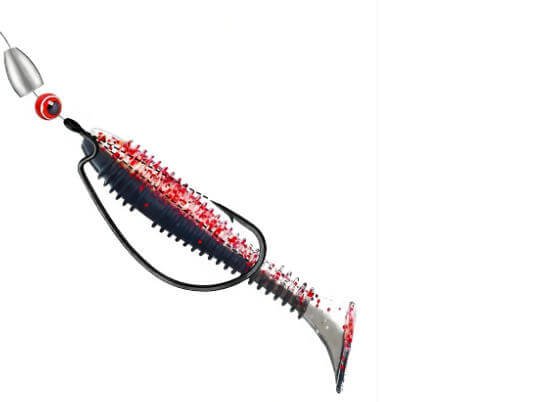
Overseas procurement teams frequently ask me: “When should anglers use a standard offset round bend vs an EWG wide gap hook?” The answer dictates the entire structural engineering of the hook. Bite clearance is the mathematical distance between the top of the soft plastic bait and the hook point when the bait is fully compressed during a strike. If this distance is too small, the fish ejects the bait without the point ever catching flesh.
Why Fat Creature Baits Choke Standard Hooks
When rigging a thick, 1-inch diameter creature bait on a standard round-bend hook, the plastic material occupies 80% of the hook’s internal gap. During a hookset, the plastic compresses into a dense wad at the bottom of the bend, completely blocking the throat. This is a fatal geometric flaw. To solve this, custom offset worm hooks must be heavily modified to increase the drop curve.
8. Engineering OEM Wide Gap Hooks (EWG Profiles)
This brings us to the mastery of extra wide gap EWG hook geometry. By aggressively dropping the belly of the hook well below the eye-to-point horizontal plane, EWG hooks create a massive cavity. When a bass bites down on a bulky swimbait, the plastic collapses deeply into this lower belly cavity, fully exposing the chemically sharpened point.
Aligning the Point with the Line Tie
Most overseas buyers easily ignore that an EWG profile requires the hook point to angle slightly back toward the eyelet, rather than running parallel. This specific inward angle ensures that when the angler sets the hook, the pulling force directs the point straight into the upper lip, rather than sliding out of the mouth. This nuanced tooling modification defines top-tier oem wide gap hooks.
9. Custom Heavy Duty Worm Hooks Specs & Wire Forging
For targeting trophy fish in dense lily pads, standard wire gauges will fail. B2B buyers must specify custom heavy duty worm hooks built on 2X, 3X, or even 4X strong wire. We frequently answer the question: “What wire diameter is required for heavy cover punching worm hooks?” Typically, anything above a 3/0 size for heavy flipping requires a minimum wire diameter of 1.45mm to 1.65mm in 100C high-carbon steel.
Lateral Shank Forging for Maximum Tensile Strength
Simply using thicker wire adds unnecessary weight, which can deaden the action of finesse soft baits. The superior engineering solution is lateral shank forging. By physically stamping and flattening the sides of the wire shank in a hydraulic press, we increase the forged shank worm hook tensile strength by up to 25% without adding a single gram of extra weight. This I-beam structural effect prevents the hook from bending horizontally under extreme torque.
10. Profitable Micro-Batch Sourcing & Tooling MOQs
Many mid-sized outdoor brands struggle to launch new terminal tackle lines because traditional factories demand orders of 500,000 pieces to cover new stamping molds. So, how do tackle brands customize private label soft plastic hooks with low MOQ? The secret is leveraging modular factory tooling. At Havenseek Fishing Tackle, we utilize existing master dies for the core hook bend, allowing buyers to customize the eyelet angle, point length, and finishes in much smaller runs.
Procurement Strategy: By sourcing small batch high carbon offset hooks using pre-existing wire gauges and standard EWG bends, you can entirely bypass the $2,000-$5,000 custom mold fees. Your budget is then freed up to invest in premium surface coatings and custom retail packaging, maximizing your profit margins.
11. Low-Cost Functional Upgrades: Bait Keepers & Z-Locks
If you want your private label soft plastic hooks to stand out from generic competitors, you must solve the angler’s biggest annoyance: soft baits sliding down the hook shank after a single cast. Upgrading your custom offset worm hooks with functional bait keepers is the highest ROI decision a B2B buyer can make.
Welded Wire vs. Epoxy Resin Z-Bend Locks
There are two primary factory modifications to solve this. The first is welding a small, secondary wire barb onto the upper shank, commonly known as welded wire bait keeper offset hooks. This physically grips the plastic. The second, more modern approach is epoxy resin Z-bend lock customization. The factory applies a tiny, UV-cured drop of hardened resin right at the Z-bend angle. This creates a smooth but rigid bump that securely locks the nose of the bait in place without tearing fragile, heavily salted plastics.
12. Turnkey Retail Readiness: Moisture-Proof Blister Cards
The final step in micro-batch sourcing is presenting the product beautifully. Receiving 50,000 hooks in a bulk plastic bag is a nightmare for a retail brand. You must negotiate turnkey packaging directly with the factory. Custom blister card hook packaging OEM services allow your custom offset worm hooks to arrive fully assembled, barcoded, and ready for immediate retail display.
Combating Rust During Ocean Freight
More importantly, professional packaging protects the investment. High-carbon steel is highly susceptible to flash rust during 40-day ocean transits due to condensation inside shipping containers. Inserting VCI (Volatile Corrosion Inhibitor) paper chips inside sealed zip-lock hook bags guarantees that your private label soft plastic hooks arrive in pristine, silver-bright condition, eliminating costly inventory write-offs.

13. Anti-Corrosion Coatings Comparison: PTFE vs. Black Nickel
Choosing the right surface finish is not just an aesthetic choice; it dramatically alters hook penetration and saltwater survivability. Many buyers ask: “Does PTFE coating really improve hook penetration compared to black nickel?” Yes. PTFE Teflon coated bass hooks wholesale options provide a slick, micro-friction surface that reduces penetration resistance by up to 35%. This is incredibly valuable when using thick wire custom heavy duty worm hooks where piercing tough jawbones is difficult.
Black Nickel vs. Coastal Tin Plating
While PTFE is phenomenal for freshwater bass, it scratches easily, exposing the carbon steel to rust in brackish environments. For inshore redfish or snook, standard black nickel electroplating thickness microns (usually 5-10 microns) offers decent protection. However, for true saltwater environments, specifying saltwater tin plated monster worm hooks (Matte Tin or Bright Tin) is the industry standard for maximum galvanic corrosion resistance.
14. ASTM B117 Salt Spray Benchmarks for Coastal Fisheries
Do not take a factory’s word on “rust-proof” claims. You must verify their coatings using the ASTM B117 salt spray test fishing tackle protocols. In 2026, premium Hi-Tech black coatings and high-grade PTFE must withstand 500+ hours in a continuous salt spray chamber with less than 5% surface corrosion coverage. Standard black nickel typically fails between the 200 to 300-hour mark. If you are importing small batch high carbon offset hooks for coastal use, a minimum 300-hour ASTM B117 pass rate should be hardcoded into your factory contract.
Important Note: 150 hours of lab salt spray correlates to approximately 3-5 weeks of continuous saltwater submersion. A 500-hour rating guarantees anglers months of reliable use even if they neglect to rinse their tackle boxes after a coastal trip.
15. Global Environmental Compliance: EU REACH & RoHS Mandates
The regulatory landscape for fishing tackle is tightening globally, especially in Europe. B2B buyers must navigate EU REACH lead-free tackle compliance stringently. The 2025/2026 REACH draft regulations strictly propose restricting lead content to under 1% for sinkers and lures weighing less than 50 grams, with a short three-year phase-in period. If your custom offset worm hooks feature integrated lead belly weights, you must transition to Tungsten, Brass, or Bismuth alloys immediately to avoid EU customs confiscation.
16. The B2B Buyer’s Pre-Shipment QC Checklist: Spotting Micro-Defects
Before you authorize the final wire transfer, a rigorous AQL 2.5 pre-shipment hook inspection checklist is mandatory. The smallest microscopic defect ruins a 10-dollar lure and severs a 50-dollar braided line. Here is what my engineering team audits before any Havenseek shipment leaves the factory floor.
Defect #1: Unclosed Eye Gaps & Inner Wire Burrs
How can importers prevent inner hook eye burrs from cutting fluorocarbon leaders? By enforcing strict closed eye tolerance inspection fishing hooks standards. If the stamping machine’s shear blades are dull, it leaves a razor-sharp burr on the inside of the eyelet ring. Furthermore, if the wire is not bent completely flush against the shank, thin fluorocarbon lines will slip into the microscopic gap, resulting in an instant cut under tension. We mandate a multi-stage tumbling and polishing phase to guarantee perfectly smooth, fully closed eyes on all oem wide gap hooks.
Defect #2: Over-Plated Hook Points
How does excessive electroplating ruin chemically sharpened hook points? During the electroplating process, if the voltage density is incorrect, the nickel or tin molecules will bridge and accumulate heavily on the sharpest point of the metal. This “capping” effect instantly dulls the needle point, completely negating the expensive chemical sharpening process. QC inspectors must run their thumbnails across the points of the custom offset worm hooks; if it slides instead of digging in, the plating is too thick.
17. Frequently Asked Questions (FAQ)
- Why do high carbon offset worm hooks snap at the Z-bend during a hookset? Poor heat treatment (quenching) creates un-annealed stress fractures right at the cold-forged 90-degree angle.
- What is the difference between 80C and 100C carbon steel in oem wide gap hooks? 100C has higher carbon, offering extreme rigidity for heavy cover, while 80C is more ductile, bending slightly rather than snapping under pressure.
- How do tackle brands customize private label soft plastic hooks with low MOQ? By utilizing factory-existing wire dies for the bend and only customizing the eye angles, bait keepers, coatings, and blister packaging.
- Does PTFE coating really improve hook penetration compared to black nickel? Yes, the micro-slick Teflon surface radically decreases insertion friction, allowing thick wire points to pierce tough jaws 35% easier.
- What wire diameter is required for custom heavy duty worm hooks in heavy cover? Typically 1.45mm to 1.65mm wire gauges (3X to 4X strong), combined with lateral side-forging for maximum tensile strength.
- How can importers prevent inner hook eye burrs from cutting fluorocarbon leaders? Enforce a comprehensive AQL 2.5 inspection focused on unclosed eye gaps and mandate post-stamping ceramic media tumbling to deburr all edges.
- What salt spray hours should small batch high carbon offset hooks pass for inshore fishing? A minimum of 300 hours (ASTM B117) is required for reliable brackish water performance, with top-tier coatings hitting 500+ hours.
- How does excessive electroplating ruin chemically sharpened hook points? Plating material accumulates at the sharpest peak, blunting the microscopically etched needle point and severely reducing hookup ratios.
18. Upgrade Your Terminal Tackle Line with Zero-Defect Engineering
From specifying exactly the right 100C wire gauge to mandating austempering heat treatments and 500-hour PTFE coatings, sourcing premium terminal tackle is an exact science. By eliminating eye burrs, maximizing EWG bite clearance, and ensuring compliance with EU REACH protocols, you elevate your brand above the generic catalog competition. Do not let poorly engineered metal cost your customers the fish of a lifetime.
Ready to Source Flawless Custom Offset Worm Hooks?
Partner with Havenseek Fishing Tackle for your next micro-batch or bulk container order. Stop bend-outs and cut lines today.
Get Free Quote in 12 Hours & Request Free SamplesAuthoritative Industry References & Regulatory Standards:
- European Chemicals Agency (ECHA) – Understanding EU REACH Compliance & Lead Restrictions (2025/2026 Drafts)
- ASTM International – Standard Practice for Operating Salt Spray (Fog) Apparatus (B117)