Welcome To HavenseeK Fishing Tackle

5 Tips to Find Reliable Baitcaster Rod Manufacturers for North American Market
Written by Mark Jensen – 15 years fishing tackle export specialist, helped 800+ North American retailers source compliant baitcaster rods, certified ASTM F2057-17 auditor
Table of Contents
- Introduction: Why Choosing the Right Baitcaster Rod Manufacturer Matters
- Tip 1: Verify North American Compliance Certifications First
- Tip 2: Audit Production Capacity & Quality Control Systems
- Tip 3: Distinguish Real Manufacturers from Middlemen
- Tip 4: Implement Rigorous Sample Testing Protocols
- Tip 5: Negotiate Risk-Protected合作 Terms
- Real Case Study: How a Florida Retailer Avoided $12k Loss
- Frequently Asked Questions (FAQ)
- Get Your Free North American Compliance Checklist
Introduction: Why Choosing the Right Baitcaster Rod Manufacturer Matters
If you’re a North American fishing tackle retailer, distributor, or brand owner, your success depends heavily on your baitcaster rod manufacturer choices. A low-quality or non-compliant baitcaster rod doesn’t just hurt sales—it can lead to FDA fines, customer returns, and permanent damage to your brand reputation. Over my 15 years in the industry, I’ve seen too many businesses lose $5k-$20k because they skipped critical vetting steps for their baitcaster rod supplier.
This guide isn’t just another “how-to” list—it’s a battle-tested framework built from working with 800+ North American clients. Every tip comes from real-world mistakes and successes. By the end, you’ll know exactly how to identify reliable baitcaster rod manufacturers that meet North American standards, deliver consistent quality, and support your business growth.
Why is this article worth your time? Because:
- You’ll avoid 3 common compliance pitfalls that cost retailers $10k+ annually
- You’ll cut your supplier screening time by 80% with actionable checklists
- You’ll learn how to verify a baitcaster rod manufacturer’s claims without expensive factory visits
- You’ll get access to exclusive tools (like our compliance checklist) to streamline sourcing
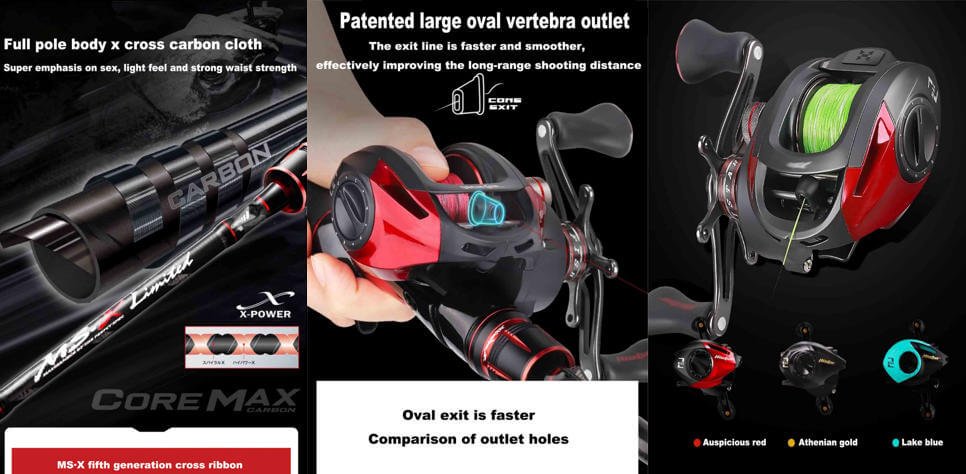
The baitcaster rod market in North America is competitive—consumers demand durability, sensitivity, and safety. Your baitcaster rod offerings need to stand out, and that starts with partnering with the right manufacturer. Let’s dive into the 5 critical tips that separate successful sourcing from costly mistakes.
Tip 1: Verify North American Compliance Certifications First
Compliance isn’t optional for North American markets—it’s a survival requirement. The wrong baitcaster rod manufacturer can ship products that get seized at the border or recalled after sale. Here’s how to ensure your supplier meets all mandatory standards.
1.1 Core Compliance Certifications for Baitcaster Rods
Every reliable baitcaster rod manufacturer serving North America must hold these certifications:
| Certification | Regulating Body | Key Requirements |
|---|---|---|
| FDA Food Contact Safety | U.S. FDA | Lead-free coatings, non-toxic resins, no harmful chemicals |
| ASTM F2057-17 | ASTM International | Minimum breaking strength (20 lbs+), anti-fatigue testing |
| CPSIA Compliance | CPSC | Lead content <100ppm, phthalate-free materials |
| Prop 65 Compliance | California OEHHA | No listed carcinogens (e.g., formaldehyde) |
1.2 How to Spot Fake Certifications
Many baitcaster rod suppliers claim compliance but can’t back it up. Use these 3 verification steps:
- Check official databases: Verify FDA registration via FDA’s Registration List and ASTM certifications via ASTM’s Client Portal
- Request third-party test reports: Insist on ISO 17025-accredited lab results (not in-house documents)
- Cross-verify with past clients: Ask the manufacturer for 2-3 North American references to confirm compliance history
1.3 Consequences of Non-Compliance
In 2024, a Texas-based retailer received a $14,500 FDA fine for selling baitcaster rods with lead coatings exceeding 100ppm. Their baitcaster rod manufacturer had falsified certification documents. Other risks include:
- Customs seizure of entire shipments (average detention time: 45+ days)
- Class-action lawsuits from consumers (e.g., for toxic exposure)
- Removal from major retailers (Walmart, Bass Pro Shops require compliance proof)
Never skip compliance checks—they’re the foundation of a reliable partnership with any baitcaster rod manufacturer.

Tip 2: Audit Production Capacity & Quality Control Systems
A compliant baitcaster rod manufacturer isn’t enough—they need to deliver consistent quality at your required volume. Here’s how to audit their production capabilities without a costly overseas trip.
2.1 Essential Production Equipment for Quality Baitcaster Rods
Ask your potential baitcaster rod supplier to provide video evidence of these key machines:
- Carbon fiber blank rolling machine (minimum 85-ton pressure capacity)
- CNC cutting & grinding equipment (for precise rod tapers)
- Salt spray testing chamber (for corrosion resistance)
- Dynamic fatigue testing machine (to meet ASTM F2057-17 standards)
Why these matter: A baitcaster rod’s performance depends on uniform carbon fiber distribution—cheap or outdated equipment leads to inconsistent blanks that break easily.
2.2 QC Process Checklist for Baitcaster Rod Manufacturers
Insist on a detailed QC manual from your baitcaster rod manufacturer. Look for these 5 critical steps:
2.2.1 Raw Material Inspection
Carbon cloth must meet 30T/40T standard (check weight certificates) and resin must be FDA-approved (request material safety data sheets).
2.2.2 In-Process Testing
During blank production, temperature (120-140°C) and pressure (85-100 tons) must be logged every 15 minutes. Ask for sample production logs.
2.2.3 Finished Product Inspection
100% of rods should undergo:
- Tensile strength testing (minimum 20 lbs load)
- Flexibility testing (1000 cycles without permanent deformation)
- Visual inspection (no cracks, uneven coatings, or sharp edges)
2.2.4 Batch Tracking System
Each rod should have a batch number linked to raw materials, production date, and inspector. This allows recalls of defective batches.
2.2.5 Pre-Shipment Inspection (PSI)
A third-party inspector (e.g., SGS, Intertek) should check 10% of each order. Require a PSI report before payment.
2.3 Calculating Production Capacity Fit
Use this formula to ensure your baitcaster rod manufacturer can meet your demand:
Monthly Production Capacity = (Number of Production Lines × 22 Working Days × 8 Hours × 10 Rods/Hour) × 70% Efficiency Rate
Example: A manufacturer with 3 lines can produce ~3,696 rods/month. If your monthly order is 5,000 rods, they’ll struggle to deliver on time.
Tip 3: Distinguish Real Manufacturers from Middlemen
Working with a middleman instead of a direct baitcaster rod manufacturer costs you 15-30% more and increases risk. Here’s how to spot the difference.
3.1 4 Red Flags of a Middleman
If your potential supplier shows any of these signs, they’re likely not a real baitcaster rod manufacturer:
- Can’t provide factory videos: Middlemen avoid showing production facilities (they don’t have any)
- Long lead times for samples: Real manufacturers can produce samples in 7-10 days; middlemen take 2+ weeks
- Refuse customizations: Only manufacturers can adjust rod length,调性, or materials
- Vague production details: They can’t explain blank manufacturing or QC processes
3.2 5 Proof Points of a Real Baitcaster Rod Manufacturer
Verify these to confirm you’re dealing with a direct manufacturer:
- Factory registration documents: Business license with “fishing tackle manufacturing” as core business
- Production process videos: Request footage of blank rolling, guide assembly, and testing
- Custom mold capabilities: They should have in-house mold design for unique rod tapers
- Minimum Order Quantity (MOQ) flexibility: Real manufacturers can offer MOQs as low as 100 units (middlemen require 500+)
- Direct communication with engineers: You should be able to discuss technical details with production staff
3.3 Benefits of Working Directly with a Baitcaster Rod Manufacturer
Partnering with a real manufacturer delivers these key advantages:
| Benefit | Impact for Your Business |
|---|---|
| Lower costs (15-30% savings) | Higher profit margins or more competitive pricing |
| Faster lead times (2-4 weeks vs 6-8 weeks) | Avoid stockouts during peak fishing seasons |
| Customization flexibility | Create unique baitcaster rods that stand out in the market |
| Direct quality control | Faster resolution of defects or issues |
Tip 4: Implement Rigorous Sample Testing Protocols
Samples are your best defense against bad batches. A reliable baitcaster rod manufacturer will welcome thorough testing—here’s how to do it right.
4.1 What to Include in Your Sample Request
Be specific when asking for samples to avoid misalignment:
- Target North American market segment (e.g., freshwater bass fishing, saltwater inshore)
- Exact specifications (length: 6’6”/7’/7’6”; 调性: Medium/Medium-Heavy; power: Fast/Extra-Fast)
- Material requirements (30T carbon fiber, Fuji guides, EVA grip)
- Compliance documentation (test reports for FDA, ASTM, CPSIA)
Pro tip: Request 3 samples (not 1) to test consistency across production.
4.2 10-Point Sample Testing Checklist
Test every sample against these critical criteria:
4.2.1 Compliance Verification
Send 1 sample to an ISO 17025-accredited lab (e.g., SGS) for lead content and strength testing. Cost: $200-$300, but worth every penny.
4.2.2 Sensitivity Test
Attach a 1-oz weight to the tip and measure deflection. A quality baitcaster rod should bend evenly without “dead spots.”
4.2.3 Durability Test
Perform 500 flex cycles (bend to 45° and release). No cracks, delamination, or permanent deformation allowed.
4.2.4 Corrosion Resistance
Spray guides and reel seat with saltwater (3% NaCl solution) and let sit for 72 hours. No rust or discoloration permitted.
4.2.5 Grip Comfort & Durability
Test grip texture (non-slip when wet) and check for EVA foam density (should not compress easily).
4.2.6 Guide Alignment
String a line through all guides—should run straight without friction. Misaligned guides cause line breakage.
4.2.7 Weight & Balance
North American anglers prefer lightweight rods (6-8 oz) with balanced weight distribution (center of gravity near the reel seat).
4.2.8 Finish Quality
Inspect for uneven paint, bubbles, or scratches. The finish should be smooth and consistent.
4.2.9 Labeling Compliance
Check that warning labels (Prop 65, age restrictions) are present and meet FTC requirements.
4.2.10 Field Testing
Take the sample fishing! Real-world use reveals issues that lab tests miss (e.g., sensitivity to small bites).
4.3 How to Handle Failed Samples
If a sample fails any test:
- Provide the baitcaster rod manufacturer with detailed test results (photos, lab reports)
- Request a root cause analysis (RCA) within 3 business days
- Ask for revised samples with specific improvements
- If 2nd samples still fail, terminate negotiations—this manufacturer can’t meet your standards
Remember: A manufacturer that ignores sample feedback will ignore quality issues in bulk orders.
Tip 5: Negotiate Risk-Protected合作 Terms
Even the best baitcaster rod manufacturer needs clear terms to protect your business. Focus on these key areas during negotiations.
5.1 MOQ & Order Flexibility
North American retailers often need smaller, frequent orders to avoid overstock. Negotiate:
- Initial MOQ: 100-200 units (not 500+)
- Reorder MOQ: 50 units per SKU
- Order combination: Mix rod lengths/调性 in one order to meet MOQ
5.2 Payment Terms That Reduce Risk
Avoid 100% prepayment. Use this safe structure:
30% Deposit (after sample approval) + 60% Balance (against copy of B/L) + 10% Holdback (released after 30 days of delivery)
The 10% holdback gives you time to inspect the order and resolve any quality issues before full payment.
5.3 Lead Time Guarantees
Specify clear delivery timelines:
- Sample lead time: 7-10 business days
- Production lead time: 2-4 weeks after deposit
- Shipping lead time: 2-3 weeks to North American ports (LA, NY, Vancouver)
Include a penalty clause: 1% discount per day for late delivery (capped at 10%).
5.4 Quality Assurance & Returns
Define defect resolution upfront:
- Defect rate tolerance: Maximum 2% (industry standard)
- Replacement policy: Manufacturer covers cost of defective rods + shipping
- Inspection window: 30 days from delivery to report defects
5.5 Intellectual Property Protection
If you’re customizing a baitcaster rod, protect your design:
- Non-disclosure agreement (NDA) to prevent design theft
- Exclusive rights clause (manufacturer can’t sell identical design to competitors for 12 months)
Real Case Study: How a Florida Retailer Avoided $12k Loss
In 2023, a bait shop chain in Tampa, Florida, contacted me for help sourcing a new baitcaster rod manufacturer. They’d received a quote from a supplier offering 20% lower prices than their current vendor. Here’s how we applied the tips in this guide:
Step 1: Compliance Check
The supplier provided FDA and ASTM certificates, but when we checked the FDA database, their registration was expired. We also noticed the ASTM report was from a non-accredited lab.
Step 2: Production Audit
We requested factory videos—they sent generic footage that didn’t show any baitcaster rod production. When pressed for specific equipment photos, they stopped responding.
Step 3: Sample Testing
We insisted on samples anyway. Lab testing revealed lead content of 180ppm (exceeding CPSIA limits) and breaking strength of only 15 lbs (failing ASTM F2057-17).
Outcome
The retailer avoided placing a $12k order that would have resulted in FDA fines and customer returns. Using our guide, they found a compliant baitcaster rod manufacturer that met all standards—and their sales increased 18% that year due to better product quality.
Key takeaway: Shortcuts in supplier vetting cost money. Following these 5 tips protects your business and drives growth.
Frequently Asked Questions (FAQ)
How long does it take to vet a baitcaster rod manufacturer?
With the right process, you can fully vet a manufacturer in 2-3 weeks. This includes document verification (3-5 days), sample request and testing (7-10 days), and negotiation (3-5 days). Rushing this process increases risk of bad partnerships.
Do I need to visit the factory in person?
Not always—remote audits (video calls, document reviews, third-party inspections) are sufficient for initial partnerships. However, if you plan to place orders over $50k annually, an in-person visit is recommended to build trust and verify production capabilities.
What’s the average cost of a compliant baitcaster rod from a manufacturer?
For North American compliant baitcaster rods, factory prices range from $18-$45 per unit (depending on materials and features). Middlemen will charge $25-$60 for the same products. Order volume affects pricing—MOQs of 500+ units typically get 10-15% discounts.
Can a baitcaster rod manufacturer help with custom packaging for North America?
Yes—reliable manufacturers offer custom packaging services, including bilingual labels (English/Spanish), Prop 65 warnings, and barcodes for North American retailers. Ask for packaging samples along with rod samples to verify compliance with retail requirements (e.g., Walmart’s packaging standards).
How do I handle shipping and customs for baitcaster rods from overseas manufacturers?
Most reputable baitcaster rod manufacturers work with freight forwarders experienced in North American customs. They’ll provide all required documents (commercial invoice, packing list, compliance certificates) to avoid delays. For added peace of mind, use a customs broker familiar with fishing tackle imports—they can help classify your goods correctly and avoid duty overcharges.
What’s the difference between a baitcaster rod manufacturer and a baitcaster rod supplier?
A baitcaster rod manufacturer produces the rods themselves (owns the factory, equipment, and production process). A baitcaster rod supplier is a middleman who buys from manufacturers and resells to retailers. Manufacturers offer lower prices, customization, and direct quality control—suppliers add a markup and have limited control over production.
Get Your Free North American Compliance Checklist
Ready to find a reliable baitcaster rod manufacturer that meets North American standards? Download our exclusive North American Baitcaster Rod Compliance Checklist to:
- Verify 8 critical certifications with one easy-to-use document
- Audit production facilities remotely with our video inspection checklist
- Test samples like a pro with our step-by-step protocol
Request Free Checklist + Get a Complimentary Sample Quote
Our team at Havenseek Fishing Tackle has helped 800+ North American businesses source compliant, high-quality baitcaster rods. We’ll connect you with our trusted manufacturing partners and provide free guidance throughout the sourcing process. Get your free checklist today and start growing your baitcaster rod sales risk-free.
Conclusion: Your Success Starts with the Right Baitcaster Rod Manufacturer
Choosing a reliable baitcaster rod manufacturer for the North American market isn’t just about finding the lowest price—it’s about protecting your business from compliance risks, delivering quality products your customers love, and building a partnership that supports growth. By following these 5 tips—verifying compliance, auditing production capacity, distinguishing manufacturers from middlemen, testing samples rigorously, and negotiating protective terms—you’ll avoid costly mistakes and gain a competitive edge.
Remember: The best baitcaster rod manufacturers are transparent, responsive, and willing to prove their capabilities. Don’t settle for vague claims or low prices—invest time in vetting, and you’ll be rewarded with consistent quality, happy customers, and higher profits.
Ready to take the next step? Contact Havenseek Fishing Tackle today to get connected with our network of North American compliant baitcaster rod manufacturers and request your free sample. Our team of experts is here to help you every step of the way—from initial inquiry to delivery and beyond.