Welcome To HavenseeK Fishing Tackle

How Fishing Rod Power and Action Affect Performance

How Fishing Rod Power and Action Affect Performance
A practical, region-aware guide for anglers — learn how to pick the right fishing rod power and fishing rod action to improve casts, hooksets and fish control. Includes diagrams, recommended setups for freshwater & saltwater, and FAQs.
Local tips included for anglers in: Great Lakes, US East Coast, Gulf Coast, Pacific Northwest, UK & Australia.

What is Rod Power?
Rod power is the rod’s backbone — how much force it takes to bend it. Ranges: Ultra-light → Heavy.
What is Rod Action?
Action describes where the rod bends (tip, mid, full). It controls sensitivity, hook-setting speed, and casting feel.
Why it matters
The combination of power + action determines casting distance, hook penetration, lure control, and fight strategy.
Deep dive: rod power, action & how they work together
Focus phrase: fishing rod power and fishing rod action are the two most important rod attributes that determine how a rod performs on the water. They are different, but they must be read together to make the correct choice for the species, technique and local conditions.
1. Rod Power — the backbone
Rod power describes the stiffness of the blank: how much weight or load it can resist before it bends significantly. Manufacturers usually classify power as:
- Ultra-light / Light: ultra-sensitive, for panfish, trout, small lures and finesse techniques.
- Medium-light / Medium: versatile for bass, walleye, small saltwater species — a go-to for many anglers.
- Medium-heavy / Heavy: for larger bass, pike, catfish, and nearshore saltwater species — powerful hooksets and control.
- Extra-heavy: for big game, heavy plastics, heavy jigs, and large saltwater predators.
Practical note: using a rod too heavy reduces sensitivity; too light and you risk losing control or breaking during a fight.
2. Rod Action — where the blank bends
Action tells you how much of the rod bends under load and how quickly it returns. Typical categories:
- Fast action: bends in the top 10–20% of the blank — very responsive, short, powerful hooksets.
- Medium-fast / Medium: bends deeper (middle of blank) — balanced feel, forgiving hooksets and good casting distance.
- Slow action: bends through most of blank — excellent for light lines, long casts with lightweight baits, and preventing pulls through soft-mouthed fish.
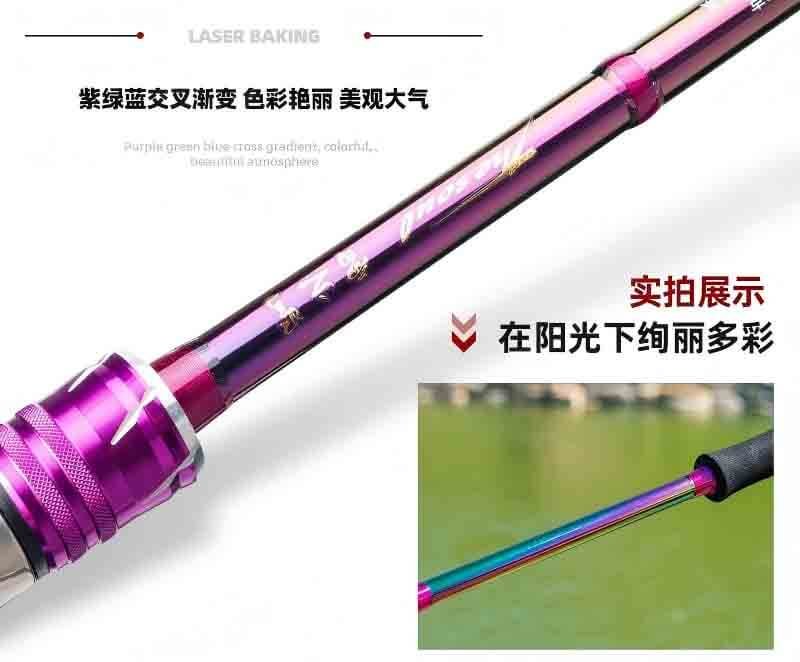
Quick comparison
| Feature | Fast Action | Slow Action |
|---|---|---|
| Hook Set | Immediate, strong | Gradual, forgiving |
| Sensitivity | High (tip) | Moderate (whole blank) |
| Best For | Bass, heavy lures | Trout, finesse, long casts |
Tip: Match line strength to rod power — light lines on light rods for stealth, heavier lines on heavy rods for control.
How power & action affect specific performance areas
Casting distance & accuracy
Action and blank taper influence the delivery of energy to your lure. Fast-action rods concentrate energy near the tip so heavier lures cut through wind and achieve distance. Slow-action rods load through the blank and act like a spring: they can cast light lures farther when your timing is correct.
Hook-setting: speed vs forgiveness
Fast actions give immediate torque to drive a hook home — ideal with braided lines or when fish have tougher mouths. Slow/medium rods absorb shock and reduce pulled hooks when fish inhale baits gently.
Playing and controlling fish
Rod power largely determines how you control runs and headshakes. Heavy power with medium-fast action gives strong control in rocky or snaggy environments. Light power with slow action improves bite detection and can tire a fish using more blank flex, which is useful for small species and delicate presentations.
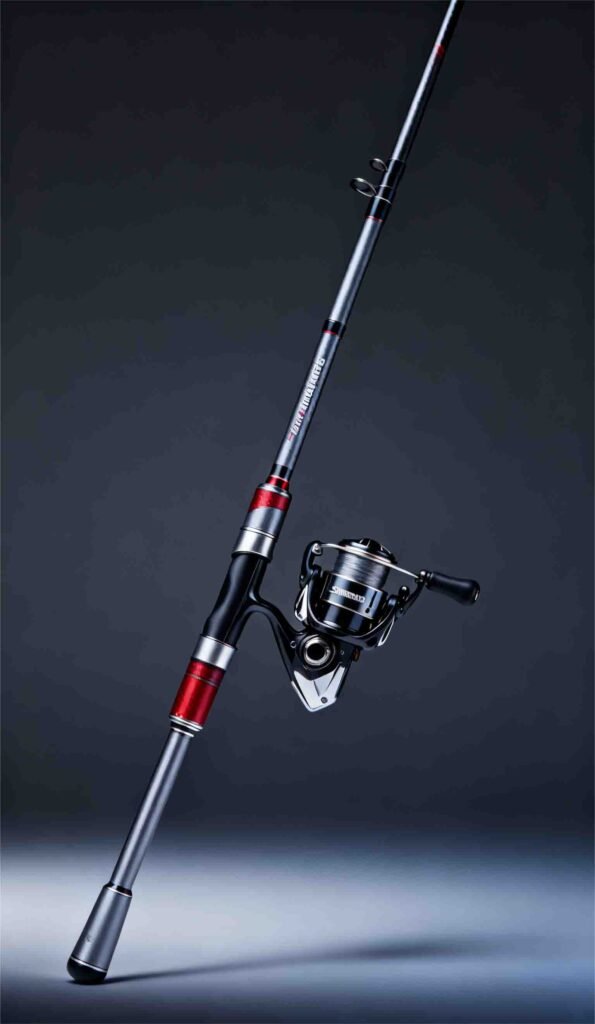
Matching rod power & action to common techniques (practical setup guide)
Below are common techniques and recommended rod characteristics. Use this as a starting point; adjust for personal feel and local conditions.
Finesse / Drop-shot / Light Jig (Trout, Panfish, Small Bass)
- Power: Ultra-light to Light
- Action: Slow to Medium — for long casts and gentle hook pressure
- Line: 2–8 lb test (mono/fluoro)
Worms, Texas Rig, Soft Plastics (Bass)
- Power: Medium to Medium-heavy
- Action: Medium-fast — balances sensitivity & solid hooksets
- Line: 8–20 lb test (fluoro / braid)
Heavy Jigs, Swimbaits, Big Crankbaits (Large Bass / Pike / Saltwater)
- Power: Heavy to Extra-heavy
- Action: Fast — immediate torque to set large hooks
- Line: 20–60 lb test (braid / heavy flouro)
Regional considerations (GEO optimization)
These tips help anglers in specific areas choose rods that confront local conditions and species behavior.
Great Lakes & Inland North America
Water often clear or stained; prefer medium to medium-heavy rods for bass & walleye. Use lighter rods during spring when fish are lethargic and more gentle presentations are needed.
US East Coast & Gulf Coast
Saltwater species often hit harder — choose corrosion-resistant components, medium-heavy to heavy power rods for inshore and heavy action for nearshore species (snook, redfish, snappers).
Pacific Northwest
Salmon and steelhead runs demand rods with stout backbones and forgiving midsections — medium-heavy with medium action often performs best for landing big salmon while preventing hook pulls.
UK & Europe
Match rod choices to local match or coarse fishing traditions: lighter rods for trout and chub, medium-power rods for pike and bass. Consider local tackle shops to test feel.
Material & construction: how blank, guides and handle affect feel
Modern blanks use graphite, fiberglass, or composite mixes. Graphite = sensitivity + light weight; fiberglass = durability and slow action; composites = a balance. Guide size, number, and reel seat quality influence casting performance and rod balance.
Guide tips
Smaller, closely spaced guides on fast-action rods improve accuracy and protect braided lines. Larger guides help reduce friction on heavy braided lines and large lures.
Four rod archetypes you should know
Ultralight Spinning
Finesse, trout & panfish, long casts on light baits.
Bass Casting (Medium)
Versatile, plastics, crankbaits, balanced for many techniques.
Heavy Casting / Jig Rod
Large lures, strong hooksets, structure fishing.
Surf & Inshore Saltwater
Durable, corrosion-resistant, long casts, heavy lines.
Real-world examples: recommended pairings
Below are sample rod + reel + line combos as starting points. Tweak to match your preferred lure weights and local fish.
| Target | Rod Power / Action | Reel / Line |
|---|---|---|
| Trout (streams) | Light / Slow | Spinning 1000–2500 / 4–8 lb fluoro |
| Bass (plastics) | Medium / Medium-fast | Baitcast 100–200 / 12–20 lb braid+fluoro |
| Inshore Redfish | Medium-heavy / Fast | Spinning 4000–5000 / 15–30 lb braid |
Care & maintenance — keep action and power performing
Rod blanks lose sensitivity and guides corrode over time when exposed to salt and sand. Rinse with fresh water after saltwater trips, lubricate reel seats, check guides for nicks (use a cotton swab to detect damage), and store rods vertically or in a rod tube to prevent permanent bend.
Common mistakes & how to avoid them
- Using too heavy a rod for finesse baits: kills action and bite detection. Choose a slower, lighter rod instead.
- Matching heavy line to a light rod: results in poor casting and stress on the blank.
- Ignoring guide damage: frayed lines cause lost fish — inspect guides regularly.
Frequently Asked Questions
How do I choose between fast and slow action?Can one rod do everything?Should I match the rod to the reel brand?
Final checklist before you buy
- Identify primary species & lures you will use.
- Decide on preferred line type and test weight.
- Choose rod power to control fish and rod action for the desired hook set / cast feel.
- Test the rod if possible — feel the balance and try a few casts.
HK Tackle — Rod Selection Help
Need help picking the perfect rod for your region? Contact our team with location and target species for tailored suggestions.