Welcome To HavenseeK Fishing Tackle

Surf Rods vs Saltwater Rods: What’s the Difference?

Difference Between Surf Rods and Saltwater Rods
If you’re torn between a surf rod and a saltwater rod, you’re not alone. Both are built for harsh marine environments, but they shine in different scenarios. In short: a surf rod prioritizes casting distance and shoreline control, while a saltwater rod (usually shorter) focuses on leverage, sensitivity, and fighting power from boats, piers, and inshore structures. Here’s how to choose the right tool for your water and understand the nuances in surf rods vs saltwater rods.
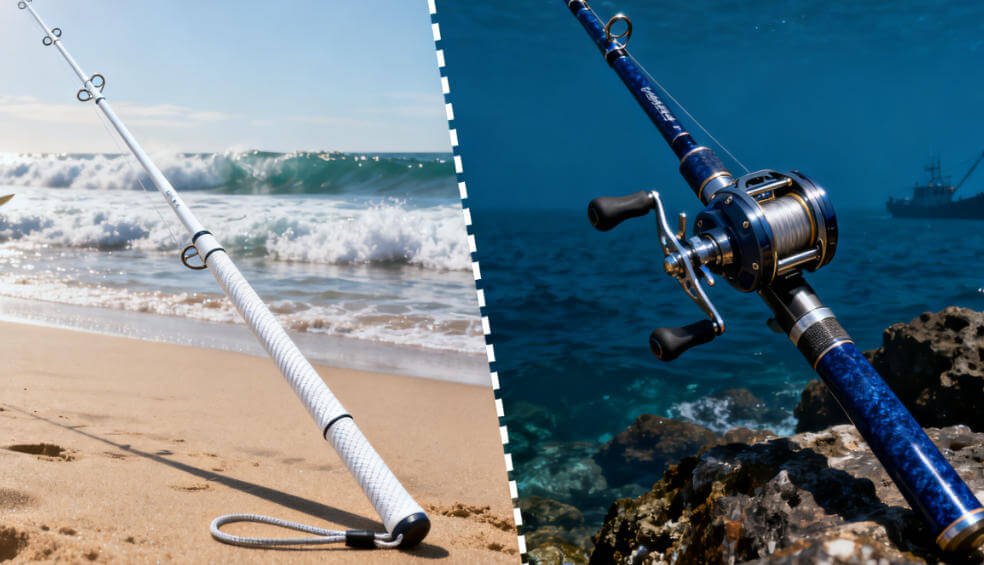
What Is a Surf Rod?
- Purpose: Long-distance casting from beaches, jetties, and rock walls to reach beyond the break and position baits or lures in the strike zone.
- Typical length: 9–15 feet, enabling two-handed power casts and line control in waves and wind.
- Action/power: Often medium to medium-heavy power with moderate-fast actions to load up on heavy sinkers and aerodynamic lures.
- Handles: Longer butt sections for leverage and two-handed casts; often shrink tube or EVA for grip in wet, sandy conditions.
- Guides: Larger diameter—especially the first guide—to manage line friction during long casts; materials resist sand abrasion and salt spray.
What Is a Saltwater Rod?
- Purpose: Versatile inshore/offshore use from boats and piers: jigging, trolling light setups, bottom fishing, and live bait presentations.
- Typical length: 6–8 feet for tighter maneuvering around railings and deck space, plus better leverage on powerful fish.
- Action/power: Widely varied—light inshore to heavy offshore. Faster actions improve sensitivity and hook-setting; heavier powers withstand vertical fights.
- Handles: Shorter grips for fighting fish close to the boat; EVA or premium cork with durable reel seats.
- Guides: High corrosion resistance (stainless or titanium frames, ceramic or SiC inserts), optimized for braid.
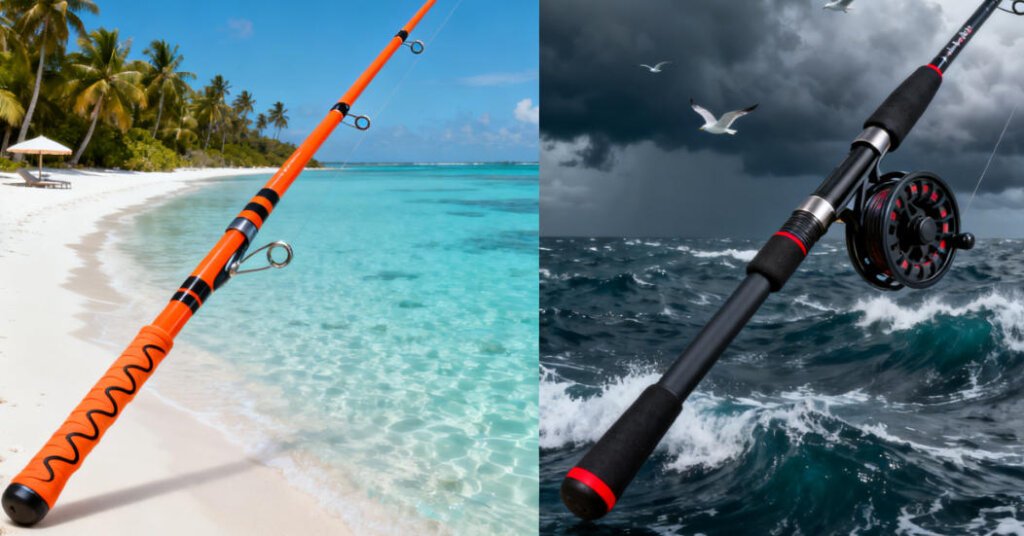
Surf Rods vs Saltwater Rods: Key Differences at a Glance
- Length & Casting Distance: Surf rods are long to cast past breakers; saltwater rods run shorter to maximize leverage and control near structure or from boats.
- Line & Lure Ratings: Surf models often rated for heavier sinkers (1–6 oz+) and 15–40 lb lines; saltwater rods range widely depending on technique (e.g., 10–20 lb for inshore trout/redfish, 30–80 lb for jigging/snappers).
- Guides & Hardware: Surf rods favor larger guides to reduce line slap during casting; saltwater rods emphasize ultra-corrosion-resistant components and compact guide trains for sensitivity and strength.
- Handle Design: Surf = long two-handed casts and better line control in surf; saltwater = shorter grips and reel seats set for fighting and boat ergonomics.
- Use Case: Surf rods for shore-based casting; saltwater rods for boat, pier, and inshore flats. Both tolerate saltwater, but each is optimized for a different approach.
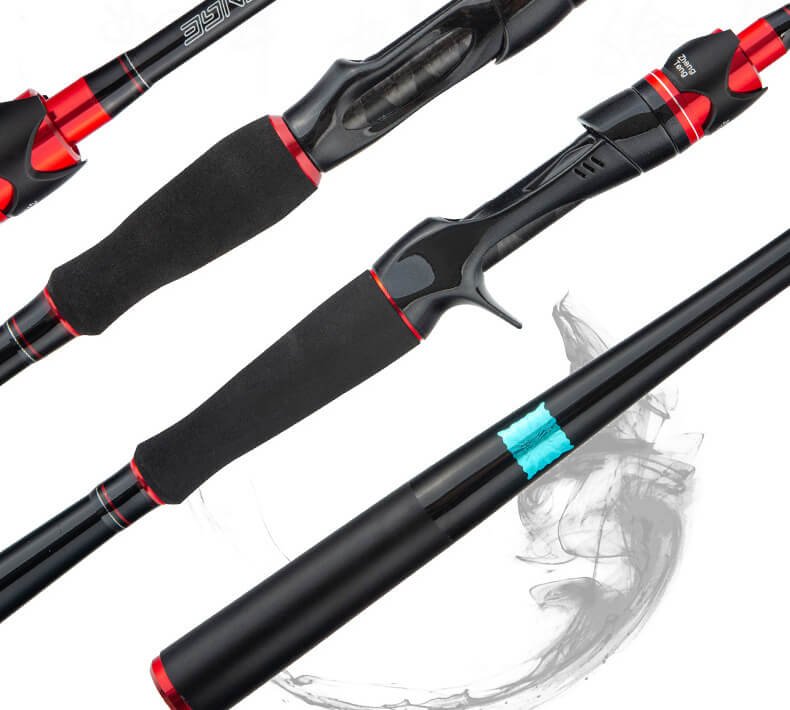
Which One Should You Choose?
Ask yourself:
- Where will you fish most? Beaches and open surf favor a long surf rod; piers, boats, and flats call for a shorter saltwater rod.
- How far must you cast? If reaching past the breakers is mandatory, length wins. If vertical jigging or precision around structure matters, choose compact control.
- What lures/baits and species? Heavy sinkers and metal spoons in surf need stout ratings; inshore soft plastics, jigs, and live bait often benefit from faster actions and sensitive tips.
Pro Tips for Setup and Maintenance
- Reel pairing: For surf, consider larger spinning reels with high line capacity; for boat/inshore, medium spinning or conventional reels depending on technique.
- Line choice: Braid improves casting distance and sensitivity; add appropriate mono/fluoro leaders for abrasion resistance near rocks and shells.
- Salt care: Rinse rods with fresh water after each trip, dry thoroughly, and inspect guides for nicks. Lightly grease reel seats and check ferrules on multi-piece surf models.
Example Use Cases
- Beach casting metal spoons for bluefish: 10–12 ft surf rod, 20–30 lb braid, 2–3 oz lures.
- Inshore jigging for redfish: 7 ft saltwater rod, fast action, 10–20 lb braid, 1/4–1 oz jigheads.
- Pier live baiting for snook: 7–8 ft medium-heavy saltwater rod, abrasion-resistant leader, high-strength guides.
FAQs
Can I use a surf rod on a boat?Yes, but the length can be awkward in tight spaces. You’ll gain casting reach and lose maneuverability.Are all saltwater rods good for the surf?They can survive the environment, but most won’t cast as far as a dedicated surf rod due to length and guide layout.What’s the best surf rod length for beginners?10–11 ft is a versatile sweet spot for distance, control, and manageable handling.
Ready to Pick Your Rod?
Ready to match your rod to your water? Explore our dedicated surf models for maximum casting reach or choose compact saltwater options for boat and pier control. For setup tips, see saltwater rod maintenance and how to choose rod length.