Welcome To HavenseeK Fishing Tackle

Ice Fishing Combo Design: 20 Years of Obsession in Each Rod
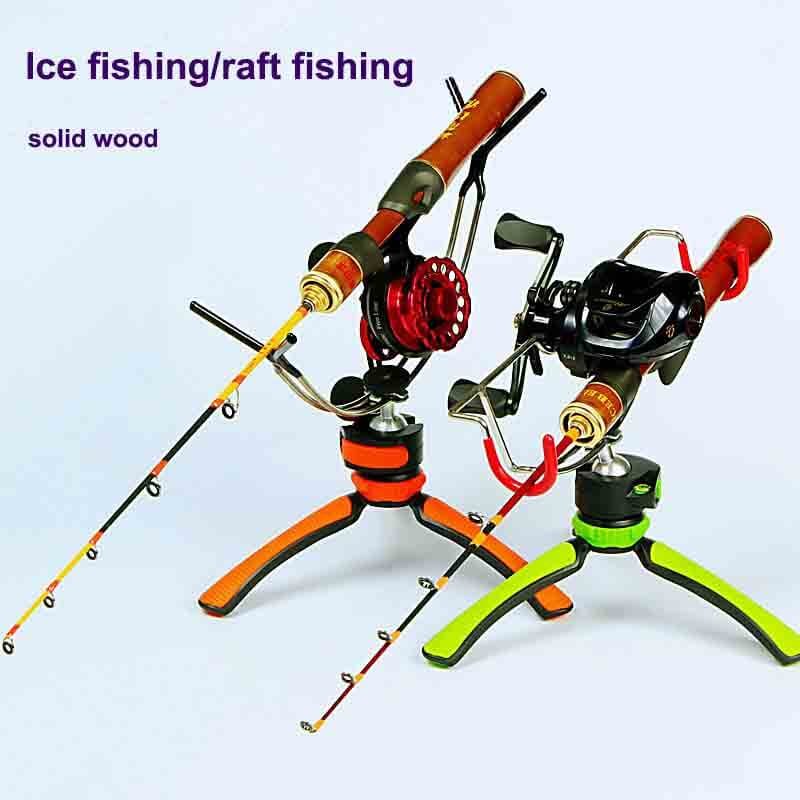
Written by Mark Chen – Head of Product Design & Development at Havenseek. With 15 years of experience designing and engineering fishing tackle, Mark has led the development of over 50 rod series, collaborating with professional anglers across North America to bridge the gap between ice fishing passion and precision manufacturing.
Why should you spend the next 10 minutes reading this? Because if you’re serious about ice fishing—whether you’re an angler chasing trophies or a retailer sourcing the best gear—understanding what goes into a premium fishing rod for ice fishing will change how you buy, use, and value your equipment. This isn’t marketing fluff; it’s a masterclass in the engineering and artistry that turns raw carbon into an extension of your senses on the ice. We’ll reveal why some combos feel like magic and others fall flat, saving you from costly mistakes and unlocking performance you didn’t know was possible. This is the deep dive into ice fishing gear you won’t find anywhere else.
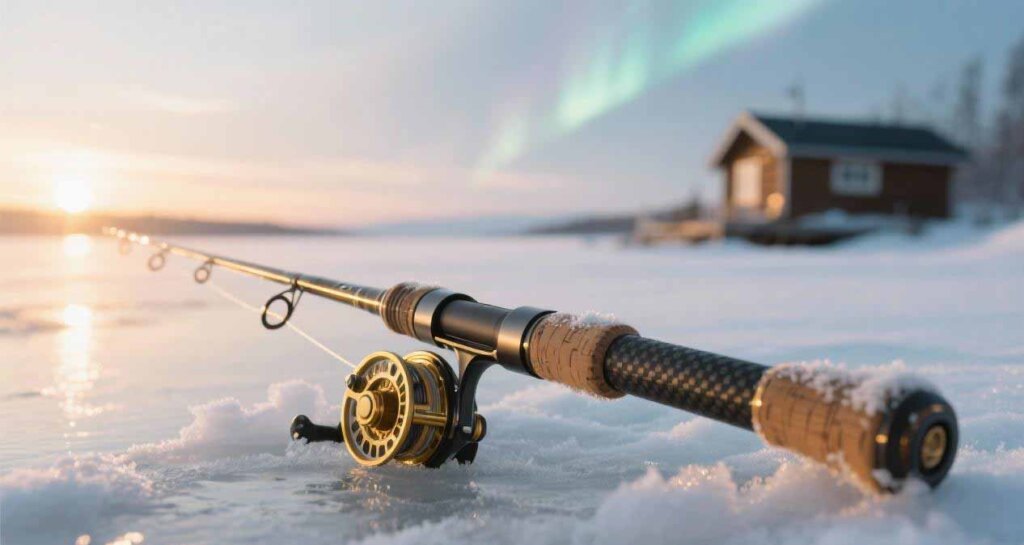
Table of Contents
- Introduction: More Than Just a Stick
- Part 1: The Blueprint – Design Forged on the Ice
- Part 2: The Material Truth – Carbon Fiber Isn’t Magic, It’s Science
- Part 3: The Craftsman’s Hand – Where Precision Meets Passion
- Part 4: The Crucible – Testing Beyond Breaking Points
- Conclusion: The Obsession Delivered
- Frequently Asked Questions (FAQ)
Introduction: More Than Just a Stick
Walk into any tackle shop, and you’ll see walls of ice fishing rods. Some cost $20. Some cost $200. On the surface, they might look similar: a blank, some guides, a handle. So what’s the difference? Is the expensive one just a scam? The truth is, the gap between a generic rod and a purpose-built, high-performance tool is vast. It’s a gap filled with thousands of hours of research, obsessive material selection, and painstaking hand craftsmanship. This isn’t about markup; it’s about what happens long before the rod hits the shelf. It’s a 20-year obsession with a single goal: to create the most responsive, reliable, and effective fishing rod for ice fishing possible. This article is your backstage pass to that process.
Part 1: The Blueprint – Design Forged on the Ice
Great design doesn’t start in an office. It starts in a shack on a frozen lake at -20°F. Our process begins not with a sketch, but with a question: “What problem are we solving for the angler today?”
Listening to the Ice: How Guides Shape Our Designs
Every winter, our design team trades CAD software for augers and sits with professional guides from Wisconsin to Alberta. We don’t just ask what they want; we watch what they do. We note the frustration when a rod is too stiff to detect a light perch bite. We see the fatigue in their hands after 8 hours of jigging with a poorly balanced combo.
A key insight from Lake of the Woods: Walleye guides needed a rod with a specific, fast tip for subtle jigging but a strong enough backbone to turn a fish’s head away from structure instantly. This single observation birthed our “Fast-Taper” series. This is how real-world ice fishing gear evolves.
The Language of Action and Power: Decoding Rod Specs
Action and power are not marketing terms. They are precise engineering parameters.
- Action (Fast, Moderate, Slow): Refers to where the rod bends. A fast-action rod bends mostly in the top 25-30%. It’s sensitive and provides a quick hook set. Perfect for jigging with spoons or when you need immediate feedback.
- Power (Ultra-Light to Heavy): Refers to the rod’s resistance to bending—its “backbone.” This determines what line weight and lure weight it can handle, and what size fish it can subdue.
Matching these to your target is the foundation of a great ice fishing combo.
| Target Species & Technique | Recommended Power | Recommended Action | Ideal Rod Length | Why This Combo Works |
|---|---|---|---|---|
| Panfish (Bluegill, Crappie) – Light jigs, small plastics | Ultra-Light to Light | Extra-Fast to Fast | 24″ – 28″ | Extreme sensitivity for detecting finicky bites, enough power to set a small hook. |
| Walleye – Jigging raps, spoons, live bait | Light to Medium-Light | Fast | 28″ – 32″ | Fast tip for lure action and bite detection, with a solid lower section to fight larger fish. |
| Northern Pike / Lake Trout – Large spoons, tip-ups | Medium to Medium-Heavy | Moderate-Fast | 34″ – 40″ | More parabolic bend (moderate) to absorb powerful runs, heavy backbone for control. |
The Forgotten Factor: Balance and Ergonomics
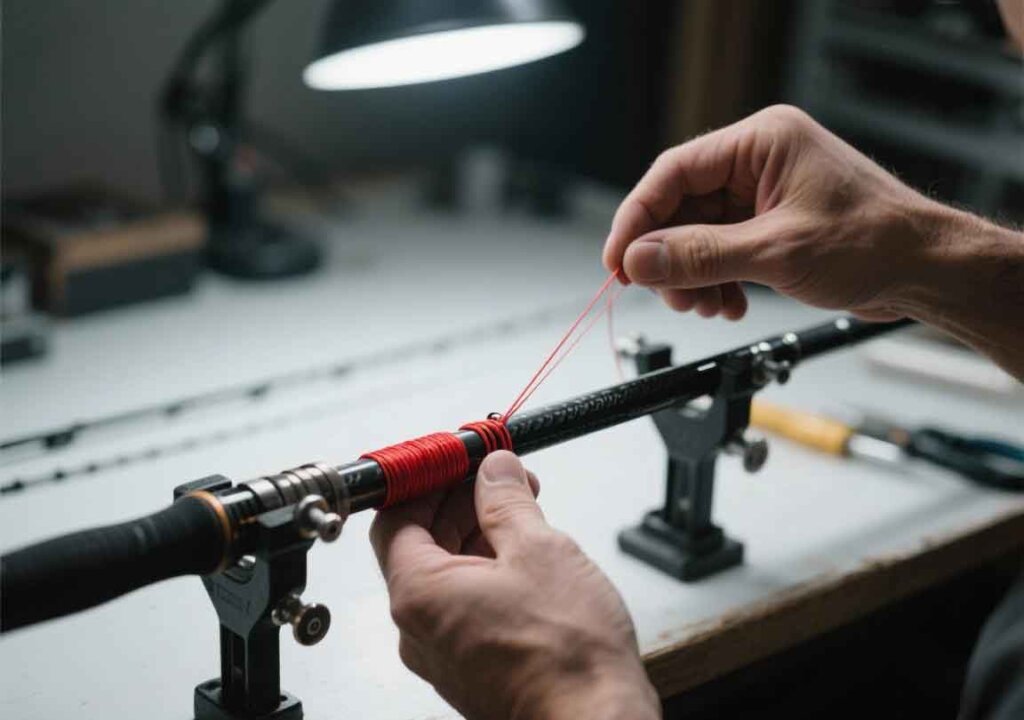
A perfectly designed blank is ruined by poor balance. We design our handles and select reels to create a neutral balance point typically just in front of the reel seat. Why?
- Reduces Fatigue: A tip-heavy rod strains your wrist and forearm over a long day.
- Improves Sensitivity: A balanced rod feels lighter and allows you to focus on subtle vibrations.
- Enhances Control: You have more precise command over your jigging motions.
This holistic view—from target species to the angler’s physical comfort—is what separates a true fishing rod for ice fishing from a summer rod that’s been cut short.
Part 2: The Material Truth – Carbon Fiber Isn’t Magic, It’s Science
The blank is the heart and soul of the rod. It’s where performance is born or limited. Let’s demystify the materials.
The Carbon Fiber Matrix: Modulus, Layup, and Resin
Not all carbon is equal. The term “modulus” refers to the material’s stiffness. Higher modulus carbon is lighter and more sensitive, but also more brittle.
- High-Modulus (HM) Carbon: Exceptional sensitivity and lightweight. Used in the tip sections of our premium rods to transmit the faintest ticks.
- Intermediate-Modulus (IM) Carbon: The workhorse. Provides an excellent balance of sensitivity, strength, and durability. Forms the core of most high-quality blanks.
- Multi-Layer Layup: We don’t use one type. A rod might have HM carbon in the tip for feel, IM carbon in the mid-section for power transition, and a reinforcing layer of stronger, more impact-resistant fiber at the butt. This is the “recipe,” and it’s a closely guarded secret for each model.
- The Glue: Resin Systems: The resin that binds the carbon fibers is crucial. Advanced epoxy resins cure clearer, are more flexible in the cold, and create a more responsive blank.
Pro Tip: Don’t be fooled by “100% Carbon Fiber” labels. All graphite rods are 100% carbon. The magic is in the modulus, weave, and layup. A good ice fishing combo will specify the grade of carbon used.
The Spine: The Backbone of Every Great Rod
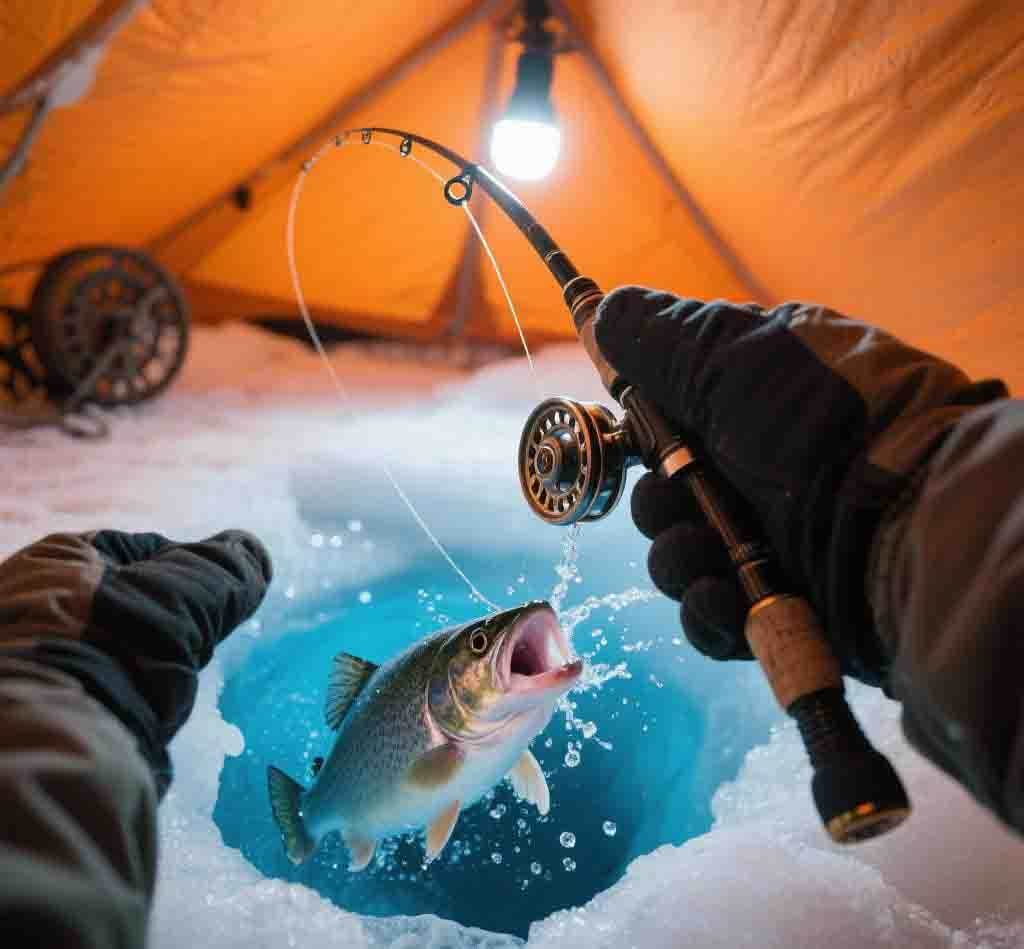
This is one of the most critical, yet often skipped, steps in low-cost manufacturing. Every carbon blank has a natural spine—an axis along which it is most rigid and wants to bend naturally.
Here’s how we find and use it:
- The blank is placed on precision rollers.
- A technician applies pressure, feeling for the natural “roll-over” point where the blank wants to settle. This is the spine.
- A line is marked along this entire axis.
- All guides are meticulously aligned along this spine during wrapping.
Why does this matter? A rod built “on-spine” has a pure, predictable bending curve. It loads energy efficiently and casts (or in ice fishing, hooksets) with authority. A rod built “off-spine” feels dead, has a wobble in its action, and is more prone to failure. It’s a time-intensive, manual process, but it’s non-negotiable for performance.
Component Selection: Where the Rod Meets the World
The best blank is let down by cheap hardware. Every component is chosen for a specific job in the harsh ice environment.
- Guides: We use single-foot, lightweight frames with aluminum oxide or silicon carbide (SiC) inserts. These materials are extremely hard, smooth, and disperse heat quickly, preventing ice from building up in the guide. Their smoothness reduces friction, preserving your light ice line.
- Reel Seat: It must be lightweight, corrosion-resistant (stainless steel or anodized aluminum), and have a secure, foolproof locking mechanism that won’t freeze shut or loosen. Ergonomics are key—it should feel good in a bare or gloved hand.
- Handle: Cork and high-grade EVA foam are the standards. Cork is classic, warm, and provides excellent grip even when wet. Modern EVA is durable, provides great insulation, and is often more consistent. The shape is contoured to fit the hand for hours of comfortable jigging.
Part 3: The Craftsman’s Hand – Where Precision Meets Passion
This is where the design and materials are transformed into a finished rod. It’s a blend of technology and traditional skill.
The Art of the Wrap: Guide Placement Under a Microscope
Guide placement is a geometric calculation for optimal stress distribution and line flow. Using a laser template, the technician marks each guide’s exact position on the spine line. The wrapping thread tension is precisely controlled—too loose, and the guide can shift; too tight, and it can deform the blank. Each wrap is locked with a specific finish knot. The first guide (stripper guide) is especially critical for a smooth transition from the reel.
The Finish: More Than Just a Pretty Coat
The thread wrap is saturated with a high-clarity, flexible epoxy. This isn’t just for looks; it:
1. Locks the guide feet permanently in place.
2. Protects the thread from abrasion and UV damage.
3. Creates a smooth, hydrodynamic surface that sheds water and ice.
The rod is placed on a slow-turning dryer (a “rod turner”) for 12-24 hours to ensure the epoxy cures evenly without sags or drips. Multiple thin coats are better than one thick one.
Final Assembly: The Marriage of Blank, Handle, and Hardware
The handle assembly is fitted to the blank using a specific adhesive designed for the materials (often a two-part flex epoxy). It’s crucial that the adhesive fills all voids to prevent moisture ingress and creaking. The reel seat is aligned perfectly straight. Once cured, a final inspection ensures every component is secure, straight, and flawless.
Part 4: The Crucible – Testing Beyond Breaking Points
A rod isn’t ready when it’s built. It’s ready when it’s proven.
Lab Testing: Measuring What Can Be Measured
Every production batch undergoes rigorous QC. We don’t just “spot check.”
- Static Load Test: The rod is clamped and a weight is hung from the tip to simulate a fish’s pull. We check the bending curve matches the design prototype.
- Guide Pull Test: A calibrated gauge applies lateral force to each guide to ensure the wraps won’t fail.
- Ferrule/Join Integrity: For multi-piece rods, we test the connection points for security and alignment.
- Finish Inspection: Under bright lights, every inch is examined for bubbles, dust, or imperfections in the epoxy.
Field Trials: The Ultimate Judge is the Ice
Finally, prototypes and samples go to our network of “Pro Staff” – not just famous names, but working guides and hardcore anglers from Minnesota to Manitoba. They use the rods for an entire season. They fill out detailed reports rating:
Sensitivity: Can you feel a 1/32 oz jig?
Hook Setting: Does the action drive the hook home?
Durability: How does it handle a big fish, or being stepped on in the shack?
Ergonomics: Does it cause hand fatigue?
Their feedback is gospel. It has led us to change guide sizes, adjust handle lengths, and even reformulate epoxy for better cold flexibility. This final, real-world validation is what ensures the ice fishing gear we ship performs on your frozen lake, not just on our test bench.
A Real Case: Last season, a guide on Lake Winnipeg reported that a specific guide was occasionally collecting ice in a unique, windy condition. Our engineers redesigned the guide frame profile for that model within a week, and the update was in the next production run. That’s the obsession in action.
Conclusion: The Obsession Delivered
So, what are you really getting when you invest in a properly engineered fishing rod for ice fishing? You’re getting years of frozen-field research crystallized into a design. You’re getting a sophisticated laminate of aerospace-grade materials, each layer placed with intent. You’re getting the steady hand of a craftsman aligning a spine and wrapping a guide. You’re getting the reassurance of a rod that has been stressed, tested, and fish-proven before it ever bears your name.
It’s not a commodity. It’s a specialized tool, born from a 20-year obsession with solving the unique problems of ice anglers. This obsession is what turns a simple ice fishing combo into your most trusted partner on the ice—a seamless connection between you and the world below.
At Havenseek, this process isn’t a cost; it’s our creed. It’s how we ensure that every piece of ice fishing gear that leaves our door is worthy of your hard-earned money and your precious time on the ice.
Ready to Experience the Difference?
You’ve seen the depth of our obsession. Now feel it in your hands. Whether you’re an angler seeking an unfair advantage or a retailer looking for ice fishing combos that build customer loyalty, let’s talk.
Get a personalized recommendation or request a catalog. Contact our tackle experts today.Get Your Free 2026 Pro Ice Gear Catalog & Consultation
Frequently Asked Questions (FAQ)
What’s the most important factor in ice fishing rod design?
The single most critical factor is action and taper design, tailored to a specific fishing technique and target species. A panfish rod and a lake trout rod are worlds apart. The action determines how the rod bends and transmits the subtle bite signal to your hand. A well-designed action is the difference between feeling a light tap and missing the fish entirely.
Why are some ice fishing rods so much more expensive?
Cost reflects materials, labor, and R&D. Premium rods use higher-modulus, more sensitive carbon fiber with precise multi-layer construction. They feature better components like aluminum oxide guides and machined reel seats. Most importantly, they undergo rigorous hand-finishing and quality control. You’re paying for consistency, performance, and durability that a mass-produced rod cannot match.
How do I choose the right ice fishing combo?
Start with your primary target species and technique. 1) For panfish and perch, choose an ultra-light to light power, fast action rod (18-24″) with a 500-1000 size reel. 2) For walleye, a light to medium-light power, fast or extra-fast action rod (24-30″) paired with a 1000 size reel is ideal. 3) For pike or lake trout, opt for a medium to medium-heavy power, moderate-fast action rod (30-36″) and a 2500-3000 reel. Always ensure the reel is rated for cold weather.
What does ‘spine finding’ mean and why is it important?
A carbon blank has a natural spine—a line along its length where it’s most rigid and wants to bend. Spine finding is the process of locating this axis and aligning the guides along it. A rod built on-spine has a more natural, efficient bending curve, better sensitivity, and greater durability. Building off-spine creates a weak, inconsistent action. It’s a time-consuming, manual step that separates handcrafted rods from cheaply made ones.
Can a good ice fishing rod really improve my catch rate?
Absolutely. A high-performance fishing rod for ice fishing acts as an extension of your nervous system. It transmits subtle vibrations from a jigging spoon or a light bite on a wax worm that a less sensitive rod would completely miss. This allows you to detect more strikes, set the hook at the perfect moment, and ultimately land more fish, especially in tough, cold-weather conditions.
What should I look for in quality ice fishing gear components?
Focus on three things: 1) Guides: Look for single-foot frames with hard, smooth inserts (like aluminum oxide or SiC) that resist ice buildup and reduce line friction. 2) Reel Seat: It should securely lock your reel without wobble, have a comfortable, cold-weather material (EVA foam extensions are great), and not freeze to your gloves. 3) Handle: Prioritize grip and warmth. Cork and high-density EVA provide excellent insulation and a secure feel in wet conditions.
Further Reading & Resources
To deepen your knowledge on ice fishing technology and techniques, we recommend these expert resources:
- The Science of Ice Rod Sensitivity – Ice Team (A detailed look at how rod design affects bite detection.)
- Understanding Ice Fishing Rod Actions – In-Fisherman (A classic article breaking down rod action for different species.)
- Ice Fishing Rods: A Beginner’s Guide – Take Me Fishing (A great foundational resource for those new to the sport.)
Havenseek Fishing Tackle is committed to advancing the sport of fishing through innovative design, rigorous manufacturing, and a deep understanding of the angler’s needs. We serve a global community of passionate fishermen and professional retailers.