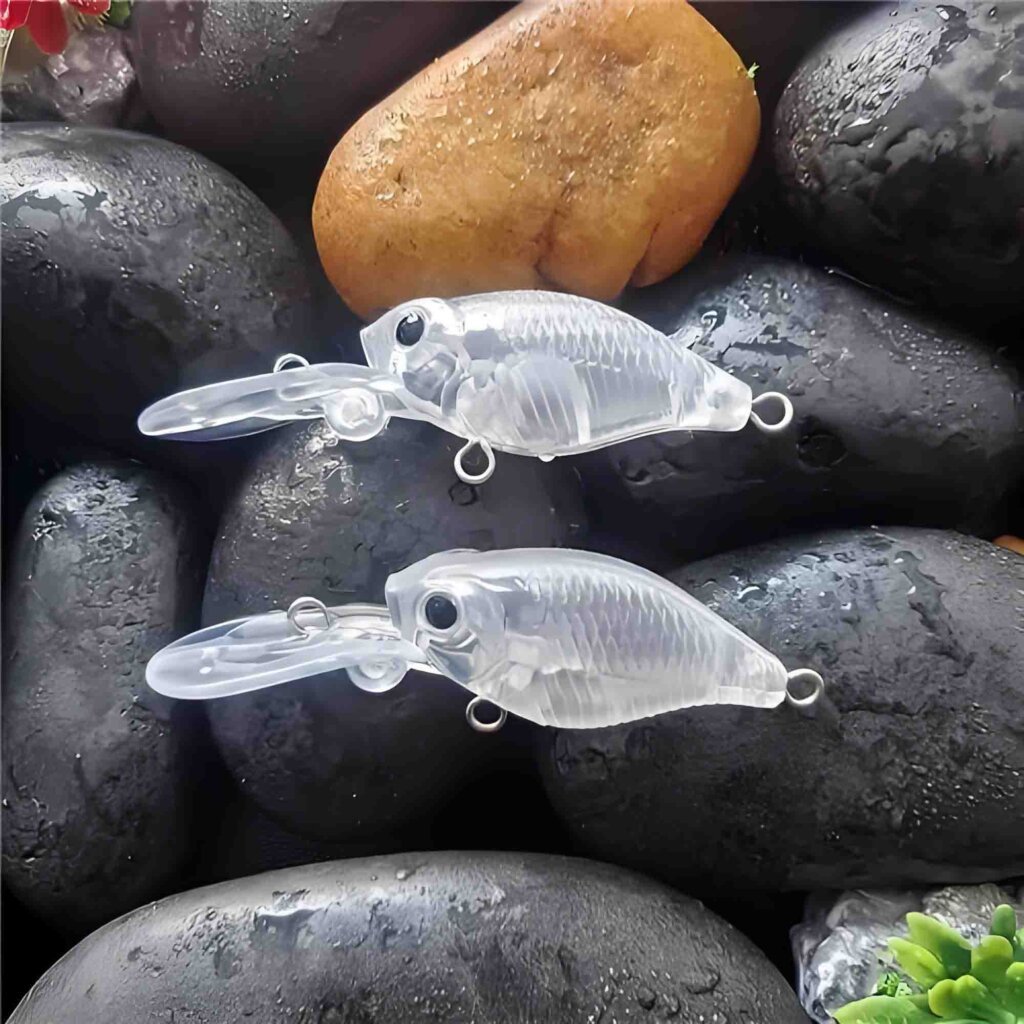
Welcome To HavenseeK Fishing Tackle

The 2026 Buyer’s Guide to Sourcing Nopaint Crankbait Body Blanks
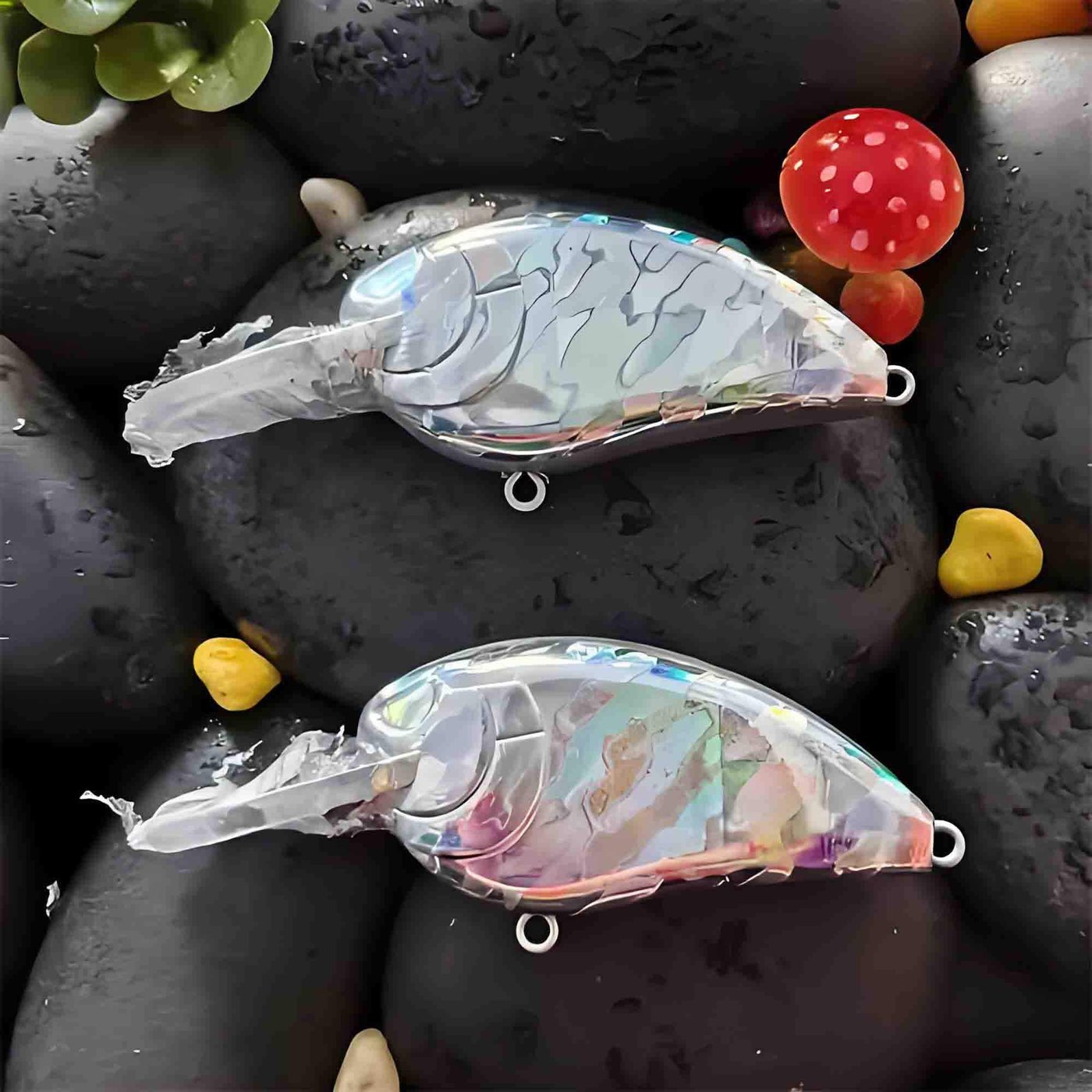
B2B FISHING TACKLE SOURCING
Why this guide is worth your next 28 minutes: If you’re buying nopaint crankbait body blanks in bulk, a 5% lower unit price can feel like a win. But what if that “deal” hides a 35% higher total cost from rejects, delays, and rework? In 2026, with demand for custom lures soaring, finding the right crankbait body manufacturer isn’t about finding the cheapest supplier—it’s about finding the most valuable partner. This guide gives you the exact 5-pillar framework my team and I use to vet suppliers, avoid catastrophic mistakes, and build a supply chain that makes your brand money, not headaches. Let’s move beyond price tags and talk about real value.
In This Guide: Your Roadmap
- The Hidden Cost of a “Good Deal” on Crankbait Blanks
- The 5-Pillar Evaluation Framework for Premium Blanks
- Pillar 1: Engineering & Quality – The Non-Negotiables
- Pillar 2: Total Cost of Ownership (TCO) – The Real Math
- Pillar 3: Vetting the Manufacturer – Beyond the Brochure
- Pillar 4: The Sampling & Ordering Playbook
- Pillar 5: Future-Proofing Your Supply Chain
- 3 Costly Sourcing Mistakes (And How to Avoid Them)
- Your Top Questions, Answered
- Your Next Step: From Reading to Results
63%
of custom lure brands report inconsistent blank quality as their top sourcing challenge in 2025. (Global Tackle Sourcing Report)
5.2x
Higher customer lifetime value for brands using premium, consistent blanks vs. budget options. (Independent Brand Survey)
$4.7B
Projected global hard bait market value by 2027, driven by customization. (Market Research Future, 2025)
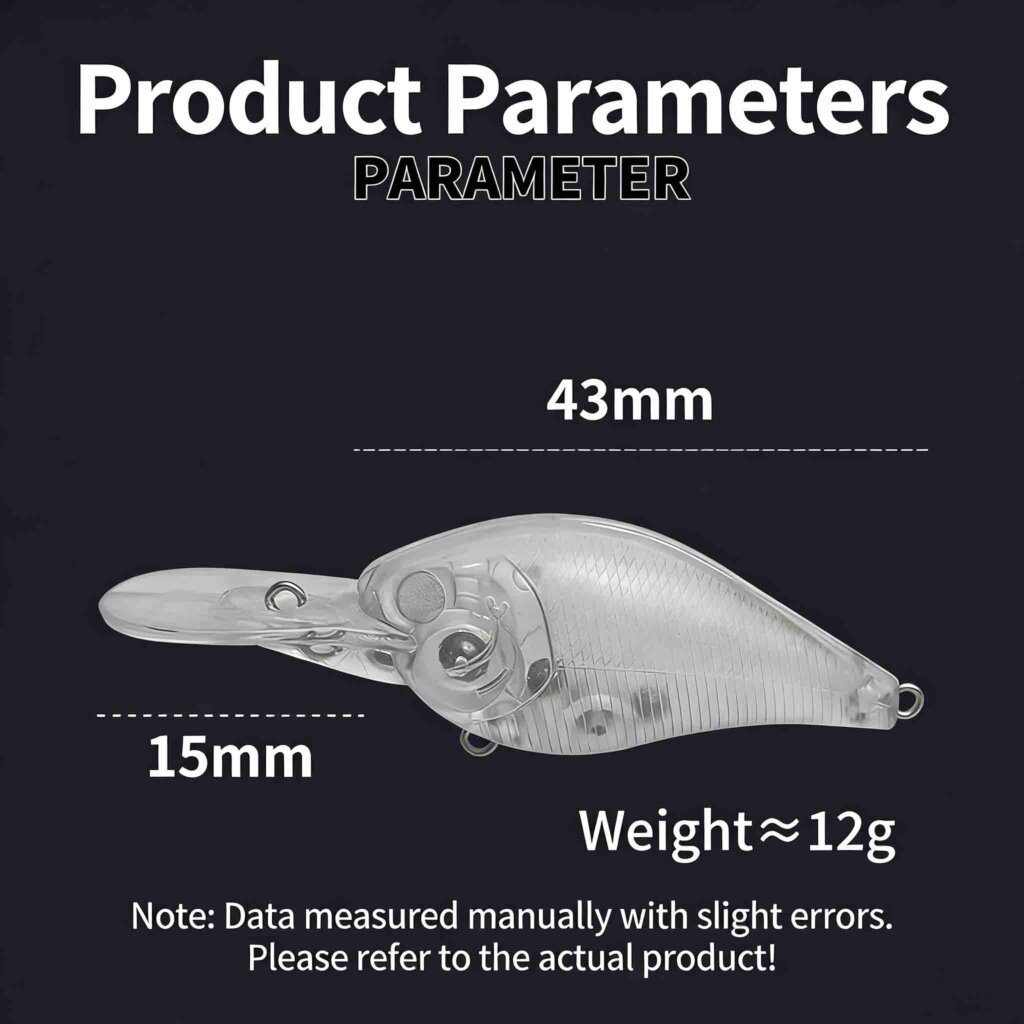
The Real Problem Isn’t Price. It’s Predictability.
Let me tell you about “Brand A.” Last year, they switched to a new crankbait body manufacturer offering blanks at 20% below market rate. The first sample batch was decent. The first production order? A disaster. Wall thickness varied by over 0.5mm, causing paint to pool. Lip slot angles were inconsistent, killing the famous wobble. The result? A 40% rejection rate, missed shipping deadlines to retailers, and a tarnished brand reputation.
Their “savings” evaporated, replaced by a 35% higher total cost when accounting for waste, repainting labor, and air freight to catch up. This story is painfully common. When you source custom crankbait blanks, you’re not just buying plastic. You’re buying consistency, performance, and time. A subpar blank doesn’t just cost you the unit price; it costs you your margin, your timeline, and your customer’s trust.
The Illusion of the “Cheap” Blank
Most buyers fixate on the FOB price per piece. The savvy buyer calculates the Total Cost of Ownership (TCO):
- Unit Price + Mold Cost Amortization + Shipping & Duty
- + Rejection/Waste Rate (%) – The silent profit killer.
- + Labor for Extra QC/Repair – Your team’s time isn’t free.
- + Risk of Delays & Lost Sales – The ultimate hidden cost.
Your 5-Pillar Framework for Bulletproof Sourcing
Forget checking boxes on a generic list. Evaluating a nopaint crankbait body supplier requires a holistic system. After 15 years and hundreds of projects, this is the framework we use at Havenseek for every potential partner. It moves you from price-shopper to strategic partner.
Pillar 1: Engineering & Quality
The foundation. Does the blank perform and facilitate flawless finishing?
- Material integrity and selection
- Dimensional precision and consistency
- Hydrodynamic fidelity
Pillar 2: Total Cost of Ownership (TCO)
The true financial picture. What does this blank actually cost your business?
- Beyond the unit price
- The cost of inconsistency
- Scalability and volume breaks
Pillar 3: Manufacturer Capability
Can they deliver, today and tomorrow? It’s about process, not promises.
- Production and QC systems
- Communication and transparency
- Problem-solving culture
Pillar 4: The Ordering Process
Reducing friction from sample to full container. Your roadmap for success.
- Strategic sampling protocol
- IP protection and terms
- Logistics and documentation
Pillar 5: Future-Proofing
The 2026 differentiator. Is your supplier evolving with the market?
- Sustainability and materials
- Flexibility for small batches
- Collaborative R&D potential
Pillar 1: Engineering & Quality – The Non-Negotiables
This is where the journey of a great custom crankbait begins. A premium nopaint crankbait body is a precision component, not a toy.
Material Science: The 2026 Landscape (ABS vs. PVC vs. New Composites)
The choice of material dictates durability, buoyancy, finish adhesion, and environmental impact.
| Material | Key Properties | Best For | Considerations (2026) |
|---|---|---|---|
| ABS (Acrylonitrile Butadiene Styrene) | High impact strength, excellent surface finish for painting, good dimensional stability. | Premium custom crankbait blanks requiring flawless paint, complex shapes. | Remains the gold standard. Look for UV-stabilized grades. Slightly higher cost. |
| PVC (Polyvinyl Chloride) | Dense, sinks faster, good chemical resistance, often lower cost. | Deep-diving crankbaits, budget-conscious lines, saltwater applications. | Ensure it’s non-phthalate. Can be trickier to paint without proper priming. |
| Bio-Based/Recycled Composites | Reduced environmental footprint, marketing appeal, evolving performance. | Eco-conscious brands, inshore/light tackle lines. | 2026 Trend: Demand growing ~25% YoY. Verify durability and consistency with the crankbait body manufacturer. |
The Devil in the Details: Tolerance & Consistency
Ask any production painter: variance is the enemy. A nopaint crankbait body must be identical, piece to piece, batch to batch.
- Wall Thickness Variance: Should be < ±0.15mm. Greater variance causes paint runs or thin spots.
- Lip Slot & Line Tie Alignment: Critical for swim action. Misalignment of just 2 degrees can ruin the action.
- Flash & Parting Lines: Minimal, easily sanded flash is acceptable. Prominent lines mean extra manual labor for you.
Actionable Tip: Request a Certificate of Analysis (CoA) for a production batch, showing measurements for 10 random blanks. A serious supplier can do this.
Hydrodynamics: Does It Swim as Designed?
A blank is a vessel for a designed action. A quality crankbait body manufacturer preserves the designer’s intent.
- Balance Point: Must be consistent. Test by floating the blank in a tank; the attitude (nose up/down) should be identical.
- Internal Chambers: For multi-density lures, internal walls must be clean and correctly placed to control rattle and buoyancy.
- Real-World Test: Rig a sampled blank with hardware, and swim it in a test tank or pool. Compare its action to a known-good finished lure of the same design.
Pillar 2: Total Cost of Ownership – The Real Math
Let’s dismantle the “sticker price” myth with a real formula. This is how you calculate the true cost of your custom crankbait blanks.
TCO Formula for 10,000 Blank Order:
TCO = (Unit Price x Order Qty) + (Mold Cost / Estimated Lifespan Uses) + Shipping + Duty + (Rejection Rate % x Order Qty x Unit Price) + (Labor Cost for QC/Repair per Reject x # of Rejects) + Cost of Delay
Case Study: The “Cheap” Blank That Cost 35% More
Supplier A (“The Budget Option”)
- Unit Price: $0.85
- Quoted Rejection Rate: “Under 2%”
- Actual Rejection Rate: 12% (found during painting)
- Lead Time: 45 days (promised), 68 days (actual)
- Communication: Slow, defensive about issues.
Supplier B (“The Partner”)
- Unit Price: $1.10
- Actual Rejection Rate: 0.5% (as promised)
- Lead Time: 30 days (promised), 30 days (actual)
- Communication: Proactive, weekly updates, solved a minor lip slot issue before shipment.
While Supplier A’s nopaint crankbait body was 23% cheaper per piece, the hidden costs of rejects, air freight to meet deadlines, and labor for sorting made the Total Cost of Ownership 35% higher. Supplier B delivered predictable cost and on-time completion. Predictability is profit.
Pillar 3: Vetting the Crankbait Body Manufacturer
You’re not just assessing a product; you’re assessing a company. Your questions should probe their systems and culture.
10 Questions to Ask Every Potential Manufacturer
- “Walk me through your QC process from raw material to pallet.” (Listen for IPQC – In-Process Quality Control).
- “What is your documented First Pass Yield (FPY) percentage for a complex crankbait body?” (Aim for >98.5%).
- “Can you provide a recent material certificate (CoC) for your ABS/PVC resin?”
- “What is your standard capacity utilization, and what’s your lead time buffer for 10k vs. 100k piece orders?”
- “Describe a time a client found a quality issue. How was it resolved?” (Tests accountability).
- “Who will be my single point of contact, and what are their response time SLAs?”
- “How do you protect client intellectual property (e.g., my custom design)?”
- “Can you share an example of a process improvement you made in the last year?” (Shows continuous improvement).
- “What is your policy on material substitutions, and how is the client notified?”
- “May we schedule a video tour of your production and QC area?” (The ultimate trust-builder).
The Communication & Transparency Factor
In B2B manufacturing, problems will occur. A great partner informs you before it affects your shipment. A bad one hides it. Gauge their transparency during sampling. Are they proactively explaining minor flaws in samples? That’s a good sign—it shows honesty.
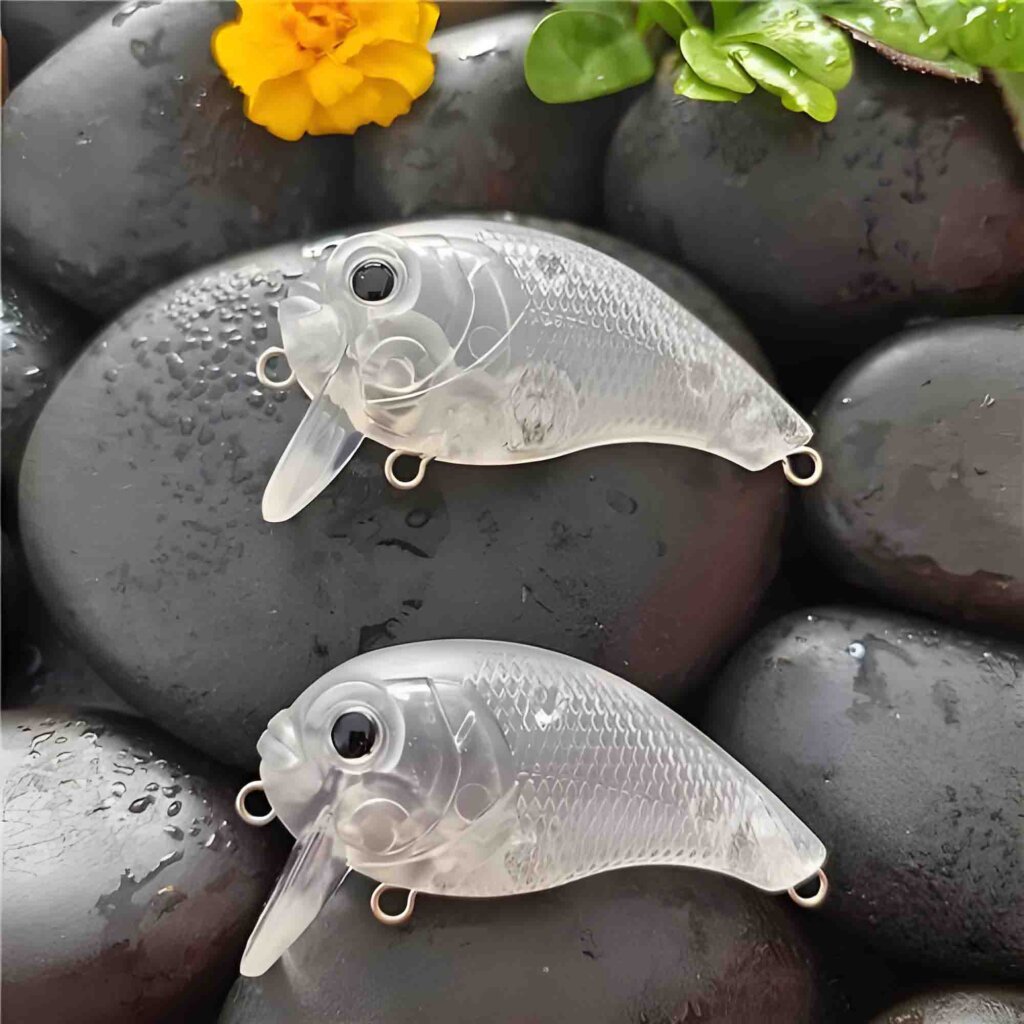
Pillar 4: The Sampling & Ordering Playbook
This is your controlled, low-risk test drive. Do not order a sample like a hobbyist. Order it like an auditor.
The Strategic Sample Request: Go Beyond “Send Me 5 Pieces”
When you request samples of custom crankbait blanks, be specific:
- Request samples from two different production batches (if possible) to check consistency.
- Ask for unfinished samples (no primer/paint) so you can assess the raw body.
- Request the full documentation: Technical drawing, Material Data Sheet, Packing list.
Your 7-Point Sample Inspection Checklist
1. Dimensions & Weight
Use calipers and a scale. Compare to spec sheet. Weight variance < ±0.3g.
2. Wall Thickness
Measure at multiple points. Critical for buoyancy and paint.
3. Flash & Seams
Minimal, easily removable. No heavy parting lines.
4. Surface Texture
Smooth, uniform. No sink marks or flow lines that will show under paint.
5. Lip/Linetie Alignment
Use a simple jig or visual check. Must be symmetrical and true.
6. Primer/Paint Test
Prime and paint one. Does the paint adhere evenly without fish eyes?
7. Swim Test (The Final Exam)
Install hardware. Test in water. Does it track straight? Achieve the desired depth and action? Compare to a benchmark.
Pillar 5: Future-Proofing – The 2026 Differentiator
The best partnerships grow with you. Your crankbait body manufacturer should be a source of innovation, not just a vendor.
Sustainability is No Longer a Niche
A 2025 Statista survey showed 68% of anglers under 40 prefer brands with eco-initiatives. Ask your supplier:
- Do you offer bio-based or recycled material options (e.g., PCR-ABS)?
- What is the environmental policy of your resin supplier?
- Are your manufacturing processes ISO 14001 (Environmental Management) certified?
Flexibility for Small-Batch & Customization
The trend is towards shorter runs and more SKUs. Can they efficiently handle a 500-piece custom order, or are they only set up for 50,000+ pieces? A flexible partner allows you to test new designs with lower financial risk.
3 Costly Sourcing Mistakes (And How to Dodge Them)
Mistake #1: The “Sample-Only” Evaluation
The Error: Approving a supplier based on perfect hand-picked samples, then being shocked when production quality differs.
The Fix: Always request a “pre-production sample” from the first 500 pieces of your actual production run before the full order proceeds. This is your final gate.
Mistake #2: Vague Agreements on Defects
The Error: Not defining “acceptable quality” upfront, leading to disputes over rejections.
The Fix: Agree on an AQL (Acceptable Quality Level) standard (e.g., AQL 1.0 for critical defects) in your Purchase Order. Define what constitutes a major vs. minor defect for your nopaint crankbait body.
Mistake #3: Ignoring the “Why” Behind a Low Price
The Error: Jumping at a low bid without understanding how it’s achieved (e.g., recycled regrind material, older/ worn-out molds, minimal QC).
The Fix: Be politely curious. “Your price is very competitive. To help me understand, could you share what allows you to hit that target? Is it a particular material formulation or a highly efficient molding process?” The answer is revealing.
Your Top Questions on Sourcing Nopaint Crankbait Bodies, Answered
What is the typical Minimum Order Quantity (MOQ) for custom crankbait blanks?
It varies widely. For a standard catalog nopaint crankbait body, MOQs can be as low as 1,000-5,000 pieces. For a fully custom crankbait blank requiring a new mold, expect MOQs from 5,000 to 20,000 pieces, depending on complexity. The key is to find a crankbait body manufacturer like Havenseek that offers flexible scaling, perhaps starting with a lower-volume production agreement.
How do I protect my custom lure design when working with an overseas manufacturer?
Intellectual property is a valid concern. Reputable manufacturers will sign an NDA (Non-Disclosure Agreement) and a clause stating that the mold and design are your property. At Havenseek, we store client molds in dedicated, labeled cells and never run them for other clients without written permission. Always get these terms in a formal contract before paying any mold fee.
What’s the lead time I should realistically expect for a first order of 10,000 pieces?
For an existing design (no new mold needed), a reliable lead time is 30-45 days from order confirmation to shipment (FOB). This includes production, full QC, and packing. For a new design requiring mold creation, add 4-6 weeks for mold fabrication and sampling. Be wary of quotes under 25 days—it may indicate overpromising or a lack of rigorous QC steps.
How can I accurately test the swimming action of an unpainted blank?
You need to simulate the finished product. Epoxy or super-glue the lip and line tie hardware into the blank. Add ballast weight (like lead wire or sticky putty) inside the body to achieve the target sink rate or neutral buoyancy. Test in a large tank or calm body of water. Compare its tracking, wobble, and depth to a finished, known-good lure of the same shape.
Is ABS or PVC better for a deep-diving crankbait body?
For maximum depth, PVC’s higher density is an advantage as it sinks faster, helping the lure get down quicker. However, ABS is tougher and generally provides a better surface for painting. The best crankbait body manufacturer can advise on the optimal material based on your specific diving depth, target species, and finish requirements. Sometimes, a composite approach is best.
What are the key red flags when vetting a new crankbait blank supplier?
1) Unwillingness to do a video call or factory tour. 2) Vague or defensive answers about their QC process. 3) No mention of material certifications. 4) Extremely low price without reasonable explanation. 5) Pressure to pay 100% upfront. 6) No contract or clear terms on paper. Trust your due diligence.
Your Path to a Profitable, Predictable Supply Chain
Sourcing the perfect nopaint crankbait body is a strategic investment in your brand’s quality, reputation, and bottom line. It’s not about finding the cheapest option; it’s about finding the most valuable partner—one who delivers consistent quality, transparent communication, and aligns with your long-term vision.
By applying the 5-Pillar Framework—Engineering, TCO, Manufacturer Capability, Process, and Future-Proofing—you move from reactive price-shopping to proactive partnership building. You stop worrying about blank consistency and start focusing on growing your business.
Stop Researching, Start Sourcing with Confidence
You’ve done the reading. Now take the step that turns insight into action.
At Havenseek Fishing Tackle, we don’t just sell blanks—we build supply chain partnerships. Let us prove it.
Get Your Free Supplier Evaluation & Quote in 12 HoursBonus: Mention this guide and receive a complimentary pre-production sample run analysis with your first quote.