Welcome To HavenseeK Fishing Tackle

Blank Minnow Lure Demand 2026: A Distributor‘s Market & Sourcing Guide
Let’s be blunt. The old model of simply reselling branded fishing lures is a margin-killing game. You’re competing on price with a hundred other distributors, held hostage by brand MSRPs, and building zero lasting value for your own business.
The smart money in wholesale fishing tackle has pivoted. The catalyst? The unprecedented, data-verified surge in demand for blank minnow lures as the foundational element for successful private label and custom fishing lure programs.
This isn’t a niche trend anymore. In my 15 years as an export manager, I’ve watched this shift from the front row. What was once a trickle of inquiries for bulk fishing lures is now a flood of strategic partnerships. This report will show you why, and more importantly, how to position your distribution business to win.
The 2026 Blank Minnow Lure Boom: Data-Driven Insights for Distributors
Emotion is for anglers. Decisions in the wholesale B2B space require cold, hard numbers. Let’s look at what the market is telling us.
18-24%
Projected Annual Growth Rate for the custom fishing lures OEM/ODM segment (2025-2027)
(Source: Global Fishing Tackle Sourcing Report, 2025)
(Source: Global Fishing Tackle Sourcing Report, 2025)
3.2x
Average Gross Margin increase for distributors launching a successful private label minnow line vs. reselling major brands.
#1
The minnow profile remains the top-selling hard bait shape globally, making it the lowest-risk entry point for a private label program.
Core Driver #1: The Globalization of Angling & The “Localization” Imperative
North America and Europe are mature, competitive markets. The explosive growth is happening in regions like Southeast Asia, Eastern Europe, and South America. Anglers there are passionate, their numbers are swelling, but they don’t all want Tennessee Shad or Blue Chrome.
They want lures that match their local perch, their murky water, and their cultural color preferences. A one-size-fits-all global brand can’t efficiently cater to this. A local distributor with a nimble private label minnow lures program can. You can work with your minnow lure manufacturer to produce “Thai Reservoir Green” or “Polish Pike Orange” in volumes that make sense for your market.
Core Driver #2: Building a Business, Not Just Moving Boxes
This is the strategic shift. Your brand is your most valuable asset. Every blank minnow lure you turn into your branded product is a brick in that asset. It creates customer loyalty that’s tied to you, not the brand on the box. It insulates you from a supplier deciding to sell direct online. It allows you to control inventory, pricing, and innovation cycles.
Think of it this way: you’re no longer just a reseller. You’re a brand owner, and the blank minnow lure is your raw material. The right minnow lure manufacturer isn’t just a vendor; they’re your R&D and production partner.
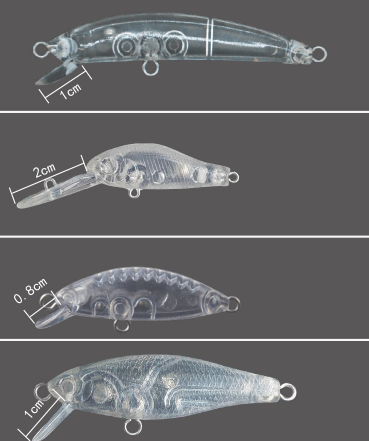
While the data clearly demonstrates the unprecedented opportunity in the blank minnow lure sector for 2026, the true differentiator for ambitious distributors lies in executional excellence. Success isn’t just about identifying the trend; it’s about systematically de-risking the supply chain. This begins with a forensic-level due diligence process when selecting your minnow lure manufacturer—moving beyond basic quotes to audit their material sourcing, production consistency protocols, and R&D pipeline for future-proofing your investment.
The strategic leverage, however, is fully realized in the branding phase. A generic private label minnow lures program merely chases margin. A visionary one builds brand equity that commands price premiums and customer loyalty. This requires integrating consumer insights directly into your product development cycle with your manufacturing partner, ensuring your lures solve specific angler frustrations in your target markets, from specialized wild trout patterns to heavy-duty saltwater finishes.
🚀 The 2026 Strategic Imperative:
View your blank lure sourcing not as a procurement task, but as the first step in vertical integration. The most successful distributors we work with are those who treat their manufacturer as a true extension of their own R&D team, co-developing not just products, but proprietary manufacturing techniques that become their unique selling proposition. In the coming year, the winners will be those who master this collaborative, brand-building approach to the supply chain.
Vetting Your Partner: A Distributor’s Framework for Selecting a Minnow Lure Manufacturer
This is where most trips fail. The allure of a low unit cost blinds buyers to the five pillars of a truly great manufacturing partner. Price is a factor, but it’s the last factor you should discuss.
The 5 Pillars of a World-Class Manufacturer
- Pillar 1: R&D & Tooling Mastery
Do they design in-house? Can they modify existing minnow lure molds or create new ones from your sketch? A partner that only replicates is a commodity producer. - Pillar 2: Material Science & Compliance
What plastics do they use? Is it consistent, food-grade ABS? Can they provide REACH, ROHS, or Prop 65 compliance documentation? This is non-negotiable for EU/US markets. - Pillar 3: Production Consistency & QC
This is the heartbeat. Do they have a documented QC process with AQL sampling? Do they 100% pressure-test for buoyancy? I’ve walked factories where every 10th lure is weight-tested—that’s the standard you need.
- Pillar 4: MOQ & Supply Chain Agility
A 100,000-piece MOQ is a red flag for a new line. Seek partners offering scalable MOQs (e.g., 5k-10k to start). Can they handle sudden 30% order increases without 6-month lead times? - Pillar 5: Communication & IP Guardianship
Is your contact a salesperson or a project engineer? Your design is your crown jewel. A trustworthy partner will sign an NDA and have clear protocols to protect your private label IP.
Your First-Contact Questionnaire: 10 Must-Ask Questions
Copy these. Paste them into your next email. The answers will separate the professionals from the order-takers.
- “Can you share a video walkthrough of your injection molding and painting facilities?”
- “What is your standard AQL (Acceptable Quality Level) for critical defects on a blank minnow lure order?”
- “Walk me through your process for fishing lure quality control, specifically for hook hanger tension and lip alignment.”
- “What is your policy and cost structure for creating a completely new minnow lure mold vs. modifying an existing one?”
- “For a first-time order of a private label minnow lures series (3 colors, 2 sizes), what is a realistic lead time from order to delivery, including sampling?”
- “Can you provide a breakdown of all costs, including mold fees, unit prices for different volumes, and sample shipping?”
- “What is your process for handling and correcting defects found in a production run?”
- “Do you have experience with sustainable fishing lures or biodegradable materials?”
- “Can you provide references from other distributors in my region or a similar market?”
- “What is your standard payment terms structure for new clients?”
The “Hidden” Factory Audit Checklist (What They Won’t Show You on the Tour)
Most factories will show you a clean assembly line. The real insights are in the details. When you visit (and you should), look beyond the brochure:
The Good Signs:
- Organized Raw Material Storage: Plastics are neatly labeled, dry, and stored off the floor. This indicates inventory control and material freshness.
- Dedicated R&D/Prototyping Area: A separate space with 3D printers, hand tools, and paint booths for experimentation shows investment in innovation.
- Active Quality Station with Reject Bins: Seeing a station with measured rejects means QC is happening, not just talked about.
The Red Flags:
- Piles of Unfinished Lures: Semi-finished products stacked haphazardly suggest poor workflow and potential for damage or mix-ups.
- Silent or Idle Machines: If many injection molding machines are off during a weekday, it might indicate under-utilization or maintenance issues.
- No On-Site Paint Mixing: If they outsource paint mixing, color consistency across batches becomes a major risk.
Remember, you’re not just buying a product; you’re buying into a minnow lure manufacturer’s entire system. Their system’s strength determines your brand’s consistency and reputation. Choose the factory that treats your private label minnow lures as if they were building their own flagship brand.
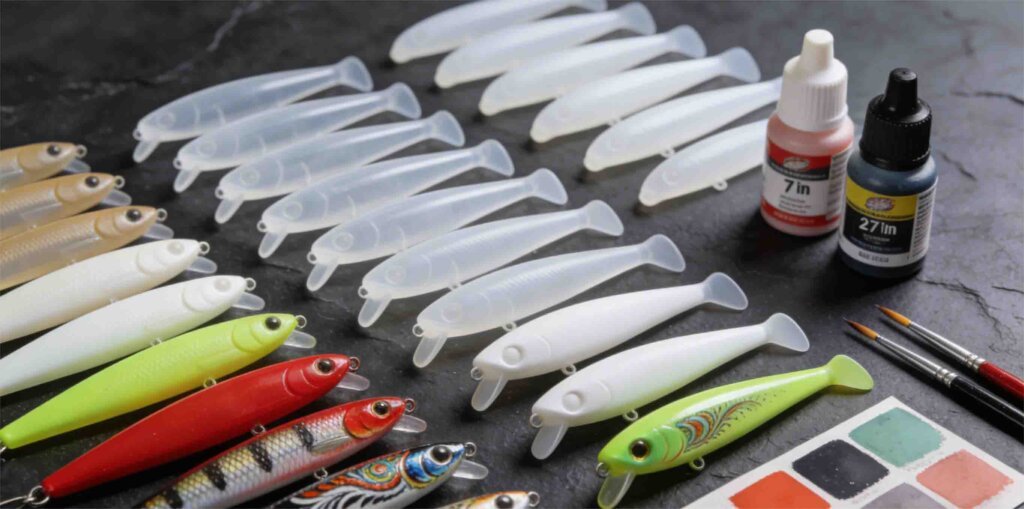
From Blank to Brand: A Step-by-Step Playbook for Your Private Label Minnow Lures Launch
You’ve found a great partner. Now, let’s build. This is the tactical blueprint, refined from launching over 50 successful lines with our clients at Havenseek.
Phase 1: Market Segmentation & The “First Skirmish” Product Line
The biggest mistake? Trying to launch 20 SKUs at once. You’ll drown in complexity and inventory cost.
The winning strategy: Start with a “First Skirmish” line of 3-5 supremely versatile private label minnow lures. Based on global data, we recommend this mix for 90% of markets:
| Model | Size | Depth | Recommended Colors | Target Use Case |
|---|---|---|---|---|
| The Shad | 3.5″ / 9cm | Suspending | Natural Shad, Bone White | Clear water, finesse bass & panfish |
| The Prospector | 5″ / 13cm | Deep Diver (12-15ft) | Chartreuse Blue, Tennessee Craw | Power fishing, pike, lake trout |
| The Flash | 4″ / 10cm | Floating (F) | Chrome, Firetiger | Reaction strikes, murky water, saltwater |
This lineup covers 80% of freshwater fishing scenarios. The suspending shad imitates baitfish in neutral buoyancy, the deep diver gets down to where big fish hold, and the floater is perfect for topwater or shallow retrieves. Each of these starts as a premium blank minnow lure from your manufacturer, ready for your brand’s identity.
Phase 2: Design, Sampling, and The “Bucket Test” You Cannot Skip
Your minnow lure manufacturer will create prototypes. Do not approve them from photos. Here’s our non-negotiable field test protocol:
- The Bathroom Sink Test: Check buoyancy. A suspending lure should hang motionless. Even a slight float/sink indicates density issues.
- The Swimming Pool/Bucket Test: Reel it. Does it track straight? Does it have a tight, enticing wiggle or a lazy roll? Compare it side-by-side with a market leader like a Rapala or a Lucky Craft.
- The Real-World Cast Test: Take it to water. How does it cast? How durable is the paint after bouncing off rocks? This is where you find flaws no factory test can reveal.
Send specific, actionable feedback: “The 5cm model dives 1 foot deeper than spec” or “The chartreuse needs 15% more yellow pigment.” A good minnow lure manufacturer will iterate. Expect 2-3 sample rounds before production approval. This stage is your quality insurance.
Phase 3: Packaging, Story & Pricing: The 3x Multiplier
A blank minnow lure in a ziplock bag is a commodity. The same lure in a branded box with a story is a brand.
Packaging That Sells on the Shelf
Invest in a clamshell or cardboard box that feels premium. Use a high-res image of the lure in action. Include key specs: diving depth, buoyancy, weight. A clear window is mandatory—anglers are tactile buyers. Your private label minnow lures need to look like they belong next to the $25 lures, not the bargain bin.
Crafting Your “Why”
“Designed in collaboration with tournament bass champions for maximum vibration in cold water.” That’s a story. It gives the angler a reason to believe, and the retailer a reason to promote. Your backstory adds perceived value and justifies a premium over no-name bulk fishing lures.
Pricing for Profit & Perception
Your landed cost (lure + duty + shipping) x 2.2 = Minimum Wholesale Price. That wholesale price x 2 = Suggested Retail. This 2.2 markup covers your overhead, marketing, and healthy profit. If the math doesn’t work with your target retail, you need to re-engineer costs with your manufacturer, not slash quality.
Navigating Pitfalls and The Horizon: 2027 and Beyond
Three Costly Traps (And How to Sidestep Them)
- Trap 1: The Over-Customization Vortex. Don’t design a spaceship for your first lure. Start with proven shapes from your manufacturer’s catalog. Custom paint is cheaper and faster than a custom mold. Prove the market first.
- Trap 2: Ignoring the Total Landed Cost. The FOB price is just the start. Factor in shipping, import duties, and warehousing. A lure that’s $0.50 cheaper FOB but arrives 60 days later can cost you a selling season.
- Trap 3: The Handshake Deal. Never proceed without a detailed proforma invoice (PI) and later, a contract. It should specify material specs, color Pantone codes, packaging details, QC standards, and penalty clauses for late delivery. This document is your shield.
The Future: Sustainability & Smart Integration
The conversation in 2026 is moving beyond just cost and action. Forward-thinking distributors are asking their minnow lure manufacturer about two things:
1. Biodegradable & Recycled Materials: Can they produce lures from bio-plastics or recycled ABS? It’s not just eco-friendly; it’s a powerful marketing edge in Europe and North America. The 2025 European Anglers Alliance survey showed 68% of anglers prefer sustainable fishing lures if performance is equal.
2. The “Chip-Ready” Lure: With forward-facing sonar (LiveScope) dominating tournaments, the next wave is lures with integrated cavities for micro-tracking chips. Is your manufacturer’s R&D team thinking about this? Yours should be. This isn’t sci-fi; prototypes are being tested now for 2027 release.
Frequently Asked Questions: Sourcing & Launching Private Label Minnow Lures
Based on hundreds of conversations with distributors like you, here are the most pressing questions answered directly.
What is a typical MOQ for starting a private label minnow lures line?
It varies wildly. For standard catalog designs with custom colors, a serious minnow lure manufacturer might offer MOQs as low as 1,000-2,000 pieces per color. For a completely new, from-scratch mold, expect a 5,000-10,000 piece commitment. The key is to find a partner who scales with you, not one that locks you into a container-load from day one.
How do I protect my custom design when working with an overseas minnow lure manufacturer?
First, only work with manufacturers who willingly sign an NDA (Non-Disclosure Agreement). Reputable ones expect it. Second, for truly unique designs, discuss mold ownership. The best practice is to pay for the mold (a sunk cost) and have the manufacturer store and maintain it exclusively for you. This legally and practically makes it your property. A trustworthy partner will have a clear contract covering this.
What’s the realistic lead time from initial inquiry to having stock in my warehouse?
Plan for a 4-6 month timeline for a new private label program. Here’s the breakdown: 2-3 weeks for sourcing/quoting, 4-6 weeks for sampling and approvals, 8-10 weeks for production, and 4-6 weeks for ocean freight. Using an existing catalog design can shave 4-8 weeks off. Always factor in the fishing lure selling seasons in your market!
Are blank minnow lures as high-quality as major brand names?
They can be better, because you control the specification. Many top-tier minnow lure manufacturers produce for major brands behind the scenes. The difference is in your QC standards. If you insist on premium components (Mustad or VMC hooks, 3D eyes, specific paint), you’ll get a premium product. The “secret” is that the quality gap isn’t in the factory; it’s in the specifications and quality oversight you demand as the brand owner.
What certifications should I require for lures sold in the EU and North American markets?
For the EU, REACH compliance (restricting hazardous substances) is critical. For California, Prop 65 documentation may be required. For electronics (if you ever do lighted lures), RoHS is key. A professional manufacturer will have these certificates on file for their materials. Always ask for them during the vetting process—it’s a major red flag if they can’t provide proof.
Ready to Transform Your Wholesale Business?
The 2026 window for building a dominant private label with blank minnow lures is open. The data is clear, the roadmap is in your hands.
Stop browsing and start building. Let’s discuss your specific market, your volume targets, and how Havenseek’s 15 years of direct manufacturer access and product development expertise can de-risk your launch and accelerate your success.
GET YOUR FREE 2026 SOURCING & MOQ STRATEGY CALLSchedule a 30-minute, no-obligation consultation with our sourcing team. We’ll review your goals and provide a preliminary product and cost analysis.
Further Reading & Cited Sources
To support the data and perspectives in this report, we recommend reviewing these authoritative external resources:
- American Sportfishing Association (ASA) – Industry Reports – For annual U.S. fishing tackle sales data and economic impact studies.
- Statista: Sports & Recreation Market Insights – For global market data on outdoor sports equipment, including fishing.
- European Chemicals Agency (ECHA) – REACH – The official resource for understanding REACH compliance for products sold in the EU.