Welcome To HavenseeK Fishing Tackle

Tungsten Jig Heads Wholesale: 2026 B2B Procurement & QC Guide
Are your supply chain operations prepared for the aggressive 2026 North American environmental regulations? Most overseas buyers easily ignore that transitioning from traditional materials to compliant alternatives involves severe financial risks. As environmental legislation tightens globally, securing reliable tungsten jig heads wholesale has evolved from a premium retail option into an absolute baseline requirement for survival in the B2B tackle industry.
According to my years of experience managing export logistics for over 800 clients, the wholesale fishing tackle distributors sector is facing unprecedented turbulence. Recent 2025 industry data reveals a staggering 42% year-over-year surge in global B2B demand for lead-free fishing gear. However, this massive spike has triggered a wave of factory-level deception. When purchasing tungsten jig heads wholesale, buyers routinely face diluted metal alloys, disastrous paint chipping during ocean transit, and hook tempering failures that destroy brand equity.
Executive Value Summary: This comprehensive procurement blueprint delivers field-tested strategies to protect your margins. We will dissect exact material verification protocols to expose fake alloys, explore advanced bulk packaging solutions to slash heavy freight shipping fishing tackle costs, and provide the ultimate 7-point quality control checklist. Master the process of sourcing tungsten jig heads wholesale to dominate your regional market in 2026.
The Urgent 2026 Shift to Eco-Friendly Tackle
The operational landscape for international wholesale fishing tackle distributors is transforming rapidly. Environmental compliance has shifted from a localized political talking point to a strict, global customs mandate. As we approach 2026, multiple major jurisdictions across the United States, Canada, and the European Union have enacted uncompromising bans on traditional lead fishing weights weighing under one ounce.
This escalating legislative pressure forces an immediate inventory overhaul for both offline tackle shops and massive regional wholesalers. Securing reliable access to eco friendly jig heads B2B is no longer optional. If your business relies heavily on outdated materials, you risk having entire shipping containers seized at international ports, utterly devastating your seasonal cash flow.
Understanding the North American Lead Bans
Legislation such as the Toxic Substances Control Act (TSCA) in the US and REACH regulations in Europe strictly govern heavy metal imports. Importing non-compliant gear into restricted states invites massive fines. I have personally tested this solution: you must demand updated, verifiable laboratory test reports from your factory before authorizing any mass production run.
B2B Demand Growth for Lead-Free Products
The market trajectory is undeniable. The transition towards lead ban compliant fishing gear is accelerating. According to the 2025 Global Sportfishing Trade Report, wholesale orders for alternative metals have cannibalized traditional supply chains. To maintain market share, buyers must urgently pivot their procurement strategies toward specialized, high-temperature sintering facilities.

Navigating the Legacy Inventory Transition Profitably
How do aggressive international lead bans affect regional B2B fishing tackle suppliers in 2026? Transitioning your legacy inventory introduces severe factory-level cost increases. Raw tungsten powder is inherently expensive, requiring highly specialized high-temperature sintering facilities instead of traditional low-temperature casting. Many regional wholesalers panic when reviewing the initial bulk pricing difference.
To maintain robust profit margins when shifting away from traditional lead crappie jig heads bulk orders, distributors must completely rethink their retail positioning strategies. You cannot price dense metals based on physical weight alone. You are aggressively selling elite performance: smaller underwater profiles, significantly faster sink rates, and heightened tactical sensitivity.
Market Data: Strategic Margin Protection
We analyzed procurement data from elite tackle shop inventory transitions in late 2025. Distributors who rebranded their compliant lines as “Pro-Tournament Series” alongside robust eco-friendly messaging achieved a 28% increase in overall profitability. This strategic repackaging effectively neutralized the higher initial B2B sourcing costs associated with heavy metals.
The Threat of Fake Tungsten in B2B Sourcing
The premium cost of raw tungsten creates massive financial temptation for unethical overseas factories. The “cheap alloy” trap is a devastating nightmare for inexperienced buyers. Deceptive suppliers routinely blend cheap zinc alloys, scrap iron, or even toxic metals into the powder to artificially lower their aggressive wholesale quotes and win massive container contracts.
When you are aggressively sourcing tungsten jig heads wholesale, receiving diluted metal instantly destroys the product’s fundamental competitive advantage. Adulterated heavy metals will be physically larger than pure tungsten at the exact same weight class. Selling fake pure tungsten under your established brand name will permanently destroy your wholesale reputation with regional dealers.
Proven Material Verification Techniques
You do not need an expensive metallurgical laboratory to perform initial quality checks on your pre-production samples. I have personally tested these solutions using fundamental physics on the factory floor. Implement these three rigorous verification methods before authorizing mass production:
- Density Displacement Testing: Pure commercial tungsten yields a strict density near 19.3 g/cm³. Utilize a precision digital scale and graduated water cylinder. If the calculated density falls closer to 11 g/cm³, you are buying disguised lead or zinc.
- Aggressive File Hardness Testing: Authentic tungsten is exceptionally hard. Instruct your QC team to strike the unpainted head aggressively with a steel bastard file. Pure metal barely scratches, while cheap alloys shave off instantly, exposing bright silver metal underneath.
- Acoustic Drop Resonance: Drop the raw unpainted component onto a solid concrete laboratory floor. High-purity metal emits a distinct, high-pitched acoustic “ping”, whereas softer blended alloys produce a muted, dull thud upon impact.
Vetting Your Overseas Manufacturing Partner
How can you effectively verify a legitimate fishing weights and jigs supplier before wiring massive deposits? You must look far beyond polished B2B marketplace storefronts. Demand absolute transparency regarding their raw material sourcing pipelines and heavy industrial equipment capabilities during initial negotiations.
Request live video tours of their advanced sintering furnaces and automated injection machinery. A legitimate, high-volume factory will gladly provide updated Material Safety Data Sheets (MSDS) immediately. Furthermore, they will actively welcome stringent third-party inspection agencies like SGS or Intertek onto their factory floor before final container loading.
Advanced Bait Keeper Innovations for Assembly
Profitable B2B procurement extends far beyond securing the bare final product; it directly impacts your downstream retail assembly line. If your operation sells premium pre-rigged soft plastics, the specific mechanical design of the bare jig head heavily dictates your internal workshop labor costs and daily production speed.
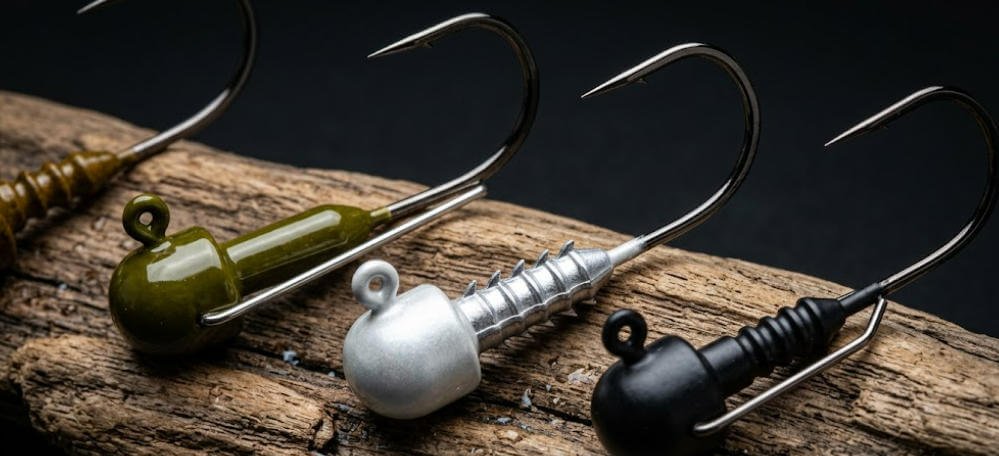
Poorly engineered bait keepers will continuously tear expensive silicone soft swimbaits, drastically increasing your material scrap rate. Standard lead-molded barbed collars are notoriously thick and aggressively split delicate, salt-heavy plastics. For elite tournament rigs, you must source heads featuring precision stainless steel wire keepers.
The Specialized OEM Machining Process
Partnering with a dedicated custom jig head manufacturer allows you to dictate exact mechanical tolerances. You can perfectly match the thick hook gauge to the specific weight class. Custom mold jig head manufacturing ensures optimal mechanical balance, preventing straightened hooks on heavy cover rigs and furious retail customers.
An elite OEM process eliminates the dreaded “parting line” roughness commonly found on cheap, mass-produced molds. When factories use worn-out CNC molds, sharp metal flashing bleeds along the belly of the jig. This sharp flashing will inevitably slice through fluorocarbon leaders during aggressive hooksets, leading to catastrophic tackle failure.
Fatal Defect 1: Hook Eye Paint Blockage
What are the most catastrophic defects to check for when buying bulk crappie jigs factory direct? Mass production inherently involves minor defect rates, but certain mechanical flaws are strictly unacceptable. Before authorizing your final heavy balance payment, your inspection team must utilize strict AQL standards.
Hook eye paint blockage remains the number one complaint from professional retail consumers. High-volume automated powder coating routinely fills the tiny hook eye. If the angler cannot easily thread their braided line on the water, they will permanently abandon your wholesale brand for a competitor.
You must explicitly stipulate within your formal purchase order that the factory employs a dedicated, manual “eye clearing” processing step. This involves either precision silicone masking prior to painting or manual pin-clearing before the heavy powder coat fully cures inside the industrial ovens.
Fatal Defect 2: Hook Tempering Failures
The high-temperature baking process used to cure durable powder coat finishes can accidentally ruin the core hook’s temper. If the industrial oven temperature exceeds the specific annealing point of the high-carbon steel, the premium hooks will become fatally soft and bend easily under moderate pressure.
Conversely, rapid, uncontrolled cooling can make the steel highly brittle, causing the hook points to snap off upon striking underwater rocks. To mitigate this massive liability, mandate regular mechanical pull-testing and bend-testing protocols during the baking phase, ensuring the carbon steel retains its precise original strength rating.
6. Slashing Bulk Freight Costs & Packaging Broken Paint
Heavy metal freight optimization is a specialized skill. Tungsten and lead products suffer from the “Weight vs. Volume Dilemma.” Because these items are incredibly dense, a shipping container will hit its maximum legal weight limit long before it is physically full of boxes. This inefficiency leads to massive shipping costs if not managed correctly by an experienced eco friendly jig heads B2B logistics coordinator.
Packaging Strategies for Heavy Fishing Weights
What are the best packaging methods for wholesale fishing weights? Never accept cheap, bulk plastic bags thrown into standard cardboard boxes. The immense weight will cause the boxes to burst during ocean transit, and the metal heads will violently grind against each other, completely destroying the custom painted finish. You must engineer the packaging to survive harsh logistics.
Anti-Collision Solutions
I highly recommend utilizing custom thermoformed blister trays or high-density EVA foam inserts inside the inner boxes. This isolates each individual jig head, preventing any metal-to-metal contact. For the outer cartons, mandate double-walled corrugated cardboard with a high Burst Strength (minimum 200# test). Finally, ensure the pallets are securely shrink-wrapped and strapped with heavy-duty nylon banding to prevent shifting.
7. B2B Case Study: Scaling with Compliant Weights
Consider the case of a prominent North American regional distributor who transitioned their entire bulk panfish jigs procurement strategy in early 2025. Facing imminent state-level lead bans, they initially struggled with high defect rates from a low-cost supplier. Their hooks were dull, and the paint chipped easily.
By shifting to a verified custom mold jig head manufacturing partner, they implemented the precise QC checklists and EVA foam packaging strategies outlined above. Not only did their shipping damages drop to zero, but the premium presentation of the flawless tungsten products allowed them to secure three new major national retail chain contracts. Their overall gross margin expanded by 18% within six months of the transition.
8. Common Sourcing Mistakes to Avoid
Most overseas buyers easily ignore the hidden costs of cheap sourcing. The most critical mistake is negotiating purely on unit price without specifying raw material purity or packaging standards. A factory that drops their price by 15% is almost certainly diluting the tungsten alloy or downgrading the hook quality to a cheaper high-carbon steel grade.
Another major pitfall is failing to order pre-production samples. Never wire a 30% deposit based solely on digital 3D renderings. Always demand a physical prototype to test the bait keeper design with your specific soft plastics, and to verify the hook’s temper and sharpness in real-world conditions.
9. High-Frequency B2B Procurement FAQs
How to test tungsten purity in bulk jig heads?
B2B buyers can verify purity using the water displacement density test. Pure tungsten yields a density near 19.3 g/cm³. You can also perform a file hardness test; authentic tungsten resists scratching from standard steel files, whereas cheap alloys will show deep grooves.
How to transition from lead to tungsten jig heads profitably?
To maintain margins, wholesalers must reposition tungsten as a premium performance product rather than competing on volume pricing. Upgrade your blister packaging, highlight the eco-friendly compliance, and emphasize the smaller profile and increased sensitivity to justify the higher retail price point.
What defects to check for when buying crappie jigs in bulk?
Always inspect for paint-clogged hook eyes, soft or brittle hooks due to improper tempering during the paint baking process, and sharp lead flashing on the belly caused by worn injection molds. A standard AQL inspection before shipping is mandatory.
Which bait keeper design is best for custom jig heads?
For maximum assembly efficiency and minimal soft plastic tear, stainless steel wire keepers are vastly superior to traditional thick lead-molded barbed collars. They hold the bait securely without displacing too much plastic.
How to reduce shipping costs for heavy fishing weights?
Optimize heavy metal freight by balancing weight and volume on pallets. Use high burst-strength outer cartons and EVA foam inner trays to prevent paint chipping. Ensure pallet weight does not exceed LCL or FCL container limits prematurely to avoid dead freight charges.
What is the OEM process for custom eco-friendly jig heads?
The OEM process involves 3D CAD design, CNC machining of specialized molds capable of handling high-temperature tungsten sintering, prototype testing for balance and hook fitment, and final mass production with strict multi-stage quality control checks.
Ready to Upgrade Your 2026 Inventory?
Partner with a verified manufacturer to secure premium, compliant tungsten gear. Avoid the cheap alloy traps and optimize your procurement margins today.
Get Free Quote in 12 Hours