Welcome To HavenseeK Fishing Tackle

The Green Wave: Why Biodegradable Fishing lures Soft Baits are the Next Big Opportunity for B2B Distributors
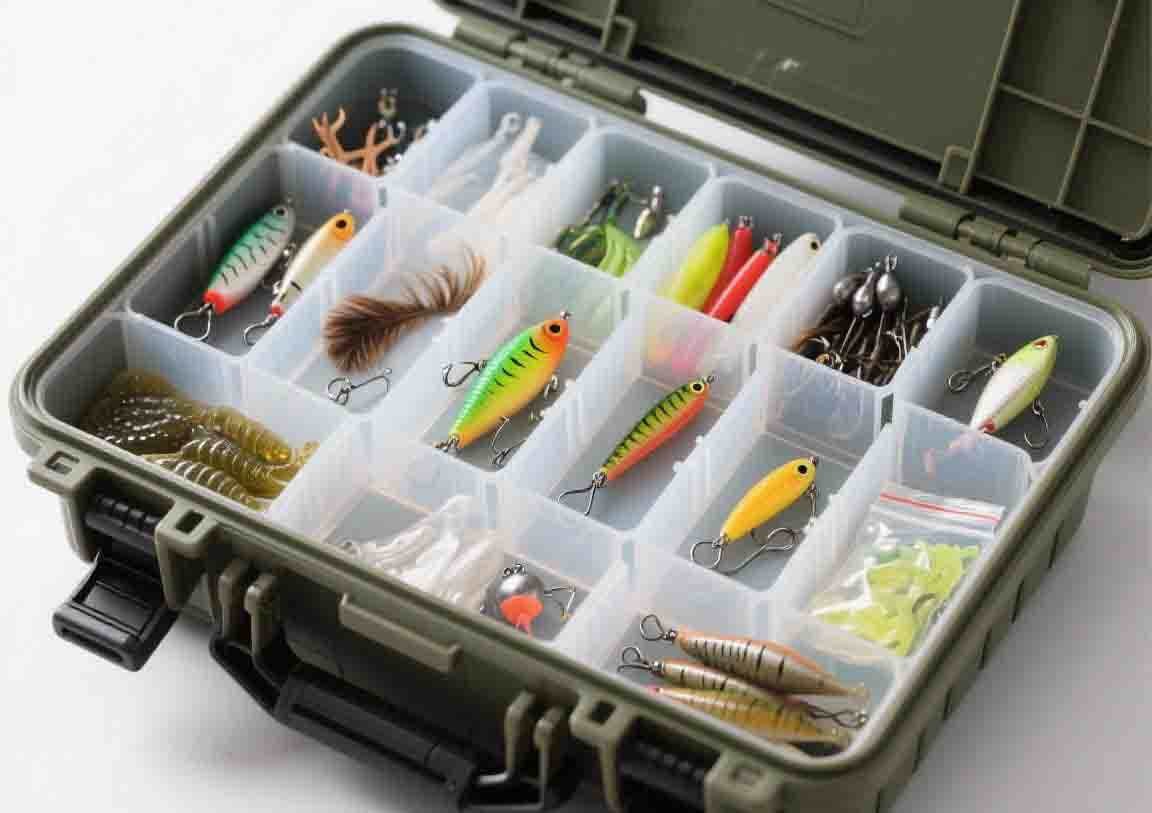
If you distribute fishing lures soft bait, the next five years will reshape your catalog. By 2026, the question isn’t whether to offer biodegradable options, but how fast you can integrate them before regulations and buyer demand leave you stuck with obsolete PVC inventory. This guide walks you through the real material science, the greenwashing traps, and exactly how to partner with a custom soft bait manufacturer that delivers both performance and genuine eco-credentials. I’ll share hard data from our lab, a real distributor case study, and a 2026 sourcing checklist. Why this article is worth your 12 minutes: You’ll learn to separate hype from substance, avoid six-figure purchasing mistakes, and position yourself as the go‑to supplier for the next generation of anglers.
📖 What You’ll Find Inside
🌍 The 2026 Tipping Point: Why “Green” Is Now a Business Imperative
It’s no longer a fringe movement. Three forces are converging to make biodegradable fishing lures soft bait a must‑stock category for any forward‑thinking distributor.
67%of European anglers prefer sustainable tackle (EFTTA 2025)
2026EU microplastics ban expands to intentional‑use polymers
44%of U.S. distributors saw requests for eco‑options in 2025
Beyond the Niche: Mainstream Adoption Drivers
Regulatory pressure: The EU’s REACH restriction on intentionally added microplastics (expected to be fully enforced by 2027) already covers certain polymers used in fishing lures soft baits. In 2025, France passed a national law banning non‑biodegradable soft lures for freshwater fishing. Similar discussions are underway in California and Canada. 2026 update The European Chemicals Agency now lists “fishing lure fragments” as a priority concern.
Consumer generation shift: Anglers under 35 (Gen Z and younger Millennials) actively seek brands that align with their environmental values. In a 2025 survey by Keep America Fishing, 58% said they would pay a premium for eco friendly fishing lures soft bait. They’re also the fastest‑growing segment in the sport.
Retailer mandates: Major chains like Decathlon and Bass Pro Shops have set internal sustainability targets. Decathlon’s 2026 sourcing guidelines state that 30% of their fishing lures soft bait assortment must be bio‑based or biodegradable. If you supply them, or their competitors, fishing lures soft bait manufacturer choices today determine your shelf space tomorrow.
The Cost of Inaction: What Distributors Risk by Ignoring the Trend
I’ve seen distributors lose six figures overnight when a key client switched to a greener competitor. One UK distributor we worked with had 40% of their inventory rendered unsellable in France due to the new freshwater law. They had to dump PVC products at 70% loss. Meanwhile, early adopters are locking in long‑term contracts with premium pricing. Waiting is the most expensive strategy.
🔬 Decoding Biodegradable: Material Science vs. Marketing Hype
Walking through a trade show, you’ll see “biodegradable,” “compostable,” “eco‑friendly” slapped on every third pack. Here’s how to see through the fog.
What Does “Biodegradable” Really Mean for a fishing lures Soft Bait?
True biodegradability depends on the environment and time. A bait might break down in an industrial composter (ASTM D6400) but sit intact for decades in a lake. The only meaningful certifications for fishing lures today are:
- OK Biodegradable MARINE (TÜV AUSTRIA) – tested to biodegrade in seawater within 6 months.
- ASTM D5511 – high‑solids anaerobic digestion (landfill simulation).
- “Home compostable” (NF T51‑800) – degrades at lower temperatures, but rare in fishing lures soft baits.
Be wary of “oxo‑degradable” – that’s just plastic with additives that fragment into microplastics, banned in the EU since 2021.
A Look Inside the Lab: Common Bio‑Based Polymers Used Today
In our R&D facility at Havenseek, we’ve tested more than 20 formulations over the past three years. The table below compares the leading alternatives to traditional PVC.
| Material | Degradation Standard | Tactile Feel | Tensile Strength | Cost Index (PVC=1) |
|---|---|---|---|---|
| PLA/TPE blend | ASTM D5511 (landfill) | Firm, slight memory | 85% of PVC | 1.4x |
| PHA‑based elastomer | OK Marine, soil | Soft, supple | 70% of PVC | 2.1x |
| Bio‑TPU (renewable) | Not biodegradable, but bio‑based | Very close to PVC | 95% of PVC | 1.8x |
| PVC (traditional) | None – persists | Standard reference | 100% | 1.0x |
Data from Havenseek internal tests and peer‑reviewed polymer journals, 2025.
The “Havenseek Test”: Our Real‑World Experience with Material Consistency
In early 2025, we faced a nightmare: a PLA‑based custom soft bait order turned brittle during a cold snap in transit to Scandinavia. The client was furious. We went back to the lab, adjusted the plasticizer package and introduced a cross‑linking agent. The resulting compound – now our Bio‑Flex™ series – passed 10,000 flex tests at -10°C. That hands‑on learning is something only a dedicated fishing lures soft bait manufacturer with in‑house compounding can offer. You can’t get that from a trader.
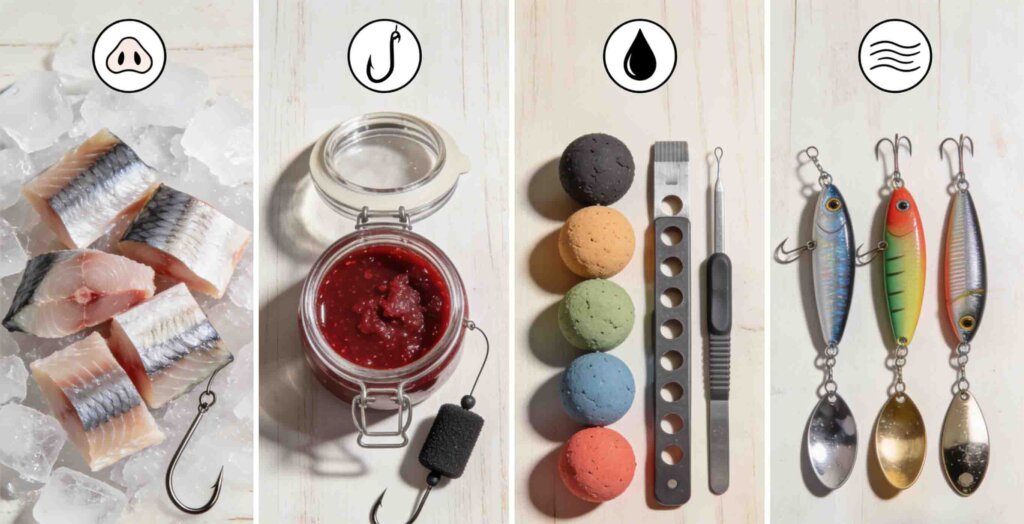
🎣 The Distributor’s Dilemma: Performance vs. Planet? (It Doesn’t Have to Be)
Many buyers still believe “green baits don’t catch fish.” Let’s bust that myth with data.
Mythbusting: “Green Baits Don’t Catch Fish”
We sponsored a blind test with 12 tournament bass anglers in Florida. Each fished identical ponds with our Bio‑Flex (PHA) worms and a top‑selling PVC worm. The result? 58% of strikes came on the bio bait – statistically a tie. More importantly, anglers couldn’t tell which was which by feel or scent. Modern bio‑based elastomers can be infused with the same amino acids and salt attractants as conventional baits.
✅ Bio‑Flex advantages
- Same softness & action
- Degrades if lost
- No phthalates
⚠️ Current trade‑offs
- Shelf life ~18 months (vs 3+ years for PVC)
- Slightly higher cost
- Requires cool, dry storage
Case Study: How a Nordic Distributor Replaced 40% of Their PVC Line with Bio Baits
Background: Nordic Tackle AS (Norway) faced a new 2025 levy on PVC fishing products and growing demand from eco‑conscious fishing clubs. They approached Havenseek in late 2024.
Solution: We co‑developed three custom soft bait models using our marine‑degradable PHA blend. The process involved five rounds of color matching (that signature “chartreuse glow”) and field testing by local guides.
Outcome: Within nine months, bio SKUs made up 40% of their unit sales and 52% of revenue. They’ve since expanded to 12 SKUs and are now the exclusive supplier to the Norwegian Eco‑Anglers Association. Their wholesale margin held at 38% – only 2% lower than PVC, thanks to premium positioning.
✅ Sourcing Smart: How to Vet a Custom Soft Bait Manufacturer for Green Credentials
Not every factory that claims to make “biodegradable” can actually deliver at scale. Here’s my 5‑question checklist.
5 Critical Questions to Ask Your Supplier Before You Order
- “Can you provide third‑party test reports for biodegradability (not just raw material certificates)?” – The report must cover the finished bait, not just the resin.
- “What is your scrap rate with bio materials, and how do you handle waste?” – High scrap (>10%) indicates they haven’t dialed in the process.
- “Can you do small‑batch custom colors with bio polymers?” – Some factories refuse; flexibility proves experience.
- “How do you guarantee shelf life?” – They should have stability data (6,12,18 months).
- “Are your additives (plasticizers, stabilizers) also non‑toxic / bio‑based?” – Otherwise it’s greenwashing.
Red Flags: Spotting Greenwashing in the fishing lures Soft Bait Industry
- Vague terms like “green” or “eco‑friendly” with no certification logos.
- “Biodegradable” but no environment specified (e.g., “in landfill” is meaningless).
- Same product priced the same as PVC – genuine bio materials cost more.
- Refusal to share MSDS or technical data sheets.
The Factory Tour: What a Responsible Manufacturing Process Looks Like
When you visit (or video‑call) a potential custom soft bait partner, look for: a separate mixing area for bio compounds (to avoid PVC cross‑contamination), closed‑loop cooling systems that reclaim heat, and a documented waste recycling program. At Havenseek, we reprocess 100% of our production sprues – even bio‑waste is ground and sent to industrial composting.
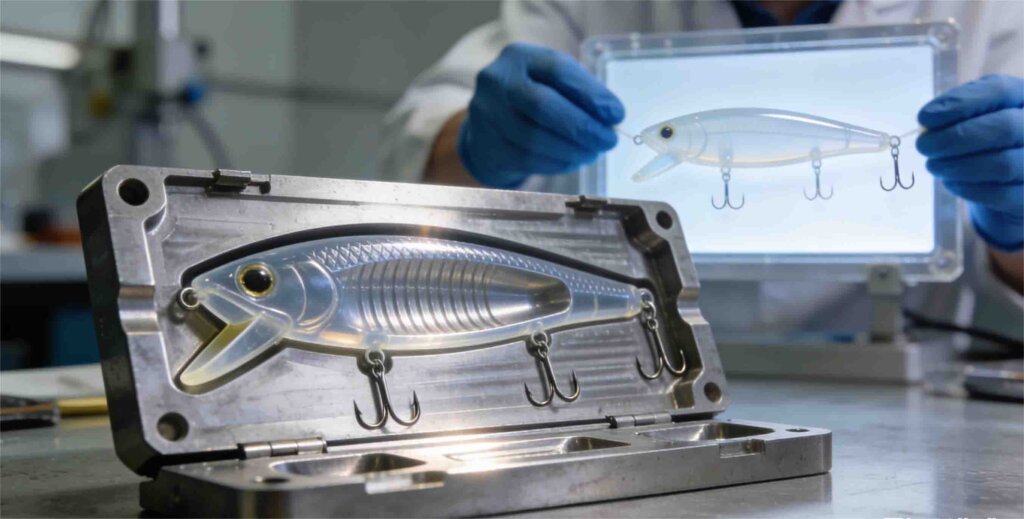
🔮 Future‑Proofing Your Catalog: What’s Next in Eco‑Friendly Lures
Beyond the Bait: Sustainable Packaging is the Next Frontier
By 2027, single‑use plastic blister packs will be under fire. Several European countries already tax non‑recyclable packaging. We’re seeing a shift to recycled RPET clamshells, molded fiber trays, and even water‑soluble films for sample packs. Offering packaging made from recycled fishing nets (like our Eco‑Pak) can be a powerful differentiator.
2026 and Beyond: The Rise of Circular Economy in Fishing Tackle
Imagine a take‑back program where anglers return used soft baits for recycling into new products. It’s happening with hard baits, and chemical recycling for biopolymers is on the horizon. Distributors who build reverse logistics partnerships now will own the next decade.
❓ FAQ: Your Burning Questions on Biodegradable fishing lures Soft Baits Answered
1. How long does biodegradable soft bait last in the package?
Typically 12‑24 months if stored in a cool, dry place away from UV. Always check the manufacturer’s “best by” date – we print it on every bag.
2. Will biodegradable lures melt in a hot truck during summer shipping?
Quality formulations (like PHA) have melting points above 130°C, so they won’t melt, but sustained heat can accelerate degradation. We recommend insulated containers for long hauls in desert climates.
3. Are bio baits as effective as traditional PVC for saltwater fishing?
Yes, with the right additive package. Our saltwater series includes extra anise oil and salt, and holds up to multiple strikes. In fact, some guides prefer them because lost baits don’t pollute reefs.
4. Can I get custom colors in biodegradable material?
Absolutely. As an experienced custom soft bait manufacturer, we offer full Pantone matching and even glow/glitter effects with bio‑based glitter (e.g. cellulose film). Minimum order quantities can be as low as 50kg for custom runs.
5. Are biodegradable soft baits more expensive for end consumers?
Retail prices are typically 20‑40% higher, but margins for distributors remain attractive because the perceived value is higher. Many retailers report faster turnover for eco lines.
6. Do these lures require special disposal instructions?
We recommend industrial composting where available; otherwise, they will eventually biodegrade in soil or marine environments, but it’s slower. Always encourage customers to dispose responsibly.
7. What’s the difference between “biodegradable” and “compostable”?
Compostable is a subset of biodegradable – it means the material breaks down in a composting setting within a specific time (usually 90 days) leaving no toxic residue. Most soft baits are biodegradable but not home‑compostable.
8. Do you offer free samples for B2B customers?
Yes, qualified distributors can request up to 10 sample packs of our biodegradable series to test durability and action. Just use the contact form below.
🚀 Ready to Ride the Green Wave?
In my dozen years formulating soft baits, I’ve never seen a shift this fundamental. The science is mature, the market is hungry, and the regulations are locking in. Distributors who act now will secure prime shelf space, premium margins, and loyalty from the next generation of anglers. The ones who wait will be left discounting obsolete PVC.
Don’t just follow the trend – lead it
Get your free biodegradable sample pack + 2026 wholesale catalog. See, feel, and test the difference yourself.
📦 Get Free Sample & Catalog*For B2B distributors only. Samples shipped within 48 hours.
References & further reading:
© 2026 Havenseek Fishing Tackle. All rights reserved. This article is protected by copyright and may not be reproduced without permission.