Welcome To HavenseeK Fishing Tackle

Dry Fly Design & Market Trends for 2025: A Supplier’s Insight
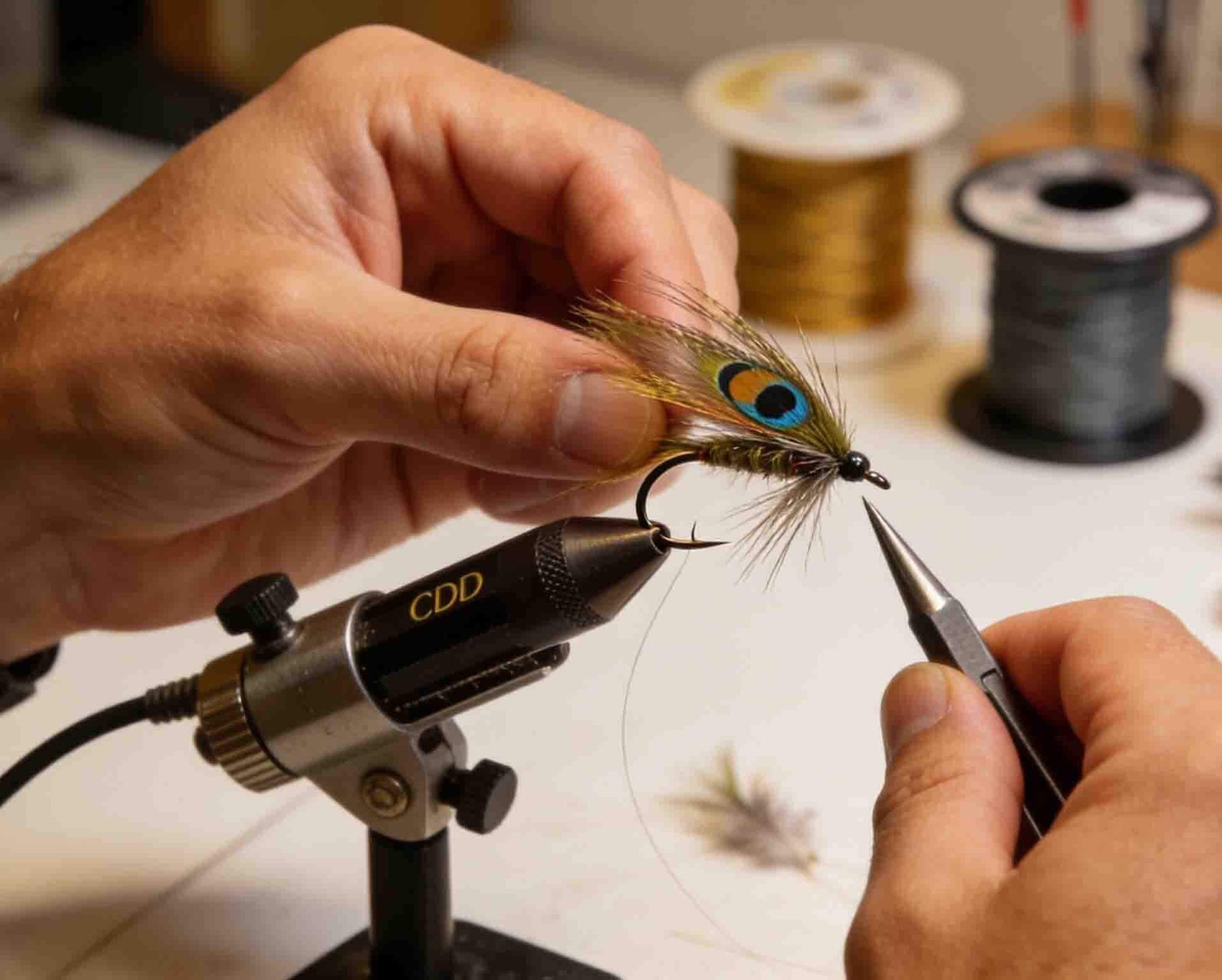
Written by Alex Chen – Product Design Director at Havenseek Tackle with 15 years of experience designing and manufacturing premium dry flies for 500+ global brands. This guide blends the art of traditional fly tying with the precision of modern supply chain management.
Table of Contents
- Introduction: Beyond the Feathers and Fur
- The True Cost of a Premium Dry Fly
- Inside the Workshop: The Anatomy of Quality
- Dry Fly Design Philosophy: Imitation, Illusion, and Trigger
- 2025+ Market Trends: What Buyers Are Demanding
- Your Supplier Evaluation Framework: 10 Critical Questions
- Conclusion: Fishing for a Better Partnership
- Frequently Asked Questions (FAQ)
- Further Reading & References
Introduction: Beyond the Feathers and Fur
For most anglers, a dry flies is a piece of art—a delicate combination of feathers, fur, and thread meant to fool a trout. For you, the brand owner or buyer, it’s a complex product with a detailed bill of materials, a multi-stage manufacturing process, and slim profit margins. The difference between a successful product line and a warehouse of unsellable stock often lies in understanding what happens before the fly is tied.
Why is this article worth 20 minutes of your time? Because I’ve spent 15 years on the other side of the table, not as a salesman, but as the person designing the patterns and overseeing production for hundreds of brands. I’ve seen the mistakes buyers make—costly ones that sacrifice quality, erode trust, and kill margins. This isn’t a sales pitch for Havenseek. Consider it a confidential memo: a raw, honest look at dry flies design logic, 2025 market trends, and the manufacturing realities that will determine your product’s success. By the end, you’ll have a framework to assess suppliers, control costs without cutting corners, and spot the trends that will sell next season. Let’s look under the hood.
The True Cost of a Premium Dry Fly: A Transparent Breakdown
When you see a price quote, do you know what you’re really paying for? Let’s dissect the cost of a single size #16 Parachute Adams, moving beyond the obvious.
The Visible Costs: The Bill of Materials (BOM)
Every component has a spectrum of quality. A “hook” can cost $0.01 or $0.15. Here’s what drives that:
| Component | Low-Cost / Generic Option | Premium / Performance Option | Impact on Fly |
|---|---|---|---|
| Hook | Bent wire, standard carbon steel, mediocre point. | Forged, fine wire, chemically sharpened, premium corrosion-resistant finish. | Strength, weight (sink rate), penetration, rust resistance. |
| Hackle (Neck Feather) | Stiff, uneven webby saddle, poor dye penetration. | Dry fly saddle: long, narrow, flexible barbules, excellent natural oils. | Footprint, buoyancy, natural movement in water. |
| Thread | Basic nylon, thicker diameter. | Fine-denier GSP or flat waxed nylon. | Durability, slim profile, ability to create neat heads. |
| Dubbing & Post Material | Basic synthetic or chopped yarn. | High-grade Antron, UV-treated poly, or natural beaver. | Sparkle, water repellency, silhouette definition. |
The BOM for a premium dry flies can be 3-5x that of a generic one. This is the first and most honest place to align with your supplier.
The Invisible Cost Driver: Skilled Labor & Quality Control
This is where the magic—and the cost—really lives. A machine can’t tie a complex dry flies. It takes a skilled tier 1-3 minutes per fly. But not all labor is equal:
- Tier Skill Level: A master tier produces consistent, durable flies with perfect proportions. Their output is lower, cost per unit higher, but rejection rate near zero.
- QC Integration: Is quality checked at the end, or at every stage? In-line QC (checking after each tying step) catches errors early, saving material and rework. It adds administrative cost but prevents mass defects.
- The Rejection Rate: A factory with a 5% rejection rate bakes that cost into your price. A factory with 0.5% has vastly more efficient processes. Ask for their historical First Pass Yield (FPY) rate.
Close-up comparison of a premium dry flies hook and a low-cost hook, side-by-side under magnification, showing differences in point sharpness, wire forging, and finish quality.
5 Common Cost-Based Pitfalls (And How to Avoid Them)
- The “Sample Bait & Switch”: The sample uses premium hooks/materials, production uses cheap substitutes. Solution: Mandate a signed, sealed “Production Approval Sample” (PAS) and conduct random batch testing against it.
- Ignoring Hook Finish: Not all “bronze” or “nickel” finishes are equal. A poor electroplating will chip, rust, and spook fish. Solution: Specify brand or standard (e.g., “Must pass 48hr salt spray test”).
- Vague Material Specs: “CDC feather” is not a spec. Size, oil content, and sourcing matter. Solution: Provide physical approved samples of each material component.
- Overlooking Packaging: Flimsy poly bags that crack in transit ruin flies. Solution: Agree on bag thickness (e.g., 2.0 mil) and test a full shipping carton.
- Chasing the Lowest Price Blindly: This guarantees corners will be cut. You simply cannot produce a Tier 1 fly at a Tier 3 price. Solution: Target the “best value,” not the lowest cost. Understand the cost breakdown.
Inside the Workshop: The Anatomy of Quality Control
At Havenseek, we don’t have a “QC station.” We have a Quality Management System embedded in every step. Here’s what that looks like for our dry flies.
Stage 1: Raw Material Inspection (The Foundation)
Quality cannot be tied in; it must start here. Every batch of materials is inspected:
- Hooks: Random sample tested for sharpness (penetration test), bend strength, and finish adherence.
- Feathers: Assessed for flexibility, barbule length, and oil content (a simple water bead test).
- Thread & Dubbing: Checked for color consistency and tensile strength.
Stage 2: In-Process Tying Controls (The Art of Consistency)
This is where the tier’s work is monitored. Key control points include:
- Thread Tension & Whip Finish: Consistent tension ensures durability. A minimum of 5-7 thread wraps for the head is standard.
- Proportion & Placement: Using jigs or visual guides to ensure the wing post is always 1.5x the hook gap in height, hackle is evenly distributed, etc.
- Glue Application: A tiny, precise drop of head cement or UV resin—too much adds weight, too little fails.
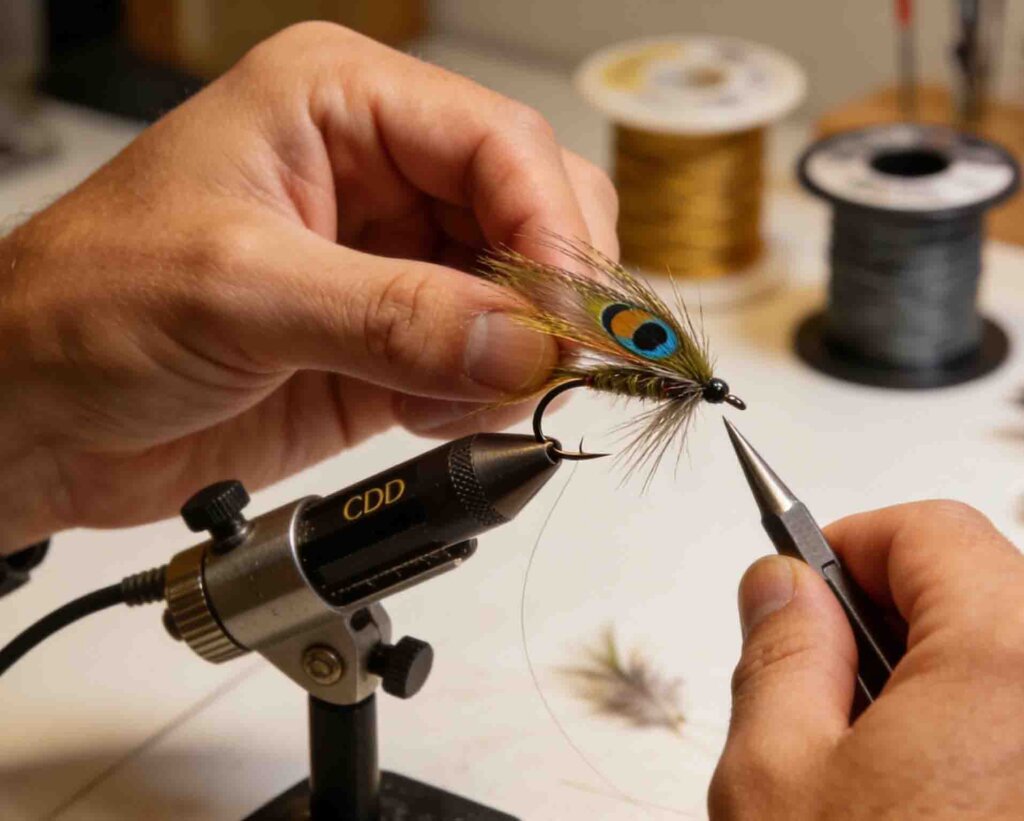
A skilled worker’s hands at a fly-tying bench, using a precision tool to measure and place a CDC feather on a dry fly hook, with other finished dry flies in the background.
Stage 3: Final Audit & Performance Testing
Before packing, a random sample (AQL Level II is common) from the batch undergoes:
- Visual Inspection: Under bright light and magnification for material defects, stray threads, and proportions.
- Destructive Testing (on sample units): Pulling on the hackle and wing to test bond strength.
- Float Test: A selection is soaked in water (often with a drop of surfactant to simulate “fishy” water) for a set time to verify buoyancy and water shedding.
Your Takeaway: Ask potential suppliers to walk you through their QC process. If they can’t detail these stages, they’re likely just doing a final glance-over.
Dry Flies Design Philosophy: Imitation, Illusion, and Trigger
Great dry flies aren’t just tied; they’re engineered. The goal isn’t a perfect museum replica, but an effective trigger.
The Three Pillars of Effective Design
Every successful pattern balances these elements for the target species and condition:
- Silhouette & Profile: This is the fly’s shadow on the water’s surface film. Is it tall and hackly (like a caddis) or low and flush (like a spinner)? The hook choice, wing height, and tail length define this.
- Color & Light Interaction: Color is less about exact match and more about contrast and translucency. Under UV light, certain materials (like Antron) pop. We design with specific lighting conditions (overcast vs. bright sun) in mind.
- Movement & “Life”: The primary advantage of natural materials. The flex of a CDC feather or the pulsation of a soft hackle in the surface tension creates an illusion of life that synthetics often struggle to match perfectly.
Designing for Specific Markets: A Case Study
North American “Attractor” vs. European “Presentation” Styles:
- NA Trends: Often favor higher visibility, durability, and buoyancy for rougher, faster water. Think Chubby Chernobyl, Parachute Adams, Stimulator. Designs often incorporate foam, rubber legs, and bright posts.
- European Trends: Lean towards ultra-natural, sparse imitations for clear, slow-moving chalk streams and wary trout. The Klinkhåmer, F-Fly, CDC & Elk exemplify this—minimal material, perfect flush float in the film.
Knowing your primary market dictates your design priorities. A successful brand often masters one and adapts carefully to the other.
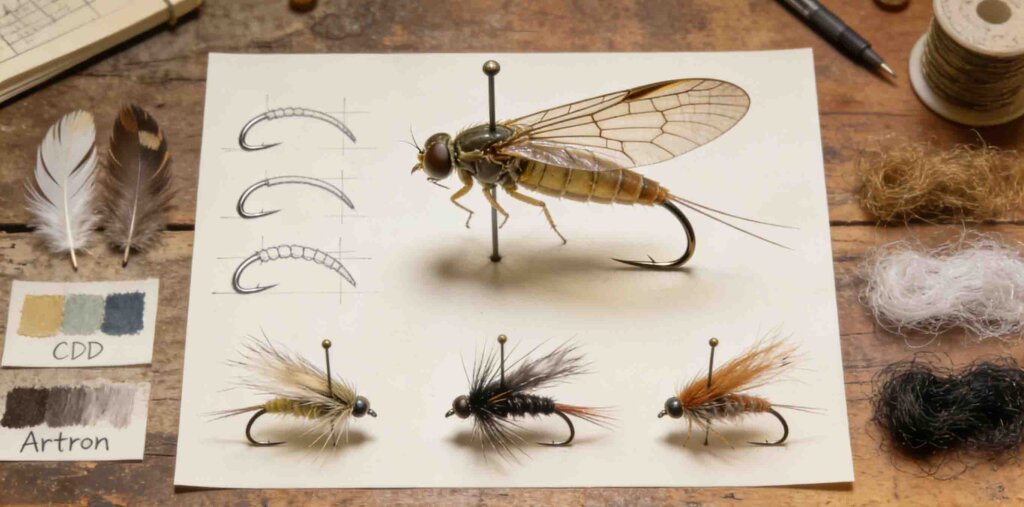
A mood board showing the design evolution of a dry flies, from initial insect inspiration sketches, to material selection (feathers, threads, foam), to prototype iterations, culminating in the final product on a hook.
2025+ Market Trends: What Discerning Buyers Are Demanding
The market is shifting. The brands that will win are responding to these macro-trends.
1. Sustainability & Ethical Sourcing (The Non-Negotiable)
This is no longer a niche concern. Buyers, especially in the EU and North America, are asking hard questions:
- Feather Provenance: Are hackle and CDC feathers from ethically run farms? Can this be documented?
- Alternative Materials: Surge in demand for high-quality synthetic substitutes that perform as well as or better than natural materials, without the sourcing concerns.
- Recycled & Reduced Packaging: Moving away from single-use plastic clamshells to recycled paper cards or minimal, home-compostable bags.
2. The Hybrid Fly: Blending Natural and Synthetic
The “either/or” debate is over. The best modern dry flies are hybrids:
- Synthetic Body + Natural Hackle: Use UV-resin or Antron dubbing for an indestructible, sparkly body, topped with a natural CDC or hackle collar for movement.
- Foam Wing + CDC Trailer: A foam wing post for unshakeable buoyancy, paired with a few strands of CDC for a lifelike footprint and movement.
3. “Sighter” Integration and Enhanced Visibility
As the angler population ages and low-light fishing grows, visibility is king. The trend is moving beyond a bright post to integrated sighters:
- Fluorescent threads woven into the body.
- UV-reactive materials that “glow” under certain light.
- Thin, bright flash strands in the wing that catch light without looking unnatural to the fish.
Your Supplier Evaluation Framework: 10 Critical Questions
Stop asking about price and MOQ first. Start with these questions to separate order-takers from partners.
- “Can you provide a detailed cost breakdown for this quote, by material and process?” (Tests transparency).
- “Walk me through your QC process for dry flies, from raw material to packed carton.” (Tests systems).
- “Who are your primary hook and feather suppliers, and how do you qualify them?” (Tests supply chain strength).
- “What is your average First Pass Yield (FPY) and rejection rate for a complex dry fly pattern?” (Tests efficiency and consistency).
- “Can you show me examples of previous custom design work and the process you followed?” (Tests design capability).
- “How do you handle material price fluctuations (e.g., in feathers) during a long production run?” (Tests risk management).
- “What is your policy on protecting a client’s custom design IP?” (Tests professionalism and ethics).
- “Can you provide third-party test reports for hook sharpness and corrosion resistance?” (Tests verification of claims).
- “What’s your lead time from final sample approval to shipped goods, and what are the biggest causes of delay?” (Tests realism and experience).
- “Beyond production, what design or market trends are you seeing succeed for clients in my region?” (Tests their value as a strategic partner).
Conclusion: Fishing for a Better Partnership
The world of dry flies is deceptively complex. The difference between a product that flies off the shelves and one that sinks your business is in the details outlined here: the unyielding focus on material science, the rigor of a true quality management system, and a design philosophy rooted in entomology and angler psychology.
Your supplier should be a source of these insights, not just a source of units. They should help you navigate cost versus performance, identify winning trends, and protect your brand’s reputation with flawless execution. At Havenseek Tackle, this partnership mindset is how we’ve built custom dry fly programs for over 500 brands. We believe an informed buyer is our best partner.
Ready to apply this framework and develop a line that stands out? Let’s turn these insights into your next best-selling pattern.
Your Next Step: A Data-Driven Sourcing Strategy
Stop guessing. Start building with confidence. Download our comprehensive B2B Dry Fly Sourcing & Specification Checklist we use with our top partners. It includes material spec sheets, QC audit forms, and a supplier scorecard.
Get Your Free Checklist & Connect with Our Design TeamDownload Your Free Sourcing Checklist
Typically responds within 12 hours. No generic sales pitch—just a specialist ready to discuss your project.
Frequently Asked Questions (FAQ)
What are the biggest cost drivers in manufacturing a dry fly?
The biggest costs are, in order: 1. Premium hooks (forged, chemically sharpened, high-grade steel). 2. High-grade natural materials (saddle hackle, CDC feathers with specific properties). 3. Skilled labor for precise, consistent tying. 4. QC overhead. Saving on any of these drastically reduces performance and durability.
How can I ensure the quality of dry flies is consistent across large orders?
Demand a detailed Quality Control (QC) Sheet with pass/fail criteria for each production stage (material inspection, in-process tying checks, final random sampling). Audit their process, not just the final sample. Reputable manufacturers like Havenseek use documented standards for every pattern (e.g., whip finish length, thread tension, precise feather placement).
What’s the difference between ‘regular’ and ‘pro-grade’ dry fly hooks?
Pro-grade hooks are forged (not bent), creating a stronger, thinner wire profile. They feature precision-point technology for instant penetration and often have advanced corrosion-resistant finishes. ‘Regular’ hooks are heavier, weaker, and duller, directly affecting the fly’s sink rate and hook-up ratio.
Are synthetic materials better than natural ones for dry flies?
It’s not ‘better,’ but different and complementary. Synthetics (EP fibers, Antron) offer unbeatable consistency, buoyancy, and colorfastness. Natural materials (CDC, hackle) have superior natural movement and hydrophobic properties. The trend is hybrid flies that use both: synthetic for the body/underwing, natural for the hackle/trailers.
What is the minimum order quantity (MOQ) I should expect for custom dry flies?
For a truly custom pattern (your design, your materials), MOQs typically start at 5,000 to 10,000 pieces per size/color. For adjustments to standard patterns (color, hook type), MOQs can be as low as 1,000-2,000. Be wary of suppliers offering tiny MOQs on ‘custom’ work—they often subcontract with zero QC.
How do I protect my custom dry fly design from being copied or sold to others?
A strong, clear Non-Disclosure Agreement (NDA) and Exclusive Design Agreement with your supplier is essential. For complete security, work with an OBM partner like Havenseek who can produce under your brand with full IP protection. Avoid sharing your most unique designs with factories that also sell directly on Amazon/Alibaba.
What are the key trends in dry fly design for the North American market?
Key trends include: 1. Sighters & Hi-Vis Elements: Integrated bright posts for tough light. 2. Extended Body Designs for better drift and profile. 3. Foam-Free Buoyancy using new hydrophobic materials. 4. Ethical & Sustainable Sourcing of feathers. 5. ‘Do-Everything’ Patterns that imitate multiple insects.
How long does it take to develop and produce a new custom dry fly pattern?
A realistic timeline: 2-3 weeks for prototyping and sample approval (3-5 sample rounds). 4-6 weeks for production of the first batch (including material sourcing, production, QC, and shipping). Always factor in extra time for rigorous testing on the water.
What should I look for in a dry fly sample before approving a large order?
Test beyond looks: 1. Float Test: Soak in water with surfactant (like soap) for 5 mins. Does it still float? 2. Hook Sharpness: Can it stick into a fingernail with light pressure? 3. Durability: Gently pull on materials. 4. Consistency: Compare 10 samples side-by-side. 5. Fish it! The ultimate test.
Why are some dry flies so much more expensive than others that look similar?
You’re paying for performance-invisible specs: the hook’s steel alloy and sharpness, the density and oil content of the hackle, the type of floatant used on the materials, and the tier’s skill in creating a balanced, durable fly. A cheap fly falls apart, sinks, or misses hooks. The cost is in the details that catch fish.
Further Reading & References
To deepen your knowledge on fly design, materials, and manufacturing, we recommend these authoritative resources:
- The Science of Fly Design – Fly Fisherman Magazine. An excellent look at the entomology and physics behind effective patterns.
- Proportions in Fly Tying: Why They Matter – Global FlyFisher. A foundational article on the geometry of successful flies.
- The Ethics of Sourcing Fly Tying Materials – Hatch Magazine. Discusses the critical shift towards sustainable and ethical material sourcing in the industry.
© 2024 Havenseek Tackle Co., Ltd. All rights reserved. This guide is based on 15 years of industry experience and is intended for educational and professional purchasing purposes.