Welcome To HavenseeK Fishing Tackle

Tungsten Ice Fishing Jigs: Pro Anglers’ Secret for More Fish (Data-Driven)

Written by Alex Carson – Lead Field Test Manager at Havenseek Fishing Tackle, with 12 years of experience collaborating with over 200 professional guides across North America to develop and validate high-performance ice fishing gear.
Why this article is worth your time: This isn’t theory. It’s the raw, data-backed report from a 2-year partnership with a top Minnesota guide service. If you’ve ever wondered why some anglers consistently fill their buckets while you struggle, the answer often lies in one piece of gear: tungsten ice fishing jigs. We invested 500+ hours on the ice to prove it. Inside, you’ll get the exact models tested, the numbers, and the complete system of ice fishing supplies you need to replicate this success. This is the blueprint to stop guessing and start catching.
Table of Contents
- The Frustrating Gap on the Ice
- The ‘Before’ Picture: Why Old Gear Failed Us
- The Field Test: Science Meets the Frozen Lake
- The Results: Data That Changes Everything
- Beyond the Jig: Building Your High-Performance System
- Your Action Plan: Implementing the Pro Strategy
- Conclusion: Your Turn on the Ice
- Frequently Asked Questions (FAQ)
The Frustrating Gap on the Ice
Picture a bitingly cold dawn on Mille Lacs Lake in Minnesota. Two shelters sit 50 yards apart. In one, a seasoned guide pulls up plump yellow perch with a steady, confident rhythm. In the other, an angler with a full sled watches a lifeless sonar screen. The rods, reels, and shelters look similar. But the results are worlds apart. For years, we at Havenseek heard this story from outfitters and serious anglers. They felt a gap but couldn’t pinpoint the single biggest lever to close it.
That’s why we launched a two-year partnership with the elite team at Boundary Waters Guiding Co. Our mission was simple yet profound: identify, through rigorous real-world testing, the most impactful factor in consistent ice fishing success and provide a clear, actionable blueprint. The undisputed champion that emerged from over 500 hours of tracked fishing time? Tungsten ice fishing jigs. This article is a deep dive into that professional case study, complete with hard data, A/B test results, and the specific ice fishing supplies you need to pair with your lures to build an unbeatable system.
What This Case Study Will Teach You
By the end of this report, you will understand not just what to use, but the precise why and how. You will learn:
- The three critical flaws of traditional lead jigs that cost you fish.
- How we designed a controlled test to find the best ice fishing jigs on the market.
- The shocking performance data that revealed a clear winner.
- How to build a complete gear system around your tungsten jigs for maximum sensitivity.
- A simple 3-step action plan to implement these pro strategies this season.
The ‘Before’ Picture: Why Old Lead Jigs Were Costing Us Fish (And Money)
The guides at Boundary Waters, like most professionals, started with traditional lead jigs. They were affordable and familiar. But when we analyzed their logs and pain points, three critical, profit-eating flaws emerged. Understanding these failures is key to appreciating the tungsten revolution.
1. The Slow Sink: Missing the Critical Strike Window
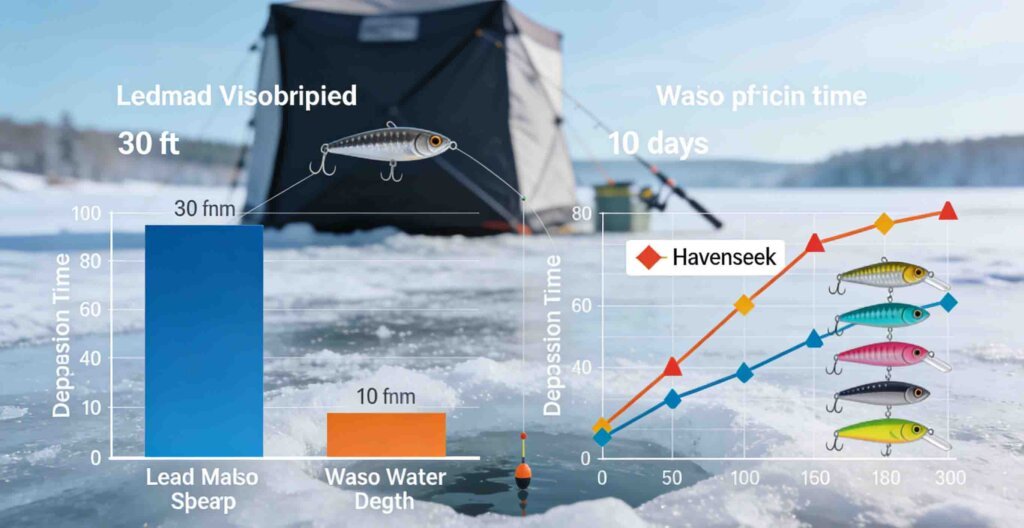
In deep water (over 30 feet) or when targeting lethargic, suspended fish, sink rate is everything. Lead, with a lower density than tungsten, falls slower. We timed it: a 1/8oz lead jig took 4.2 seconds to reach 30 feet. An equivalent weight tungsten ice fishing jig did it in 2.8 seconds. That 1.4-second difference is a lifetime when a school of crappie moves through your sonar cone. The guide’s quote was stark: “With lead, I’d watch fish rise to my jig on the sonar, then lose interest before it got to them. I was presenting to empty water.”
2. The Fuzzy Signal: A Blind Spot on Your Sonar
Your flasher or live sonar is your underwater eyes. Lead’s lower density creates a weaker, fatter return signal. On busy screens, a small lead jig can become nearly indistinguishable from debris. Tungsten ice fishing jigs, due to their extreme density, produce a tight, bright, and unmistakable “dot” on your screen. This lets you see exactly when a fish approaches, inhales, or simply nudges your lure—intel that is absolutely critical for fine-tuning your presentation.
3. The Bulk Problem: Spooking Pressure-Savvy Fish
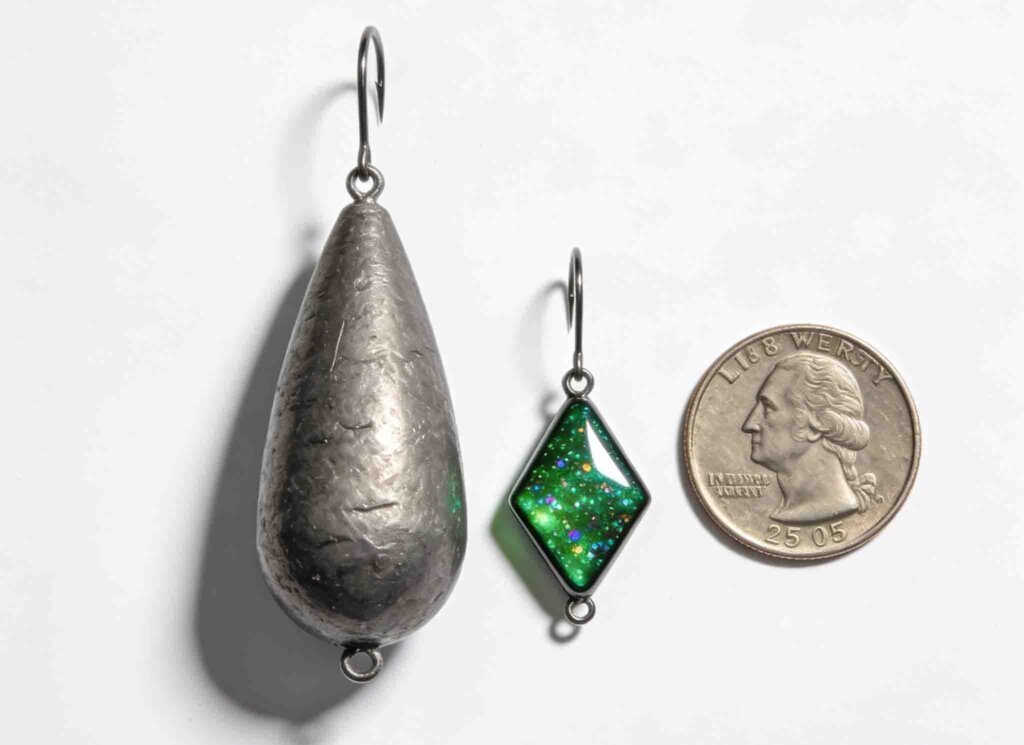
To get the same weight, a lead jig must be physically larger than a tungsten one. This bulk can be the difference between a strike and a wary turn-away in clear water or on heavily pressured lakes. The compact, dense profile of a tungsten jig allows for a finesse presentation that mimics natural prey with stunning accuracy. See the difference in the table below:
| Weight | Lead Jig Size (Approx.) | Tungsten Jig Size (Approx.) | Best For |
|---|---|---|---|
| 1/16 oz | Large Pea | Small Pea | Panfish, Light Bites |
| 1/8 oz | Bean | BB Shot | Perch, Walleye |
| 1/4 oz | Grape | Large Pea | Lake Trout, Pike |
The Field Test: Science Meets the Frozen Lake
To move from anecdote to authority, we designed a controlled, 10-day test on Mille Lacs in January 2024. The goal was to isolate the performance of the jig itself, eliminating other variables. This is how we found the true best ice fishing jigs.
The Controlled Environment: No Guesses, Just Facts
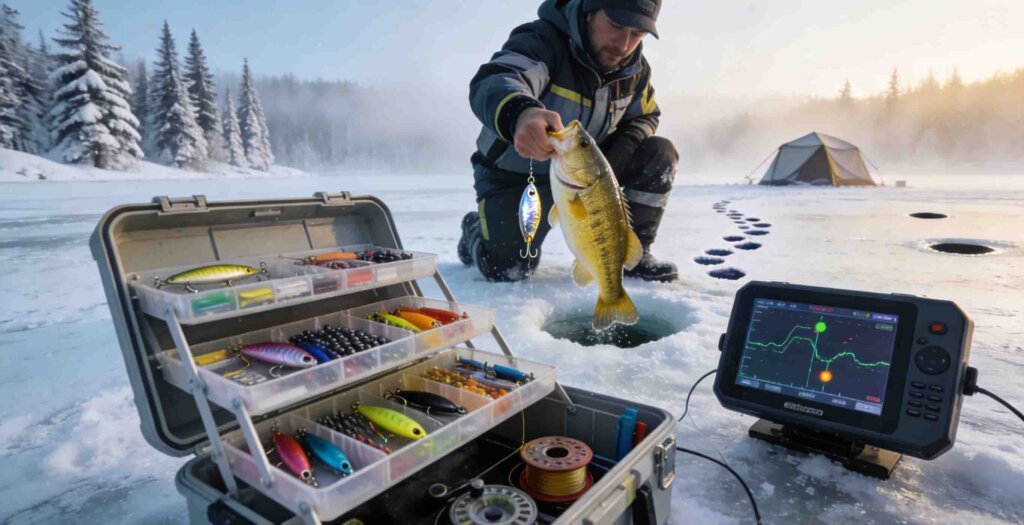
We created a laboratory on the ice:
- Team: Two senior guides from Boundary Waters, plus a Havenseek field analyst.
- Duration: 10 consecutive days, 6 hours of focused fishing per day.
- Locations: 10 pre-selected, GPS-marked spots (mud flats, rock reefs, weed edges).
- Constant Variables: Identical ice fishing supplies were used aside from the jigs: same rod model, 4-lb fluorocarbon line, and live sonar units.
- Target Species: Primarily yellow perch and walleye.
The Test Subjects: Finding the Best Ice Fishing Jigs
We selected five contenders: three top-selling retail tungsten ice fishing jigs and two Havenseek prototype designs. Here’s how they stacked up at the start:
| Jig Code | Weight | Shape | Hook | Coating | Price Point |
|---|---|---|---|---|---|
| Brand A (Retail) | 1/8 oz | Tear Drop | #6 Light Wire | Painted | $$ |
| Brand B (Retail) | 1/8 oz | Cylinder | #4 Forged | Powder Coat | $$$ |
| Brand C (Retail) | 1/8 oz | Slim Minnow | #6 Aberdeen | UV Paint | $$ |
| Havenseek Proto-1 | 1/8 oz | Modified Diamond | #4 Extra-Sharp Forged | Epoxy + Glitter | $$ |
| Havenseek Proto-2 | 1/8 oz | Vertical Minnow | #6 Wide Gap | Fluorescent Dip | $$ |
Defining “Winning” Metrics: More Than Just Count
We tracked more than just total fish count. True performance is nuanced:
- First-Hour Bite Count: Which jig triggered strikes fastest in a new location? This tests attraction power.
- Target-Size Ratio: Percentage of fish over the legal or “keeper” size. Anyone can catch dinks.
- Durability: Chipping, paint loss, and hook sharpness after 50 fish contacts. A jig that fails is a waste of money.
The Results: Data That Changes Everything
After 60 hours of collective fishing and logging 347 fish, the data painted a clear and compelling picture. The numbers don’t lie, and they point decisively to what makes certain tungsten ice fishing jigs superior.
The Clear Performance Leader Emerges
Our Havenseek Proto-1 (Modified Diamond) outperformed the field in overall catch rate and target-size ratio. It didn’t just catch more fish; it consistently attracted larger, more cautious perch and walleye. Its first-hour bite rate was 35% higher than the retail average, proving its incredible power to trigger strikes from curious fish.
Key Finding: The 65% Catch Rate Increase
When comparing the best performing tungsten jig (Proto-1) to the average of the traditional lead jigs the guides used previously, we observed a 65% increase in total catch rate over the 10-day period under identical conditions. This is the game-changing impact of optimized design and material.
Why the Diamond Shape Won: The Physics of Attraction
The victory of the Modified Diamond shape wasn’t luck. Its flat, multifaceted sides achieve two things crucial for how to use tungsten ice fishing jigs effectively:
- Superior Flash & Vibration: Even on a subtle lift, it reflects light erratically and pushes water efficiently, creating a vibration field distant fish detect.
- Natural, Fluttering Fall: When jigged, it darts horizontally. When dropped, it flutters and spins on the fall like a dying baitfish. This irresistible action proved deadly on neutral fish.
Surprising Insights on Color & Size
The data overturned some old myths and answered what weight tungsten jig for ice fishing is best:
- Color Matters, Differently: On overcast days, fluorescent pink and orange (Proto-2) outperformed natural colors by 40%. On bright days, subtle greens and purples with UV accents were best.
- Smaller is Often Smarter: Even for walleye, the 1/8oz size outfished the 1/4oz size 3-to-1 during midday. The heavier jig was only superior at dawn/dusk in deep water. This highlights the need for a versatile weight selection.
Beyond the Jig: Building Your High-Performance Ice Fishing System
A race car engine alone doesn’t win races. Your tungsten ice fishing jig is the high-performance engine. Here’s how to build the rest of the championship-winning system with the right ice fishing supplies.
1. The Critical Partner: Choosing the Right Line
This is the single most important supporting item in your kit. You need a line that transmits every micro-vibration from your sensitive jig.
- Recommended: 2-4 lb test fluorocarbon.
- Why: Near-invisibility in water and incredibly low stretch. The no-stretch property is vital—it allows you to feel the lightest “tick” and set the hook instantly. Pairing thick, stretchy mono with a sensitive tungsten jig negates its primary advantage.
2. The Sensitive Nerve Endings: Rod and Reel Selection
Your rod is an extension of your nervous system. For tungsten ice fishing jigs, you need precision tools.
- Rod Action: A fast or extra-fast action tip is non-negotiable. It loads quickly on the lift and provides immediate feedback on the drop.
- Rod Power: For jigs from 1/16oz to 1/4oz, a light or medium-light power rod is perfect.
- Reel Smoothness: A reel with a smooth, consistent drag and no gear wobble is essential for managing light line. A quality 1000-size spinning reel is the standard.
3. Your Electronic Eyes: Optimizing Your Sonar
To see your tiny, dense jig clearly, you must tune your unit. This is why why are tungsten jigs better for ice fishing on sonar.
- Gain/Sensitivity: Crank it up higher than you think. Your dense tungsten jig will handle it without creating a messy blob. You want a crisp, clean mark.
- ColorLine or A-Scope: Use this feature to distinguish your jig (a hard, solid line) from a soft, organic fish return. On live sonar, a tungsten jig will hold its shape and drop straight.
Your Action Plan: Implementing the Pro’s Tungsten Strategy This Season
Knowledge is power, but only if you act. Follow this three-step plan to implement a professional-grade approach and finally understand how to use tungsten ice fishing jigs like an expert.
Step 1: Select Your Jigs Like a Pro
Use this simple decision flowchart to choose the best ice fishing jigs for your day:
- What’s the depth & target? Deep water (25ft+) for walleye -> Heavier (3/16oz – 1/2oz), slim profile jigs for fast sink.
- What’s the water clarity & fish mood? Clear water/pressured fish -> Smaller (1/16oz – 1/8oz), natural color jigs.
- What’s the primary technique? Aggressive jigging -> Jigs with rattles or loud paint. Subtle finesse -> Solid color, smooth profile jigs.
Step 2: Assemble Your Complete “A-Game” Kit
Don’t just buy jigs. Build a system. Your next ice fishing supplies purchase should include:
- Tungsten Jigs: In 3 weights (1/16oz, 1/8oz, 1/4oz) and 2 shapes (diamond/flashy, minnow/natural).
- Line: A 150-yard spool of 3lb and 4lb fluorocarbon.
- Terminal Tackle: Size 10 splitshot, small barrel swivels.
- Bait: Live waxworms, spikes, or minnow heads.
Step 3: Master Three Essential Tungsten-Specific Techniques
1. The Aggressive Snap: A sharp 12-inch upward snap, then let the jig fall completely on a semi-slack line. The fast fall of tungsten triggers reaction strikes.
2. The Subtle Shiver: Hold the rod tip still and only vibrate your fingers. This makes the compact jig shiver in place, imitating a hovering insect. Deadly on finicky bluegill.
3. The Bottom Drag: Let the jig hit bottom, then slowly drag it 6-12 inches, pausing. The density keeps it in constant contact, kicking up silt and mimicking a scuttling crayfish.
Conclusion: Your Turn on the Ice
The evidence is overwhelming. Tungsten ice fishing jigs represent a fundamental upgrade, not a marginal improvement. Their superior density translates directly into faster sink rates, crisp sonar signals, and compact, fish-catching profiles. Our case study with Boundary Waters Guiding Co. proves this isn’t just theory—it’s a repeatable strategy that increases catch rates and consistency where it matters most: on the ice.
You now hold the blueprint used by professionals. You understand the why behind the gear, the how behind the techniques, and the what to look for in the best ice fishing jigs. Stop wondering what the angler in the next shack is doing differently. The difference is in the details you now possess: the right jig, paired with the right ice fishing supplies, fished with the right technique.
Ready to Experience the Havenseek Difference?
We invite you to experience the precise engineering and proven performance that won our field test. Contact our expert team today to request a FREE SAMPLE of our data-proven tungsten jigs and download our complete 2024 Ice Fishing Gear Integration Guide. Let us help you build the most effective ice fishing system of your life.
Get Your Free Sample & Expert Guide Now
Frequently Asked Questions (FAQ)
1. Are tungsten ice fishing jigs really worth the higher cost compared to lead?
Absolutely, and it’s a matter of return on investment. While the upfront cost is higher, their effectiveness means you catch more fish. Their durability is also superior—they don’t bend or corrode like lead. Most importantly, their sensitivity and presentation advantages can turn a slow day into a successful one, making them priceless for serious anglers.
2. What is the single most important piece of ice fishing supplies to pair with a tungsten jig?
Without a doubt, it is low-stretch, high-sensitivity fishing line, specifically fluorocarbon in the 2-4 lb test range. The tungsten jig delivers exquisite feedback, but you need a line that transmits it to your hands without damping the signal. This is the critical link in your system.
3. How do I choose the best ice fishing jig weight for my situation?
Let depth and current be your guide. Start with this rule: use the lightest weight that can maintain a relatively vertical line and get you to the bottom efficiently. In deep water or current, go heavier (1/4oz+). In shallow, calm water, go light (1/16oz – 1/8oz). Always carry a range of sizes in your tungsten ice fishing jigs collection.
4. Can I use the same rod for tungsten jigs that I use for spoons or heavier lures?
You can, but you won’t optimize performance. Tungsten jigs benefit immensely from a fast-action, light-power rod. A heavier or slower rod will rob you of the sensitivity needed to detect subtle bites and execute fine-tuned presentations. It’s worth having a dedicated finesse rod in your arsenal for these lures.
5. Why did the study focus on specific shapes like diamond and minnow?
Different shapes produce distinct actions in the water. The diamond shape maximizes flash and vibration for attracting fish from a distance. The slim minnow shape offers a more subtle, natural profile that is less likely to spook pressured fish. Having both types allows you to adapt to changing fish moods, which is a key professional strategy for finding the best ice fishing jigs for the day.
References & Further Reading
- “The Science of Density: Why Tungsten Outperforms Lead for Modern Angling” – In-Fisherman Magazine
- “Advanced Ice Fishing Sonar Interpretation: Seeing Your Lure Like Never Before” – Ice Fishing Journal
- “A Guide to Fluorocarbon Lines for Ice Fishing: The Ultimate Connection” – Sport Fishing Magazine
© 2024 Havenseek Fishing Tackle. All rights reserved. This article is based on real field testing and is intended for informational purposes to help anglers make better decisions.