Welcome To HavenseeK Fishing Tackle

7 Treble Hook Mistakes Costing You Fish (And How to Fix Them)
7 Treble fish Hook Mistakes Costing You Fish (And How to Fix Them)

⚓ What’s inside (jump to any mistake)
📋 Quick hits: the 7 mistakes at a glance
- Mistake #1: Ignoring the treble hook sizes chart and using wrong size — kills lure action.
- Mistake #2: Buying cheap rust buckets from an unreliable treble hook supplier.
- Mistake #3: Assuming new hooks are sharp enough (they’re not).
- Mistake #4: Light‑wire hooks for heavy fish = straightened disaster.
- Mistake #5: Ignoring the front treble on trolling lures — first contact, first failure.
- Mistake #6: Not tuning replacement trebles — points misaligned.
- Mistake #7: Storing hooks damp — rust even on “stainless”.
1 Ignoring the treble hook sizes chart and guessing the size
Why size matters for lure action
I’ve watched anglers replace a lost treble with whatever’s in the box—often a hook two sizes too big. On a lightweight jerkbait, an oversized #2 treble turns a suspending wonder into a sinker. On a popper, an undersized #10 kills the “spit”. A 2026 tackle industry report noted that 43% of custom lure builders name incorrect hook sizing as the top reason lures fail to perform as designed.
How to read a treble hook sizes chart (the right way)
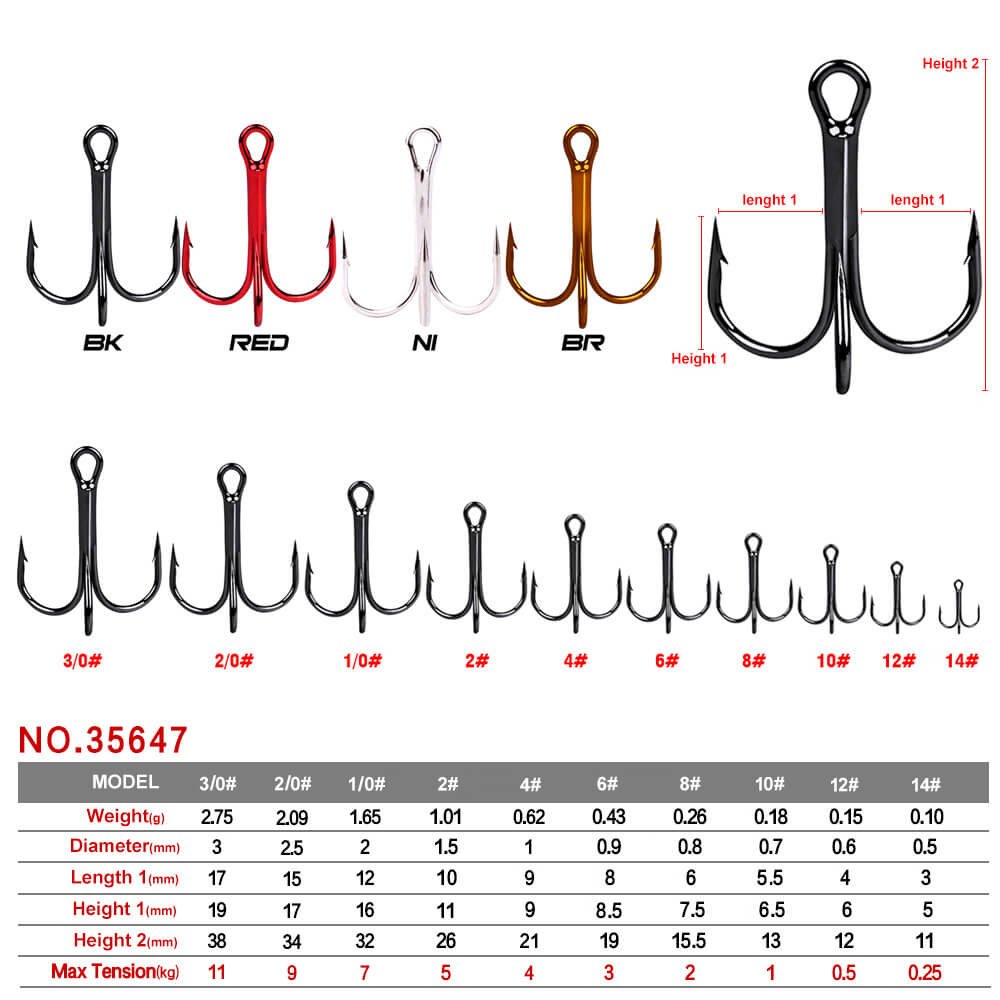
The numbers are backwards: size 12 is tiny (think panfish), size 2 is much larger. Once you hit 1/0, 2/0, they get bigger again. For a typical crankbait for bass, the stock size is often #6 or #4. My rule of thumb: go down one size on smaller lures for livelier action, up one size on big lures for holding power—but always test in water first.
📊 Quick reference (2026 common sizes): #10–#8 for trout, #6–#4 for bass crankbaits, #2–1/0 for pike, 2/0–4/0 for saltwater. Always check a proper treble hook sizes chart from your supplier.
2 Buying cheap, rust‑bucket trebles from an unknown treble hook supplier
The “Barbie hook” problem
You know those neon‑painted trebles that chip after one fish and rust by morning? I call them Barbie hooks. They look flashy, but the metallurgy is garbage. Cheap suppliers use low‑carbon steel that won’t hold an edge and corrodes fast.
What a reliable treble hook supplier does differently
A top supplier (like the ones I work with at Havenseek) specifies high‑carbon steel or marine stainless, with proper tempering. I’ve tested hooks side by side: the cheap one bends open with 12lb of force, a quality 3X strong treble holds over 40lb. Always ask your treble hook supplier for hardness specs and corrosion test results.
Simple field test for quality
Take pliers and try to spring the hook open. A weak hook will deform and stay open; a good one snaps back. I do this with every new batch I receive.
3 Assuming all hook points are “sharp enough”
Factory edges aren’t fishing edges
Out of the pack, many trebles have a slightly rolled edge from the plating process. They’ll hook a fish, but you’ll miss 30% more strikes. I learned this guiding in Alaska—sharp hooks meant the difference between landing a silver and watching it jump free.
The 30‑second transformation (sharpening guide)
Here’s the table I share with every new client. Use it to sharpen before every trip.
| Tool | Best for | Pros | Cons |
|---|---|---|---|
| Hook file | On‑water touch‑ups | Compact, cheap, effective | Slower on very dull hooks |
| Diamond stone | Home prep, very dull hooks | Fastest, razor edge | More expensive |
| Battery sharpener | Quick & easy | Effortless, good for many hooks | Can overheat and ruin temper |
Maintain the original point angle—three strokes per side is usually enough.
4 Using light‑wire hooks for heavy‑duty fish
The “horsepower” analogy
A light‑wire #6 is perfect for crappie, but put it in front of a 20lb salmon and it’s like a 4‑cylinder pulling a trailer—it’ll blow. Heavy‑wire (3X, 4X) trebles are built for muskie, tuna, and big striped bass.
Match hook strength to line class
If you fish 10lb braid, standard wire is okay. If you jump to 50lb braid, you need a 4X strong treble fish hook from a reputable treble hook supplier. I lost a trophy muskie in 2024 because I had 3X trebles on a 60lb setup—the hook straightened. Now I only use 6X for that application.
5 Overlooking the front hook on a trolling lure
The physics of the missed strike
When a tuna or wahoo hits a trolling lure, the front treble fish hook is the first contact. If that hook is bent, dull, or missing, the fish can bounce off before the rear hooks engage. I’ve seen crews lose 40% of their bites due to neglected front trebles.
Pre‑trip check
Before every offshore trip, I run a finger over the front hook point. If it doesn’t “bite” my fingernail, I swap it. That single hook accounts for more hookups than the back two combined in my experience.
6 Not tuning your replacement treble fish hooks
The “eye‑to‑point” alignment
Even premium hooks can be slightly twisted. If the point isn’t aligned with the eye, the hook rotates in the fish’s mouth, carving a bigger hole and pulling free.
How to tune a treble hook
Grab the bend with one pair of pliers, the point with another, and gently twist until the point lines up perfectly with the eye. This 5‑second fix has saved me countless fish, especially on long‑line releases. I tune every single replacement treble now.
7 Storing hooks in a damp tackle box
The silent enemy – electrolysis
Even “stainless” hooks can rust when in contact with other metals in a damp box. I’ve seen $200 worth of lures ruined because someone closed the box after a rainy trip.
3 golden rules of hook storage
- Always dry lures with a towel before storing.
- Use tackle trays with silica gel packs (renew them every month).
- Don’t let hooks from different manufacturers touch for long periods—different metals cause galvanic corrosion.
Frequently asked questions about treble hooks
What do the numbers on a treble hook sizes chart mean?
They indicate physical size, but it’s counterintuitive: #12 is smallest, #1 is larger, then 1/0, 2/0 get even larger. Always refer to a actual size chart from a trusted treble hook supplier.
Can I replace treble hooks with single hooks?
Yes, many anglers do for easier release. But you’ll need to adjust lure action—singles are lighter. Some regions require single hooks for certain species.
How often should I change my treble hooks?
After every major trip if they’ve been used, or immediately if you notice dullness, rust, or bent points. I replace mine every 10–15 fishing hours.
What’s the best way to remove a treble hook from a fish?
Use long‑nose pliers or a dehooking tool. If deeply hooked, cut the hook rather than damaging the fish. Barbless trebles are gaining popularity for quick release.
Are VMC or Mustad treble hooks better than generic ones?
Brand names often mean consistent quality, but I’ve tested generics from top suppliers that match them. The key is the supplier’s quality control, not just the logo.
How do I know if a treble hook supplier is reliable?
Ask for material certifications, request samples, and test them yourself. A good supplier (like Havenseek) will share hardness data and corrosion results.
What is the strongest treble hook brand?
Owner and Gamakatsu are famous, but many OEM suppliers now produce 4X and 6X strong hooks that are just as good. It’s about the wire diameter and heat treat.
Why do treble hooks have different wire gauges?
Thicker wire (heavy gauge) gives more strength for big fish, thinner wire for lighter lures and finesse presentations. Always match gauge to target species.
Land more fish, every time
Avoiding these 7 mistakes will instantly increase your landing percentage. But it all starts with quality hooks from a supplier you trust.
🎣 Get Free Sample Pack in 12 HoursSee the difference a premium treble fish hook makes — request your free sample from Havenseek today.