Welcome To HavenseeK Fishing Tackle

What Is a Baitcasting Reel and How Does It Work? (Full B2B Guide)

What Is a Baitcasting Reel and How Does It Work? (Full B2B Guide)
Perfect for wholesale buyers, tackle retailers, importers, and distributors
1. Introduction: Why Baitcasting Reels Matter in Today’s Fishing Market
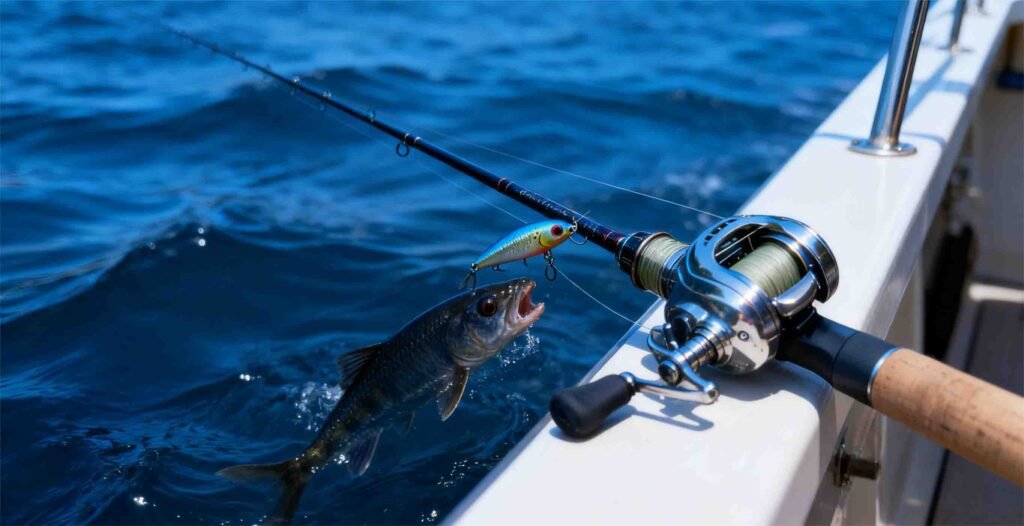
Baitcasting reels are among the most important products in the modern fishing tackle industry. Whether your business focuses on bass fishing, saltwater casting, or high-performance lure fishing, baitcasting reels play a major commercial role—especially in North America, Europe, and Japan, where anglers demand precision and power over long casting distance.
For B2B buyers, understanding how does a baitcasting reel works is not simply technical knowledge. It directly affects purchasing decisions, product sourcing, retail positioning, customer education, and after-sales guidance. As suppliers like HK Tackle continue to expand global OEM/ODM baitcasting programs, retailers increasingly request reels with higher braking precision, smoother drag systems, and stronger frames.
This article baitcasting reel explained what a baitcasting reel is, how does a baitcasting reel work, key components, and what B2B buyers must look for when sourcing or selling this category.

2. What Is a Baitcasting Reel?
A baitcasting reel—also known as a casting reel—is a fishing reel designed to give anglers more control, accuracy, and power when casting heavier lures. Unlike spinning reels, where the line flows off a stationary spool, a baitcasting reel uses a rotating spool that turns during the cast.
This rotating spool provides several advantages:
- Greater casting accuracy
- Higher torque for stronger fish
- Ability to cast heavier lures
- More control over lure placement
- Better leverage for fighting large fish
Because of these performance advantages, baitcasting reels dominate markets such as:
- Bass fishing (USA)
- Pike and predator fishing (Europe)
- Snakehead fishing (Asia)
- Inshore saltwater casting (global)
For retailers, this means baitcasting reels consistently outperform spinning reels in premium price segments.
3. How Does a Baitcasting Reel Work?
A baitcasting reel works through a simple but highly controlled mechanical system:
Step 1: Angler presses the thumb bar
This disengages the spool so it can rotate freely.
Step 2: The lure is cast forward
The spool rotates at high speed, releasing line in real time.
Step 3: Braking systems slow the spool
This prevents “backlash,” also known as a bird’s nest, when the spool spins faster than the line can exit.
Step 4: The angler stops the spool with their thumb
This gives baitcasters their famous accuracy.
Step 5: Reeling engages gears and line guide
The spool rotates smoothly under gear control, evenly distributing line across the spool.
Step 6: Drag system regulates pulling pressure
Allowing the angler to fight powerful fish without breaking the line.
Because the spool rotates directly, baitcasting reels offer both power and efficiency, making them ideal for heavy lures and larger fish.
4. Key Components of a Baitcasting Reel (B2B Breakdown)
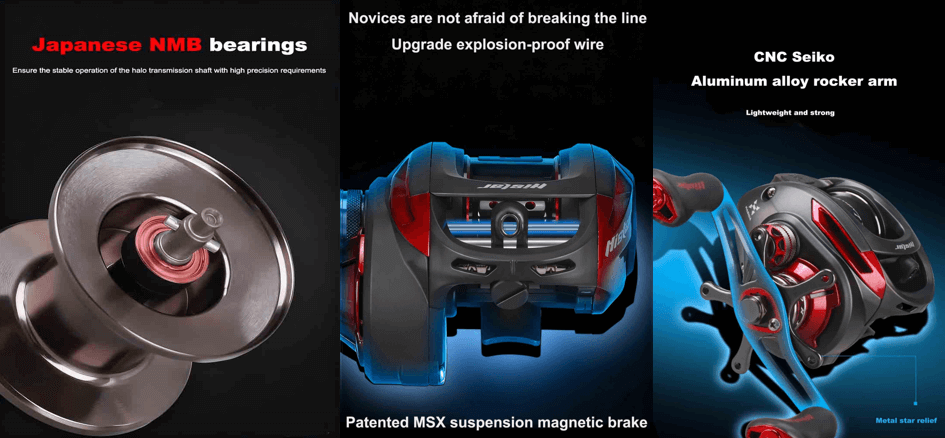
To help retailers and importers understand product features when sourcing, here is a breakdown of the main parts:
1. Frame
Material options:
- Aluminum (strongest, premium)
- Graphite (lightweight, budget-friendly)
Aluminum frames are preferred for saltwater or heavy-duty models.
2. Spool
Usually aluminum; higher-end reels include:
- CNC-machined aluminum
- Lightweight shallow spool (for BFS finesse fishing)
- Deep spool (for saltwater or long-cast applications)
3. Braking System
Controls spool rotation.
Types:
- Magnetic brakes (easy for beginners; consistent)
- Centrifugal brakes (precise tuning; preferred by pros)
- Dual brake systems (premium, high adjustability)
Retail insight:
Magnetic brakes dominate the mid-range market, while centrifugal is common in high-end tournament reels.
4. Drag System
Uses washers to apply pressure to the spool during a fight.
Materials:
- Carbon fiber (premium, saltwater safe)
- Felt (budget reels)
Typical drag range: 5–12 kg for freshwater; 10–15+ kg for saltwater.
5. Gear System
Determines retrieve speed.
Popular gear ratios:
- 6.3:1 – versatile, all-purpose
- 7.2:1 – faster lure presentations
- 8.1:1 and above – high-speed techniques
High gear ratio reels sell extremely well in bass and snakehead markets.
6. Bearings
More bearings = smoother performance, but quality matters more than quantity.
Common materials:
- Stainless steel
- Hybrid ceramic (lightweight, high performance)
7. Thumb Bar & Clutch
Allows instant spool engagement/disengagement.
High-quality designs use reinforced alloy for durability.
8. Line Guide System
Ensures even line distribution on the spool.
Premium models use zirconia or titanium-coated inserts for smoothness and line protection.
5. Why Anglers Prefer Baitcasting Reels (Consumer Insights for Retailers)
From market research (U.S. & Japan trends), anglers choose baitcasting reels for several reasons:
1. Better Accuracy
Thumb control allows precise lure placement around:
- Docks
- Lily pads
- Timber
- Rocks
- Target structures
Accuracy = higher catch rates.
2. Higher Power
More torque for:
- Bass
- Snakehead
- Pike
- Inshore saltwater species
Perfect for retailers selling mid-range to premium gear.
3. Superior Lure Control
Especially for:
- Jigs
- Crankbaits
- Spinnerbaits
- Swimbaits
- Topwater lures
This matches high-demand product categories.
4. Durability
Baitcasters last longer and require fewer repairs compared to spinning reels.
6. Common Types of Baitcasting Reels (B2B Overview)
1. Low-Profile Baitcasting Reels
The most popular style in:
- U.S. bass market
- Asian snakehead market
- Predator fishing in EU
Designed for comfort and palm-fitting ergonomics.
2. Round Baitcasting Reels
High-capacity reels for:
- Musky
- Pike
- Salmon
- Saltwater inshore
- Catfish
These reels are heavier but stronger, appealing to specialized fishing stores.
3. Saltwater Baitcasting Reels
Features include:
- Corrosion-resistant materials
- Sealed bearings
- Strong drag systems
A rapidly growing category due to inshore fishing demand.
7. What B2B Buyers Should Consider When Importing Baitcasting Reels
1. Market Demand
Different regions prefer different styles:
| Region | Preferred Reel Type |
|---|---|
| USA | Low-profile, high-speed |
| Japan/Korea | BFS finesse baitcasting |
| EU | Heavy-duty pike/musky reels |
| Southeast Asia | High-power snakehead reels |
2. Materials & Build Quality
Key points:
- Aluminum frames sell better in premium market
- Graphite frames work for entry-level models
- Carbon drag washers are essential for saltwater reels
3. Retail Positioning
Entry-level → beginners
Mid-range → casual anglers
High-end → tournament and pro anglers
4. Packaging & Branding
Custom packaging and OEM branding are major selling points for international distributors.
8. Advantages of Working With HK Tackle for Baitcasting Reels
If included in blog post:
- OEM/ODM customization
- Multiple brake system options
- Carbon fiber drag systems available
- Saltwater corrosion protection
- Bulk production capability
- Private label designs
- Support for full baitcasting rod + reel combo sourcing
9. Conclusion
A baitcasting reel is a precision-engineered tool that gives anglers unmatched accuracy, power, and control. Understanding how it works is crucial for retailers, importers, distributors, and wholesale buyers who want to select the right models for their market.
As global demand continues rising—especially in bass, predator, and inshore saltwater fishing—baitcasting reels remain a profitable and essential category for any fishing tackle product line. With the right supplier and the right product knowledge, businesses can capture strong growth across multiple regions.